







Education, healthcare most promising sectors for AI adoption, says OpenAI executive
OpenAI’s head of startups Marc Manara sees outsized potential in both industries – and says Singapore is doing well in positioning itself as an AI hub.
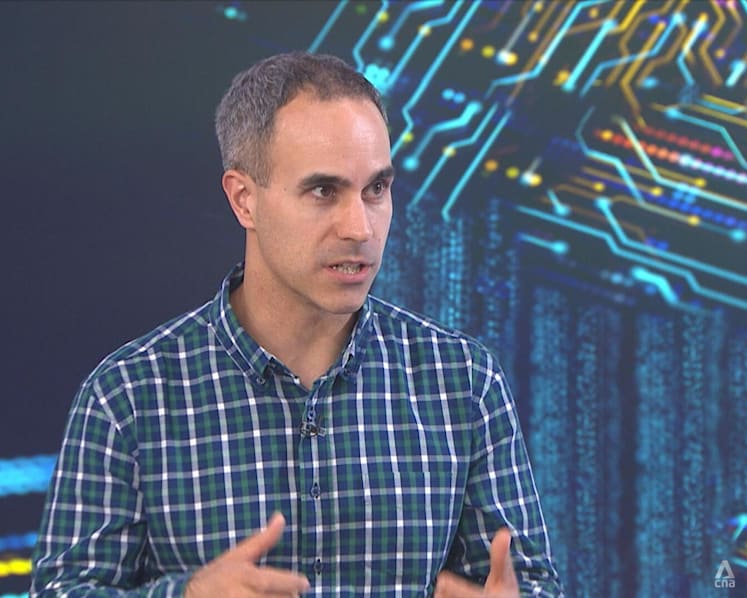
OpenAI's head of startups Marc Manara speaking during an interview with CNA on Feb 23, 2026.

This audio is generated by an AI tool.


SINGAPORE: Education and healthcare hold the greatest promise for artificial intelligence to reshape entire industries, according to a senior executive at OpenAI, the company behind ChatGPT.
Mr Marc Manara, OpenAI's head of startups, made the remarks during an interview with CNA on Monday (Feb 23) while visiting Singapore, where the San Francisco-based company set up an office in late 2024 to support its expansion into the Asia-Pacific region.
In education, Mr Manara said AI could make truly personalised learning a reality, something that was previously impossible to deliver at scale.
“The potential for AI to make it easier for people to … study something that maybe was a topic that was too small of an interest globally to have a full course built around it – with AI you can do that now,” he said.





“That potential is still being tapped, and I'd love to see more investment there.”
In healthcare, he pointed to the rapid adoption of AI tools among healthcare institutions in the United States, particularly for administrative tasks that have long burdened frontline staff.
“A clinician being able to record a patient conversation and have notes transcribed accurately, taking what was previously the drudgery of their job and doing it highly effectively and fast, and allowing them to spend more time in the patient conversation,” he said.
He added that AI's impact extends beyond the clinic: "Upstream of that – billing, insurance claims – all these different things that the industry is benefiting heavily from AI."
But the bigger opportunity, he said, lies ahead. "There's a lot of unstructured data and a lot of highly skilled folks – nurses, doctors, clinicians, administrators – that can actually benefit from AI, empowering them more."
SINGAPORE'S AI STRATEGY
His visit comes as Singapore ramps up its AI ambitions. In his Budget 2026 statement, Prime Minister Lawrence Wong announced that healthcare will be one of four "AI missions" driving the country's efforts. The other three sectors are advanced manufacturing, connectivity and finance.
A National Artificial Intelligence Council, which Mr Wong will chair, will be set up to oversee the development and execution of the missions.
The government has also committed more than S$1 billion (US$790 million) to strengthen public AI research capabilities.
Mr Manara welcomed the moves, saying Singapore stood out globally for how its leadership enthusiasm, talent base and startup culture come together.
“It signals the forward-looking position of leadership and the country, overall, and pairs with the optimism and organic kind of enthusiasm around AI that I see,” he said.
“Singapore is basically creating itself as a hub to attract the best AI talent to build here and I think it's doing that really successfully,” he added.


UPTAKE AMONG BUSINESSES
On the ground, Mr Manara said demand from Singapore-based companies – startups and large incumbents alike – has been rising sharply. Firms are approaching OpenAI not just to experiment, but to re-examine core business processes.
“Companies (are) coming to us, saying, ‘I want every person in the organisation to feel empowered and understand how to make their day-to-day work better using AI and ChatGPT’,” he said.
Singapore Airlines and Grab are among the companies that have already partnered with OpenAI to enhance customer experience and operational efficiency. Last year, the Singapore Tourism Board and OpenAI also signed a Memorandum of Understanding to advance Singapore's tourism sector with AI.
Looking regionally, Mr Manara said Singapore has the right ingredients to become a launch pad for AI startups in the Asia Pacific.
“There’s a cross-section of cultures here that means that I'm seeing teams start here and expand regionally really fast,” he said. “The pace (of AI adoption) has been just super fast … and there's an optimism around AI here that I feel even though I'm only here a little bit of each year.”





