High Court dismisses Pritam Singh's appeal against conviction for lying to parliamentary committee
Justice Steven Chong found that Pritam Singh was hoping he did not have to deal with Raeesah Khan's lie and never intended to have it clarified until a meeting with Low Thia Khiang.
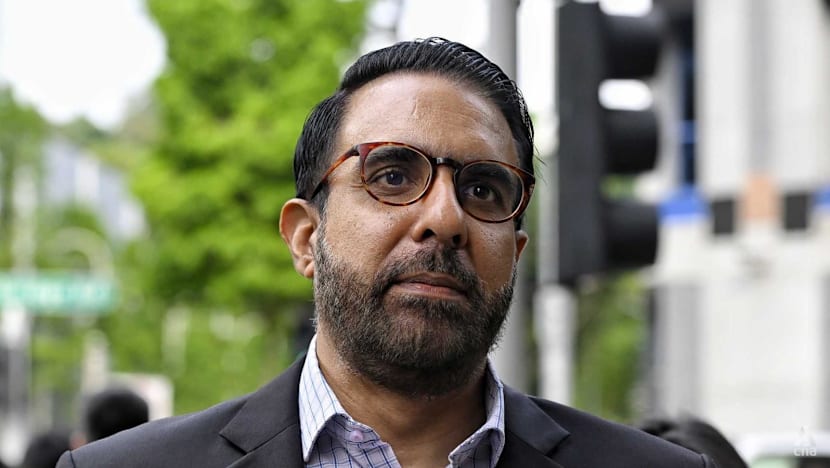
Leader of the Opposition Pritam Singh arrives at the High Court on Dec 4, 2025. (File photo: CNA/Wallace Woon)

This audio is generated by an AI tool.






SINGAPORE: A High Court judge on Thursday (Dec 4) dismissed an appeal by Leader of the Opposition Pritam Singh against his conviction for lying to a parliamentary committee.
Justice Steven Chong said the lower court judge's decision to convict Singh on both charges was sound and supported by the evidence, even though he did not agree with the trial judge's assessment of some peripheral aspects.
He found that Singh did not intend for then-Workers' Party (WP) member Raeesah Khan to clarify her lie for at least two months after he found out about it.
He also found that Singh never took the position that Ms Khan should clarify her lie until a meeting on Oct 11, 2021, where WP veteran Low Thia Khiang said the lie should be revealed in parliament.
"The appellant's own case, taken at its highest, is that he wanted Ms Khan to clarify the untruth if it was raised in parliament," said Justice Chong.
If the matter had not been raised in parliament again, Justice Chong said it appeared to him that Singh's approach would have been "to let sleeping dogs lie", that is, "that there was no need to resurrect the issue if it was already 'buried'".
"Alas, that was not to be," said Justice Chong.
"The appellant was confronted with an inconvenient truth," he added. "A sitting MP from his party had told an untruth - an unsolicited lie."
Justice Chong said the WP leaders were essentially "engaged in an exercise of risk management and/or damage control".
He added that Singh "was hoping he did not have to deal with the untruth", and that it was for this reason that the WP leaders were examining issues such as whether the untruth would be raised again in parliament and whether the government would be able to discover it.
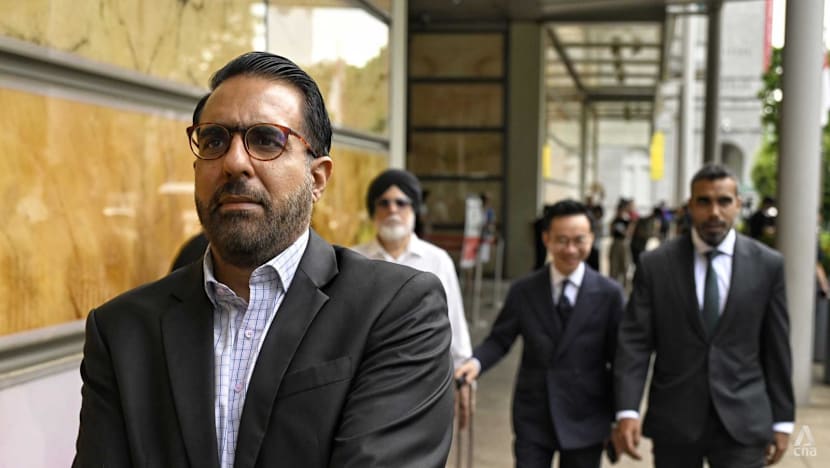
After the hearing, Singh paid his fine in full. He told reporters outside the High Court that he was disappointed with the appeal verdict but respected it.
He said he took responsibility for taking "too long" to respond to Ms Khan's lie, but said he remains committed in his responsibilities to parliament and to Singaporeans.
He also said his focus is to continue serving Singaporeans and to speak up for them and thanked Singaporeans for their support.
In a statement posted on Facebook following the hearing, the WP said that it is studying the court's verdict and grounds of decision, adding that it has "weathered many challenges over the years".
"Our commitment to serving the people of Singapore remains unwavering. We are deeply grateful to everyone who has stood with us, in moments of progress and through difficult times," the party said.
"Our work in service of Singaporeans continues. We will persevere in our efforts to earn the trust and support of all Singaporeans."
BACKGROUND
Singh, 49, had claimed trial to two charges of lying to the committee of privileges in relation to a false anecdote told by former party member Raeesah Khan.
She had claimed in Parliament that she had gone to a police station with a rape victim, later doubling down on the lie when questioned by Minister K Shanmugam, before confessing to it a few months after her original lie.
Singh was later charged over allegedly false answers he gave the committee of privileges, which was looking into Ms Khan's conduct.
He was convicted and sentenced to a total fine of S$14,000 (US$10,700). The fine, at S$7,000 per charge, did not disqualify him from being a member of parliament as it did not meet the threshold for disqualification.
The Elections Department said after his sentencing that disqualification is based on the sentence for a single offence. The threshold for disqualification is at least a year's jail, or a fine of at least S$10,000 per offence.
The closely covered trial included testimonies by Ms Khan, her former aides Ms Loh Pei Ying and Mr Yudhishthra Nathan, and WP stalwart Low Thia Khiang.
The trial judge found that the evidence showed that Singh never wanted Ms Khan to clarify the untruth, and that his lack of guidance on how to do so was consistent with his lack of desire for it to happen.
He also found that Singh was not a credible witness, while Ms Khan and her aides "displayed courage in testifying and speaking the truth", despite the defence's attempt to undermine their credibility.
During the appeal, Singh's lawyer, Mr Andre Jumabhoy, sought to overturn the conviction while the prosecution urged the court to dismiss the appeal as the conviction was sound.
Mr Jumabhoy said the trial judge accepted "impossibilities" in Ms Khan's account as "proof" and "conjecture as fact", ignoring the "plain reality" that Singh "consistently acted with caution, integrity and empathy".
ASSESSING THE EVIDENCE
In a written judgment released shortly after the brief hearing, Justice Chong gave detailed reasons for his decision.
Justice Chong found that the trial judge "carefully evaluated" an entire body of evidence, including contemporaneous WhatsApp messages, witness testimonies and Singh's own evidence.
"It was the totality of the evidence, rather than merely Ms Khan's evidence, that persuaded the judge to convict the appellant," said Justice Chong.
He observed that Singh had elected not to call some WP leaders as witnesses, although they had attended some "material meetings" with him.
"In the trial below, the prosecution did not invite the judge to draw an adverse inference from the appellant's choice, and none was drawn by the judge," said Justice Chong.
"As such, I will say no more, save to express that it is curious that the appellant did not avail himself of seemingly available evidence which may have served as corroboration of his account of events."
He said the appeal turned on the assessment of the evidence by the trial judge in relation to two statements Singh allegedly made.
These are: A statement that Singh allegedly told Ms Khan on Aug 8, 2021, to take the untruth to the grave, and the statement "I will not judge you" or "I won't judge you", that Singh told Ms Khan on Oct 3, 2021.
The second statement was undisputedly made, but the meaning of the statement was disputed - with Singh saying he would not judge Ms Khan for taking ownership and responsibility for the untruth by clarifying it if it was raised in parliament.
Conversely, the prosecution said it meant that Singh would not judge Ms Khan if she decided to maintain her lie.
The trial judge found that Singh meant the latter version, and that he had made the "grave" statement.
Justice Chong said that if Singh did indeed make the "grave" statement, he could not logically have intended for Ms Khan to clarify the lie at some point in the future, as the meaning of the "grave" statement was "diametrically opposed to coming clean about the untruth".
HE DID TELL MS KHAN TO TAKE THE UNTRUTH TO THE GRAVE: JUDGE
He agreed with the trial judge that Singh had made the "grave" statement, pointing to two key planks.
First, the contextual fact that the WP leaders, including Singh, held the hope or belief at the Aug 8, 2021, meeting that the lie might not be raised in parliament again.
Second, Ms Khan's contemporaneous messages and Singh's own conduct both show that he did not want her to clarify the untruth as of Aug 8, 2021.
"In sum, because of the appellant's belief that Ms Khan's lie was unlikely to surface again, he did not think that there was any need to rock the boat by volunteering the truth. The appellant had therefore made a false statement to the COP when he claimed otherwise," said Justice Chong.
He turned to examine the attitude of the WP leaders, saying that they found themselves in an "invidious situation" following the Aug 8, 2021, meeting.
Ms Khan testified that, during this meeting, Ms Sylvia Lim said the lie probably would not come up again.
Justice Chong found that the trial judge was right to find that the WP leaders, including Singh, seemed to think at this meeting that the lie would not come up again in parliament.
"It is significant that Ms Khan was not challenged on her evidence that Ms Lim had made the statement above," said Justice Chong.
He said it appeared that Ms Lim had "consistently held this view" that the lie would not come up again, as Mr Low testified that Ms Lim had said the government did not know about the untruth and that it was not easy to know "because there are so many police stations in Singapore".
Mr Low's evidence on this was also unchallenged by the defence.
Justice Chong said this view was shared, at least tacitly, by the other WP leaders, including Singh.
"In simple terms, if the issue of the untruth was unlikely to come up again, there might be no need to clarify the untruth," he said.
He also found a WhatsApp message Ms Khan sent to her aides immediately after the meeting, recounting the "grave" statement, to be "strongly corroborative" of Ms Khan's account that Singh did in fact make the statement.
"A person’s reaction or inaction to significant events is usually revealing of his or her understanding of the events," said Justice Chong.
"In this case, I find that the appellant's complete failure to follow up with Ms Khan or the other WP leaders on the untruth for around two months after the Aug 8 meeting up until the Oct 3 meeting is probative of the making of the 'grave' statement during the Aug 8 meeting and the appellant's prevailing understanding that there was no need to proactively clarify the untruth in parliament," he said.
If Singh indeed had the view that Ms Khan should at some point clarify the lie, one would expect steps to be taken to decide what, when and how such a clarification should be made, said the judge.
"The telling of the untruth was a significant event for the WP given the potentially serious political fallout if it were not properly managed," said Justice Chong.
Yet, he said it is common ground that nothing was said between Singh and Ms Khan or among the WP leaders between the Aug 8 meeting and the Oct 3 meeting about making preparations to clarify the lie.
"The complete absence of any discussion during this period is entirely consistent with Ms Khan's evidence that at the Aug 8 meeting, the appellant had told her to take the untruth to the grave, where the upshot of the 'grave' statement was that nothing further needed to be done about the untruth," said Justice Chong.
He said this complete inaction was in stark contrast to Singh's involvement in drafting Ms Khan's personal statement in the second half of October 2021, after the meeting with Mr Low, where a total of nine drafts were prepared, with multiple in-person meetings between Singh and Ms Khan to review the statements.
While Singh offered two explanations for the lack of discussion - that is, he was waiting for Ms Khan to get back to him after speaking to her parents about her sexual assault, and that he was very busy with other political matters - the judge said both explanations "do not pass muster".
"The appellant's complete inaction is particularly inexplicable given his own evidence that the telling of a lie by a member of the WP was a 'serious thing' and 'could not stand on the record'," said Justice Chong.
THE "I WILL NOT JUDGE YOU" STATEMENT
Justice Chong also found that the trial judge had not erred in accepting the prosecution's interpretation of Singh's "I will not judge you" statement to Ms Khan.
He said the ordinary meaning of such a phrase is that the statement-maker will not judge the recipient for taking a course of action normally considered to be objectionable.
Further, Singh's own evidence indicated that he had given Ms Khan a choice about what to do if the anecdote was raised in parliament, and the provision of a choice includes the option of maintaining the lie.
Third, the lack of any reaction from Singh to an email from Ms Khan indicated that he had previously told Ms Khan that he would not pass judgment on her if she doubled down on the lie.
The email, sent from Ms Khan to Singh and other WP leaders on Oct 7, 2021, made reference to the WP leaders' guidance "without judgment", closely mirroring the wording used in the judgment statement, said Justice Chong.
Ms Khan's account of the judgment statement is also corroborated by her two aides, and the statement is consistent with the making of the grave statement.
Justice Chong said he was "doubtful" of some of the trial judge's findings concerning Ms Loh and Mr Nathan's deletion of messages from their phones.
"The (trial) judge seems to have accepted that Ms Loh and Mr Nathan deleted their messages due to a fear that their phones had been hacked rather than a desire to conceal their roles and actions," said Justice Chong.
"In my view, the appellant has raised fair questions as to the strength of this finding by the (trial) judge given the selective manner in which some messages were deleted and, by the same token, left undeleted."
However, he said the deletions do not affect the corroborative value of other messages which support Ms Loh and Mr Nathan's testimonies of the judgment statement.
He thanked both sides for their submissions, saying the appeal was conducted "very fairly" and in "the best traditions of the Bar".
The penalties for the charges of wilfully making false answers to questions material to the subject of inquiry before the Committee of Privileges, under the Parliament (Privileges, Immunities and Powers) Act, are a maximum jail term of three years, a fine of up to S$7,000, or both, per charge.