Singapore unveils stock market reforms to attract young investors. But will they care?
Reforms to revive Singapore's stock market are in motion, but Gen Z investors say they still prefer to invest elsewhere.
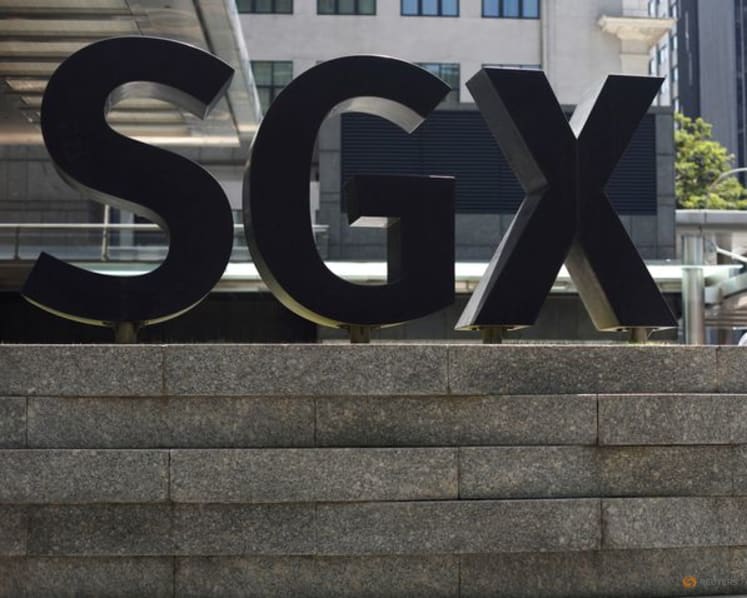
An SGX sign is pictured at the Singapore Stock Exchange. (File photo: Reuters/Edgar Su)

This audio is generated by an AI tool.


SINGAPORE: Yong Jun Han bought his first stock four years ago. It was Apple, not a local blue-chip.
Since then, the 24-year-old accounting undergrad has built a portfolio heavy on America's “Magnificent Seven” tech giants and Chinese behemoth Alibaba.
As for Singapore stocks, they get only a token allocation through an exchange-traded fund focusing on real estate investment trusts (REITs). He has no plans to venture deeper into the local market.
"The Singapore market will work for you if you want stability and dividends," he said. "But for younger investors, we don’t want that."





He is not alone. Two other young investors CNA spoke to echoed similar views – perceptions of low liquidity and "boring" stocks weighted towards traditional sectors have pushed them to invest elsewhere.
Mr David Gerald, founder-CEO of the Securities Investors Association Singapore (SIAS), said attracting younger investors is vital for the long-term health of the local bourse.
“Without new participation, liquidity may remain low which makes it harder for companies to raise capital for growth. This could reduce the appeal of Singapore,” he said.
Authorities have rolled out a litany of measures to address this. A S$5 billion (US$3.86 billion) liquidity injection programme aims to jolt the market out of its vicious cycle of poor valuations and evaporating liquidity.
Industry watchers have welcomed the move. But the question remains: Will it be enough to excite a generation that grew up trading meme stocks on Reddit?
“YOU GET THE VIBE THAT IT’S BORING”
A survey last year by SIAS and financial content platform Beansprout revealed the scale of the problem. Investors below 35 allocate just 14 per cent of their portfolios to Singapore stocks. In contrast, those above 64 dedicated 72 per cent to local equities.
Mr Gerald attributed this to perceptions that the Singapore market offers lower returns compared to others such as the US. The convenience of trading overseas and the cost are other factors.
Ms Shreeya Singh, 26, started investing a few years ago after signing up with an online broker that offered commission-free trades and free shares. The sign-up was fuss-free, the mobile app was intuitive and the trading fees were low, she said.
She has since dabbled with US tech stocks, exchange-traded funds and cryptocurrencies, flipping "risky assets" once they hit 30 per cent gains.
“It’s not a lot but it’s still profit to me,” said the sales executive, who doubts she could replicate such returns in Singapore's more stable market.

Mr Chan Yew Kiang, EY’s leader for initial public offerings in ASEAN, said mobile trading platforms have given young investors access to a buffet of options, including high-risk cryptocurrencies.
“The variety of options allows younger investors to seek suitable opportunities where risks commensurate with the returns,” he said. “Singapore’s stock market performance comparatively had not been as strong in the past few years, which made it a less attractive option.”
There's also the mindshare problem, said Interactive Brokers Singapore chief executive Lin Yujun.
“Given how the US market is big and broad, it has a lot of strong brand names that dominate the news, as well as content on YouTube, TikTok and discussions on Reddit forums.”
US tech stocks, riding a multi-year bull run, have become inescapable in the content young investors consume. By contrast, Singapore stocks get attention mostly when the news is bad.
“It’s quite rare for people to be talking about Singapore stocks, except for banks and REITs. You get the vibe that it’s boring and that doesn’t help,” said Ms Singh.
Moomoo Singapore’s chief market strategist Isaac Lim said investors under 35 – digital natives who learn and adapt quickly – tend to lean towards US equities and alternative investments.
For example, Gen Z investors take profits quickly and aren't afraid to break traditional investing rules, he added.
REFORMS UNDERWAY
To shift these perceptions, a review group set up in 2024 has proposed sweeping changes. Two measures stand out as particularly relevant for younger investors, experts said.
First, a dual listing bridge with Nasdaq is expected to launch around mid-2026, allowing companies to list simultaneously on SGX and the US exchange. This gives them access to both Singapore's investor base and America's deeper capital pools.
The initiative will "remove the dilemma" for Singapore firms weighing where to list, said Ms Ong Changqi, JP Morgan Asset Management’s ASEAN equity portfolio manager.
Interactive Brokers’ Mr Lin described it as giving companies the best of both worlds but “with less friction and at the price of one”. More importantly for young investors, it could bring high-growth companies, like tech startups, to the local bourse.
Second, cutting the board lot size from 100 to 10 units for stocks priced above S$10 is a “big catalyst” for young and new investors, said Moomoo’s Mr Lim.
Take DBS as an example. As of Jan 5, the minimum investment is about S$5,600 for 100 shares. Under the new rules, investors could start with just 10 shares for around S$560 – far more accessible for students or fresh graduates with limited savings.
WILL THAT BE ENOUGH?
SIAS’ Mr Gerald called the reforms “promising steps” and pointed to “encouraging early signs”. Average daily turnover in the third quarter rose 16 per cent year-on-year to S$1.53 billion, the highest since early 2021. IPOs raised over S$2 billion in 2025.
But the young investors CNA spoke to aren't convinced yet.
“I don’t really have that good of an understanding of the Singapore market, so I’m not sure how these measures will play out,” Mr Yong said. Many of his peers are not even aware of the changes and are still focused on other markets, he added.
Ms Chantel Ho, 24, said her understanding of local stocks is limited to blue-chips, which she invests in via a monthly plan. Despite a number of new listings in 2025, the economics major said she is unfamiliar with the names and plans to stick with what she knows.
Mr Gerald said providing better access to research is critical. The SIAS-Beansprout survey found that beginner investors rank research and expert guidance as key motivators. The enhanced Grant for Equity Market Singapore scheme, which improves research coverage for smaller companies, could help build confidence.
Moomoo’s Mr Lim said listed firms also have a role to play in how well market revitalisation efforts will pan out in the long term.
“Companies need to continue improving their fundamentals, create real business value and actively engage with investors,” he said. “This momentum is crucial as it will determine if the initial liquidity injection turns into a temporary boost or a long-term catalyst for a lively SGX.”

SGX said it believes the reforms will resonate with younger investors. Beyond growth stocks, the exchange also offers "attractive yield plays for those pursuing passive income or financial independence goals", it added.
A spokesperson pointed out that Singapore's blue-chip stocks have served as a "safe haven, supported by a strong currency and competitive returns" during volatile periods. The Straits Times Index has "quietly outperformed the S&P 500 over the past five years" and hit multiple record highs last year.
To reach digital natives, SGX has launched several initiatives, such as its first Capital Markets Conversations for students in June, which drew over 300 participants. The exchange is also working with brokers and research providers to deliver bite-sized content through infographics, videos, podcasts and social media, while partnering with financial influencers.
"Ultimately, investors are keen to invest in stocks they are familiar with, and the combined ecosystem effort with innovative engagement strategies has gained traction in raising the profile of Singapore stocks to all investors, including the younger demographic," SGX said.