







Singapore to uplift skilled trades with structured career ladders, starting with electricians
Skilled trades will remain essential in Singapore’s future economy, but the workforce is ageing, says Manpower Minister Tan See Leng.
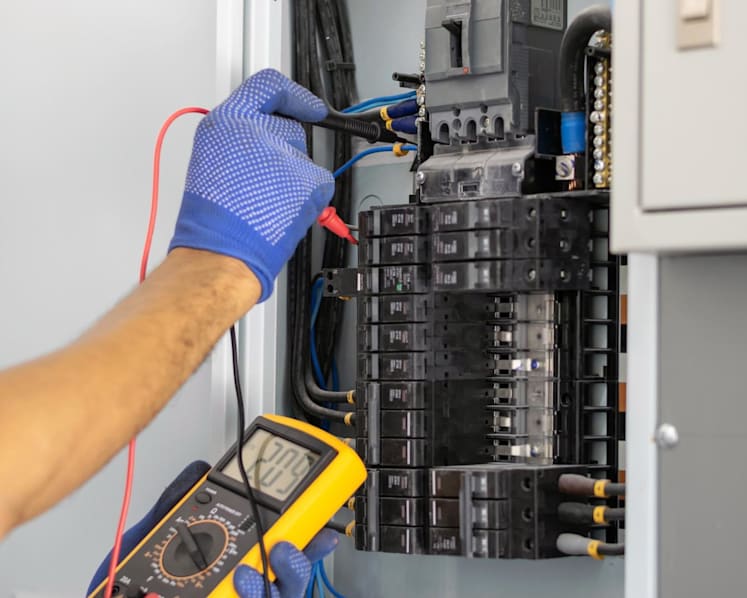
File photo of an electrician working at a control cabinet. (Photo: iStock)

This audio is generated by an AI tool.


SINGAPORE: Singapore will move to uplift skilled trades by developing initiatives for tradespeople, such as more structured career and skills progression ladders, as well as apprenticeships.
This will start with a pilot for electricians under a partnership between the Ministry of Manpower (MOM) and the Specialists Trade Alliance of Singapore (STAS), Manpower Minister Tan See Leng said on Tuesday (Mar 3).
“In the past, success in the labour market was narrowly defined by academic qualifications, linear career paths, and traditional professions,” Dr Tan told parliament.
“Increasingly, there is greater awareness that there are diverse pathways to success, and every profession deserves recognition and respect.”





He noted that Prime Minister Lawrence Wong had said inclusive growth means creating good jobs in domestic and essential services where many workers are employed.
The Economic Strategy Review has also recommended broadening the range of good jobs in Singapore’s economy.
MOM agrees that skilled trades can and should offer good job opportunities for those who prefer hands-on work that requires dedication and mastery, said Dr Tan.
“Many such trades will remain essential in our future economy. They may also be resilient, or even complementary, to automation by artificial intelligence.”
For example, electrical work will continue to be indispensable in Singapore’s transition to a green and AI-powered economy, he said.
“Yet with the workforce ageing in such trades, we need to think harder about workforce renewal and attracting more Singaporeans to join these trades,” said Dr Tan.
He said these efforts are starting with the electrical trade, given its essential role in Singapore’s future economy, deep skills content and the need to build a strong local pipeline of talent.
There are around 3,700 licensed electrical workers in Singapore, of whom about 1,400 are aged 60 and above, the Ministry of Trade and Industry said last November.
“We will learn from this to scale up our efforts to other trades,” said the minister, who was laying out MOM’s spending plans.
At a briefing for reporters, an MOM spokesperson said the ministry intends to expand the initiatives, particularly to building-related trades covered by STAS.
STAS is an industry body for specialist contractors and suppliers in the building and construction sector. Its members include associations for air-conditioning, lifts and escalators, furniture, plumbing and other trades.
Asked whether this is a response to job disruption caused by AI, the spokesperson said MOM’s analysis and international analyses clearly showed that skilled trades have lower exposure to and risk of substitution by AI.
But the focus on skilled trades is not because it is a “safe harbour” from AI. Instead, the impetus is to create more diverse pathways where people can succeed in their careers, said the spokesperson.
In January’s midterm update on the Economic Strategy Review, the committees recommended boosting efforts to “uplift and transform jobs in sectors that may be more resilient to global shifts and offer opportunities for quality employment”.
They cited skilled trades such as technicians, as well as jobs in care and social services.
Better career progression and recognition for skilled trades have come under discussion in the past.
Then-Deputy Prime Minister Lawrence Wong said in 2022 that the economy places insufficient value on technical roles that tend to be more hands-on, as well as service and community care roles that tend to be more “heart” work.
He said there was a need to strengthen multiple pathways of progression to help people with different strengths and talents flourish.
In a parliamentary reply last November, MOM said it was also working with skilled trades associations to encourage a fair reward to tradespeople who have deepened their skills to provide high-quality services.
The ministry also said at the time that it was not setting wage growth targets for the professionalisation of skilled trades, and would monitor wages closely to ensure they rise in line with the quality of services rendered.
NEW STATUTORY BOARD
MOM also said that the new statutory board formed from the merger of Workforce Singapore and SkillsFuture Singapore will be called Workforce and Skills Singapore (WSSG).
WSSG will be established in the third quarter of 2026, said Dr Tan. The new statutory board will be under MOM, and jointly overseen with the Ministry of Education.
Workforce Singapore’s current chief executive, Ms Dilys Boey, will head the new statutory board.
By combining the data and capabilities of both organisations, WSSG can give workers a clearer picture of where opportunities are, and help employers reduce skills mismatches and the time taken to move a candidate through the hiring process, said Dr Tan.





