







New digital signs at Serangoon MRT station aim to ease commuter confusion during train breakdowns
The initiative follows recommendations by the Rail Reliability Taskforce, which called for stronger standard operating procedures to manage service disruptions.
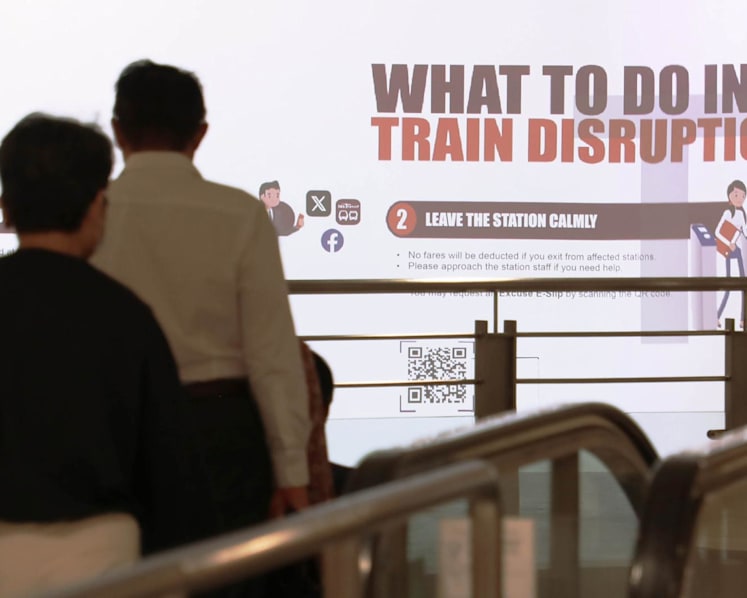
Display showing instructions on the steps to take in the event of a train disruption, at Serangoon MRT on Jan 22, 2026. (Photo: CNA/Alyssa Tan)

This audio is generated by an AI tool.


SINGAPORE: During train disruptions, station staff typically scramble to manually put up signs, direct commuters and activate blinking lights at bus stops for free bridging buses.
That strain on manpower could soon be eased. A new trial at Serangoon MRT station uses digital signage and automation to better guide commuters to alternative travel options during rail breakdowns.
Under the trial, digital displays within the station will show the colour-coded status of all rail lines, allowing commuters to check service conditions before starting their journeys.
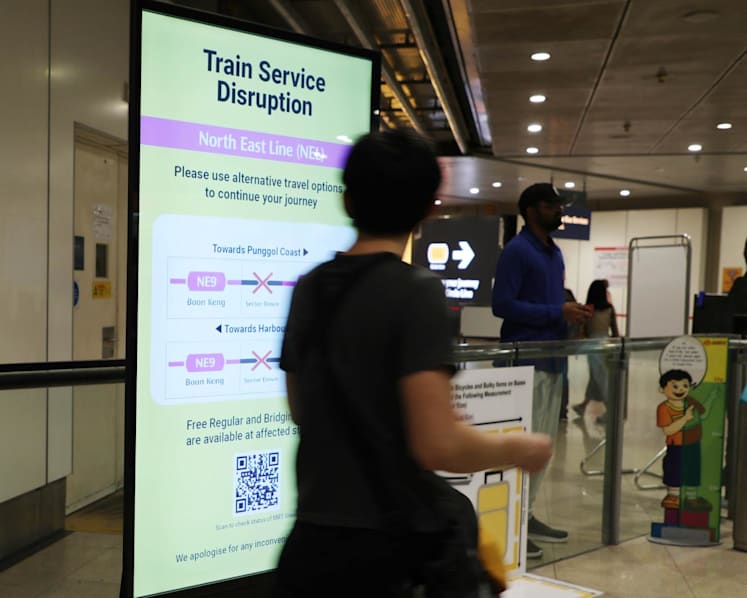
More screens have been installed at fare gate areas, linkways and passenger service centres. During a disruption, advertisements on these screens will be switched to show information alerting commuters of the fault, and directions to bridging buses.





This is so station staff can then turn their focus to other tasks, such as assisting vulnerable commuters, said the Land Transport Authority (LTA).
The measures are being trialled on the North East Line and Circle Line at Serangoon station, with plans to expand them to other stations. Before that happens, commuters at Serangoon will be consulted to refine the new processes.
The initiative follows recommendations by the Rail Reliability Taskforce, which called for stronger standard operating procedures to manage service disruptions on the ground and enable quicker, more effective recovery.
“This includes the need for stronger contingency planning, improved alternative travel options for commuters and clear, commuter-centric communications during service disruptions,” the LTA, SMRT and SBS Transit said in a joint statement on Saturday (Jan 24).
The media were invited on Thursday to observe the new system, which was installed in December.
During disruptions, smaller screens within the station will show flashing arrows to guide commuters towards alternative transport options, such as free bus boarding points.
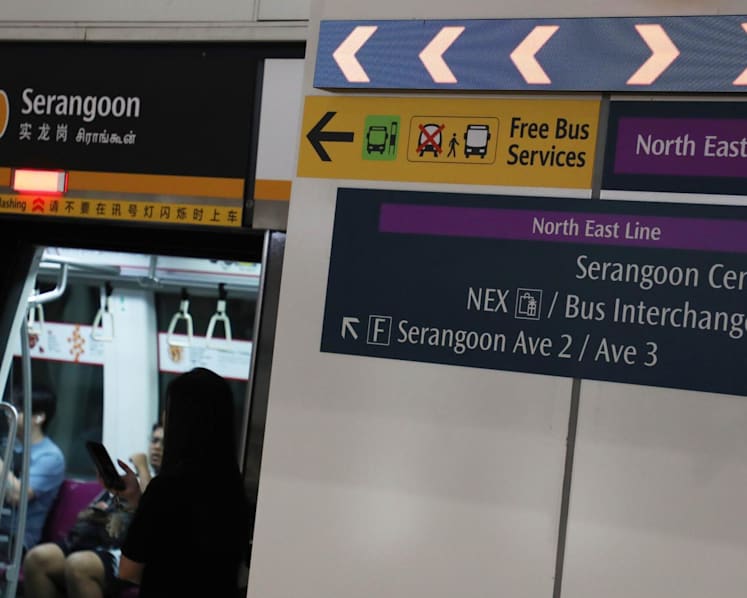
At those boarding points, flashing lights can now be switched on remotely from the station. Previously, staff had to activate the lights manually at each location.
QR codes have also been placed inside train cars and around gangways, allowing commuters to access live service updates quickly during train faults.
Serangoon station was at the centre of a three-hour North East Line disruption last August, which affected services between Farrer Park and Punggol Coast.
Some of the new signs - guiding commuters to shuttle buses - have already been activated in the ongoing three-month planned service disruption on the Circle Line.
“LTA will continue working closely with public transport operators to refine our incident management processes,” the agency said.
“By integrating technology and ground-level enhancements, we aim to better support commuters with timely information and clearer guidance on alternative travel options, to enable a smoother recovery during disruptions.”




