IN FOCUS: The Lions took Singapore to the Asian Cup – now comes the hard part
CNA looks at what needs to be done to ensure the Lions' milestone qualification does not become a flash in the pan.
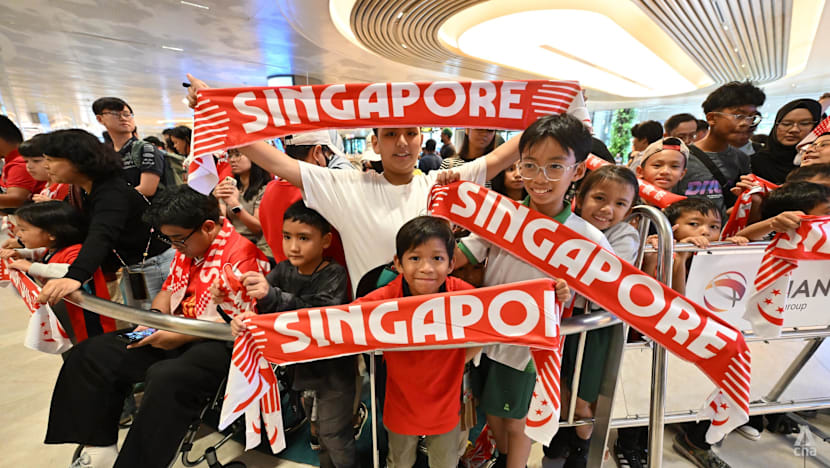
Lions supporters showing their support as they welcome the footballers back at Singapore’s Changi Airport Terminal 2, on Nov 19, 2025. (Photo: CNA/Jeremy Long)

This audio is generated by an AI tool.


SINGAPORE: It was a result that reverberated across the island – for all the right reasons.
At watch parties in Our Tampines Hub and Bishan Community Club, fans erupted as the Lions clawed back from the brink – first with a Shawal Anuar equaliser, then a dramatic Ilhan Fandi winner minutes later.
Thousands of kilometres away in the rafters of Hong Kong's Kai Tak Stadium, a defiant band of away fans roared Singapore to a historic win. The Lions had qualified on merit for the Asian Cup for the first time.
When the full-time whistle blew, tears streamed down faces, including that of 49-year-old Alvin Tan.
"It was a huge sense of relief that finally we did it somehow," said Mr Tan, a member of the Lions' die-hard supporters club SingaBrigade. "(I cried) for a good 15 minutes."
For Mr Tan, who has backed the Lions for a decade, the win felt like a personal triumph.
"At that point of time I was enjoying the moment. But the next day I started thinking about what's next. How are we going to keep the momentum going?"
Mr Tan, a senior advisor for trade associations, has cheered the Singapore squad in the good times and the bad. He has seen it all before – big wins followed by crushing defeats, or momentum that fizzles out into disappointment.
Now, after a deserved homecoming and the timely appointment of Gavin Lee as permanent head coach, players, coaches, analysts and fans like Mr Tan say the real work begins.
Football Association of Singapore (FAS) deputy president Desmond Ong said this is "more than just a moment of celebration".
"It’s an opportunity to inspire a new generation of players, attract more supporters to our domestic league, and showcase Singapore football on a regional stage. The energy around the national team now gives us a unique platform to grow the game, both on and off the pitch," said Mr Ong.
CNA spoke to those in and around the game to find out what must be done to ensure that the breakthrough in Hong Kong isn’t just a flash in the pan.


IMPROVING YOUTH DEVELOPMENT
If the Lions' Asian Cup berth is to mean more than just a one-off success, Singapore must first build a stronger pipeline of talent coming through the football ranks, said those who spoke to CNA.
But recent results at the youth level have raised concerns.
Singapore's U-22 men's football team finished plum last in their Asian Football Confederation (AFC) Under-23 Asian Cup qualifying group in September, losing all three games: 1-2 to Yemen, 0-1 to Vietnam and 1-4 to Bangladesh.
They also lost five of their matches in the Singapore Premier League (SPL) between September and October.
In their qualifying campaign for the U-17 Asian Cup, Singapore lost 1-2 to Malaysia, 0-6 to Vietnam and drew 1-1 with Hong Kong and Macau. The team's only victory came via a late goal against the Northern Mariana Islands.
"I've been worried about Singapore football for quite a long time - about the youth development and also the quality of players coming through," said football commentator Khidhir Khamis.
While results sometimes don't "tell the whole story", there is a "correlation" between the success of a nation's senior team and its youth sides, added former player Rhysh Roshan Rai.

"It can be a precursor to what we'll see down the road. Because with national teams for example, normally if you're getting good results (at the youth level), then you tend to see these players stepping up into the senior level and also being able to produce at that level," he explained.
'The challenge is not that we produce the best players in our system. The challenge is now how do we produce them in such a way that they are at an international level ... that they can compete with not just teams in our region but teams in Asian overall."
Ability is not the issue, said former Balestier Khalsa coach Peter de Roo, who also previously held roles as technical director in Australia’s FFA Centre of Excellence and the Football Association of Malaysia.
"Talent is not defined by where you are born or which month you are born. But to develop talent into potential, you need talent and attitude, but then you need the opportunities," he continued.
Yet, the opportunities in Singapore "have not been the way they should be", said Mr de Roo, adding that there is a need for greater opportunities in coach education as well as creating the right competitive environment for players.
Youth development challenges have long been recognised, with the Unleash the Roar (UTR) project four years ago to address them. UTR is a national movement that involves both FAS and the Singapore Government to uplift the state of football in the country.
Since then, UTR has launched a number of initiatives, including the Singapore Youth League (SYL), an overseas football scholarship programme and the official opening of the Kallang Football Hub for elite youth and senior players.
Launched last year, the SYL now sees nearly 6,000 mostly Singaporean children across 12 age groups playing around 30 matches annually.
Top junior performers will then be invited to join the Junior National Development Centre (JNDC), with their older counterparts invited to the National Development Centre (NDC), and the best from the NDC offered overseas scholarships and training stints.
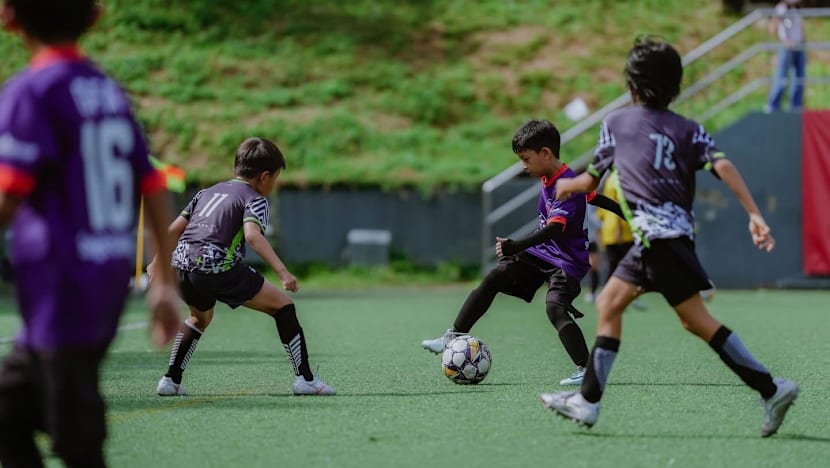
Responding to CNA's queries, UTR co-chair Toh Boon Yi said that initiatives put in place to "rejuvenate" the youth system and build a strong talent pipeline with a "clear youth development pathway" will take time.
"The SYL is only in its second year and the JNDC and NDC in their third year," he added.
"It will be between six to eight years before our first batches of JNDC players from 2023, who have been in the new system from day one, reach the age of 15-16 and compete in AFC (Asian Football Confederation) or FIFA-sanctioned competitions."
Most agreed the UTR project deserves time to bear fruit.
"The jury's still out," said Mr Rai. "In terms of UTR, SFA and things like that, it probably needs a bit more time. But those things need to be supported a lot more in terms of being able to attract talent, with things like coaching, with things like players - being able to develop them and playing more games at a higher level."
"You've got to start somewhere. And I think it was a good start, and hopefully it gets continued," Mr de Roo said of the SYL.
That includes exposing players to tougher opponents and matches. "We will send more of our youth teams overseas to test them regularly against strong opposition, while we work with like-minded partners to increase the levels of training and matches in our ecosystem," said UTR's Mr Toh.
As part of plans to improve coaching standards, UTR has sent coaches on attachments to Japanese pro clubs and it will be continuing efforts to give coaches more exposure to "one of the strongest" coaching ecosystems in Asia, he added.
There must also be a sense of unity and continuity in the execution of programmes, said Mr Khidhir. "The direction of it must be unified," he added.

One positive observation – whether or not the youth football teams are doing well – is that football still excites the next generation, said a SPL player who spoke on condition of anonymity.
"A lot of kids want to make it (as a footballer), football is still a big part of their life," he said, adding that parents are also more supportive of professional football as a career path than before.
"Some are so committed that they will send them to training every week. They wait all the way till the training ends, not just (drop them off) and go," he said.
"Some will even bring equipment to video their kids to analyse (their performance) after that."
IMPROVING THE DOMESTIC LEAGUE
As authorities work to widen Singapore's footballing base, more must be done strengthen the summit – its domestic league, said those who spoke to CNA.
Earlier this year, FAS announced structural changes, including a second-tier feeder league known as SPL2.
FAS said SPL2 offers a "structured platform" for emerging talent to compete in a "high-performance setting", as well as a "clear link" between development and first-team football, with squads integrated across both competitions.
"This structure aligns with both club needs and national development goals by expanding the base of competitive opportunities while keeping quality and progression at the forefront," it added.
But a gap still exists in the elite development pathway between the U-17 league and the SPL2. Some aspiring players still risk falling out of the system, while others find the jump too difficult, the player told CNA.
"If you don't make it to SPL2, there's nowhere else for you to go," he said. "A lot fall through the cracks because of this big gulf in age groups. They can't make the step up, but they are actually good - you just need to give them time."
CNA understands that there are plans to introduce a U-19 league next year to bridge that gap.
Mr R Vengadasalam, a former general manager of Woodlands Wellington FC, suggested expanding the SPL to provide more opportunities to young local players.
"A lot of ... are good players drift out of the system because there are too few clubs," added Mr Vengadasalam, who now runs youth club Woodlands Lions FC.
"With eight clubs, how many players can you accommodate? Where are the rest of the players going?"

One perennial issue for aspiring players at that age is the competing commitments and priorities. Youths have to think about their families, their own education, their ambitions outside of football, as well as financial concerns.
The simple fact is that youngsters in the SPL2 are not paid much, said the SPL footballer who declined to be named. Aside from their other commitments, money could be a reason they call time on their footballing careers, he said.
Agreeing, Mr Rai said youths need to be able to see the SPL as a way to ascend to greater heights.
"They must see that there's a pathway for them to go into the SPL to develop, go and play senior football, make a good living, a good wage, and maybe even use the league as a stepping stone to other competitions across Asia," added Mr Rai.
Beyond structure, others pointed to a more fundamental concern: footballing quality.
Earlier this year, FAS announced a series of changes as part of "ongoing efforts" to "raise the overall standard" of the SPL while supporting long-term national team objectives.
One of the changes allowed SPL clubs to field seven foreign players on the pitch simultaneously, as part of a move to "enhance the quality" of competition by introducing higher levels of "tactical and technical play".
However, this in turn means less opportunities for local footballers. "Some foreigners that I see are not even better than locals but they are playing just because they are foreigners," said the player.
Mr Khidhir said that while allowing seven foreigners may be reasonable as a stopgap, the number needs to be pared down gradually.
What Singapore can do now is to develop young players, make sure they’re ready for the SPL in four or five years, reduce the number of foreigners, and integrate local talent when they are ready, he added.
On this note, FAS' Mr Ong said the association will continue to ensure adequate game time for local players.
Said the FAS deputy president: "We will also ensure development pathways remain clear for Singaporean players to grow."
While clubs such as Lion City Sailors (LCS) and BG Tampines Rovers have set the bar high, it remains to be seen whether the league has truly improved over the years, said some who spoke to CNA.
The Sailors made local history last season as they reached the finals of the AFC Champions League Two (ACL2) final. In this season's edition of the tournament, BG Tampines have booked their spot in the round of 16.
"(If you look at) average quality of the clubs, I think we have not really improved," said the SPL player. "What LCS has done is something good, but the thing is, that is only LCS, the rest of the league are still lagging behind."
Blogger Ko Po Hui, who has covered local football for close to three decades, said: "While both Lion City Sailors and BG Tampines Rovers have shown what they are capable of in the continental tournament(s) of late, it cannot hide the fact that the SPL still needs to work hard to improve its quality on various aspects like intensity and competitiveness."
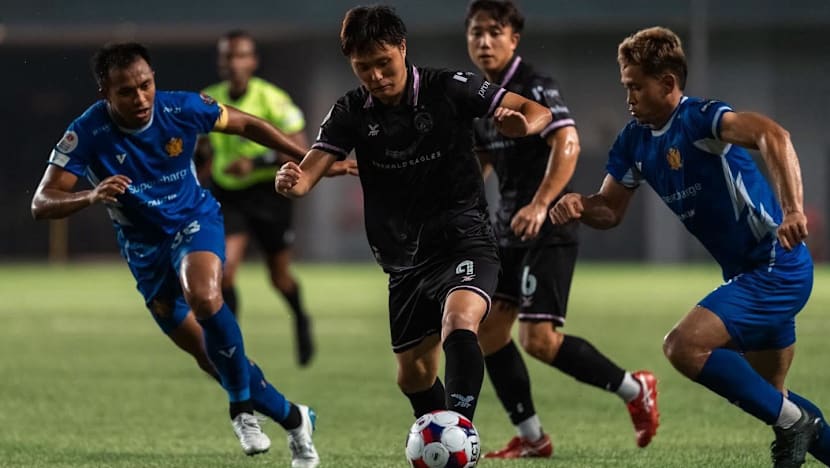
"We are still not one of the best leagues in Asia," said the SPL player who declined to be named. "We have a lot of things to catch up on."
EARNING MONEY, GAINING FANS
Football remains Singapore's most well-funded sport. But many who spoke to CNA say it could still use more resources, as well as better ways to deploy them.
"The numbers that are in Singapore football look large on paper ... However, the actual reality is a lot of the funding is not actually going necessarily into programmes and grassroots football and things like that," said Deloitte Southeast Asia’s sports business group leader James Walton.
Instead, a significant chunk of the FAS' expenses go into the SPL, Mr Walton pointed out.
The FAS' annual report for the year ended March 2025 stated that it generated about S$36.8 million (US$28.3 million) in revenue, with about S$20.7 million spent on the domestic league.
"(If) the amount of money the Football Association was receiving and distributing was purely going into programmes, coaching, national team, youth team, development facilities, you'd be in a really good position," added Mr Walton.
One potential solution to free up resources is the privatisation of the SPL. But aside from billionaire Forrest Li, the founder of Sea Group, owner of Lion City Sailors and now the FAS president, few individuals or companies have stepped forward as potential investors.
"So if you did try to privatise tomorrow, would you even find people and what would that model be?" asked Mr Walton.
The lack of corporate sponsors have also encumbered local football, as it has done for many other sports here.
The FAS' annual report for the year ended March 2025 stated that it received about S$28.9 million of public funding from Sport Singapore. This accounted for about 78.5 per cent of its total revenue.
In contrast, it received only S$1.38 million in sponsorship funding, which represents about 3.75 per cent of total revenue.


"There's no way you can run away from the fact that you need money to come into the game, and you need serious money to come into the game," said Mr Rai.
Where sports sponsorships in countries like England and France are "purely commercial" decisions, this is not the case in Singapore, added Mr Walton.
"Because we're such a small nation and because the value for money in the commercial side isn't always there, a lot of the time, a lot of these sponsorship decisions are in part based on access," he said.
"How it brings me into the circle and how it positions me and my organisation is a part of it."
But it is not all doom and gloom. Mr Li, the FAS president, has shown a willingness to lead from the front, observers said.
At a press conference announcing Lee's appointment last week, he revealed that the S$2 million bonus the Lions received for Asian Cup qualification came out of his own pocket.
FAS' Mr Ong said this payout reflects FAS' willingness to reward achievement and invest in success.
More importantly, the Lions' recent feat provides just the chance to get corporates on board, said Mr Walton.
"The reality of football is, other than during the Olympics, football will always be the back page news," he said.
Mr Ko added: "The qualifying for the Asian Cup is a timely catalyst to lift Singapore football out of the doldrums ... The FAS leadership must be aware this is a rare godsend opportunity they have to capitalise on."
That opportunity appears to be recognised by the FAS.
Its deputy president Mr Ong told CNA that the "success narrative" of Singapore on the international stage helps raise football's prestige and makes it more appealing for corporate partnerships.
At a press conference on Gavin Lee's promotion as permanent head coach last week, Mr Li said: "Whoever cares about Singapore, cares about Singapore football, if you have resources, if (you are a) big corporation, I hope you can come in to contribute. And I will make sure as president of FAS, every single dollar will be well spent, it will not be wasted."
“If you do feel our national team is (doing) great, bringing you happiness, bringing you pride, please find a way to contribute.”
Referring to Mr Li's call for sponsors, Mr Walton said: "If Forrest is the one that walks out there, and goes to his fellow business leaders - and he knows a lot of them - and says: 'Can you contribute?' Honestly, he has that soft power that can make it happen."
In the press conference, Mr Li also said the FAS has received many enquiries on potential collaboration following the Lions' qualification.
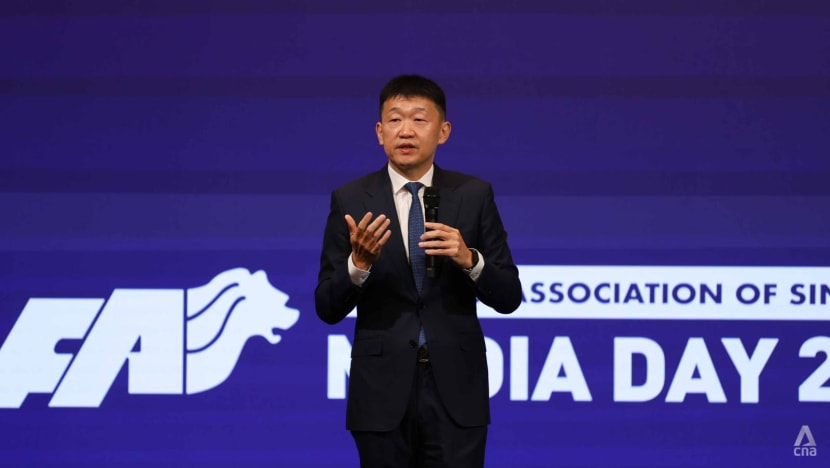
“We get a lot of e-mails saying: ‘We want to contribute, what is your bank account?’... and ‘How can we contribute in whatever (way) we can?’. That is what we hope (for) and that is what we’re going to work on,” said the FAS president.
But it is not just about the money, said Mr de Roo. "If you don't have money, you need to work harder, be smarter and do better," he added. "Of course, it (money) makes a difference. But money without a proper plan means nothing."
That surge in interest also presents a chance to win over new fans, including those who only watch football casually, said supporters.
"Everybody is talking about the game, everybody is talking about the national team," added Lions and BG Tampines Rovers fan Pang Jia Tai. "It would be a good chance to get more people engaged."
To this, Mr Pang suggested offering one free entry for a Singapore Cup match to ride the momentum and court new fans. Another form of publicity could be for clubs to spotlight players who were part of the Asian Cup squad, added Mr Tan.
Mr Toh said that UTR and FAS are exploring initiatives such as community outreach programmes to schools, community screenings of Lions matches and opportunities to catch national training sessions.
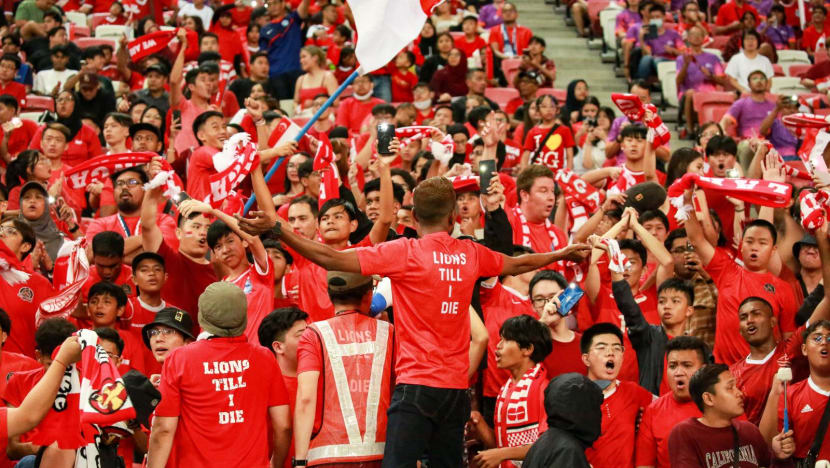
"People still love football. But they fall out of love with local football. This is your moment to fix it," said Mr de Roo.
"We like football, but I don't know if we like local football," Mr Rai added.
"I don't know if we love ourselves, our sport enough to really want to support it, to really come down to the grounds, and even when the product is not great, to actually come and watch and be in the stands and say: 'This is our game. This is our league.'"
Ultimately, for that historic night in Hong Kong not to be remembered as a one-off, stakeholders must be clear-eyed about the challenges ahead.
After all, qualification for the Asian Cup is by no means an indication that Singapore has arrived.
"I understand (the euphoria). That is good because that's exactly what Singapore football needs. At the same time, the danger is then people think: 'Hang on, it's fixed'," said Mr de Roo.
UTR's Mr Toh echoed the caution. "The path to football excellence is not something one party can do alone, as evidently seen in examples of more established football ecosystems," he said.
The FAS deputy president Mr Ong added that the achievement in Hong Kong is the start of a new chapter and not the finish line. FAS' reforms, the commitment of our players and clubs, and the growing interest from fans and partners are all building blocks for lasting growth, he said.
"We ask our supporters to continue cheering for our teams, attend matches and engage with football at every level," said Mr Ong. "Together, with trust, patience, and support, we can turn this momentum into a sustainable, thriving football culture in Singapore — one that inspires pride today and builds a foundation for the future."
On this point, Mr Rai said it is encouraging that the people in charge of the local football scene do not actually believe that all is well.
"They will be well aware of what the challenges are, they will be well aware of what they need to do ... so hopefully they are able to get the job done in that regard."
As for Mr Tan, the SingaBrigade diehard, he remains hopeful because this moment is a pivotal time in the history of Singapore football.
"I have a friend who is not a diehard like me, he's more of a casual fan," he said. "But he's already telling me that he's saving up for Saudi (Arabia)."