I knew beating cancer would be tough. What I didn't expect was the crippling loss of identity as I returned to work
Following a gruelling battle with leukaemia, former physics teacher Jamin Jeow struggled with fear, identity loss and uncertainty as he realised the work he needed to put in before he could re-enter the workplace.
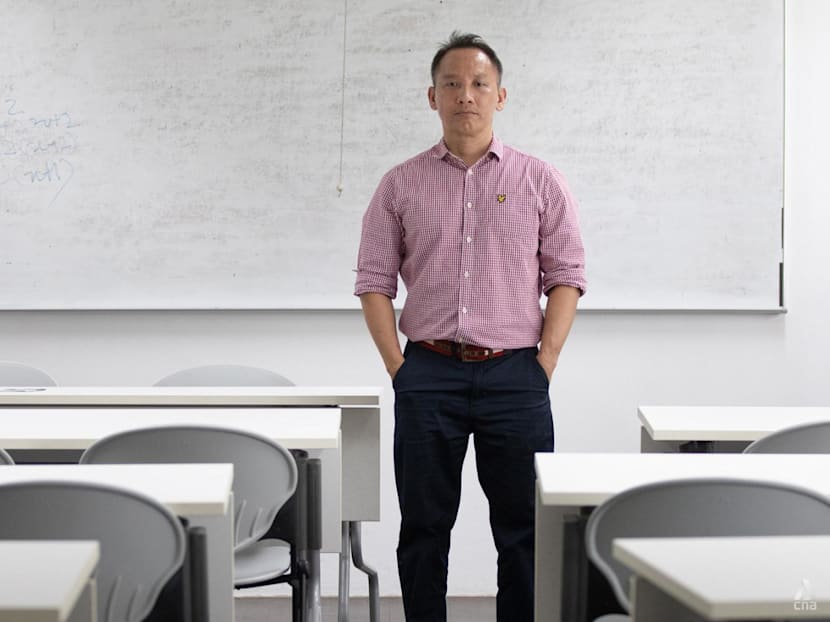
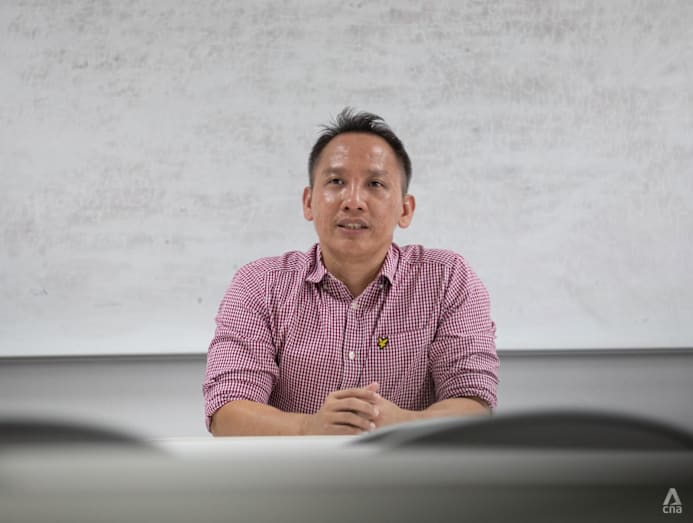
After a year battling cancer, Mr Jamin Jeow returned to work as a career counsellor at Anglo-Chinese School (Independent) with the help of many around him. (Photo: CNA/Mak Jia Kee)

This audio is generated by an AI tool.
In November 2024, after more than a year of fighting leukaemia, my oncologist gave me the all clear to return to work.
I knew the first thing I should have felt was relief, but instead, another unsettling feeling crept up and took me by surprise: fear.
I had spent months in hospitals and treatment wards, fighting to survive. Now I was stepping back into a world that had, in my absence, come to feel unfamiliar.
Many questions weighed heavily on me: Could I still do the work I once did confidently? Would colleagues see me the same way?





After everything my body had been through, did I still belong there?
THE DIAGNOSIS THAT CHANGED MY LIFE
In October 2023, when I was 47, I was diagnosed with high-risk myelodysplastic syndrome that was transforming into acute myeloid leukaemia.
Doctors told me I might have nine months or less to live without a bone marrow transplant.
The news was surreal. One moment I was living an ordinary life – exercising regularly, keeping fit, going about my daily routine – and the next I was confronting the possibility that my life might soon end.
My mind went straight to my family. My wife and I had been planning for early retirement at 55. Could that still proceed as planned?
My sons were 16 and 18 then, both at the point of making major academic decisions. Would I still be around to guide them? Had I shaped enough of their moral compass?
That same evening, I broke the news to my family over dinner. Everyone was incredulous.

I had been fit and strong right up to that point. I went running with my boys twice a week, taking them to the gym for strength training afterwards. None of us had seen it coming.
What followed were months of hospital stays, treatment and preparation for a bone marrow transplant at Singapore General Hospital (SGH), where its haematology wards became a strange kind of "home" to me over time.
Against the odds, a fully matched, unrelated donor was found locally through the bone marrow donor programme, and the transplant saved my life.
A CRIPPLING SENSE OF IDENTITY LOSS
By October 2024, exactly one year after my diagnosis, I was in remission. However, physically and psychologically, recovery took much longer.
The intensive chemotherapy that I had before the transplant, followed by two years of maintenance chemo, left me with neuropathy and made rebuilding my strength and stamina a slow, grinding process.
Neuropathy is a condition caused by nerve damage that leads to pain, weakness, numbness or tingling in one or more parts of your body. In my case, I felt it acutely in my limbs.
Even as my body slowly healed, my confidence did not immediately return.
The next month, I was given the green light to return to work. However, I found that the idea of stepping back into professional life filled me with uncertainty – the kind that has more to do with my identity than with my capabilities.
Before cancer, I had been a physics teacher and head of department at Anglo-Chinese School (Independent), or ACS(I). But after months away from work, I found myself wondering whether the person who once carried those responsibilities still existed.
Psychologically, I was dealing with a sense of identity loss that was unexpectedly crippling, one that came from no longer being sure about who I was, or whether my work in education had defined me more than I knew.
Could I still operate at the same level I used to? Did I even want to do it? How would my colleagues see me?
RETURNING TO WORK REQUIRED SELF WORK
The emotions, as I would later learn, were not mine alone.
A 2025 study from the Singapore Cancer Society (SCS) showed that nearly one in two cancer survivors experience anxiety about returning to work, and only around a quarter rate their post-treatment work capacity as near their lifetime best.
Knowing that returning to work would not be easy, I sought support through the society's return to work programme, which connected me with social workers, physical rehabilitation therapists, and an occupational therapist, who helped me manage my energy for a full-time workload.
This included formulating a sleep routine and desk-bound exercises to manage my neuropathy.
Out of the many battles I had to fight, the toughest one was for my mental health.
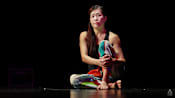
I started seeing a psychologist, and during my visits, I came to terms with the fact that I had been in perpetual firefighting mode since my diagnosis. I had been entirely focused on survival, with no space to process what was happening to me emotionally.
The very first session helped thaw my emotions. I had to learn to let go of my emotional baggage. The therapy work was hard, as there is no miracle pill or shortcut for the grief to dissipate – only intentional thinking and doing, session after session.
What helped speed up the process, unexpectedly, was when I had the chance to speak at an SCS workshop on cancer inclusivity in the workplace.
Sharing my story with an audience that included employers allowed me to channel my grief into a productive outlet, and in doing so, my sense of identity gradually shifted from survivor to advocate.
CHANGES THAT MADE A DIFFERENCE
When I returned to ACS(I), I stepped away from my previous role in the classroom and moved into a new position in career counselling, a field where I had little prior institutional knowledge.
In many ways, it felt like starting over.
But what kept me going was a simple motivation: I still cared deeply about my students and wanted to continue supporting them in their journey beyond the classroom.
Some of the students I now advise want to be doctors, and I am able to draw on my medical journey to impress upon them the need to treat the patient and not just the disease – to hold both data-driven medical care and compassion in the same hand.
The empathy I see in my students' eyes and their eventual acceptance of medicine as a calling, give me immense satisfaction, something I did not expect to find again after what I've gone through.
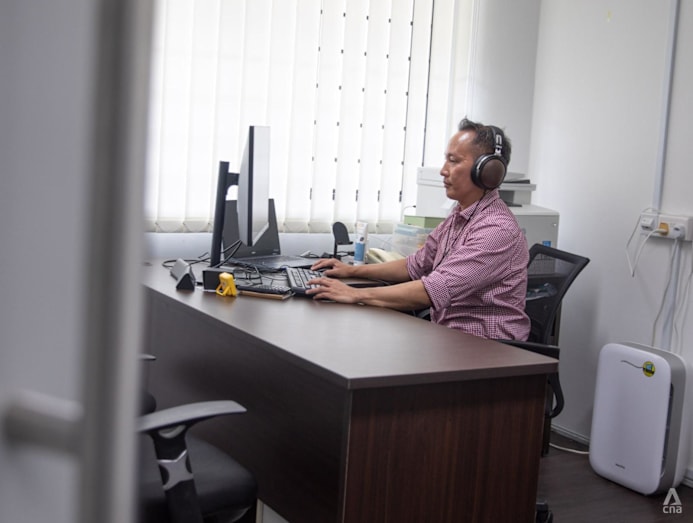
This transition would not have been possible without the support of my school's leadership.
While I was still recovering, the senior administration at ACS(I) reshaped my role so I could return in a way that matched my abilities – arranging a desk-bound role, seeing students in small groups instead of a classroom, with the flexibility to work from home on days when treatment or follow-up checks were required.
The support didn't stop there, but kept coming in from every level.
The estate team kept my office clean since my immune system was still compromised. The canteen staff prepared freshly cooked meals upon my request without complaint.
My immediate colleagues guided me in my new role and helped me draw on my classroom experience to shape my approach to this new work.
My principal, Mr Arene Koh, stayed in regular contact during my recovery and checked in on me often. My supervisors, deputy principals Dr Andrew Yong and Mr Terence Chiew, vouched for my abilities to enter the new role and reassured me that they believed in what I could still contribute, even if the path forward looked different from before.
It was compassion wrapped in dignity by my leaders and colleagues, and I couldn't have asked for more.
Those small gestures made a world of difference. Slowly, little by little, things began to fall into place again.
IT TAKES A COMMUNITY TO RESTORE A LIFE
Returning to work after cancer is not something anyone can or should do alone.
For me, it involved the dedication of doctors and nurses at SGH, the support of the SCS and its return-to-work programme, and the understanding and flexibility of my employer and colleagues.
Each played a part in helping me rebuild a life that once seemed lost.
As cancer survival rates improve, more people will find themselves in the position I once faced: recovering medically, but unsure how to rebuild their professional lives.
What makes the difference is not always grand gestures. Often, it is small acts of understanding, flexibility, encouragement, and the belief that everyone still has something meaningful to contribute.
We often say it takes a village to raise a child. What coming back from cancer has taught me is that it takes a community to restore a man.
Jamin Jeow is a cancer survivor and a career counsellor at Anglo-Chinese School (Independent).