







CNA Explains: How the Houthis could threaten the Red Sea and shape the Iran war
Given the disruptions in the Strait of Hormuz, the Red Sea has been an alternative route for Saudi Arabia to transport crude to Asia.
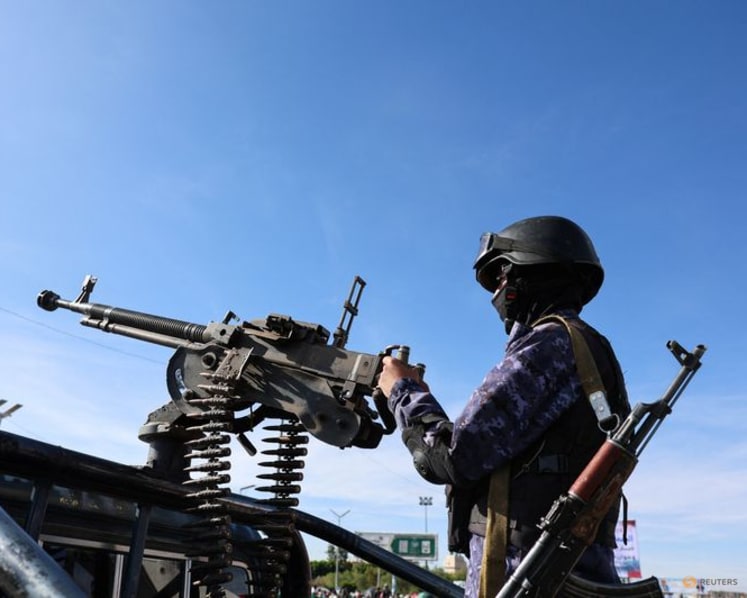
A Houthi police trooper mans a machine gun mounted on a patrol vehicle at the site of a rally in solidarity with Iran, as the US-Israeli conflict with Iran continues, in Sanaa, Yemen on Mar 27, 2026. (Photo: Reuters/Khaled Abdullah)

This audio is generated by an AI tool.


SINGAPORE: Yemen's Iran-aligned Houthi rebels opened a new front in the war on Iran on Saturday (Mar 28) after launching their first attacks on Israel in this conflict.
While the strikes themselves were limited, the significance lies in what could follow.
The Houthis could potentially disrupt shipping through the Red Sea, as they did at the height of Israel's war on Gaza.
This could further destabilise global energy and shipping flows already strained by Iran’s effective closure of the Strait of Hormuz.
Who are the Houthis?
The Houthis are an armed movement that controls much of Yemen, including the capital Sanaa. Since 2014, they have fought a civil war against the internationally recognised government that is backed by a Saudi-led coalition.
The Houthis are designated a terrorist group by the United States and the European Union.
Backed by Iran, Houthi rebels have a track record of striking targets well beyond Yemen and are said to have received military training from Iran.
They are also no strangers to conflict with Israel and the US.
During Israel's war against Hamas in Gaza, the Houthis attacked shipping in the Red Sea and the Gulf of Aden in what they said was solidarity with Palestinians, forcing vessels to reroute and driving up global shipping costs.
A US-led effort to deter those strikes culminated in a ceasefire deal, although the Houthis did not rule out further attacks on Israeli vessels.
The commander of the foreign operations branch of Iran's Revolutionary Guards issued a rare message on Monday, hailing Iranian proxy groups, including Hezbollah and the Houthis, for their actions against Israel.
"Get used to the new regional order," said Esmail Qaani.


What damage could come next?
The Houthis’ strategic advantage lies in geography.
From their mountain strongholds above the Red Sea, the Houthis have shown they can disrupt one of the world's busiest shipping corridors using drones and missiles.
The Red Sea handles about 15 per cent of global maritime traffic and is a key link between Europe and Asia.
During the Gaza war, their attacks drove vessels away from the Bab el-Mandeb strait, a narrow waterway at the southern tip of the Red Sea that serves as the gateway to the Suez Canal from the Indian Ocean.
A sustained disruption now would be far more damaging.
With the Strait of Hormuz already constrained, any move to threaten the Red Sea would squeeze global energy flows from both sides of the Arabian Peninsula.
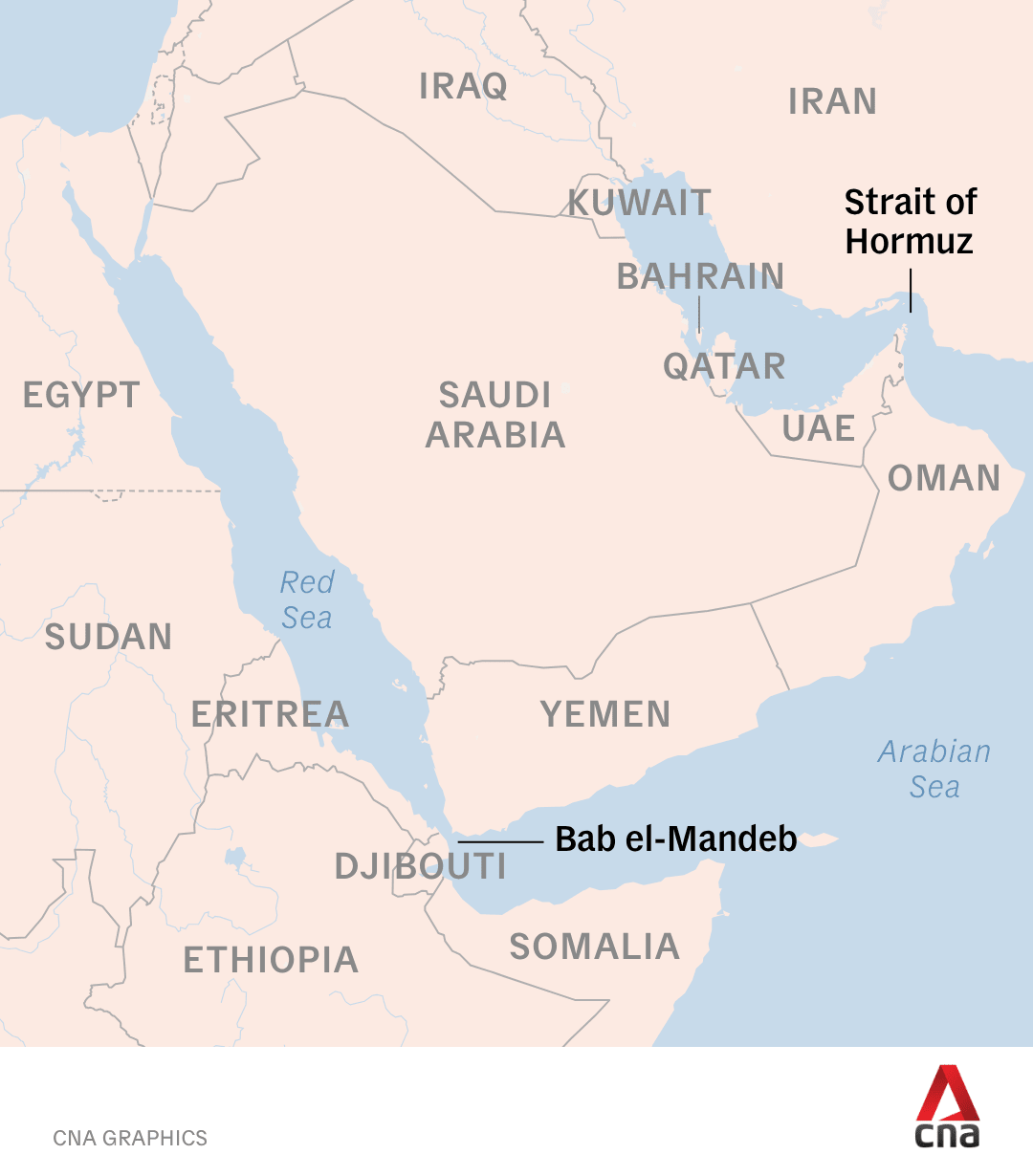
Associate Professor Goh Puay Guan from the National University of Singapore Business School said that ships could be forced to make a lengthy detour around the Cape of Good Hope in South Africa, as they did when the Suez Canal was blocked by the massive Ever Given ship, as well as during the Israel-Hamas war.
"In both cases, these led to higher freight costs and also shipping delays," Assoc Prof Goh noted.
"A longer, sustained disruption would have a much higher and broader economic impact than a shorter-term disruption and spike in prices," he added.
"Already, we are seeing various governments having to react to the higher prices, and there would likely have to be more policy interventions."
How could it impact energy prices?
Energy markets are already bracing. Analysts estimate oil prices could rise by US$5 to US$10 per barrel if the Bab el-Mandeb is effectively closed.
The Houthis have proven to be "remarkably effective" at disrupting shipping flows in the Red Sea, noted June Goh, senior oil market analyst at Sparta Commodities.
Ms Goh noted that at the height of the disruption in 2024, when the Houthis systematically targeted ships sailing through Bab el-Mandeb, oil flows were significantly reduced, and tanker rates surged as shippers rerouted their cargoes.
Any attempts at disruption in the current climate will be "catastrophic to the crude and product supply out of the region", said Ms Goh.
Saudi Arabia may ultimately face the hardest choices.
Given the disruptions in the Strait of Hormuz, the Red Sea has been an alternative route for the kingdom to transport crude to Asia.
If the Houthis begin targeting Red Sea shipping, analysts said Saudi Arabia's current restraint in the war may not hold.
Riyadh might consider retaliation, "even if limited", Saudi security analyst Hesham Alghannam told AFP.
Why are they joining the war now?
After the war broke out, the Houthis signalled intent without acting. "Our fingers are on the trigger," the rebels' military spokesman warned early in the conflict.
Nearly a month later, that trigger has been pulled, with the group saying it fired cruise missiles and drones at Israeli military sites.
Analysts say the Houthis likely sought to delay direct involvement due to the risks, but their ties to Iran ultimately made it inevitable.
The rebels likely "tried their best to stay out of this war," Farea Al‑Muslimi, a research fellow at Chatham House, told AFP, adding they knew it "won't be good for them in any way".
"But they had to ultimately pay back the favour to Iran," which has backed them for years, he added.
Their initial strikes - aimed at Israel rather than American interests in wealthy Gulf states - appear designed to balance competing priorities between demonstrating support for Iran while avoiding immediate escalation.
"Their main focus is still the Palestinian cause," the US-based risk consultancy Basha Report wrote on X. "At the same time, they are signalling to the US and Saudi Arabia that they are not targeting them, at least for now."
How far could the Houthis go?
So far, the Houthis appear to be testing the limits of escalation.
They have struck Israel but stopped short of targeting shipping lanes or US assets - a signal, analysts say, that they are testing the limits of escalation.
"It suggests that the Houthis are calibrating - fairly carefully - how deeply they want to be involved in this conflict," Steven Heydemann, director of the Middle East Studies programme at Smith College, told CNA's Asia First.
"The threat of disruption may be sufficient to bring shipping almost to a halt, we've seen that in the Straits of Hormuz," he added.
"In some respects, it would be enough, perhaps, for the Houthi leadership to make clear that they intended to disrupt shipping lanes for them to achieve the result that they set out to achieve."
While Iran is the Houthis' most important backer, the group has its own strategic calculations.
Entering a regional war could carry significant risks for the Houthis, such as possible retaliation from the US or Israel at a time when the Yemeni economy is in dire straits.
According to the United Nations, around half of the country’s population is suffering from acute food insecurity.
Want an issue or topic explained? Email us at digitalnews [at] mediacorp.com.sg. Your question might become a story on our site.




