Higher transport, grocery prices: How the surge in oil prices could impact Singapore
As a small and open economy, Singapore is exposed to global energy price shocks, analysts said.
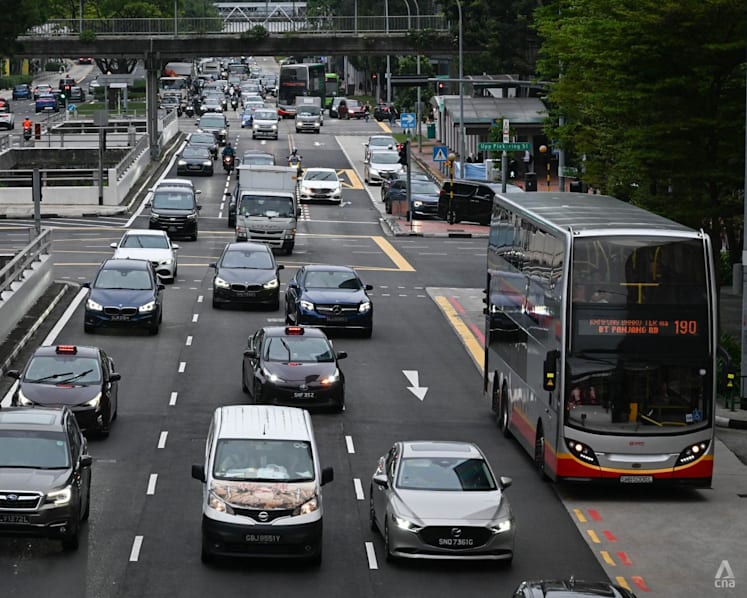
A view of traffic in Singapore. (File photo: CNA/Lan Yu)

This audio is generated by an AI tool.




SINGAPORE: The surge in global oil prices following the escalating conflict in the Middle East could have knock-on effects on Singapore’s economy, raising the costs of goods and services beyond just petrol prices, analysts said on Monday (Mar 9).
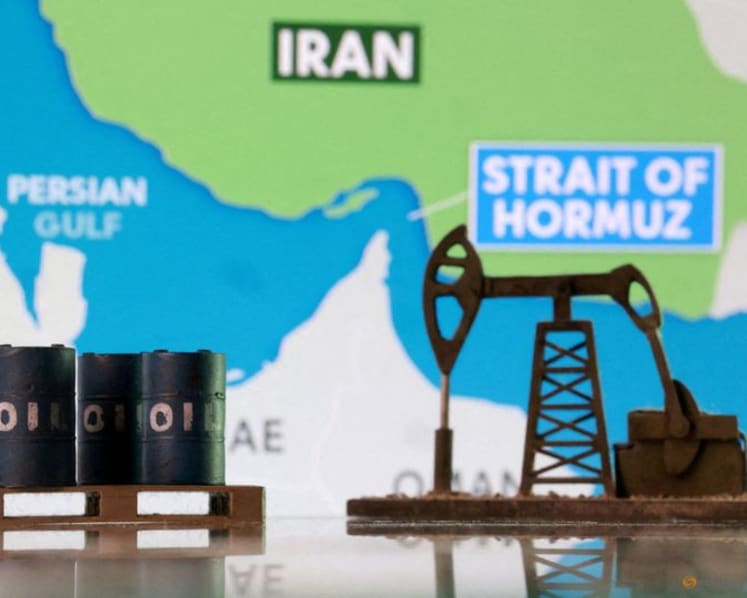
The war has prompted some major Middle Eastern oil producers to cut supplies over fears of prolonged disruption to shipping through the Strait of Hormuz – a chokepoint through which about a fifth of the world’s daily oil consumption passes.
The supply disruption has impacted prices – Brent crude oil prices surged past US$100 per barrel on Monday, reaching levels seen during Russia’s invasion of Ukraine in 2022.
As a small and open economy that imports most of its raw materials, Singapore is exposed to global energy price shocks, analysts said.
“Any significant movement in energy price gets translated to the ground very quickly,” said Mr Song Seng Wun, an economic adviser at Singapore-based fintech firm SDAX.
EFFECTS ON INFLATION
Ms Selena Ling, chief economist and head of OCBC Group Research, noted that the immediate impact of higher pump prices was already felt by the man on the street over the weekend.
“There could be more pain to come if energy prices remain persistently higher and translate into higher utilities and transport prices down the road,” she added.
While the increase in prices is likely to be reflected in transport and logistics first, sectors such as food, retail and construction are likely to follow as production costs get passed along supply chains, she said.
Inflation in Singapore has stabilised, but likely bottomed out in the second half of 2025, she said.
Singapore's core inflation averaged 0.7 per cent in 2025, falling from 2.8 per cent in 2024, data from the Ministry of Trade and Industry showed.
In January, the Monetary Authority of Singapore raised inflation forecasts for 2026 to 1 per cent and 2 per cent, up from the previous forecast of 0.5 per cent to 1.5 per cent.
Minister for Trade and Industry Gan Kim Yong said last week that the Singapore government is monitoring developments in Iran "closely" and will reassess its GDP and inflation forecasts if necessary.
Ms Ling said that depending on how persistent the energy price shock is and whether businesses pass on costs to consumers, there is a risk that inflation could rise further.
“If crude oil prices stay elevated around US$92 per barrel for the rest of this year, then Singapore’s headline CPI could rise from around 1.3 per cent to 1.8 per cent, for instance,” she said.
Mr Song noted that the impact of price increases will not be felt immediately across all sectors.
For example, the price of vegetables may take time to increase, while airfares would rise faster due to the heavy use of fuel.
BROADER IMPACT ON ECONOMY
Mr Song added that the situation in the Middle East not only impacts oil supply, but also other commodities, such as chemical products and metals.
This could mean higher fertiliser costs, which could translate into grocery prices. Similarly, disruptions to the supply of aluminium, for example, could raise construction costs, he said.
Beyond inflation, rising oil prices could have broader effects on the economy, including on business and consumer confidence, Mr Song said.
“The longer oil prices stay high or continue to climb, (consumers) will cut back on consumption because they are worried about just the impact of high energy costs, curbing consumption, which may lead to businesses cutting back,” he said.
Ms Ling agreed that, indirectly, the negative knee-jerk reaction on financial assets could contribute to some near-term caution on discretionary spending.
Consumers could also cut back on travel plans that may have involved flying through the Middle East airline hubs, she added.
The extent of economic impact would depend on the evolving situation in the Middle East, he added.
If oil prices stay higher for longer than six months, there will be a “significant impact” on growth and inflation forecasting, he said.
But it is still early days, he said. “It is only the first week, and a lot of things have already happened,” he said.
“What we're seeing in terms of energy costs reflects that uncertainty over demand and supply conditions, not just today, but also in the coming days and weeks.”

IMPACT COULD BE SHORT-TERM
One economist noted that while energy prices may cause a short-term bump in inflation, they are unlikely to derail the broader disinflation trend.
Ms Sheana Yue, a senior economist at economic advisory firm Oxford Economics, said businesses may not pass on all the higher costs immediately. Instead, the price increases are likely to be gradual, as some firms may absorb part of the extra expense.
Singapore has buffering measures and regulatory tools to smooth out energy price shocks, she added.
For example, quarterly tariffs in the electricity market help to average out periods of volatile energy prices, while the Monetary Authority of Singapore’s exchange rate mechanism helps reduce the impact of rising import prices.
“In short, we expect the impact to be manageable and largely temporary for most households,” she said.
Analysts also noted that, as one of Asia’s largest refining and oil trading hubs, the macroeconomic impact of the war could be cushioned if profit margins at refineries remain strong.
“Historically, this has meant that higher Brent oil prices are associated with better terms of trade for Singapore, suggesting it is not a pure loss for the economy,” said Ms Yue.
Ms Ling agreed that Singapore’s role as a refining, storage and trading ecosystem means it could see stronger demand for fuel processing, blending and storage services.
“That said, this may not fully offset the broader economic drag if oil prices remain elevated for an extended period of time and start to weigh on global trade and growth,” she said.