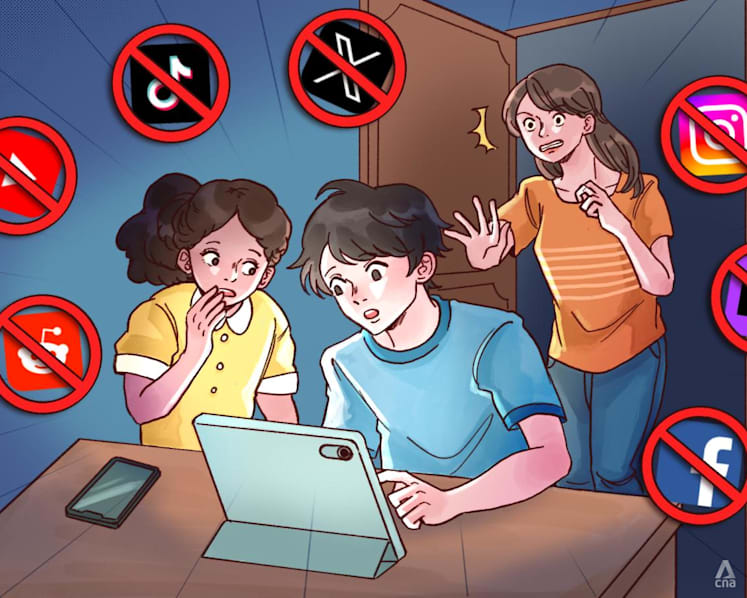
France leads Europe in proposed crackdown on youth social media use
If enacted, the measure could come into force as early as the next academic year in September, bringing significant changes to how France's young people interact online.
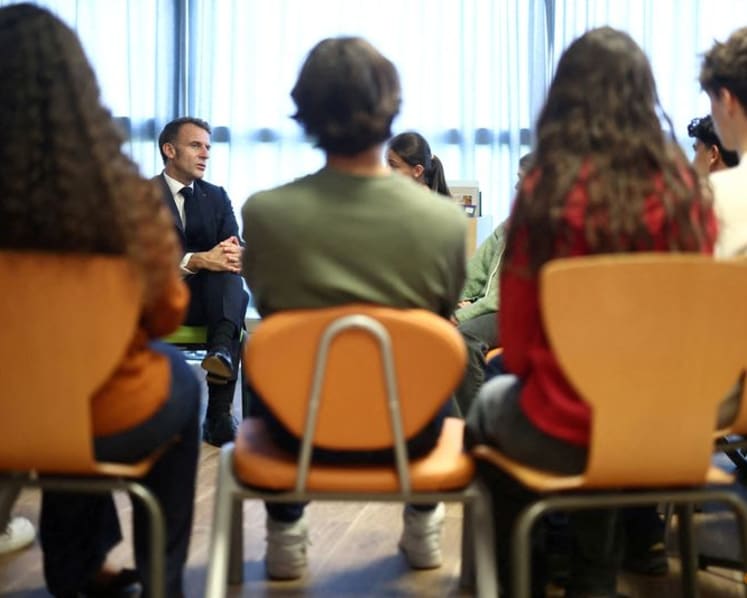
French President Emmanuel Macron attends a discussion with middle and high school students about the role of social media, at College La Fayette Middle School in Rochefort, France, Nov 4, 2025. (File Photo: Reuters/Stephane Mahe/Pool)

This audio is generated by an AI tool.
PARIS: France is moving a step closer to restricting children’s access to social media, after lawmakers in January approved a bill to ban platforms for users under the age of 15.
The proposed legislation, championed by President Emmanuel Macron, will now head to the Senate, France’s upper house, where it is widely expected to pass with broad cross-party support.
If enacted, France will become one of the first countries in Europe to implement such sweeping restrictions, following Australia’s recent move to limit social media use for those under 16.
The measure could come into force as early as the next academic year in September, bringing significant changes to how young people interact online.
MIXED REACTION AMONG STUDENTS





Among students in Paris, opinions on the proposed ban are divided.
Some told CNA they support the move, arguing that younger users are not equipped to handle the pressures and risks of social media.
“I think it’s a very good thing,” said one student, adding that platforms expose children to inappropriate content and behaviours.
Another agreed, noting that younger teens are highly impressionable and vulnerable to harmful influences online, including exposure to dangerous individuals and misleading information.
“If you’re under 15, it’s true you’re too young,” he told CNA. “(Social media) puts ideas in young people’s heads and they are very influenceable as they can’t yet make their own decisions and be an independent thinker.”
But not all are convinced. Some students argue that a blanket ban may not be effective as children could find ways to circumvent it, suggesting that guidance would be a more practical approach.
“A better solution would be more education for children about prevention. We can’t totally ban all social media because they would find a way to get around it,” said a student.
ENFORCEMENT CHALLENGE
The bill would also ban mobile phones in all schools. However, questions remain over how such a ban would be enforced.
Currently, mobile phone restrictions are already in place in some institutions, where pupils are required to hand in phones at the start of every lesson.
In 2018, France banned children from using mobile phones in colleges, which are attended by youths between the ages of 11 and 15.
But students have found ways to bypass the rules. Some hand in inactive or secondary devices while continuing to use their primary phones discreetly.
Experts and students alike suggest similar workarounds could emerge for social media bans, including the use of virtual private networks (VPNs) to evade age restrictions.
CONCERNS OVER RIGHTS, FREEDOM
The proposal has also raised concerns among rights groups.
Advocates warn that restricting access to social media could infringe on young people’s freedom of expression and limit their participation in digital public spaces.
Alice Apostoly, advocacy officer at campaign group Feminists Against Cyberbullying, said the move could have unintended consequences.
“It does restrain the liberty of communication and erodes the rights of minors under 15 to be in an online public space, which is also an important place of socialisation for young people,” she said.

Social media companies have defended their existing safeguards.
TikTok, which has around 200 million monthly users in Europe, says it already offers more than 50 safety features for teenage accounts. These include screen time limits, default private settings and parental controls.
The company has pushed back against stricter regulations, arguing that existing tools can help protect younger users without the need for outright bans.
BROADER EUROPEAN PUSH
France is not alone in pursuing tighter controls on social media use among minors.
Countries including Portugal, Denmark and Greece are advocating for similar measures at the European Union level, signalling a broader shift towards stricter digital regulation.
In Spain, Prime Minister Pedro Sanchez has gone further, proposing criminal liability for technology executives who fail to remove illegal or harmful content from their platforms.
Meanwhile, human rights organisation Council of Europe has emphasised that responsibility for online safety should lie primarily with tech companies, rather than governments imposing blanket bans.
Despite the debate, Macron has called for an accelerated legislative process, aiming to implement the ban by the start of the new school year in six months.
If passed, the law would mark a significant shift in Europe’s approach to regulating young people’s digital lives, and could set a precedent for other countries grappling with the risks and influence of social media on children.