Iran’s protests fuelled by an ailing economy the regime cannot fix: Analysts
Years of Western sanctions over Tehran's nuclear programme, coupled with corruption and financial mismanagement by the state, have hollowed out Iran’s economy.
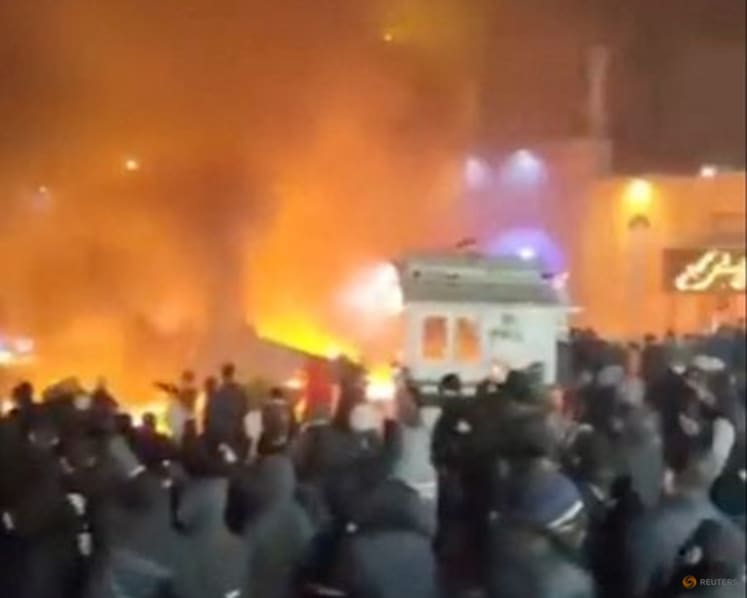
Protesters gather amid evolving anti-government unrest in Tehran, Iran, in this screen grab obtained from a social media video released on January 9, 2026. (Photo: Social Media/via Reuters)

This audio is generated by an AI tool.
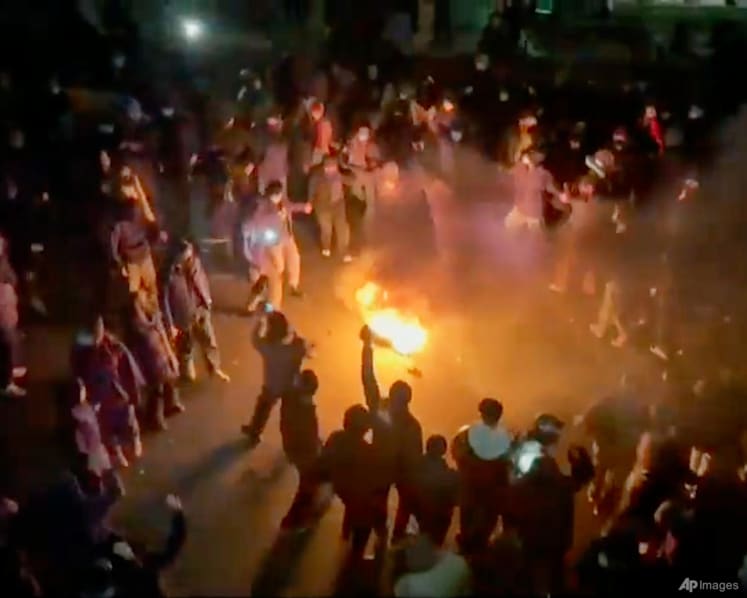
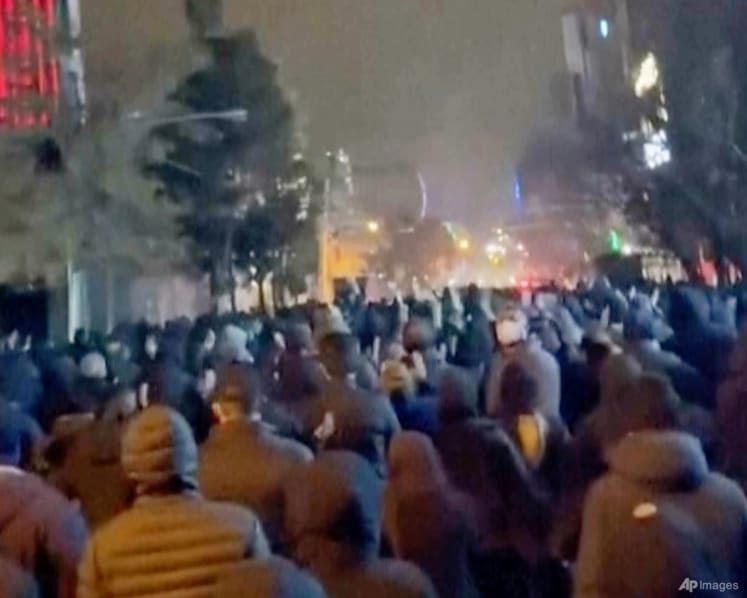
Iran’s nationwide protests are being driven by a deepening economic crisis that analysts say the government has no realistic means of fixing, instead turning to repression to quell unrest.
Years of Western sanctions over its nuclear programme, coupled with domestic corruption and financial mismanagement by the state, have hollowed out the country’s economy.
As economic pressure intensifies, driving up prices and collapsing living standards, public frustration has spilled onto the streets.
Experts say Iran’s leadership lacks both the financial capacity and political will to stabilise the economy in the near term.





“The regime doesn't have many options. It does not have the ability to address economic grievances,” said Shahram Akbarzadeh, a professor of Middle East and Central Asian politics at Deakin University.
Recovery would require large-scale external support and investments, added Amin Saikal, an adjunct senior fellow at the Nanyang Technological University’s S Rajaratnam School of International Studies.
“What (Tehran) really needs is an injection of a massive amount of funds into its economy – for example, US$50 billion – and that could only come from outside,” he said.
That leaves Tehran in a bind. Sanctions relief would require negotiations with the United States and its allies – something the regime is reluctant to pursue if it means compromising on its nuclear programme or regional influence.
While Iran has long said it is open to talks, Washington remains adamant that Tehran must halt uranium enrichment and dismantle its nuclear infrastructure.
Iranian leaders insist their nuclear programme is peaceful and intended only for civilian purposes, even as enrichment levels have risen.
Among Iran’s allies, only China has the financial muscle to offer meaningful relief, said Saikal.
“There’s a very strong strategic relationship between China and Iran. There’s also a similar relationship (with) Moscow, but Russia is not really in a position to be as helpful as Beijing may be,” he told CNA’s Asia Now, referring to Russia's ongoing war with Ukraine.
Without external funding, Iran’s authorities are left with few options to address public anger.
“(Iran) doesn't (want to) negotiate with the West because that goes against its ideological bedrock,” said Akbarzadeh. “So, the regime relies on security crackdowns, (like) it has done so in the past.”
CRACKDOWNS ARE REGIME’S DEFAULT RESPONSE
Analysts said what began as economic discontent has since evolved into broader demand for political change.
“The authoritarian rule, suppression of dissent and nepotism have frustrated the people. They are saying – more than 40 years of mismanagement, of running the country against the interests of the citizens … enough is enough,” said Akbarzadeh.
He added that demonstrators have also criticised Iran’s geopolitical isolation and regional spending, chanting slogans such as “Neither Gaza nor Lebanon, my life for Iran” to oppose Tehran’s support for militant groups abroad while conditions at home deteriorate.
Authorities have responded with mass arrests and internet shutdowns aimed at disrupting coordination and limiting international attention.
Akbarzadeh said the leadership is banking on the protests losing momentum, as previous movements have after crackdowns, including the 2022 Woman, Life, Freedom uprising.
However, he warned the regime is capable of escalating its brutal crackdown: “So far, the response has been quite measured, even though it's led to death and destruction. But the response could become much, much harsher.”
A RETURN OF THE PEACOCK THRONE?
Some protesters have looked to figures outside Iran for alternatives, including exiled Crown Prince Reza Pahlavi.
The 65-year-old has recently sought to position himself as a potential figure in Iran’s future, appealing to protesters’ frustration with the Islamic Republic.
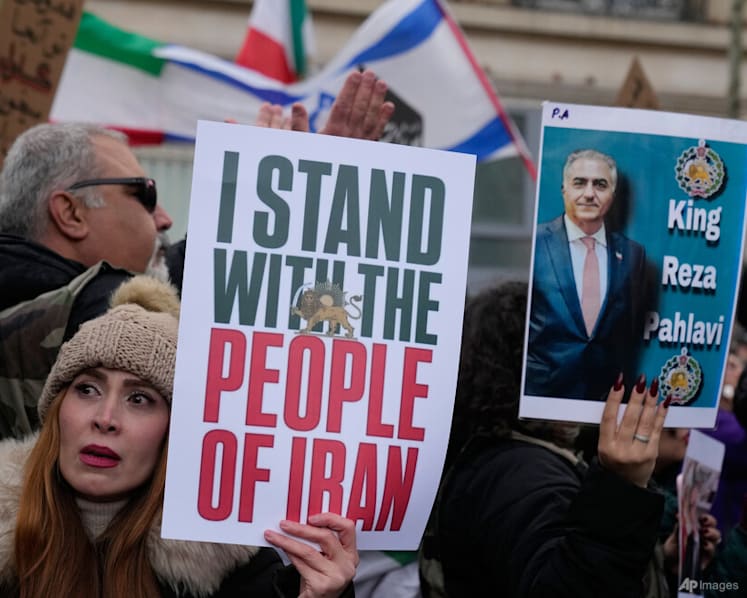
He has lived in exile for nearly five decades since his father – the ousted last shah of Iran – was overthrown during the 1979 revolution.
Akbarzadeh said any perceived support for Pahlavi reflects desperation rather than a clear desire to restore the monarchy, which was widely resented for deep economic inequality and oppressive rule.
“Especially among the ethnic minorities in Iran, there is no love for Pahlavi at all because the monarchy was famous for its harsh treatment of ethnic minorities,” he said.
“Among some Iranians … there's a sense of nostalgia that perhaps a return to pre-revolutionary days might be a better option. But that doesn't necessarily mean support for the monarchy.”
RISK OF REGIONAL FALLOUT
External pressure has further complicated the situation, raising concerns about wider regional consequences.
On Monday (Jan 12), US President Donald Trump stepped up economic pressure on Tehran, announcing a 25 per cent tariff on any country trading with Iran.
However, analysts say the move is unlikely to be a game changer, given the country’s long experience operating under sanctions.
Iran exports about 90 per cent of its shipped oil to China, its largest trading partner which is already facing US tariffs. Trump has not specified whether the newly-announced 25 per cent will be imposed on top of existing duties.
“The Chinese have their own reasons to want to make sure this Islamic Republic survives,” said Alex Vatanka, a senior fellow at the Washington-based Middle East Institute.
“In reality, sanctions alone are not going to change Iran’s behaviour. What people are watching out for is a more muscular American reaction.”
Trump has also warned of possible American military intervention if Iranian authorities continue to kill protesters. Tehran has countered by threatening to target US bases across the region.
“The situation is very explosive,” said Saikal, pointing to ongoing conflicts in the region including Syria, Lebanon, Yemen and the Palestinian territories.
“Any unraveling of the situation in Iran would not only affect the Iranians, but also could have an enormous impact on the region, which is already very much on the edge.”