Iran shows off its control over Strait of Hormuz after collapse of peace talks
Iran said the first revenue from a toll that it started collecting from ships using the Strait of Hormuz had been transferred to the central bank's account
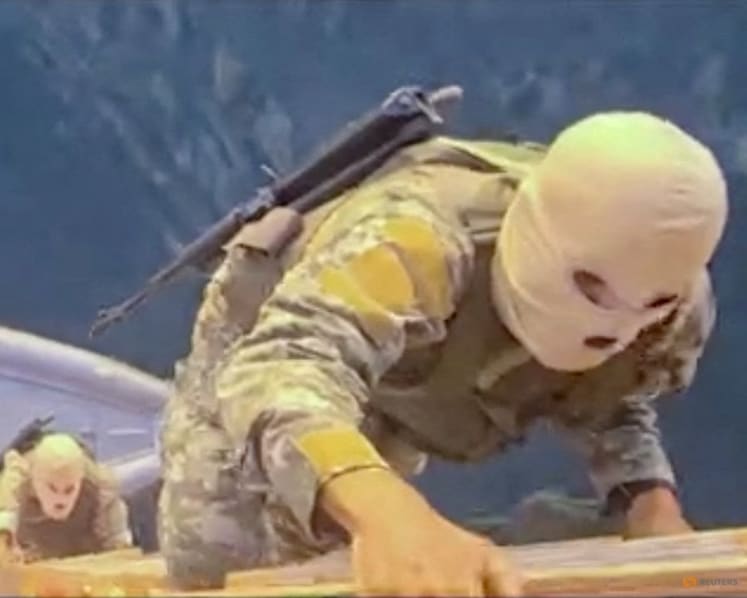
A screen capture from a video said to show the seizure of the container ships MSC Francesca and Epaminondas in the Strait of Hormuz, broadcast on Iranian State TV, and released on Apr 22, 2026, shows soldiers taking part in the operation. (Image: IRIB via Reuters)
WASHINGTON: Iran showed off its tightened grip over the Strait of Hormuz on Thursday (Apr 23) with video of its commandos storming a huge cargo ship, after the collapse of peace talks that Washington had hoped would open the world's most important shipping corridor.
State television broadcast footage overnight of masked troops pulling up in a grey speedboat alongside the MSC Francesca, climbing a rope ladder to a shell door in the hull and jumping through brandishing rifles.
The footage, presented with an action-movie-style soundtrack and no commentary, also included views of another ship, the Epaminondas.
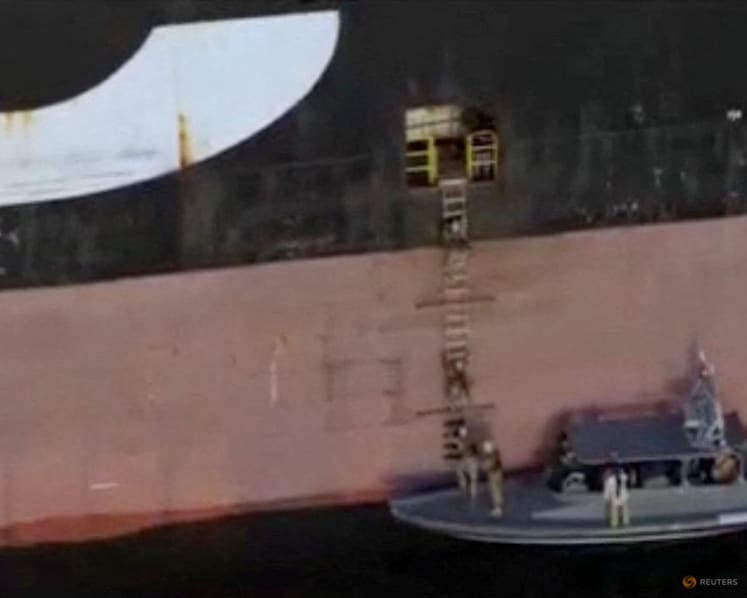
Iran claimed to have captured both on Wednesday, accusing them of trying to cross the strait without permits.
The vice speaker of parliament, Hamidreza Hajibabaei, said the first revenue from a toll that Iran was now collecting from ships using the strait had been transferred to the central bank's account. He gave no further details about who had paid it, when or how much.
Iran's judiciary chief Gholamhossein Mohseni-Ejei said the merchant vessels attacked in the strait had "faced the law".
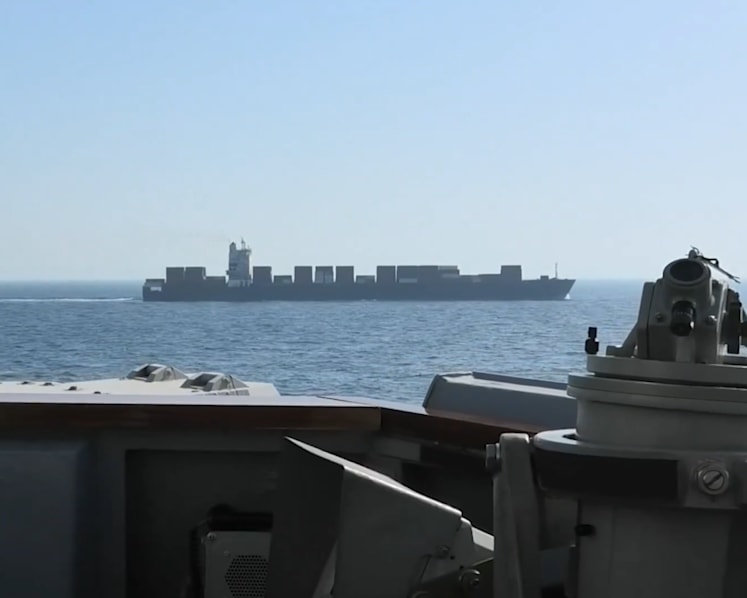
Iranian speedboats and marine drones were sheltering in sea caves off an island near the mouth of the strait and keeping the US Navy from approaching.
PAKISTAN STILL IN TOUCH WITH SIDES ABOUT TALKS
Iran, which has effectively blocked the strait to ships apart from its own since the US and Israel launched the war in February, has been left in apparent control of the waterway since last-ditch peace talks were called off on Tuesday, hours before a two-week ceasefire expired.
Tehran says it will not consider opening the strait, normally the route for a fifth of global oil and liquefied natural gas, until the US lifts a blockade of Iran's own shipping, which Washington imposed during the ceasefire and Tehran calls a violation of that truce.
The US military has intercepted at least three Iranian-flagged tankers in Asian waters and is redirecting them away from their positions near India, Malaysia and Sri Lanka, shipping and security sources said on Wednesday.
US President Donald Trump cancelled threats to restart attacks on Iran in the ceasefire's final hours on Tuesday, but has refused to lift the blockade.
There has been no formal extension of the ceasefire, and no plans have been announced for further talks.
Iranians, who endured six weeks of US and Israeli bombardment before the ceasefire on Apr 8, described a nerve-wracking environment under the threat of renewed warfare.
"In a situation that is neither peace nor war, things are somewhat frightening. At every moment, you think that Israel or the US might launch an attack," Arash, 35, a government employee in Tehran, told Reuters by phone.
"You cannot make decisions about the future in such a situation."
Pakistan, which hosted the only peace talks of the war earlier this month and had been preparing to host a second round before it was called off on Tuesday, was still in touch with both sides, a Pakistani government source said.
The Pakistani source said Iranian officials were still declining to commit to sending a delegation, citing the US blockade and other reasons.
"Yesterday, diplomats from various countries met different Pakistani authorities and asked about the expected dates for the next round of talks, but they could not give them any timeframe, clearly," the Pakistani source said.
Iran has said publicly it is willing to talk in principle, but that the US blockade and inconsistent demands from Washington made it impossible to commit.
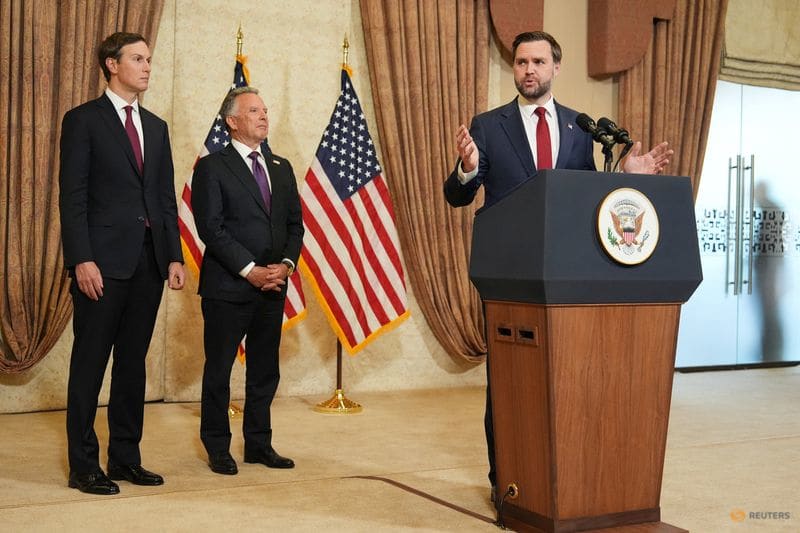
The US delegation led by Vice President JD Vance never left Washington.
"You did not achieve your goals through military aggression and you will not achieve them by bullying either," the head of Iran's negotiating team, Parliament Speaker Mohammad Baqer Qalibaf, wrote on social media on Wednesday.
"The only way is recognising the Iranian people's rights."
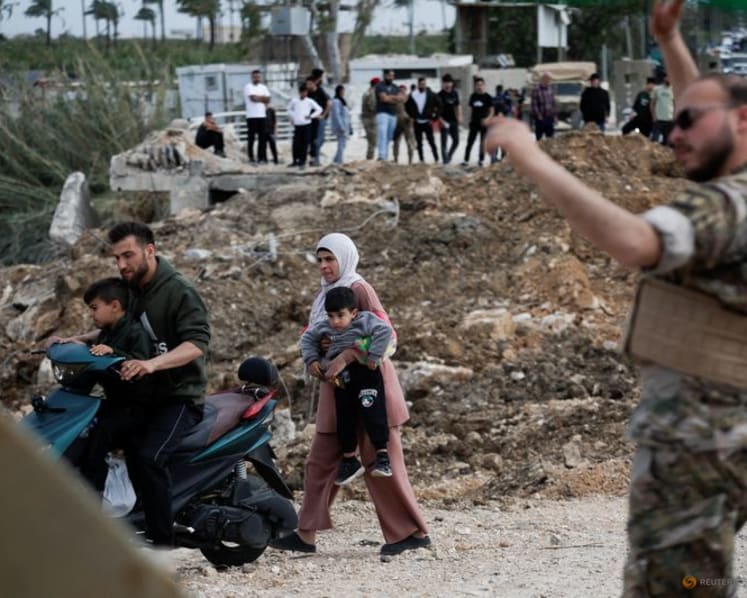
The US was separately due to host a second round of talks between Israel and Lebanon on Thursday, with Lebanon seeking an extension of a ceasefire reached last week in a war that has run in parallel to the Iran war.
Israeli strikes killed five people, including a journalist in Lebanon on Wednesday, the deadliest day there since the US-brokered truce took effect last week.
Iran says maintaining the Lebanon ceasefire is a precondition for talks on the wider war.
US NAVY SECRETARY FIRED
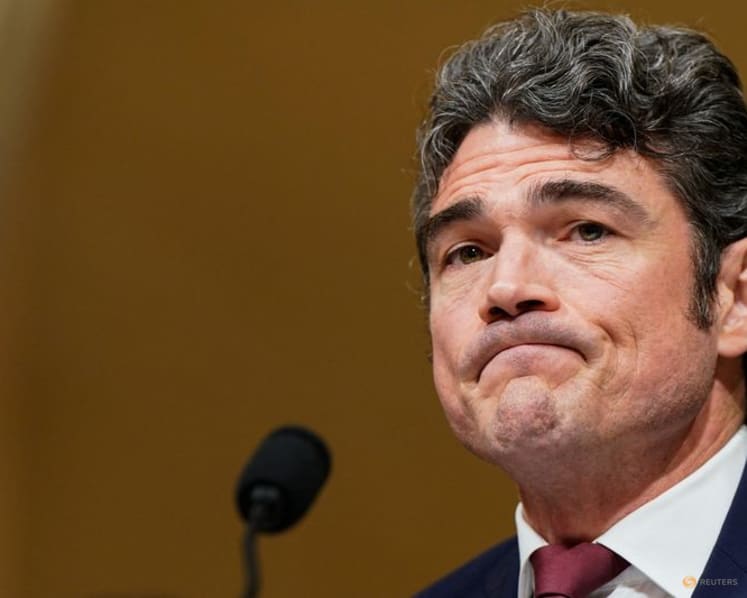
In the latest wartime shakeup at the Pentagon, John Phelan, a billionaire investor appointed by Trump as secretary of the Navy, was ousted late on Wednesday.
Two sources told Reuters he had been fired over disagreements around shipbuilding and bad relations with officials, including Defense Secretary Pete Hegseth.
The stalemate in the strait has left markets whipsawed by mixed signals. The lack of a clear path to resolving the worst energy disruption in history sent oil prices climbing again, but with fighting on hold, Wall Street share prices have zoomed to record highs.
On Thursday, shares were down in Japan, Hong Kong, Britain and Germany, but up in South Korea and flat in France.
Futures markets forecast an easing on Wall Street from Wednesday's record close. Brent crude was up more than 1.5 per cent at US$103.50 a barrel.
So far, the US has not achieved the aims Trump set out at the war's start: to deprive Iran of the capability to attack its neighbours, end its nuclear programme and make it easier for its people to overthrow their government.
Iran has retained missiles and drones that can hit its neighbours, and a stockpile of highly enriched uranium estimated by the United Nations atomic watchdog at more than 400kg.
Its rulers, who killed thousands to put down a popular uprising in January, have faced no organised opposition since the war began.
And they have added new leverage by seizing control of the strait despite threats from Trump, who posted on social media earlier this month: "Open the F****** Strait, you crazy b*******, or you'll be living in Hell - JUST WATCH!"