







Oil surges, stocks retreat on fears of prolonged Iran war
Analysts say there is now “less belief … that there's going to be a quick off-ramp and a quick resolution to this conflict”.

High prices for gasoline are shown at a gas station in downtown Los Angeles, California, US, Mar 10, 2026. (Photo: REUTERS/Mike Blake)
NEW YORK: Oil prices jumped Thursday (Mar 12) with Brent crude settling above US$100 a barrel for the first time since August 2022, as Iran vowed to make the United States regret launching its war against the country.
The price of Brent crude surged 9.2 per cent to US$100.46 a barrel, while its US equivalent, West Texas Intermediate, climbed 9.7 per cent to US$95.73 a barrel.
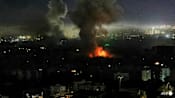
Stocks retreated as fears of a prolonged conflict in the Middle East took hold, with US and Israeli strikes on Iran continuing and Tehran's retaliation bringing trade through the Strait of Hormuz to a virtual standstill.
Markets were not assuaged by US President Donald Trump's proclamation that stopping Iran from getting a nuclear weapon was more important to him than controlling oil prices.
"Markets are certainly moving with oil prices and the ongoing concerns about energy disruptions," said Angelo Kourkafas, a senior analyst at Edward Jones.
"There is less belief compared to the last couple of days now, at least from an investor's perspective, that there's going to be a quick off-ramp and a quick resolution to this conflict," he said.
Energy Secretary Chris Wright acknowledged that the US military was currently "not ready" to escort tankers through the critical Strait of Hormuz.
Brent is up around 38 per cent from the eve of the conflict, which began on Feb 28 when the United States and Israel launched airstrikes against Iran. It is up nearly two-thirds from the start of the year.

Iran's new supreme leader Mojtaba Khamenei called Thursday for using "the lever of blocking the Strait of Hormuz", which the country's Revolutionary Guards vowed to carry out.
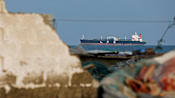
The call followed fresh attacks against Gulf energy targets: an attack on two oil tankers off Iraq killed at least one crew member, while a cargo ship caught fire after being hit by shrapnel.
Iran's government, however, has sent mixed messages on hitting regional targets and blocking the strait.
On Thursday, the country's deputy foreign minister told AFP that Tehran had allowed ships from some countries to cross through the key waterway.
The International Energy Agency said the Mideast war "is creating the largest supply disruption in the history of the global oil market", a day after its member countries agreed to unlock 400 million barrels of oil from their reserves - their largest release ever.
Analyst David Morrison at Trade Nation said that if the announcements of the release of oil from strategic reserves "were supposed to cap prices, then they failed dismally".
Kourkafas said the release would provide "a temporary buffer" but it was probably not enough to offset the loss of flows through the strait.

The rise in energy prices could cause prices to rise throughout the global economy, with analysts warning of wide-ranging effects from rising inflation to slowing growth if the fighting continues.
"The longer the oil price remains elevated, the more damaging and long lasting the inflation shock will be for the global economy," said Kathleen Brooks, research director at the trading group XTB.
Wall Street's main stock indices closed down, with the Dow shedding 1.6 per cent, the Nasdaq losing 1.8 per cent and S&P 500 tumbling 1.5 per cent.
Europe's leading equity markets closed lower, as did most Asian markets.
The dollar rose further against major rival currencies.
"The dollar has strengthened, driven by safe-haven demand, fears of inflation, and higher-for-longer interest rate expectations," said Victoria Scholar, head of investment at Interactive Investor.




