Iran war: Markets bet on brief conflict, but analysts warn of wider risks
Experts also warn that closure of the Strait of Hormuz would hit energy-intensive Asian economies hardest.
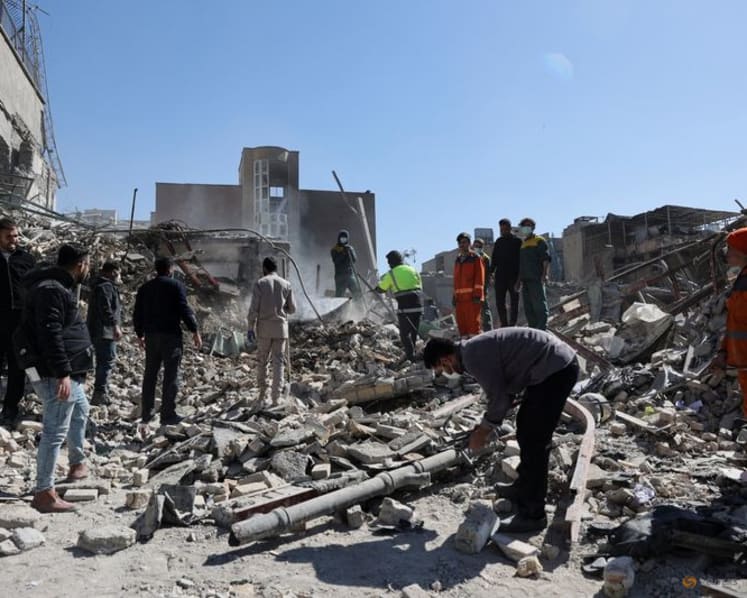
Debris are scattered in the aftermath of an Israeli and US strike on a police station in Tehran, Iran, Mar 3, 2026. (Photo: WANA/Majid Asgaripour/via REUTERS)

This audio is generated by an AI tool.
Financial markets and investors appear to be treating the United States-Israel conflict with Iran as another geopolitical shock that will fade quickly, observers say.
Oil prices rose 3 per cent on Wednesday (Mar 4) with Brent crude trading above US$84 per barrel, as concerns mounted over supply disruptions in the Middle East.
Most economists CNA spoke to say the spike is reminiscent of past flare-ups: Sharp and unsettling, but temporary.
“History suggests that during these types of events, oil prices tend to revert back to close to their starting point after about four to five months,” said Ray Farris, chief economist at Eastspring Investments.
“Worst case, we're in for a short-term shock. It's unlikely, in my view, that this is going to persist, in part because the Iranians are simply heavily outgunned by the US and Israeli military.”
The increase is also modest compared with the aftermath of Russia’s invasion of Ukraine in 2022, when crude prices surged more than 50 per cent in weeks to above US$100 a barrel. Even then, prices eased a few months later.
Analysts say crude prices have remained relatively stable in recent years, supported by higher inventory buffers, stronger supply cushions and greater investor diversification.
But while markets are betting on a short conflict in Iran, geopolitical analysts caution that the situation may be far more complex and potentially more enduring.
WHAT IF THE WAR DRAGS ON?
US President Donald Trump has signalled that military operations will continue until Washington achieves its objectives, including destroying Iran’s ballistic missile capabilities, curbing its ability to develop nuclear weapons and dismantling support for proxy groups.
Secretary of State Marco Rubio has warned that “the hardest hits are yet to come”, fuelling expectations of further escalation.
Iran has retaliated by hitting targets in Israel as well as US military assets in neighbouring Gulf states, raising fears of a widening regional confrontation.
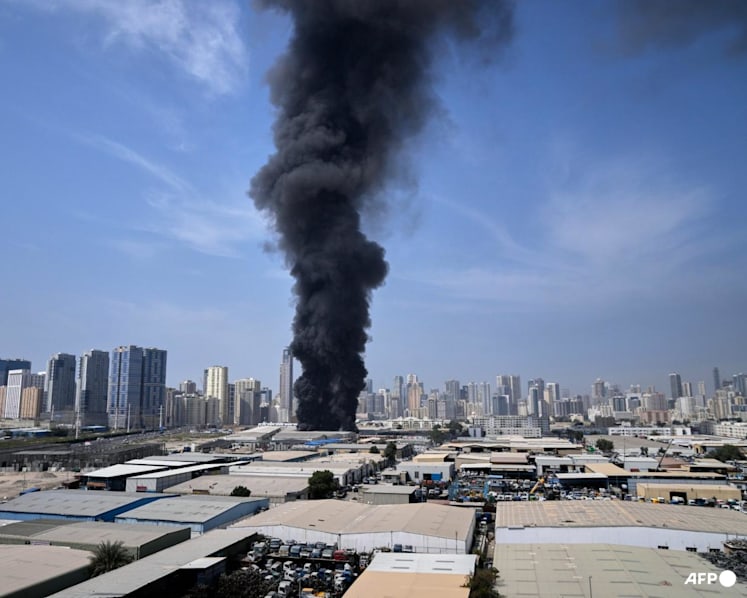
Civilian and energy infrastructure have also been struck, denting the Gulf’s carefully cultivated image as a safe and prosperous hub for travel and finance, and severely disrupting oil and gas trade.
Analysts say Tehran’s strategy appears aimed at raising the costs for US-aligned Arab neighbours, in hopes they will pressure Washington to halt its military campaign.
“Iran wants to send a message to its Gulf neighbours that if they're going to host American military bases, they’re going to pay a price,” said Nader Hashemi, associate professor of Middle East and Islamic politics at Georgetown University.
“For example, the reputational selling point of Dubai was that it was a safe haven. Now, that has been damaged as a result of this war.”
Hussein Banai, associate professor of international studies at Indiana University Bloomington, said Tehran understands the leverage at its disposal.
“Iran knows that by striking at oil refineries in the Arab Gulf monarchies, it could (potentially) shift the game at an economic level, gain leverage and insert uncertainty to the global markets,” he said.
“And there’s life left yet in Iran's proxies across the region. The Arab countries are really wary that the longer this goes, the more instability will be on them.”
Kian Tajbakhsh, an international relations professor at New York University, described Tehran’s approach as potentially “misguided”, warning it could backfire.
“The scope of Tehran’s attacks has (instead) built up and bolstered the resolve of the Arab countries to coordinate their response and efforts against Iran,” he told CNA’s Asia Now.
While Gulf states are unlikely to enter the war directly, he said, they may permit the US to use their territory or airspace for further operations.
Amid concerns that Washington’s interceptor missile stockpiles could be stretched by sustained Iranian drone and missile attacks, Tajbakhsh said he expects the conflict to intensify in the coming days.
“It's fair to assume there will be an escalation,” he added. “Part of US contingency planning (is) to take out assets that still remain inside Iran … (such as) missile silos, launchers and other inventories on the ground.”
ENERGY IN FOCUS
Since Monday, Iran has declared the Strait of Hormuz closed and threatened to attack any ship trying to pass through the passage, which is only about 33km wide at its narrowest point.
“The Iranians … know that controlling this specific choke point is going to get the attention of the rest of the world, where the high price of oil can be felt in supermarkets,” said Banai.
The strategic waterway handles about a fifth of the world’s oil and liquefied natural gas (LNG) trade, raising fears of a major energy shock.
“We're simply going to see higher and higher prices. For every day that this goes on, it impacts 20 million barrels of crude oil and refined products,” said Andrew Lipow, president of US-based consulting firm Lipow Oil Associates.
Energy-intensive economies are particularly exposed, with analysts saying the pain would be felt most acutely in Asia.
According to the US Energy Information Administration, China is the largest recipient of crude transported through the Strait of Hormuz, followed by India, South Korea and Japan. Analysts note that China may be partially buffered, having stockpiled oil and with alternative supplies from Russia.
Southeast Asian nations with high energy demand, including Thailand and the Philippines, could also face significant disruption.
Europe may also feel the squeeze. Having diversified away from Russian gas after the Ukraine war, it now faces potential disruptions to Middle Eastern LNG flows.
Lipow noted that expanding LNG exports from the US – currently the largest in the world – would require infrastructure that is still years away.
Tajbakhsh believes the shutdown will likely prove temporary, as Washington anticipated such a move and could deploy anti-mining ships and other naval assets to reopen shipping lanes.
Already, Trump has sought to reassure allies by offering the US Navy to escort vessels through the strait.
“There will be short term disruption, perhaps for the next several weeks, but over the long term, the flow of shipping through the region will be opened up and markets will return to normal,” Tajbakhsh said.
Still, if oil and gas prices remain elevated, political pressure could mount.
POLITICAL RISKS AT HOME
At home, Trump may find less public support than he expected.
A Reuters/Ipsos poll, which closed on Sunday, found that just one in four Americans approve of US strikes on Iran.
More than half said they believe Trump – who has ordered strikes in Venezuela and Syria in recent months – is too willing to use military force to advance US interests.
The memory of the Iraq and Afghanistan wars is also not far in people’s minds.
“Even when there's no boots on the ground, just the idea of getting involved in another Middle Eastern War haunts people,” said Hashemi.
“If American casualties go up, and if the Iranian regime survives this, people are going to ask questions – why are we spending billions of dollars on military campaigns when back in the US, we can't have universal health care and affordable college tuition?”
He added that this could lead to consequences for the Republicans at the midterm elections later this year.
GLOBAL ECONOMY
But even if the conflict stretches beyond a month and energy prices remain elevated, economists argue the global economy enters this period on relatively strong footing.
“In the US, there's both fiscal and monetary stimulus and (also a) tremendous surge in artificial intelligence infrastructure investment (that is seen) throughout Asia as well. So globally, there's a very powerful capex cycle that's supporting the economy,” said Farris.
While some loss of gross domestic product growth is possible, inflation is easing in many parts of the world and governments will likely deploy fiscal measures to cushion the blow, he added.
For now, markets are betting that the war in Iran will be intense but brief, and that oil prices will eventually retreat – as they have in past crises.
Analysts, however, warn if attacks on regional infrastructure continue and the conflict expands, the economic aftershocks could prove far less fleeting than investors expect.