Netherlands' seizure of China chipmaker Nexperia sparks concerns among global auto companies
Nissan will reportedly trim production of its top-selling Rogue SUV in Japan due to a shortage of Nexperia chips, while Germany said it is discussing the matter with affected companies.
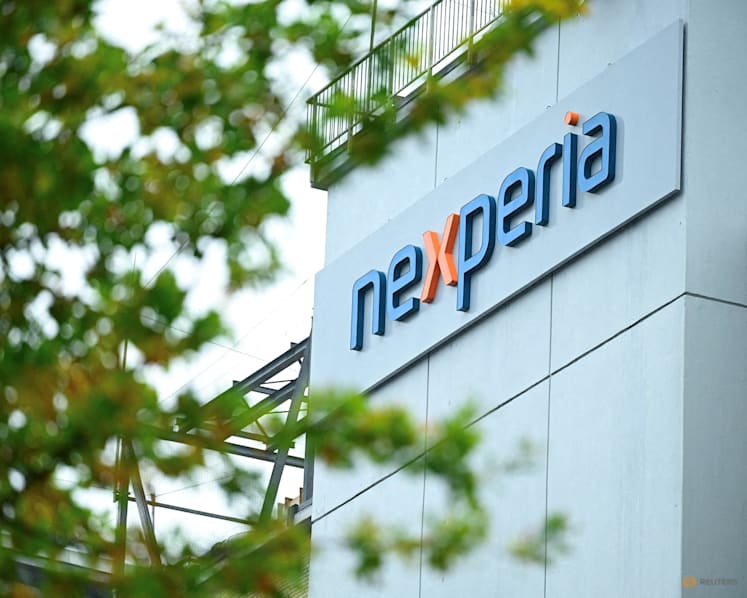
The logo of Chinese-owned semiconductor company Nexperia is displayed at the chipmaker's German facility, after the Dutch government seized control and auto industry bodies sounded the alarm over the possible impact on car production, in Hamburg, Germany, on Oct 23, 2025. (File photo: Reuters/Jonas Walzberg)
Global automakers are grappling with a supply chain disruption after the Netherlands seized Chinese-owned chipmaker Nexperia in late September, prompting Beijing to retaliate by banning exports of the company’s products.
Nissan Motor will cut production of its top-selling Rogue SUV in Japan by about 900 vehicles from next week due to a short supply of chips from Nexperia, according to a person familiar with the matter.
The output cut will start from Nov 10 at its plant in southwestern Kyushu, said the person, who declined to be identified because the information is not public.
Nissan is also reviewing planned output for the plant for the week of Nov 17 as the supply of parts using Nexperia chips remains impacted, they added.





In a statement to Reuters, Nissan said it would implement "small-scale production adjustments" during the week of Nov 10 involving several hundred vehicles at the Kyushu plant and its Oppama plant, south of Tokyo, where it makes the Note compact.
Germany, home to major automakers such as Audi, BMW and Mercedes-Benz, said it was lobbying China in the interests of German customers of Nexperia through all available channels.
"We take the situation of the affected companies very seriously and are discussing the matter with the companies as well as with Dutch and European partners through various channels," a spokesperson for the country’s economy ministry told Reuters on Wednesday (Nov 5).
CHINESE-DUTCH TALKS UNDERWAY
Nexperia, Chinese-owned but based in the Netherlands, makes billions of simple but ubiquitous chips that auto suppliers use in parts ranging from brakes and electric windows to lights and entertainment systems.
The Dutch government seized control of the firm on Sep 30 by invoking a rarely used Goods Availability Act, citing fears of technology transfers to its Chinese parent, Wingtech, which the United States has flagged as a potential security risk.
It also replaced Nexperia’s Chinese CEO Zhang Xuezheng with interim CEO Stefan Tilger.
The Netherlands provided few details on its decision to invoke the act, but said concerns about Nexperia’s governance “posed a threat to the continuity and safeguarding on Dutch and European soil of crucial technological knowledge and capabilities”.
China, which slammed the move as “discriminatory”, banned exports of Nexperia products in retaliation. While most of the company's chips are produced in Europe, around 70 per cent are packaged in China before distribution.
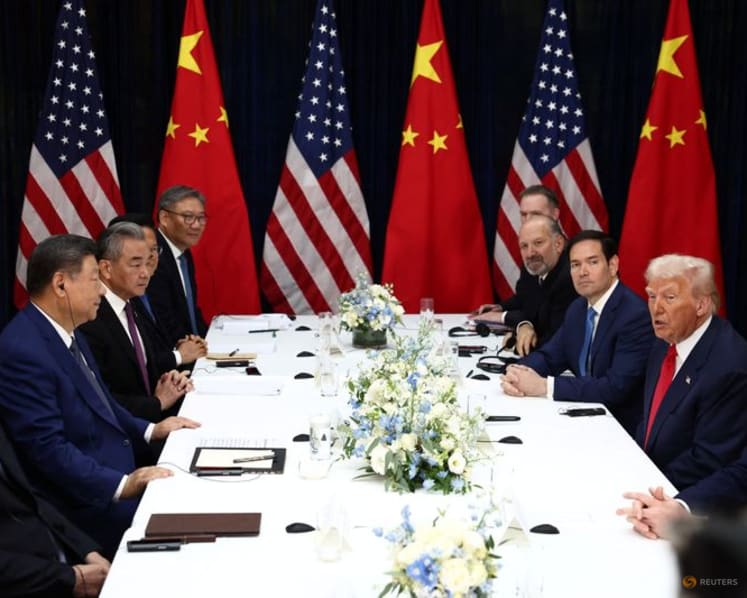
China said on Saturday, after a meeting between US President Donald Trump and his Chinese counterpart Xi Jinping the same week, that it would consider exemptions to the chip exports affected by the Dutch move.
However, it issued a strongly worded statement on Tuesday telling the Netherlands to "stop interfering" in Nexperia's internal affairs.
“The Dutch side persists in its unilateral course without taking concrete actions to resolve the issue, which will inevitably deepen the adverse impact on the global semiconductor supply chain," the ministry said in a statement.
A spokesperson for the Dutch economic affairs ministry said on Tuesday that talks between both governments were still underway.
“ZERO AUTONOMY”
European carmakers and suppliers have rushed to apply to China for Nexperia chip export exemptions, which need to be paid for in Chinese currency, or have sought alternative suppliers.
The CEO of Jeep and Fiat maker Stellantis told Reuters on Tuesday that Europe's supply chain vulnerabilities were putting it at a competitive disadvantage versus its rivals in China.
"Today our system means we have zero autonomy as an industry," Antonio Filosa said at a sector meeting in Paris.
"Look at the Nexperia chip crisis. Look at the April rare earth crisis that we went through very painfully."
A spokesperson for Nexperia, which has warned customers it cannot guarantee the quality of shipments from its Chinese site, said the company was focused on restoring supplies for customers and was seeking to "de-escalate as soon as possible".
Ola Kaellenius, CEO of Mercedes-Benz, told Reuters in Paris that there were signs that an understanding was closer to being reached between China, Europe and the US.
The German carmaker has sufficient chips for now, Kaellenius said, adding, "... we will see what the American-Chinese agreement leads to. We are watching that carefully".