Four years of war: Ukrainians endure another winter hardship as peace talks stall
Aid workers near the frontlines are racing to repair damaged homes and deliver medical care in sub-zero conditions, as peace negotiations falter.
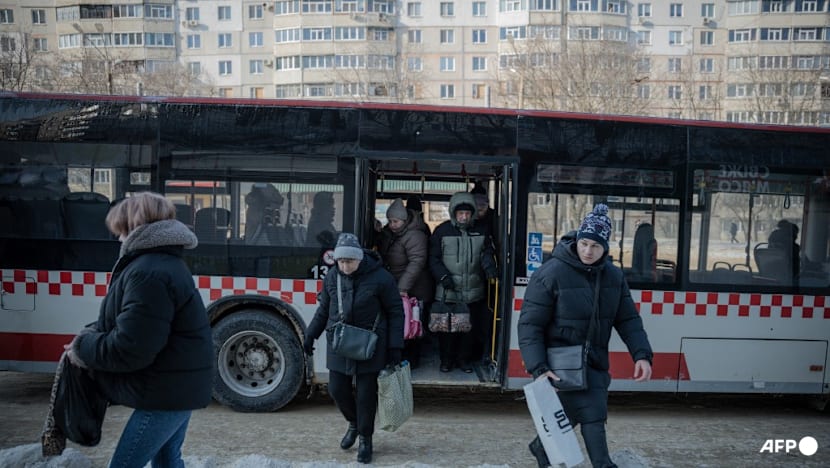
Commuters walk through the snow as they disembark a bus in Kharkiv on Feb 4, 2026, amid the Russian invasion of Ukraine. (Photo: AFP/Ivan Samoilov)

This audio is generated by an AI tool.


KHARKIV, Ukraine: Four years ago, Russia launched a full-scale invasion against Ukraine, triggering the largest and deadliest war in Europe since World War II.
Since then, hundreds of thousands of people have been killed and millions displaced. Vast areas of eastern and southern Ukraine lie in ruins.
Despite several rounds of negotiations, peace remains elusive.
In eastern Ukraine, the scars of war are clearly visible – entire neighbourhoods have been destroyed and many families are struggling to rebuild their lives.
“THERE IS NO BAKHMUT FOR US ANYMORE”
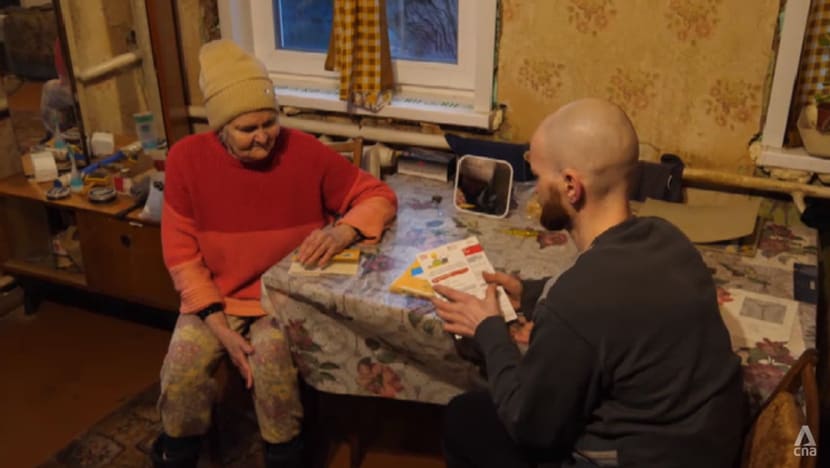
Following heavy bombardment in Bakhmut in eastern Ukraine, Oleksandra Bezvuglaya and her family fled northwest to Kharkiv, which itself has also come under repeated Russian attacks since the war began.
She was born and raised in Kharkiv but the city is now unrecognisable. Her family now lives in a previously unoccupied house in disrepair, without basic facilities – not even an indoor toilet.
“We came from Bakhmut because we were bombed hard and we decided to leave. I have relatives here, I came to my brother,” the retiree told CNA.
“Because, how can you stay there? You can't. There is no Bakhmut at all now. There is no Bakhmut for us anymore,” she added.
With a pension of less than US$100 a month, she cannot afford repairs. Aid agencies have replaced broken windows and insulated the house to protect the family from the bitter winter cold.
Bezvuglaya and her family are among an estimated 3.7 million people who are internally displaced in Ukraine.
As the war enters its fifth year, many are struggling to make ends meet, and winter has made conditions even harder.
HEALTH PROBLEMS LINKED TO COLD WEATHER
In another part of Kharkiv, another resident – only identified as Dasha – considers herself lucky.
She was out dancing when a kamikaze drone hit her street in November. She returned to find neighbours’ homes in ruins and several of her windows blown out.
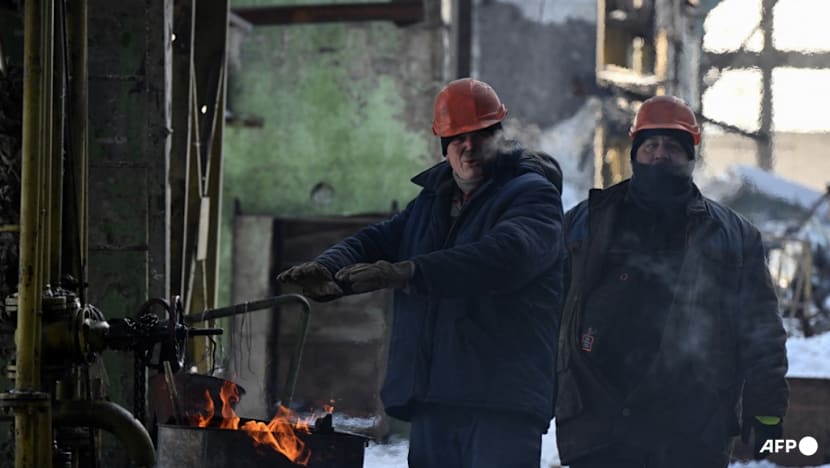
Such repairs can take around three weeks. Aid agencies say speed is essential during winter, especially with Russian strikes on the energy grid, leaving many homes without power.
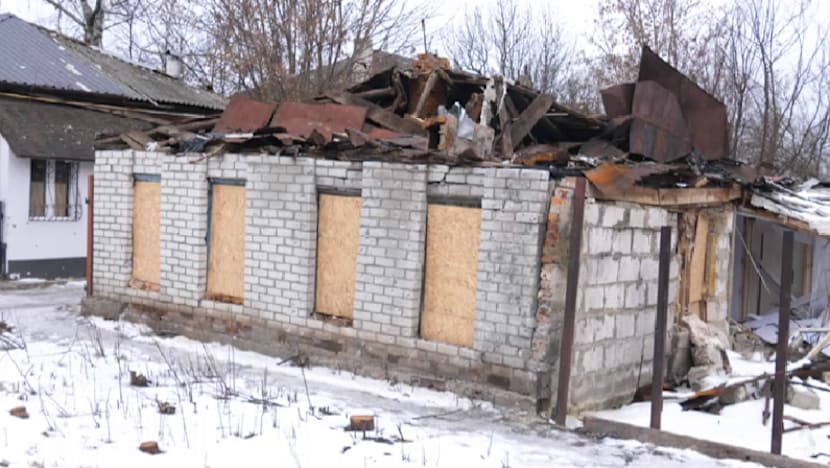
“Sometimes it affects people more than just the absence of windows, no water, no heating … (it becomes) too hard to survive,” said Ievgen Babaiev, shelter and settlement manager at the Danish Refugee Council.
According to the International Rescue Committee (IRC), roughly 60 per cent of households across Ukraine lack sufficient heating.
While Russia denies deliberately targeting civilian energy infrastructure, one in five Ukrainian families is experiencing health problems linked to cold indoor conditions.
With temperatures often below freezing, doctors say they are seeing weakened immune systems and rising cases of flu, respiratory illness and arthritis.
“You don’t have heating at home; you don’t have water because the energy system is not working completely; and you don’t have network coverage,” said Oleksandr Onikiienko, health cluster co-coordinator at the IRC.
“Even in big cities, during the long-lasting blackouts, the mobile network is not working, so if you need emergency support you may not be able to reach out and actually ask for that help,” he added.
In rural areas close to the fighting in the country’s east, the situation is even more severe.
In a village in Kharkiv Oblast, about 20km from the frontlines, the nearest hospital is 10km away and out of reach for many residents.
“It is difficult to go out due to our current situation. People are afraid to go out. And due to the weather conditions, we are not allowed to use public transport,” said resident Alla Nymerenko.
The village’s roughly 300 residents depend on mobile medical units that visit about once a month.
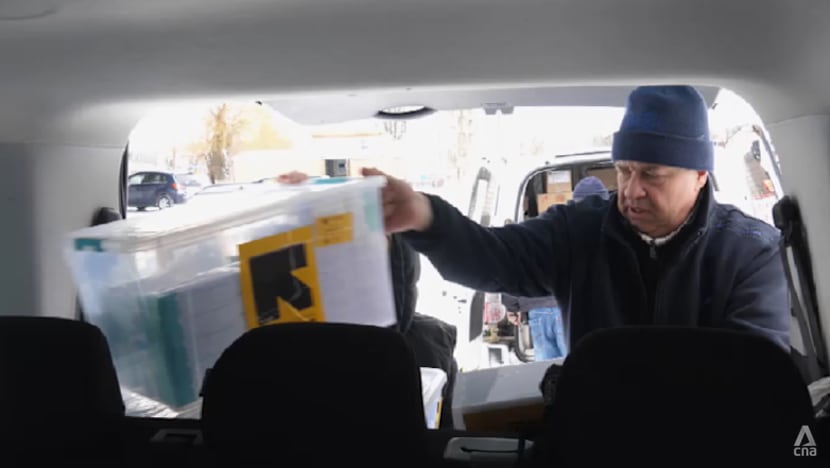
Across Ukraine, the IRC and its partners carry out around 11,000 outpatient consultations each month in about 80 locations.
But with freezing temperatures worsening chronic illnesses, doctors say demand for care is growing.
Since Russia’s full-scale invasion, hundreds of attacks on medical facilities have been reported. In these harsh conditions, mobile clinics remain a lifeline for communities near the frontlines.
STALLED PEACE EFFORTS AND SECURITY CONCERNS
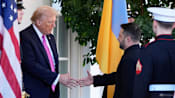
As Ukrainians endure another difficult winter, diplomatic efforts to end the war continue, but with little progress.
The United States has said it wants a deal by the summer. However, sticking points remain, particularly over control of territory in the Donbas region and what security guarantees Ukraine would receive in the event of a ceasefire.
Some experts say attacks on energy infrastructure are part of a broader demoralisation campaign to pressure Kyiv during negotiations.
“People in large cities were sitting in cold with no electricity, no heat, no water for weeks, and that was Russia pressing on us and terrorising us to sign the ugly deal,” said Lesia Orobets, founder of advocacy group Price of Freedom and a former Ukrainian Member of Parliament.
Moscow has insisted that Ukraine give up control of four oblasts that Russia has illegally annexed. It has also proposed capping the Ukrainian army at 600,000 personnel and rejected substantial security guarantees from Ukraine’s international partners.
The Kremlin says it is committed to negotiations but maintains that its own security concerns must be addressed.
Kyiv said on Monday that another round of negotiations aimed at ending the war could be held at the end of this week. Peace talks between Ukraine, Russia and the US ended last week without a breakthrough.
Ukrainian officials say that after years of resistance, any agreement must ensure Russia cannot regroup and attack again in the coming years.
Funding is central to any lasting security guarantees, said analysts.
“In addition to the Ukrainian army, we really need sustainable financing, so if you ask me about what types of security guarantees we really need, we do need a fund,” said Oleksandra Azarkina, co-founder of think tank We Build Ukraine.
Such a fund – which could include loan mechanisms – would provide a reliable flow of financing to help expand Ukraine’s defence industry and support growth in Europe’s defences as well, she added.
The European Union this month approved a loan worth more than US$100 billion to provide military and budgetary support over the next two years.
Some experts argue that the situation calls for more economic pressure on Moscow.
“There are areas of the Russian economy that remain unsanctioned,” said Celeste Wallander, former US Assistant Secretary of Defence for International Security Affairs, noting that there are many measures to stop Russia from “being able to wiggle out of the sanctions”.
“To keep the economic pressure on Russia is probably as important, if not more important, than the military pressure,” she added.