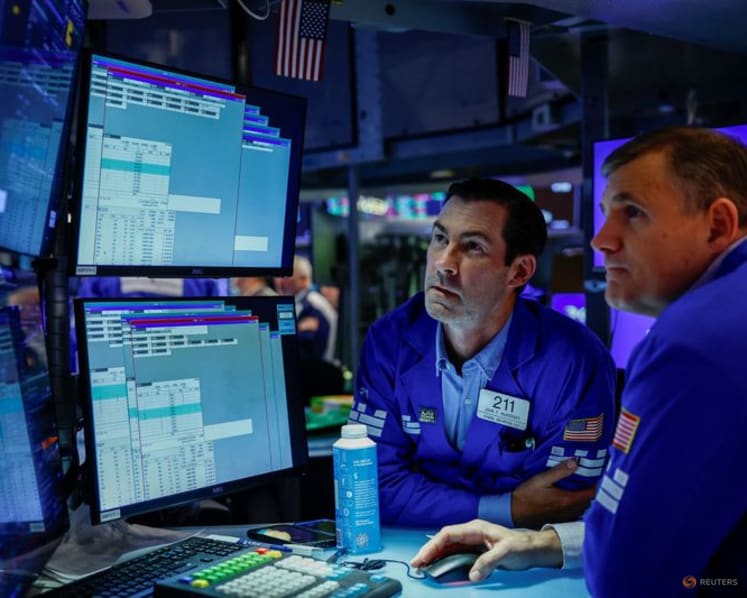
US Fed raises rates to tackle 'too high' inflation, sees more tightening ahead
Federal Reserve Chair Kevin Warsh said the decision to raise interest rates by 0.25 percentage points was a "serious" one, but needed to be taken.
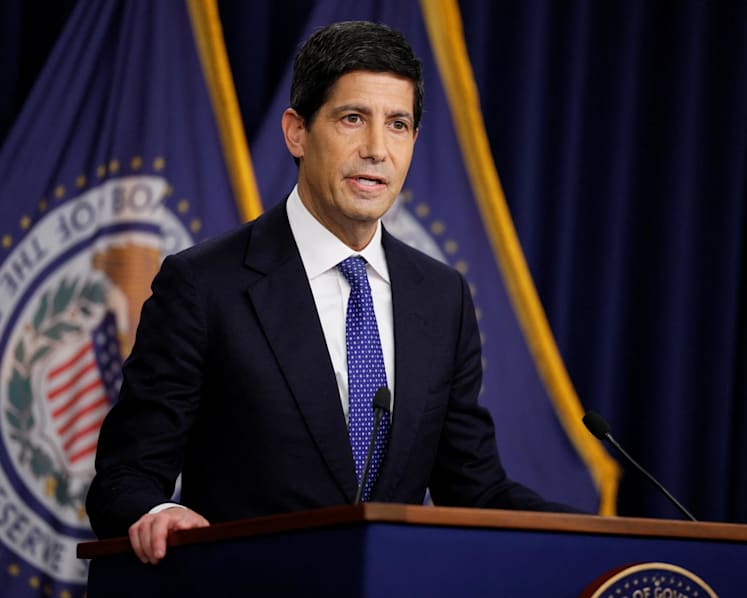
Federal Reserve Chairman Kevin Warsh holds a press conference following a two-day meeting of the Federal Open Market Committee (FOMC) at the Federal Reserve in Washington, DC, US, on Sep 16, 2026. (Photo: Reuters/Evan Vucci)
The Fed's Federal Open Market Committee voted unanimously to raise rates by 25 basis points to between 3.75 and 4.00 per cent.
Warsh, appointed by Trump, said the decision was a "serious" one, but needed to be taken.
"The plain fact is that inflation is too high, and has been for too long," he told a press conference.
And Wednesday's rate hike may not be the last - the vast majority of Fed policymakers indicated that at least one more rate hike was likely necessary before the end of the year, according to their Summary of Economic Projections.
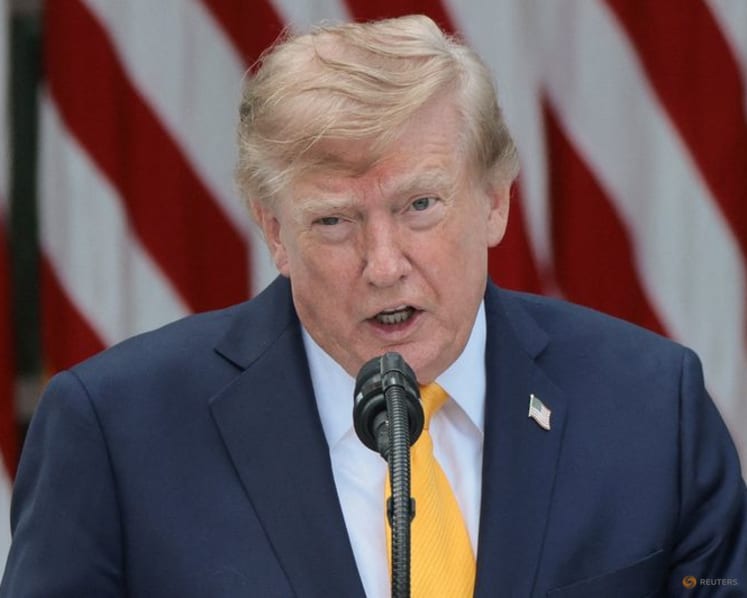
Trump reacted angrily to the decision Wednesday, renewing his call for the Fed to lower interest rates "AND FAST" in a social media post.
"Interest rates in the United States should be 1 per cent, or less, because we are the best credit in the world - by far," Trump said on Truth Social, his social media platform.
"LOWER THE INTEREST RATES FOR THE UNITED STATES OF AMERICA, AND FAST!" he said.
It was the closest Trump has come yet to levelling one of his broadsides directly at Kevin Warsh, picked by Trump earlier this year to take over the Fed from Jerome Powell, a figure the president frequently derided for not delivering the dramatic rate cuts Trump has routinely demanded.





Trump, as he has in recent social media posts, also appeared to connect persistent US trade deficits with the borrowing costs set by the central bank, even though the two are largely unrelated. Trump had previously threatened to cut off all trade from countries with which the US had trade deficits if the Fed did not cut interest rates.
"The word “Deficit” is nothing more than a fancy word for LOSS. We are “carrying” almost every country in the World, and that cannot go on any longer," Trump posted on Wednesday.
Trump's Republican Party faces a stern test in upcoming midterm elections, with rival Democrats seeking to wrest control of both houses of Congress and economic issues front-and-centre for voters.
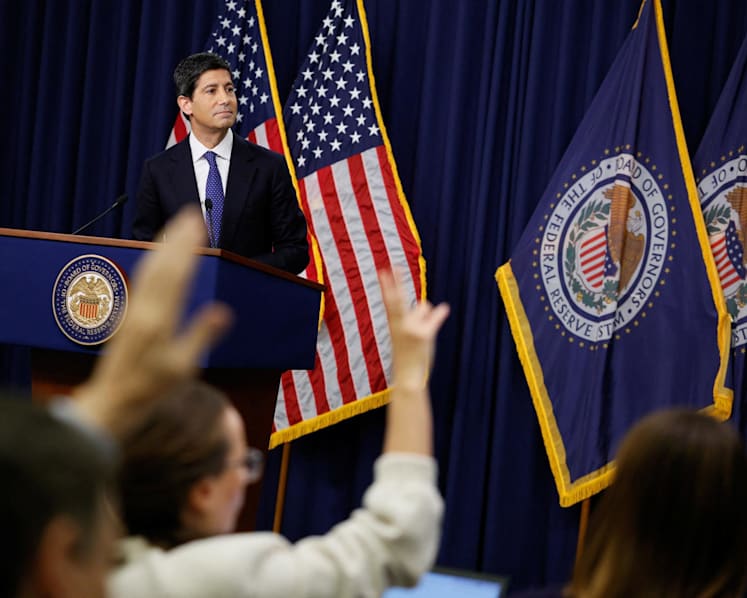
GROWING CALLS FOR HIKE
The Fed has held rates steady since January, choosing to wait to gauge the effects of the Iran war's energy price shocks and to let the impact of tariffs on prices ripple through the economy.
Since July, however, a growing faction of policymakers had indicated a rate hike may be required to tame inflation, as the war grinds on and prices remained elevated.
On Friday, August's consumer price index came in at 3.4 per cent - unchanged from the month before, but still well above the Fed's long-term two-per cent target.
Diane Swonk, chief economist at KPMG, said inflation had "forced the Fed's hand."
"Price pressures remain too elevated and too persistent for policymakers to look through, while the economy and labour market have held up well enough to absorb tighter policy," she said.
In its SEP, the Fed raised its forecast for its preferred gauge of inflation - the Personal Consumption Expenditures (PCE) price index - by 0.1 percentage points to 3.7 per cent by year-end.
The Fed also raised its projection for GDP growth by year-end to 2.3 per cent, up 0.1 percentage points.
Warsh reiterated his belief in the "resilience" of the US economy, citing its strength as being a marker of its ability to absorb tighter fiscal conditions.
"RATHER UNFORTUNATE"
US stock markets largely priced in Wednesday's rate hike, but they were still down on the news - expected with any rate hike as equities become less attractive.
Yields on 10-year US Treasury bonds - which have surged in recent days as uncertainty on long-term inflation has spiked - were also up past the five-per cent threshold, a sign that uncertainty remains a factor.
Warsh was named to his position after a contentious Senate confirmation process, during which Democratic lawmakers accused him of being a "sock puppet" for Trump, which he denied.
So far, Trump has supported Warsh, claiming that the Fed chair wants lower rates and accusing the board of being "political."
The Fed has a dual mandate to deliver maximum employment while keeping inflation to its long-term two-per cent target.
It mainly achieves these goals by setting the key US interest rate - lower rates tend to spur economic activity but fuel inflation, and hiking them cools both activity and prices.
The Fed's SEP showed that at least 12 of 18 policymakers who participated in the projection expected one more rate hike would be required before the end of the year.
Four policymakers expect two more rate hikes to be required.
Warsh has criticised the Fed's policy of offering such projections in the past and did not participate in the previous iteration in June.
This projection also included only 18 policymakers, suggesting he had once again withheld his contribution.
Warsh's assessment that monetary policy is not yet restrictive sends a “really big signal” about the path ahead, Cabana told CNA's Asia First.
"Clearly, Chair Warsh believes that rates need to be higher. They need to start to slow the economy, help bring inflation back down," he said, adding that there are expectations for two more hikes this year.
Cabana said the Fed’s decision to raise rates despite Trump’s preference for lower borrowing costs also sends a strong message about the central bank’s independence.
“Even though the president might want rates lower, right now the Fed’s job is to get inflation under control,” he added.