Stocks suffer fresh blow as markets hit by perfect storm
Markets now face the resurgent Middle East war, a spike in oil prices back past US$100 and worries about the artificial intelligence investment boom.
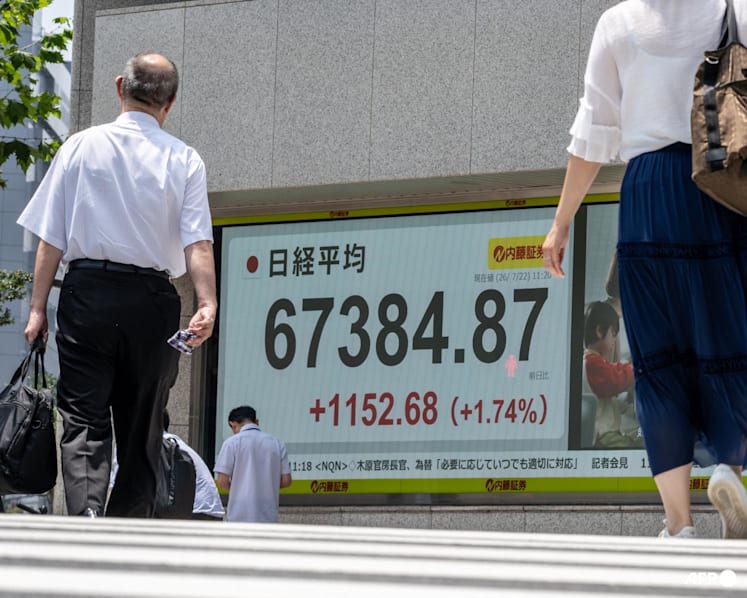
Pedestrians walk past an electronic quotation board displaying the Nikkei Stock Average on the Tokyo Stock Exchange in Tokyo on Jul 22, 2026.
(File photo: AFP/Philip Fong)
HONG KONG: Asian markets sank on Friday (Jul 24) to track a sell-off on Wall Street as world markets are battered by a perfect storm of the resurgent Middle East war, a spike in oil prices back past US$100 and worries about the artificial intelligence investment boom.
While traders in the past have been able to offset the bad news in one area by focusing on the positives elsewhere, analysts said they were now struggling to firefight on three fronts.
Tech firms were once again bearing the brunt of the selling owing to growing concerns about the colossal sums ploughed into AI hardware, factories and research, with many now questioning when they will see returns.
And it has been the big beasts that have taken the heaviest blows - having pummelled their way to multiple record highs in the past two years - with US Magnificent Seven titans being joined by South Korean and Japanese giants on the block.





The latest blows came on Thursday as Google-parent Alphabet and Tesla came under scrutiny for massive capital spending drives. Alphabet dived almost 7 per cent, and Tesla plunged more than 14 per cent.
Meta, Microsoft, and Amazon had already flagged that they would fork out more than US$700 billion this year on AI ambitions, and are due to report next week.
The Magnificent Seven on Thursday suffered their biggest one-day drop since the tariff tantrum in April 2025, with an index of the group shedding almost US$800 billion in market value.
"A relatively small number of companies have driven a disproportionate share of returns in recent years," wrote Angelina Lai at St James's Place Asia and Middle East.
"As expectations rise and markets become more selective, future outcomes are likely to depend less on exposure to a theme and more on which businesses can translate investment into sustainable earnings growth and attractive returns on capital."
Hefty selling on Wall Street bled through to Asia, where Seoul dived more than 3 per cent as chipmakers were hammered. Samsung shed more than 7 per cent and SK hynix more than 8 per cent.
Tokyo's Nikkei index was sharply lower, with Kioxia tanking 9.5 per cent, Advantest down 6 per cent and Tokyo Electron 5 per cent lower.
TARIFFS REVISITED
Hong Kong, Shanghai, Sydney, Singapore, Mumbai, Bangkok, Jakarta, Taipei, Wellington and Manila were also well down.
London, Paris and Frankfurt extended the losses at the open.
The AI selloff was compounded by fresh worries that the re-escalation of hostilities in the Middle East will again fan inflation and force banks to hike interest rates.
The US-Iran truce last month sent oil prices sharply lower and eased fears that central banks would lift borrowing costs.
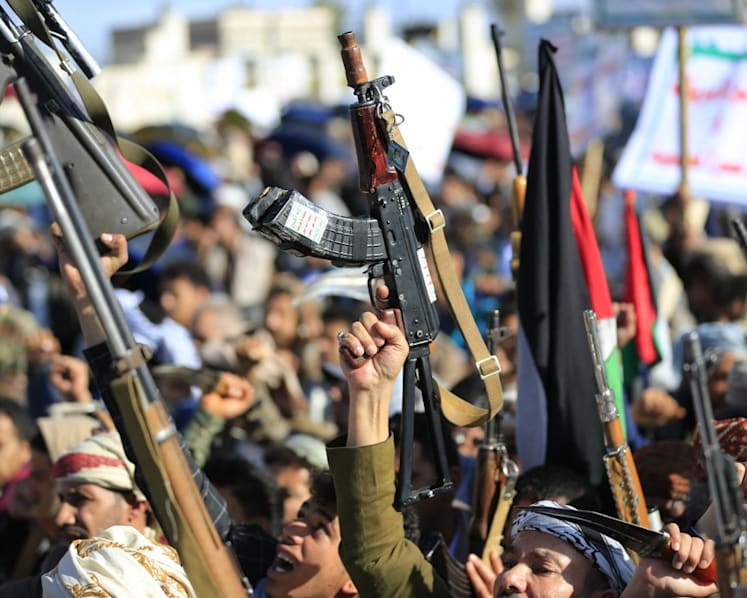
But fresh tit-for-tat attacks between the two, and news that Yemen's Houthi rebels had joined the fight with Tehran, sent Brent crude soaring seven percent to US$102 to a on Thursday, the highest since late May.
Both main contracts fell more than 1 per cent Friday with Brent hovering just below US$100.
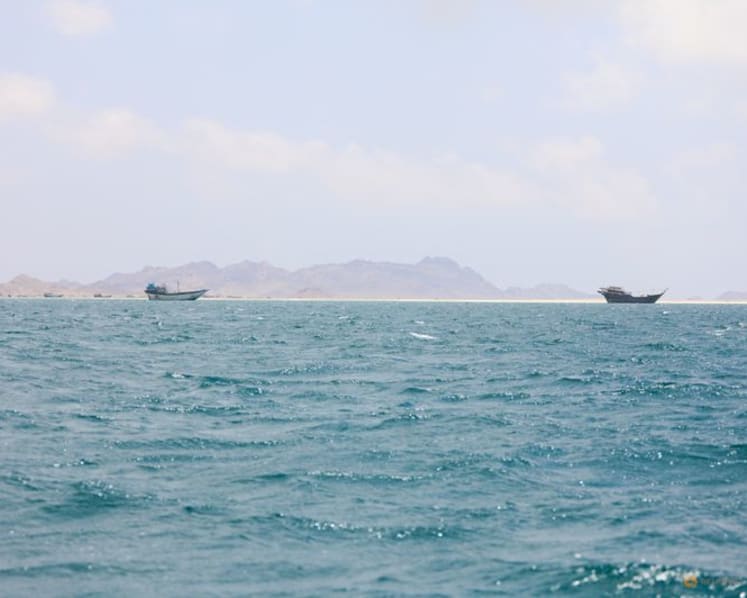
Iran and the US vowed to step up attacks on one another after the Houthis struck Saudi Arabia's shipping in the Red Sea and declared a blockade of Saudi ports.
Saudi Arabia had been using the Red Sea to export millions of barrels of oil that normally flowed through the Strait of Hormuz, so the closure of that shipping channel would remove more oil from the market.
United Nations Secretary-General Antonio Guterres warned the "situation is getting out of control. It is teetering on the edge of the unimaginable".
SPI Asset Management's Stephen Innes said "oil, rates and AI had fused into a modern market Chimera: crude feeding the inflation inferno, the bond market carrying that heat into higher yields and technology discovering that even the strongest growth story can burn when the cost of capital rises.
"What had looked like three separate threats was now moving as one beast."
Adding to the dour mood was news Thursday that Washington would impose new tolls of 10-12.5 per cent on dozens of trading partners - including China and India - over forced labour concerns.
The administration has moved swiftly to rebuild Donald Trump's tariff wall after the Supreme Court struck down a host of his duties in February - dealing a blow to his ability to unleash steep levies at will.
After the setback, the president tapped different authorities to reimpose a 10 per cent tariff on imports. But this only lasts 150 days and expires Friday.