Anti-Muslim incidents rise after Bondi Beach attack, stirring anxiety among Indonesians in Australia
Reports of Islamophobia in Australia have increased following the Dec 14 attack, and some Indonesian Muslims say they feel anxious about stepping out of their homes.

This audio is generated by an AI tool.


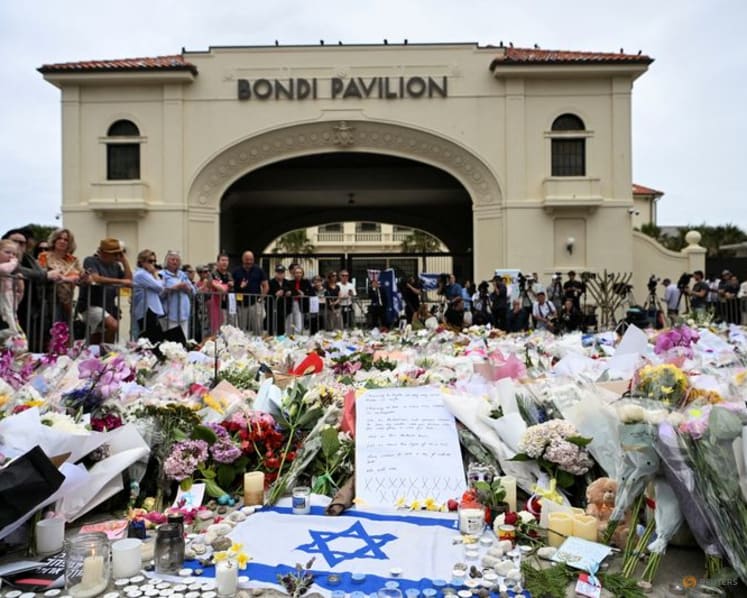
JAKARTA: Sydney’s Bondi Beach shooting, in which two gunmen inspired by Islamic State targeted a Jewish celebration, has left some Indonesian Muslims in Australia feeling anxious about stepping out of their homes amid a rise in reports of Islamophobic incidents.
For Neti (not her real name), a student studying at the University of New South Wales in Sydney, the days after the Dec 14 shooting were filled with fear.
The main campus of her school in Kensington is located about 8km, or a 10 to 20 minute drive, from Bondi Beach, where father-and-son duo Sajid and Naveed Akram allegedly killed 15 people in an attack targeting a Hanukkah event.
Sajid, an Indian national, was killed by the police during the attack. Naveed, an Australian-born citizen, has been charged with 59 offences, including 15 counts of murder and one of committing a terrorist act.
The pair had travelled to southern Philippines in the weeks before the shooting, fuelling suspicions they may be linked to extremists in a region with a history of militant insurgencies. But Australian police have said they acted alone and were not part of a wider terrorist cell.





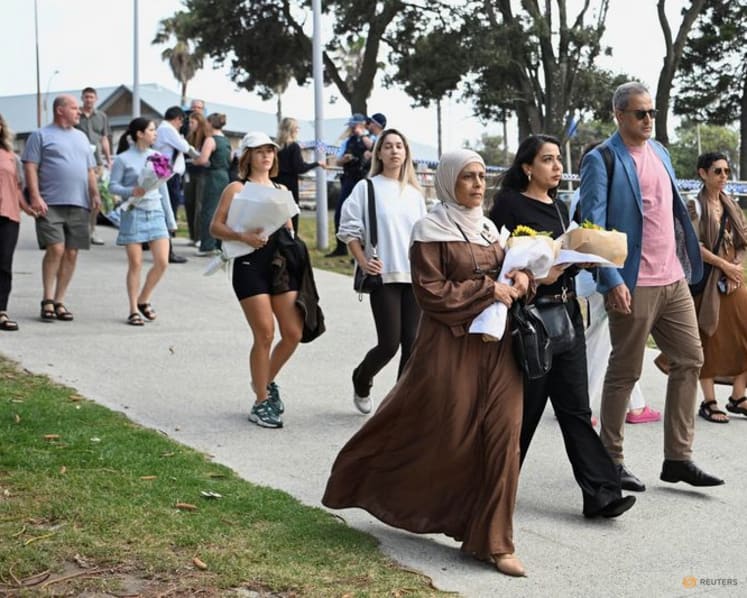
Neti, 46, who wears a hijab, said she was initially afraid to leave her house, particularly when accompanying her three daughters to school.
"I was afraid to go out … Especially since we all wear hijab and use public transport, we are very easily identifiable," she told CNA Indonesia on Dec 16.
"I even thought about not going to school and cancelling my campus clinic appointment. But in the end, I went anyway," she said.
Across the country, in Perth, Hani Noor Ilahi, 36, a student at the University of Western Australia, said that while the environment at her multicultural campus has not changed, it is a different story beyond its walls.
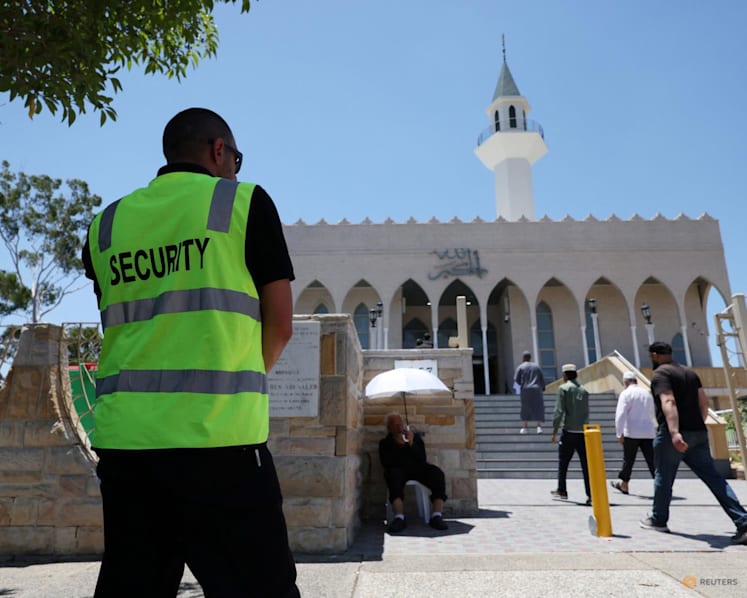
In city areas, especially during Friday prayers, mosques are now guarded by the police, she said.
The police presence followed incidents in which mosques became targets of vandalism after the Bondi Beach shooting.
On Dec 18, the walls of Bald Hills Mosque in Brisbane, Queensland, were spray-painted with hate graffiti and swastika symbols associated with Nazism. The perpetrators are still at large.
Said Hani, who also wears a hijab: "For those of us whose religious identity is visible, it makes us more worried. Especially when we are outside Muslim environments, there is always this sense of anxiety about how they see us."
INCREASE IN REPORTS OF ISLAMOPHOBIA
Their concerns are not unfounded. Reports of Islamophobia in Australia have increased following the Dec 14 shooting.
The Islamophobia Register Australia, a community organisation that monitors and reports such incidents in the country, received 126 reports of hate incidents in the week after the shooting. This was a 10-fold increase compared with the previous two weeks.
Separately, the Australian National Imams Council also reported an increase. On Dec 29, the council said in a statement that nine mosques and Islamic study centres in Australia had reported acts of vandalism or serious security incidents requiring police involvement.
These included hate graffiti at Melbourne Islamic School, pieces of pork thrown into a Muslim cemetery in Narellan, New South Wales, as well as incidents in which Muslim women were spat on, verbally abused and threatened in Perth, Western Australia.
Disinformation about Islam and Muslims has also surged on social media, according to the Australian Associated Press (AAP) Fact Check.
For instance, an old video resurfaced showing a group of people at a protest in Sydney in October 2023 chanting "Allahu Akbar" (“Allah is the greatest” in English). It was recirculated across social media platforms such as Facebook, Instagram and X in the week following the attack.
"(It was) an old video of a group of people attending a protest (that) was taken out of context," said Sara Cheikh Husain, an Australia-based expert on Islamophobia and author of the book “The Politics of Anti-Islamophobia in Australia: The Case of Muslim Community Organisations”, in a written interview with CNA Indonesia.
"The reposts of this video and other similar appropriated content of pro-Palestine gatherings, held similar Islamophobic messages describing Muslims in Australia as angry men, Hamas supporters, and refugees celebrating the Bondi shooting," she said.
According to Ridlwan Habib, a terrorism and intelligence observer from the University of Indonesia, Islamophobia in Australia is not a new phenomenon that emerged solely from the Bondi Beach attack. He said the issue has deep roots and is part of a broader context, including the involvement of some Australian Muslims in global extremist networks.

MULTIPLE ISSUES CONFLATED
Islamophobic posts made after the Bondi Beach attack span a wide range of issues related to Islam and immigration, said Ridlwan. "Especially about the hijab, then about immigrants, then about passport security issues," he told CNA Indonesia.
Multiple, distinct issues have been conflated into a single framework of threat, said Sara.
"The patterns are the same throughout. It is an Islamophobic mishmash of the three interconnected narratives of blame encompassing the three groups targeted by Islamophobia: Muslims, pro-Palestinians, and refugees/migrants," she said.
Sara said the “extremism” label has expanded and is being used to refer to a much broader spectrum, including pro-Palestinian activism and movements, even when there is no direct connection.
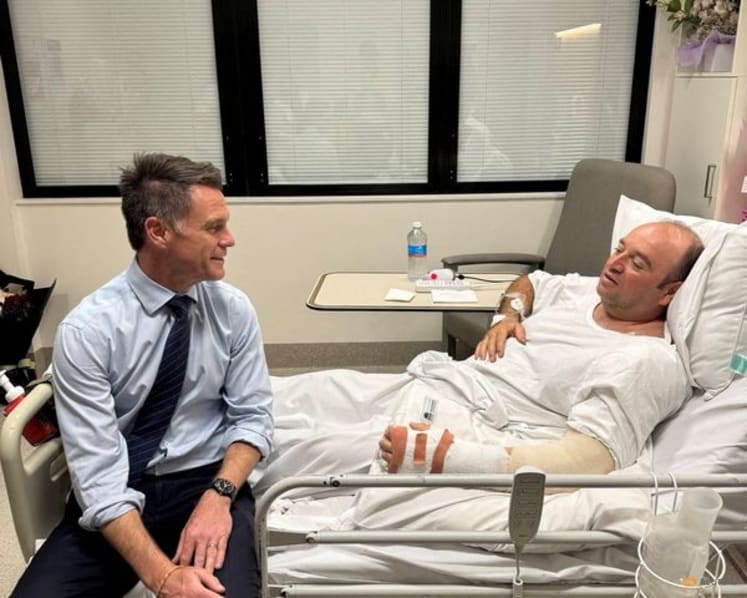
Sara said the bravery of Ahmed Al-Ahmed – a fruit vendor from Syria who disarmed one of the Bondi Beach attackers despite being shot by the other alleged gunman – should have served as a counter-narrative to Islamophobia and challenged the generalisation of Muslims "if we were … living in a logical, apolitical and critical space".
But Ahmed’s actions did not stop the spreading of misinformation to demonise Muslims, she said.
SCHOOLS, COMMUNITY OFFER SUPPORT
Ridlwan said community support is crucial in correcting the "radical Islam" narrative that has proliferated on social media – for instance, through campaigns promoting religious moderation.
"There are moderate Islamic imams there. They need to be more active in campaigning that Islam is peaceful," he said. An imam is a religious leader who offers guidance in worship and religious practice.
The Indonesian community should also stand together, and Indonesian Muslim students in Australia must continue to maintain communication with local authorities, he added, "because the security of foreign nationals is also part of the responsibility of the local police”.
Neti and Hani said they have been closely following advisories issued by both the Australian and Indonesian governments following the Bondi Beach attack.
The Indonesian Consulate General in Sydney, through its Instagram social media account, has issued an advisory urging all Indonesian citizens there to remain calm while increasing vigilance and caution in the wake of the Bondi Beach shooting.
Hani said she received a security advisory and support email from her university shortly after the attack. The email contained contact information for students who may have been affected by the incident.
Neti said similar security advisories also came from parties such as the non-profit health and social services organisation Mission of Hope, which were shared informally via WhatsApp to provide support to anyone affected.
Neti and Hani hope various communities in Australia will regain a sense of security while being able to express their identity.
"Hopefully people who have visible identities, for example those who wear hijab, those who wear robes or turbans, or wear clothing that signifies a particular religious, ethnic or racial identity, feel safe to express what is part of their identity," Hani said.
"My first impression when I came to Australia was that various multicultural communities live side by side, and I hope it will always be that way,” said Neti.