Indonesia on ‘right track’ to hit GDP, investment goals; Danantara keen to work with Temasek, Khazanah: Minister
At the CNA Summit held in Jakarta on Thursday (Feb 5), Indonesia’s Investment and Downstream Industry Minister Rosan Perkasa Roeslani called for more collaboration between the government, private sector and foreign investors.
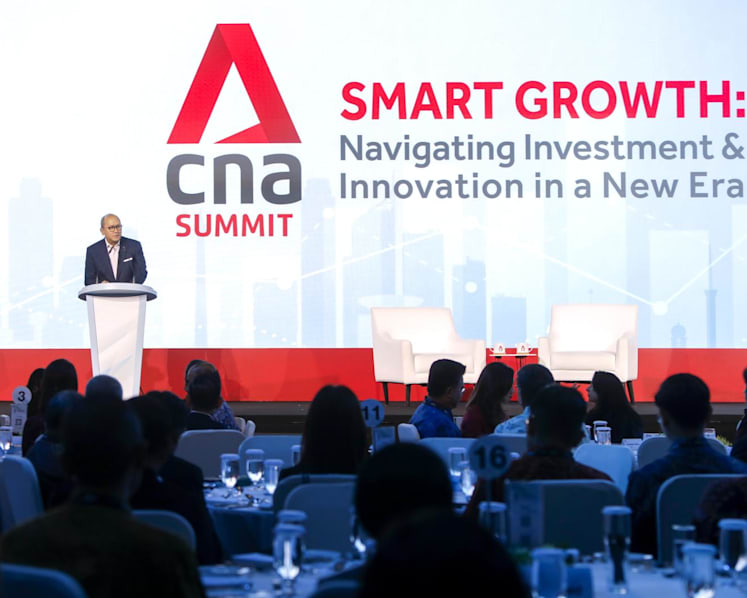
Indonesian Investment and Downstream Industry Minister Rosan Perkasa Roeslani speaking at the CNA Summit 2026 in Jakarta, Indonesia on Feb 5, 2026. (Photo: CNA)

This audio is generated by an AI tool.




JAKARTA: Indonesia is on the “right track” to meet its economic growth targets and attract more investments, said the country’s Investment and Downstream Industry Minister Rosan Perkasa Roeslani, as he expressed interest in working with foreign state investors such as Singapore’s Temasek and Malaysia’s Khazanah in joint investments within the region.
“Heading to the 8 per cent economic growth, we believe we are on the right track but we just need to accelerate the implementation,” he said on Thursday (Feb 5), citing how Indonesia exceeded its national target last year in attracting US$120 billion in investments as he urged more collaboration between the government, private sector and foreign investors.
Rosan, who also serves as the chairman of Indonesia’s Investment Coordinating Board (BKPM) and the CEO of Indonesia’s second sovereign wealth fund Danantara, was speaking at the CNA Summit 2026 held at Ritz-Carlton Jakarta, Pacific Place.
It is the first time the flagship summit has been held outside Singapore since its launch in 2020. The latest event brought together leaders of major investment institutions in the region, including Temasek, Danantara Indonesia and Khazanah Nasional.
To meet the 8 per cent growth target set by President Prabowo Subianto by the end of his first term, Indonesia needs US$800 billion investment by 2029, which Rosan said is about a 40 per cent increase from the past decade which recorded US$500 billion in investments between 2014 to 2024.
“In Indonesia, we have a lot of potential but I think the most important for us to have quality investment, we need to create more jobs, that’s key because human capital is key for us if we want to have more sustainable growth in Indonesia,” he said.
“Every year, we produce about 2 million babies (in Indonesia). So every three years, (we can) produce one Singapore,” Rosan added as he emphasised his country’s need not only for “quality investment … but also quality jobs".
“If you talk about potential here in Indonesia, I think it’s aligned with the quality of investment all over the world," he added.
Singapore’s population is approximately 6.11 million, as of June 2025.





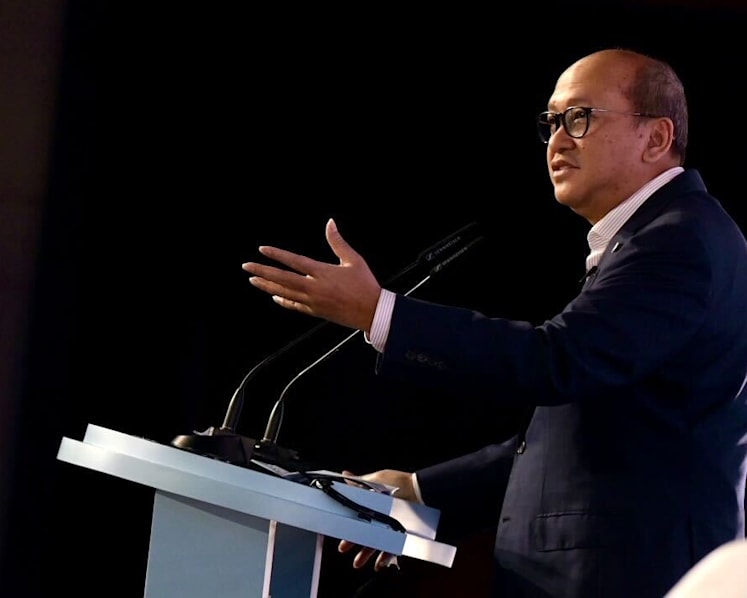
The minister also spoke about Indonesia’s potential in renewable energy and digital economy, with the government preparing to attract more data centre investments, especially in Batam.
Beyond job creation, Rosan underscored the importance of improving Indonesia’s investment climate by simplifying regulations and ensuring policy consistency and predictability, long seen as concerns for foreign investors.
“What they want in order to invest in Indonesia is certainty, they know that when they invest, it’s a long-term commitment and there is always a risk … so certainty is very important,” Rosan said at a fireside chat after delivering his keynote speech.
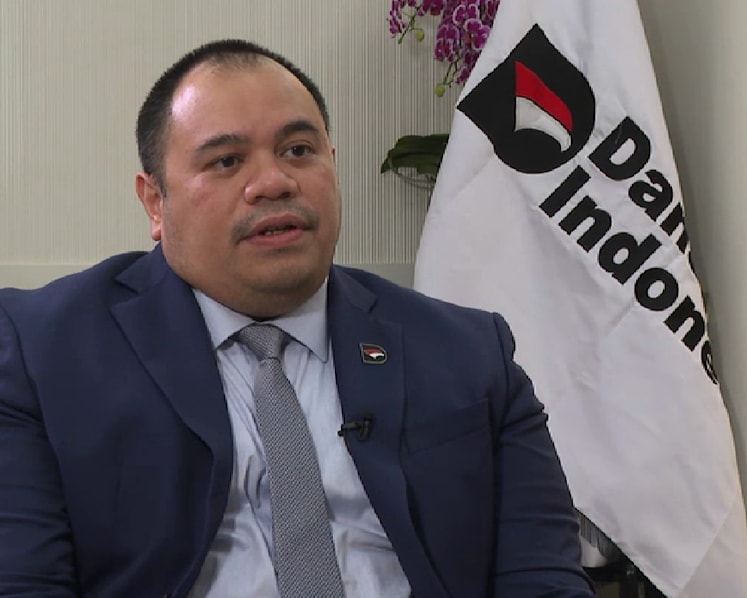
Rosan also spoke of the role of Danantara - which was launched in February 2025 and now manages total assets of around US$900 billion, according to IDN Financials in January this year - in consolidating state-owned enterprise assets as he expressed interest in partnering with ASEAN peers like Temasek and Khazanah.
“I think this is the time for us to have more collaboration among ASEAN countries, not only in terms of trade but also in terms of investment …. There is still untapped potential that we can work together to achieve all the goals,” he said at a fireside chat held after his keynote address.
“We complement each other and we can learn from each other so for Indonesia, we are definitely open for business.”
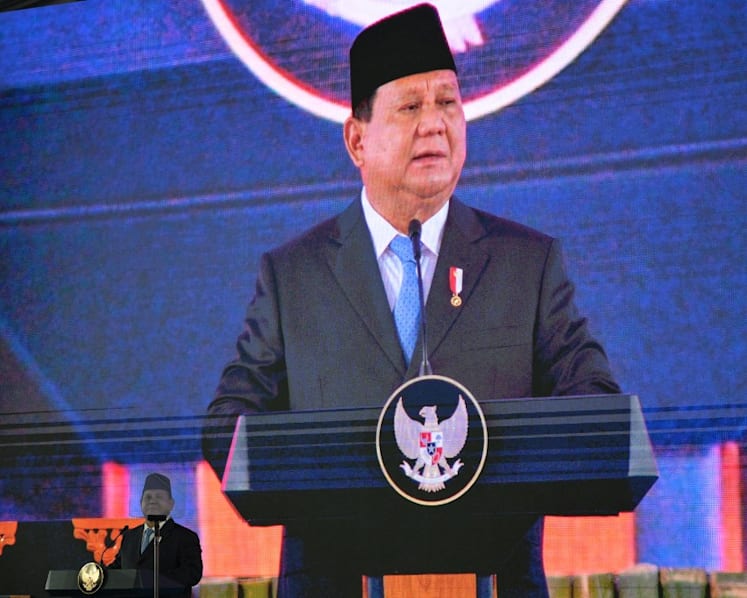
The summit this year, titled “Smart Growth: Navigating Investment and Innovation in a New Era” discussed converging pressures faced by leaders today, including shifting geopolitics and capital flows, the rapid adoption of digital technologies and artificial intelligence, and rising expectations for inclusive growth.
Previous editions of the summit have explored themes ranging from the digital economy and mental wellness to green recovery and leadership trade-offs.
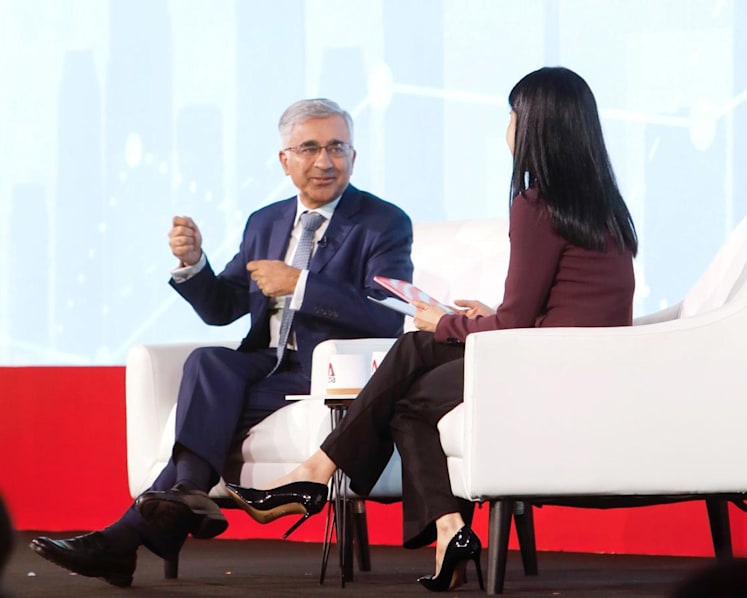
WHAT INVESTMENT CHIEFS OF TEMASEK AND KHAZANAH SAY
In a fireside chat moderated by CNA presenter Elizabeth Neo, Temasek’s Chief Investment Officer Rohit Sipahimalani spoke about adopting a long-term perspective in making investments, noting the level of uncertainty that is said to continue to persist over the next few years at levels not seen in the last 40 years.
This is driven by geopolitics, rising nationalism, protectionism and artificial intelligence which could be a huge opportunity but also disruptive for a number of companies, he said.
Rohit shared that for Temasek, 60 per cent of its investment portfolio is in businesses that it deems as resilient.
This refers to businesses that have a “narrow range of outcomes”, he said. These businesses could include those that have access to large domestic markets, are self-sufficient from a technology supply chain, have liquidity and low leverage as well as not high levels of uncertainty such as those linked to AI, according to Rohit.
“It is tough to navigate but if you have the approach of resilience, have the approach that you want to have in things that are more uncertain, you have the flexibility to pivot, I think you can navigate the environment,” he said.
As of Mar 31 last year, Temasek’s net portfolio value stood at S$434 billion (US$340 billion).
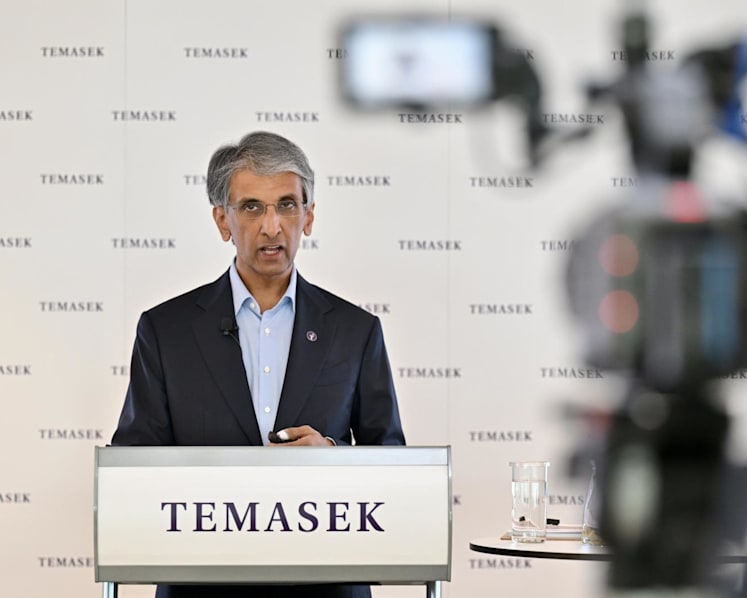
In another fireside chat, Khazanah Nasional chief investment officer Hisham Hamdan said that while economic growth in countries such as Malaysia has been strong, capital market returns have lagged, as he called for a more diversified economy.
Hisham raised concerns about Malaysia becoming a “hotel economy” where economic activity takes place domestically but much of the value is captured overseas, pointing to global travel platforms such as Booking.com and Trip.com as examples.
“We want to capture most of the value, transactions happening here (in Malaysia),” Hisham said.
“That is perhaps where Khazanah, together with our friends at Danantara and Temasek, can rise together.”
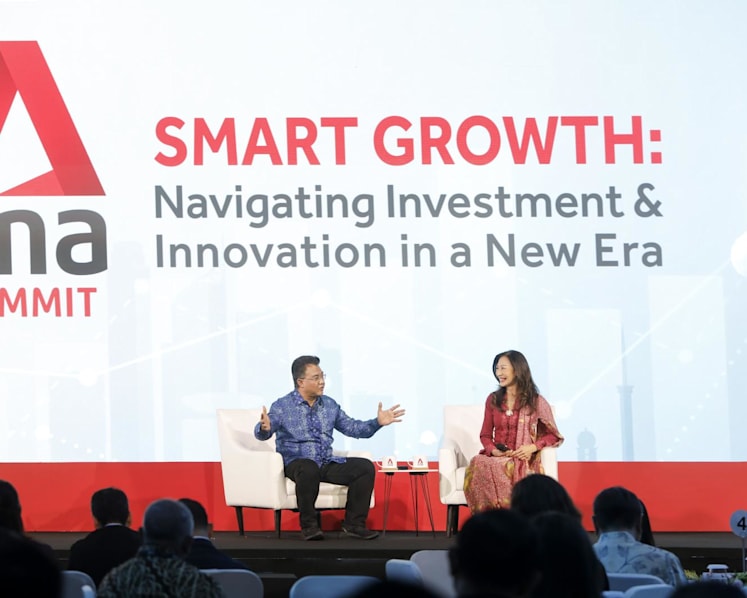
On geopolitics, Hisham said Malaysia’s approach to the United States and China is “not either or”, but it would engage with both countries.
He noted that the US is Malaysia’s largest investor while China is the country’s biggest export market.
Malaysia’s Khazanah manages about US$40 billion of assets, reported local media.


STRONG CONSUMER MARKET AND CHANGING AI CLIMATE: BUSINESS LEADERS
In another panel discussion, several business leaders expressed confidence in Indonesia’s long-term investment potential despite national and global headwinds and market fluctuations.
Hans Patuwo, Group CEO of GoTo Group, Indonesia’s largest digital ecosystem, stressed that the fundamental “ethos” of Indonesia remains unchanged, supported by a perennially attractive consumer market despite recent headlines of Indonesia’s stock exchange rout.
Last week, the benchmark Jakarta Composite Index fell sharply, dropping more than 8 per cent on Wednesday and Thursday, triggering multiple trading halts and wiping out significant market value.
This came after the MSCI Index raised concerns on investability and a potential downgrade to frontier-market status.
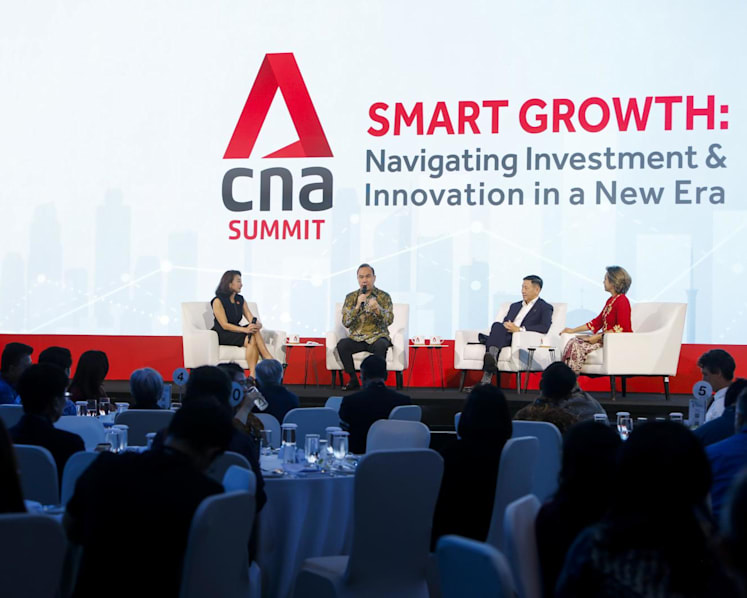
Asked about possible actions to restore Go-to’s share price towards its original IPO levels, he cited the need to understand and rethink its social contract with the public because "when our drivers and our partners do well, then we do well".
He added that improving investor trust was necessary and that transparency and consistency were key given how investors are "very sophisticated" these days.
"They will make up their own minds and their own decisions on whether we are a good investment or not and what will happen to the share price," Patuwo said.
He further noted that the nature of business has shifted in the AI era, requiring a focus on velocity – a combination of speed and direction – rather than speed alone, and noted that Go-to has built “sufficient technological muscle” in the past years to outsmart scammers.
Ng Tian Chong, CEO of Singtel Singapore, echoed these sentiments on the strength of Indonesia’s consumer base, dismissing recent market noise as “transient” and noted Indonesia’s demographics as a huge driver.
“The mid-to-long term opportunities are still there. The market is being repaired in some industries, especially like mine, and I think those are some green shoots to hold onto,” he added, pointing to Singtel being the largest minority shareholder with its long-standing stake in Indonesian Telco Telkomsel.
Aileen Goh, country manager for Indonesia and Timor-Leste at Mastercard, added that “there is no doubt Indonesia is going to be a powerhouse as far as the digital economy is concerned.”
"As a technology company, we are here for the long term. Mastercard’s view has always been that we follow the government vision and follow the industry to scale that vision and we build talent to sustain that vision," she said.
Panellists also shared their visions on accelerating their companies’ progress ahead of Indonesia’s centennial in 2045, with a focus on digital economy readiness, AI-driven workflows and potential dangers.
For instance, Ng said Singtel has been tapping AI and machine learning while working with regulators to combat scam calls, although bad actors are constantly “changing their modus operandi”, adding that Singtel has been blocking about 10 million scam calls and text messages monthly.
“A TIME OF AMBITION AND STRATEGIC RENEWAL”
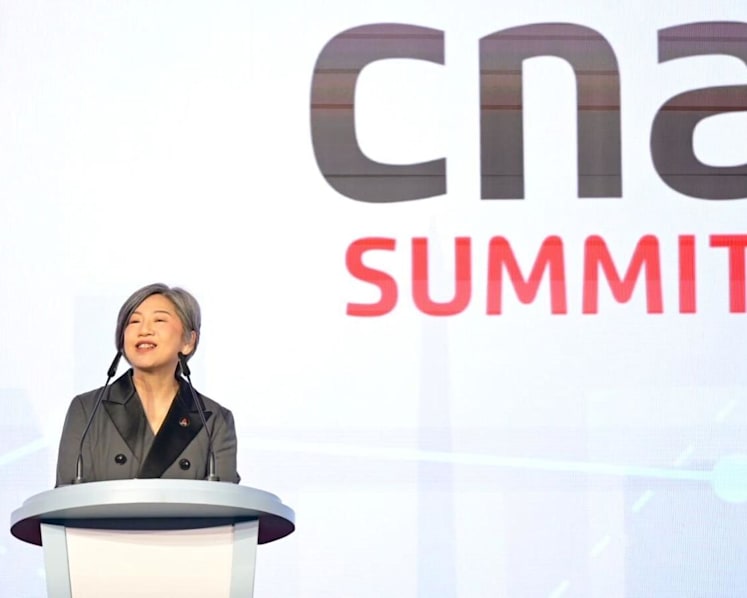
Giving the opening remarks at the summit, Mediacorp CEO Tham Loke Kheng underscored the importance of CNA’s mission to help the world understand Asia while strengthening the confidence of Indonesian leaders, investors and policy makers.
This included launching CNA’s Bahasa Indonesia website in April 2024 to reach a wider Indonesian audience. The site now draws 1.5 million page views monthly.
“We are also meeting at a time of ambition and strategic renewal under President Prabowo Subianto's administration that is felt keenly across the region,” Tham said.
“This environment that is rich with opportunity yet shaped by greater complexity, is exactly why we have chosen smart growth as our focus today,” she added, stressing the backdrop of geopolitical tensions, the breakneck pace of AI and a more disciplined capital environment.

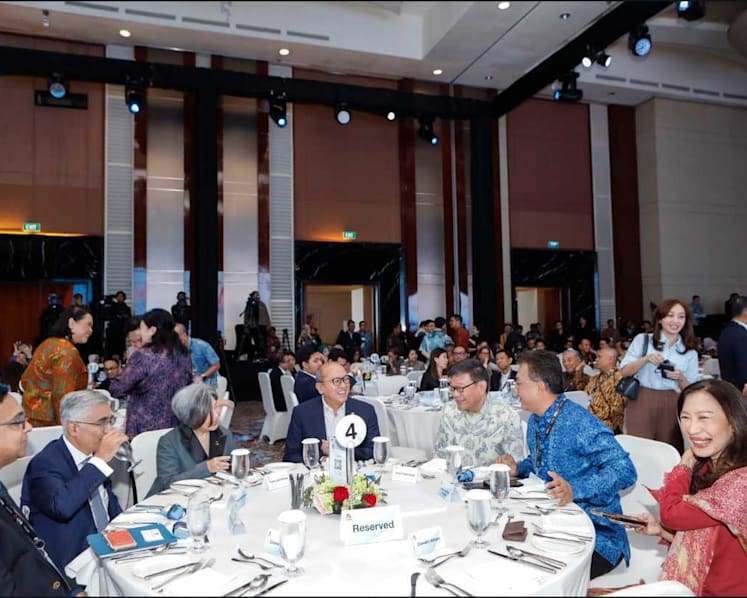
The CNA Summit on Thursday was attended by about 350 people, including policymakers, business leaders and academics from across the region.
A Member of the Jakarta Provincial House of Representatives (DPRD DKI Jakarta) Wa Ode Herlina said that discussions held during the summit were aligned with Indonesia’s national interests and helped to elevate Jakarta’s local needs.
“With this event, we hope investment can grow and develop, particularly local investment in Jakarta, especially for first-time investors and small- to medium-scale (MSME) players.
There are still many MSME players in Jakarta who need support,” she told CNA.
Research and advisory senior analyst Muhammad Alif Alauddin said he attended the summit to tune in to the perspectives from Malaysia and Singapore, “because Danantara is very, very new for us, (set up only a year ago)”.
“I (was) mostly looking forward to the experiences of Khazanah and Temasek – how they are engaging global investors in supporting the domestic market and also the foreign market as well,” said Alif of KRA Group, a public affairs and political risk consultancy.
Additional reporting by Neo Chai Chin and Asyraf Kamil