







Indonesia to ban social media access for under-16s, says communications minister amid a ‘digital emergency’
Implementation will begin on Mar 28 this year, with Communications Minister Meutya Hafid saying that the regulation makes Indonesia the “first non-Western country” to introduce age-appropriate access restrictions in the digital space.
JAKARTA: Indonesia said on Friday (Mar 6) it would ban social media access for children under 16, citing threats from online pornography, cyberbullying, online fraud and internet addiction, in a move its minister stressed has made it the “first non-Western country” to introduce age-appropriate access restrictions in the digital space.
This even though an expert whom CNA spoke to said that implementation may be difficult to fully enforce due to the nature of social media applications.
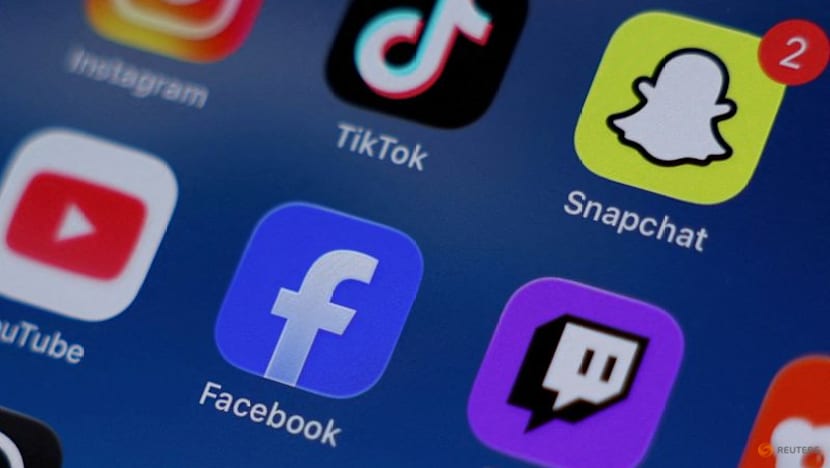
Communications Minister Meutya Hafid had said in a statement that accounts belonging to children under 16 on high-risk platforms will start to be deactivated, beginning with YouTube, TikTok, Facebook, Instagram, Threads, X, Bigo Live, and Roblox.
"The government is stepping in so that parents no longer have to fight alone against the giants of the algorithm. Implementation will begin on Mar 28, 2026," she added.





The ban will be introduced in stages "until all platforms fulfil their compliance obligations".
“The reasoning is clear: our children face increasingly real threats. These range from exposure to pornography, cyberbullying, online scams, and most importantly, addiction.”
Meutya acknowledged that the implementation of the regulation will be a major challenge and cause initial inconvenience, with tens of millions of children who are active internet users.
“Children may complain and parents may feel confused about how to handle those complaints,” the minister said, calling the regulation as the “best step” the government could take in what she described as a “digital emergency”.
"We are taking this step to reclaim the sovereignty of our children's future. We want technology to humanise humans, not sacrifice our children's childhood."
In an earlier statement on Thursday before the ban was announced, Meutya said that excessive use of digital platforms could affect children’s mental health and development, adding that the main target of the regulation is technology companies, not children or parents.
Sanctions will be imposed on platforms that fail to fulfil their child protection obligations, she warned.
‘DIFFICULT TO ENFORCE’
Bimantoro Kushari Pramono from Universitas Indonesia told CNA that age-based restrictions are difficult to fully enforce, as most social media platforms rely on self-declared age systems.
“Users are simply asked to enter their date of birth when creating an account. Technically, anyone can claim to be older than they actually are,” he said.
However, the lecturer in human-computer interaction added that the regulation serves as a strong regulatory signal that the Indonesian government is “beginning to demand greater responsibility” from digital platforms for the social impacts of their products.
“In the long-term, policies like this could encourage platforms to develop more robust-age verification mechanisms, stronger child-protection systems or safer platform designs for younger users,” said Bimantoro.
“This policy is not merely about restricting children’s access, but also part of a broader negotiation of power between the state and global digital platforms in governing the digital space.”
On Thursday, Indonesia’s communications ministry said that it had issued a “stern warning to Meta for failing to curb the spread of online gambling and disinformation.
The warning came after Meutya on Wednesday made an unscheduled visit to Meta's operational office in Jakarta.
Meta was warned over its low level of compliance with Indonesia's regulation regarding the spread of content that involved disinformation, online gambling, defamation and hate speech across its platforms, such as Facebook, Instagram, and WhatsApp, the ministry said.
Meta had taken action over only 28.47 per cent of flagged content related to online gambling and disinformation, the ministry said then.


A European Union expert group began work this week on a similar social media ban for children after Australia in December required TikTok, YouTube, Snapchat and other sites to remove accounts held by under-16s.
Brussels is keeping a close eye on how successful the Australian ban proves to be, with legal challenges already filed against it.
France, along with Denmark, Greece and Spain, has been pushing for similar action at EU level, and India has been considering a teen social media ban of its own.
In Malaysia, Communications Minister Fahmi Fadzil said on Thursday that children under the age of 16 are not allowed to open their social media accounts, but accounts managed by parents on behalf of their children are permitted.
He said that the government is currently implementing a regulatory sandbox with social media platforms to introduce a minimum age limit of 16 for new account registrations, reported the New Straits Times.
He said Malaysia's approach differs from the Age Assurance model used in Australia, with the country instead leveraging specific legislation relating to the MyKad as an additional security element for identity and age verification.
Additional reporting by Izzah Aqilah Norman.





