IN FOCUS: Why have Malaysia’s homes remained ‘seriously unaffordable’ for a decade and counting?
In 2024, Malaysia’s median house price was more than four times its median annual household income. To reverse this, the government, developers and financial institutions must all play their part, analysts say.
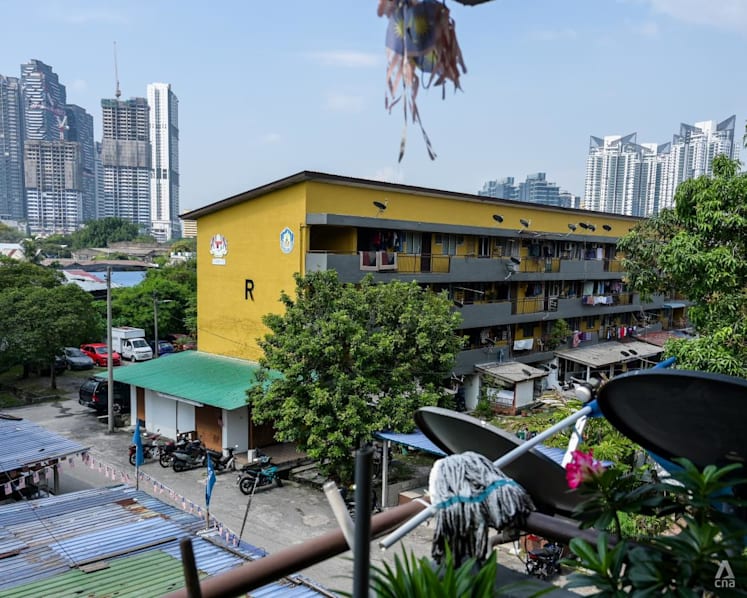
A public housing project in Dato Keramat, Kuala Lumpur, with new high-rise housing in the background. (Photo: CNA/Fadza Ishak)

This audio is generated by an AI tool.


KUALA LUMPUR: In the past year or so, Nur Syarah Alya Nizamuddin stepped up the hunt for her first home, eager to settle down near her parents who live in Shah Alam, Selangor.
Having grown up there, the 27-year-old felt comfortable in the city and did not want to venture too far from her parents, as her only sibling is based abroad.
But house prices in the Greater Kuala Lumpur area, considered Malaysia’s economic hub with a high concentration of jobs, quickly dampened her spirits.
In 2025, the median house price in Kuala Lumpur and Selangor was RM560,000 (US$142,300) and RM470,000 respectively, a 7 per cent and 4.4 per cent increase from the year before, according to official data. This is a spike from the 1.6 per cent and 0.4 per cent increase in 2024.
The Malaysian federal government has defined affordable homes as having a maximum price of RM300,000.
“Looking at property prices, I wondered to myself, ‘When am I going to own a property? Do I need to be a boss or manager first?’” Syarah, an administrative assistant in the medical industry, told CNA.
Syarah restricted her search to government schemes that reserved affordable homes for income earners below a cap, as these were the only options that fit her budget.






In December, Syarah bought a new unit in Shah Alam for RM290,000 under the Rumah Selangorku scheme, which is only open to buyers with a maximum household income of RM10,000.
She is servicing the home loan by herself and plans to get married soon. The monthly loan repayments take up about 30 per cent of her monthly salary.
Her new apartment, which is expected to be completed in the fourth quarter of 2028, is a roughly 30-minute drive from downtown Kuala Lumpur without congestion.
“The government’s (affordable housing) initiatives have allowed us to purchase our own property, but it can do more,” she said, calling for a review of whether the housing market in major cities was really targeted at Malaysians or foreigners.
“For me, the price range in Kuala Lumpur is too high; it is not suitable for those of us with normal jobs. That’s why I feel it’s very expensive to purchase a property in Malaysia.”
According to official data, Malaysia’s homes have been “seriously unaffordable” since 2014, when the country’s median house price was almost five times its median annual household income.
This house price-to-income ratio, or median multiple, is a method recommended by the World Bank and United Nations to gauge housing affordability. Home prices are considered affordable when they are three times or below that of household income.
A decade on in 2024, homes in Malaysia have become slightly more affordable, when the median multiple dropped from 4.9 to 4.2, though this score still falls in the “seriously unaffordable” range.
On Feb 26, Senator Michael Mujah Lihan told parliament’s upper house that property prices in major cities across Malaysia had soared to levels that were increasingly unaffordable.
“Although construction costs and property values have risen, average wage growth has not kept pace,” he reportedly said, calling for the government to implement stronger price controls and more targeted tax incentives.
A month earlier, Parit Member of Parliament Muhammad Ismi Mat Taib had asked how the government was tackling high home prices, which he described as a burden on first-time buyers.
Analysts say homes remain unaffordable due to slow income growth, longer loan tenures, and rising costs for developers. These developers in turn price homes higher for larger profit margins.
Despite the marginal improvement in affordability, they warned that the consistently high prices mean homes are beyond the reach of many Malaysians, and contribute to the rising share of residential loans in household debt.
“It is almost impossible for first-timers to buy a property in centralised locations especially in the urban areas,” Olive Tree Property Consultants executive director Tan Wee Tiam told CNA.
“We tend to opine that some forms of land price (government) subsidy are essential to bring down the development cost and pricing of affordable houses.”
IS THE GOVERNMENT DOING ENOUGH?
Recognising that homes on the open market can be unaffordable for some Malaysians, the federal and state governments have introduced several housing schemes to help the bottom 40 per cent and middle 40 per cent income earners.
These schemes have eligibility criteria that include citizenship and household income, and offer homes capped at around RM300,000 with hybrid financing models, including the possibility of rent-to-own.
The federal government’s schemes include PR1MA, where a government-linked company builds affordable homes across the country either directly or through voluntary joint ventures with private developers. Prices range from RM150,000 to more than RM500,000, depending on location and project.
Residensi Wilayah is another federal government affordable housing scheme that is designed for Malaysians working in the federal territories - Kuala Lumpur, Putrajaya and Labuan. Prices range from RM200,000 to more than RM400,000.

State governments, which have vested power over their land, have their own affordable housing schemes.
But unlike the federal government, states - which have more financial and capacity constraints - do not directly build the affordable homes under these schemes. Instead, they impose a requirement on private developers to include at least 30 per cent of affordable housing for all projects.
One example is Selangor’s Rumah Selangorku - the scheme Syarah opted for - which offers homes priced from RM240,000 to more than RM350,000.
Another is Johor’s Rumah Mampu Milik that offers four tiers of affordable housing, with the highest tier capping household income at RM10,000 for homes priced between RM250,000 and RM300,000.
While experts welcomed federal government measures to keep homes affordable, including stamp duty waivers and credit guarantees, they said states should stop relying on developers to foot the cost of building affordable homes.
This is because developers end up charging more for open market units to offset the cost of building affordable housing in their developments. This, they said, brings up overall prices - a practice known as cross-subsidisation.

Instead, state governments should set aside land for affordable housing, to be sold to developers on the cheap with related compliance costs waived, said Siva Shanker, a director at international property consultancy Rahim and Co. Compliance costs are the total expenses a business incurs to adhere to laws, regulations and industry standards.
“The developer is a capitalist - his job is to make profit for stakeholders, not provide welfare. Welfare must be provided by the state,” he told CNA.
Siva pointed to how some developers could resort to building state affordable housing in locations further away from urban centres where land costs are cheaper, making it hard to attract buyers even in that lower-end segment.
This means affordable homes are potentially being built in unsuitable locations or places with poor amenities or connectivity, creating a mismatch between demand and supply and leaving these homes vacant.
In 2025, homes priced below RM300,000 made up the largest portion (37.7 per cent) of unsold completed units.
“The ones that (are suitable to be) bought then continue to remain unaffordable forever,” Siva said.
“This situation is a vicious cycle, and it's going to perpetuate itself if we don't resolve it quickly.”
But the government has cautioned that it has to “strike a balance” when intervening with price controls, as existing homeowners do not want to see the price of their homes go down.

At a panel discussion on housing reform at the Malaysia Economic Forum in February, Housing and Local Government Minister Nga Kor Ming maintained that the government wants to ensure home prices appreciate at a “healthy” rate.
“It is impossible to keep on controlling the price and make sure that it will not go up, because we are not a purely communist or socialist economy,” he said.
“As a government, our main duty is to ensure the price is not highly speculated. At the same time, the income of the people must slowly but steadily increase.”
This is why Prime Minister Anwar Ibrahim has made it a priority to woo trade and investment on his overseas trips, Nga added.
Malaysia attracted RM207.1 billion worth of foreign investment in 2025, a 20.9 per cent increase from the year before, Anwar said in March.
“When we attract more foreign direct investment, we attract more multinational companies, they will offer high-income jobs. So when income is high … housing will be more affordable,” Nga said.
But a 2024 report by Khazanah Research Institute (KRI) argued that the rapid rise of unaffordable homes in Malaysian cities was not primarily a wage stagnation problem.
“This is because no amount of wage increment, even with the minimum wage intervention, can realistically keep pace with Malaysia’s rapid house price escalation,” wrote KRI research associate Theebalakshmi Kunasekaran.
Theebalakshmi told CNA that addressing housing affordability requires a broader approach of structural reforms, pointing to a lack of comprehensive data - such as the income or needs of the local populace - to effectively analyse housing market dynamics at the local level.
“In Malaysia, state government agencies for housing do not collect or utilise on a frequent basis data on households (if they are available to these agencies) to monitor the demand for housing in their localities,” she said.
“This limitation may lead to an oversupply of housing units that are not in line with the needs of the population or, conversely, an inadequate supply of housing units that are in demand, resulting in a demand-supply mismatch.”
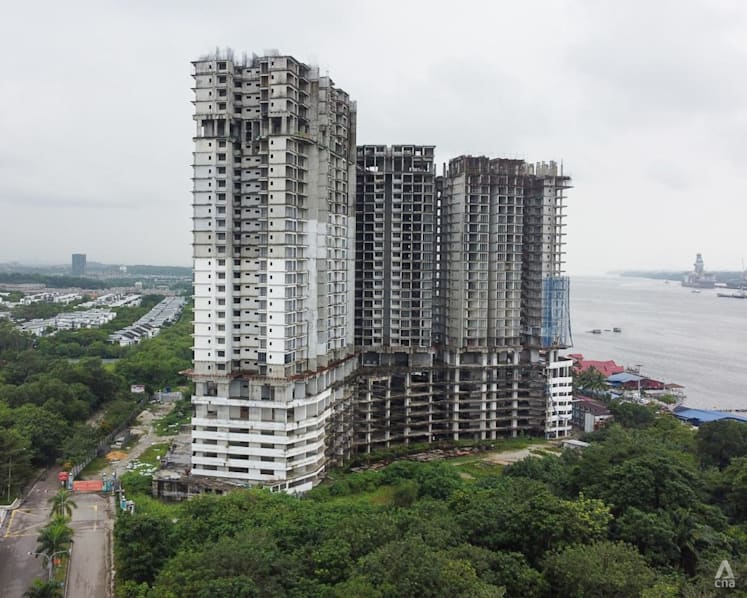
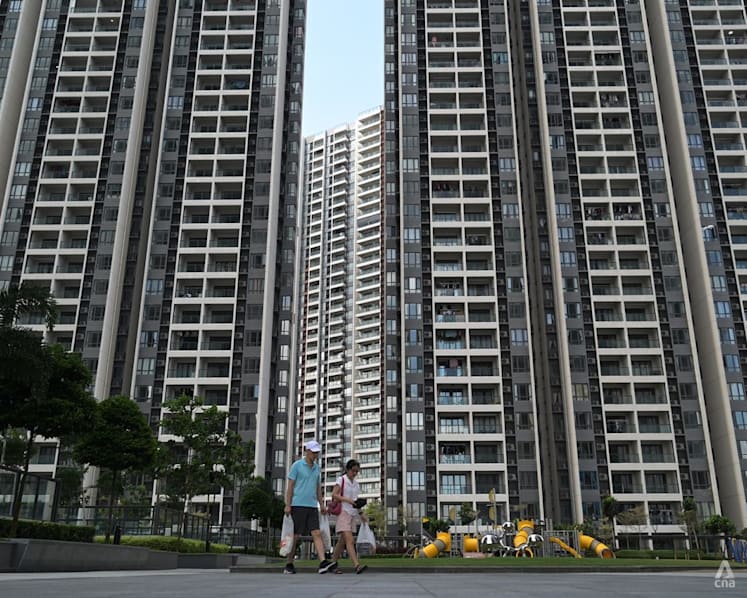
Muhammad Najib Razali, an associate professor of property economics at Universiti Teknologi Malaysia (UTM), said affordability is not just about headline prices but also proximity to jobs, reliable transport, and services.
In cities like London and Sydney, studies showed that affordable homes in certain areas experienced weak take-up because access to employment and commuting distances were more important factors.
“The government plays a critical role in shifting policies from blanket price-based definitions toward income-linked and location-sensitive strategies that reflect local earning capacities,” Najib told CNA.
“Streamlining planning approvals, reducing regulatory delays, and coordinating infrastructure provision can lower development costs and encourage supply in more accessible locations.”
Olive Tree’s Tan suggested for a single federal authority to manage the “entire lifecycle” of affordable housing to achieve true economies of scale, citing Singapore’s Housing and Development Board as an example.
This authority will oversee acquisition or transfer of land as well as construction and sale of affordable housing, he said.
“Instead of relying on private developers to find land, the government could release state-owned land specifically for affordable housing developments that are within close proximity to transit-oriented developments and other public amenities,” he added.
“This removes the ‘land cost’ variable, allowing prices to move toward a more affordable threshold."

Back at the panel discussion in February, Nga said that while the idea of a single authority looked “good on paper”, he stressed that Malaysia was “not an island republic”, but a federation with three tiers of government: federal, state and local council.
Noting state governments’ power over land matters, the minister said the National Affordable Housing Council - chaired by Anwar - engages with all states to ensure a “consistent” housing policy across the country.
CNA has contacted Nga’s office for further comments on the affordability of Malaysian homes.
Daniel Subramaniam, who bought his first home in 2021 - a resale unit in an apartment building in Petaling Jaya, Selangor that cost RM490,000 - said he was “fortunate” to have been earning enough to afford it at the time.
“Right now, my housing expenses covering my mortgage, taxes and condo fees come up to around 40 per cent of my take home pay,” the 31-year-old management consultant told CNA.
“I can imagine it'd be much harder for those earning less, and I think average salaries are less as well.”
But Daniel feels the government can only do so much when it comes to controlling house prices.
“It’s still subject to the market prices which are developer-set. And I don't see how they'd come down if new launches are still selling out and people continue to invest (in those developments),” he added.
How does Kuala Lumpur’s housing affordability compare to the region’s capitals?
The 2025 Asia Pacific Home Attainability Index found that home attainability in the region “remains constrained”.
This is despite incomes rising in some countries around the region and prices falling in a number of markets and segments, the report said.
The index also uses the median multiple method, but defines “attainable” as median home prices being less than five times the median annual household income.
Prepared by the Urban Land Institute, a global network of real estate and land use experts, the index looked at 41 cities across the region using data as at end-2024.
It found that Kuala Lumpur had a median multiple of 5.0 when considering the price of apartments.
This is more attainable than apartments in Jakarta (7.5), private property in Singapore (16.9), homes in Hanoi (19.1), condos in Manila (19.8), and condos in Bangkok (20.3).
The report noted that Singapore is the only capital city in the region to offer attainable homes, with its public housing apartments having a median multiple of 4.3.
“While market forces are, in aggregate, the most significant determiners of home attainability, government policy is the single biggest driver,” it said.
“Regulation and taxation can have dramatic effects on both the supply of and demand for housing.”
But governments face the challenge of pleasing citizens with conflicting priorities, the report added.
“Homeowners do not want to see the value of their homes fall. Prospective homeowners would like to see homes becoming cheaper.”
DEVELOPERS CAN PLAY “STRONGER ROLE”
Theebalakshmi from KRI called on developers to play a “stronger role” by building affordable houses that cater to what existing households prefer and can realistically afford, while ensuring “decent and adequate” quality standards.
She cited data to show that housing supply is instead “skewed” to higher-end homes: Newly launched housing units priced at RM500,000 and above accounted for 39 per cent of total launches in 2023. This proportion rose to 41 per cent in 2024 before dropping slightly to 40 per cent in 2025.
“It is highly likely that this trend of luxury housing supply is more pronounced in urban areas, where the job opportunities are concentrated,” she said.
Even before construction begins, developers face “significant expenses” related to land acquisition, infrastructure provision, compliance requirements and financing, Najib from UTM highlighted.
“Industry analyses frequently show that land and related development costs can account for a substantial share of total project value, particularly in urban regions such as Greater Kuala Lumpur where demand is strongest,” he said.
“These structural costs limit how low prices can go without affecting project viability, which explains why private developers tend to focus on mid-market segments unless supported by incentives or planning reforms.”

But Nor Iza Ishak, who bought her first home - a new apartment that cost almost RM400,000 in Sentul, Kuala Lumpur - four years ago, questioned if developers were really succeeding in targeting higher-income buyers.
The 37-year-old, who works as a secretary, noted that she has personally seen pricier units in the area she lives remaining vacant.
In 2025, homes priced above RM500,001 made up the second-largest portion (34.7 per cent) of unsold completed units, suggesting that more expensive units were not exactly being snapped up either.
“If this government wants to push the younger generation to buy their first home, they should really look into home prices and affordability,” Iza said.
“Because even if you build many homes but the prices are very high, what do you expect from the younger generation, whose incomes don’t match the prices?”
Theebalakshmi encouraged developers to reduce mismatch between demand and supply by conducting proper feasibility studies.
This ensures that houses are built at appropriate prices and building standards, with good location and within the affordability thresholds of the local populace in the area, she said.

Najib urged developers to adopt cost-efficient construction technologies, standardised designs, and better market research to align products with actual household formation trends, rather than speculative demand.
The housing minister Nga said at the panel discussion that he has always advised developers to conduct feasibility studies and reduce building costs through technology like industrialised building systems (IBS).
IBS is a construction technique in Malaysia where components are manufactured in a controlled environment either on- or off-site, before being transported and assembled with minimal site work.
“To ensure any IBS factory is sustainable, you need to have about 20,000 units per year to make sure your investment is commercially viable,” Nga said.
“Therefore, (my ministry) is going to look into a new modus operandi, whereby I want to actually link some of the developers together by supporting the IBS factory, to bring down the cost and make it more affordable.”
The Real Estate and Housing Developers’ Association of Malaysia (REHDA) told CNA that construction cost is just one component “among many others” that make up development cost.
“They also include labour cost including wages, land cost and compliance cost; the latter can be quite an exorbitant amount,” said REHDA president Ho Hon Sang.

Developers raise home prices after “careful consideration” of factors like increasing development cost and cross-subsidisation, but this in turn risks putting off potential buyers, he said.
“To address this, many developers have taken the decision to lower their profit margin, but not all developers are able to do this given that a lot of them are SMEs (small and medium-sized enterprises),” said Ho.
“We fear that this is not an entirely feasible step in the long run as historically, development costs will continue to rise.”
Ho hopes the blanket policy of requiring developers to include at least 30 per cent of affordable housing for all projects can be scrapped, highlighting that affordable homes are often sold at prices lower than the cost of building them.
“While we laud the government for their affordable housing efforts, the current practice of blanket affordable housing quotas at the same location as the developers’ free market residential units does hinder developers from optimising their resources to serve the people better,” he said.

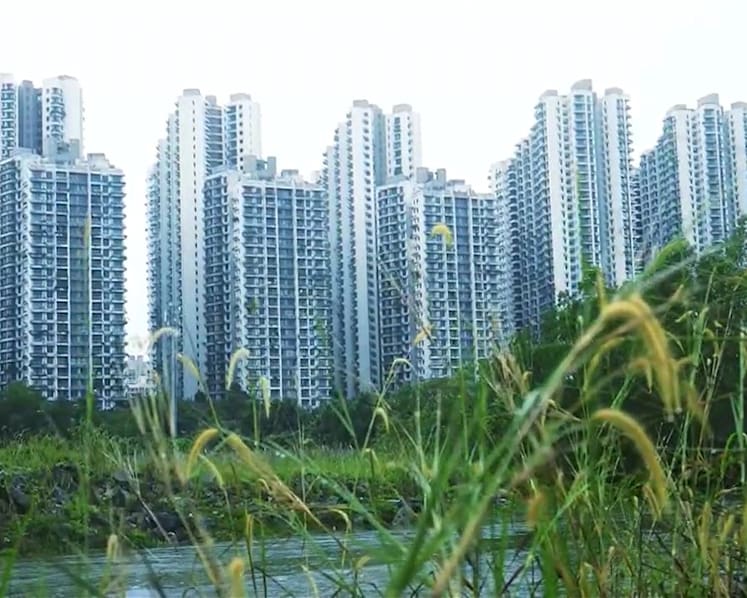
A “complete government takeover of affordable housing” will allow it to take a more data-driven approach to related policies, eliminate developers’ need to cross-subsidise, and “very likely” lead to lower house prices in the free market, Ho said.
“At the same, this will enable developers to have more freedom in building homes that the people truly need at the right location, based on the supply and demand model,” he said.
“This will then allow purchasers to be able to choose a house that is priced according to their level of affordability.”
Ho also urged financial institutions to offer “comprehensive financing incentives” to all segments of the population, including the lowest earners and gig economy workers who might not qualify for existing financing options.
“Should all industry stakeholders play their part … I believe affordability will be at much better rates than right now,” he added.
TIME TO CAP HOME LOAN TENURES?
With that said, KRI’s Theebalakshmi pointed to issues with “easy financing" that contribute to higher house prices.
“While demand for housing remains high, modest income growth is insufficient to close the affordability gap, which has been further widened by the increased reliance on mortgages,” she said.
Despite a rapid growth in home prices, innovative financing measures such as longer loan tenures and higher loan-to-value ratios have made expensive homes “more accessible and appear to be affordable”, Theebalakshmi added.
In Malaysia, home loan tenures can go up to 35 years.
At the panel discussion on housing reform last month, MBSB Bank group chief executive Rafe Haneef cited a need to relook Malaysia’s long-established economic model that encourages growth based on private consumption.
This means potentially putting a cap on home loan tenures so that land prices - a primary contributor to high house prices - can “correct” themselves, he said.
This is because shorter loan tenures will affect sales viability and, in turn, how much developers are willing to pay for land, he explained.

“What is the goldilocks tenure? Is it 25 years? Is it 30 years? That's where banks need to work with the government to find the right balance between keeping the (land) price not too high or not too low,” Rafe added.
“If we put a cap on car financing and personal financing, should we not have a cap on house financing as well? But this policy has to be made carefully, because if you put a cap, existing house prices may go down.”
UTM’s Najib proposed a more sustainable hybrid financing framework that combines Islamic finance, microfinance, green sukuk bonds and public-private partnerships under a single housing financing authority.
Sukuk bonds are Islamic bonds that represent ownership in tangible assets, services or projects, rather than as a debt obligation.
The financing framework will introduce monetary coordination mechanisms, including interest rate caps, income-contingent repayments and liquidity windows, to stabilise affordability against macro-financial shocks, Najib wrote in a 2025 study.
“When supply, financing, and policy are aligned with real demand conditions, affordability outcomes improve in a more sustainable manner than through (government) subsidies alone,” he told CNA.

Quek Yew Aun, who together with his wife bought an RM700,000 resale landed home in Petaling Jaya, Selangor in 2021, opined that affordability depended on what buyers were looking for and willing to put up with.
The 34-year-old civil servant has peers who do not mind living further from the city as they mostly worked from home, or bought a house in the suburbs to rent out while they rented a place in the city.
“Compared to before COVID-19, property loans have better rates, and the policies that the government put in - for example the stamp duty waivers - those were very helpful for first-time buyers,” he told CNA.
“I just feel that people who are looking for affordable homes will find it harder and harder to get them in Malaysia, because the wages are not increasing fast enough, and I guess in the general population, people are still comfortable with renting.”
Editor's note: An earlier version of this article attributed a quote to Olive Tree Property Consultants chief executive Samuel Tan. It should have been attributed to the firm’s executive director Tan Wee Tiam. We apologise for the error.