analysis Asia
From Anwar warning to US$250m claim - what’s behind Malaysia’s response to Norway’s scrapped missile deal?
The strength of Malaysia’s case will depend on whether export approval was explicitly tied to delivery of the missiles, and what remedies exist if a sovereign government blocks the transfer, says an analyst.
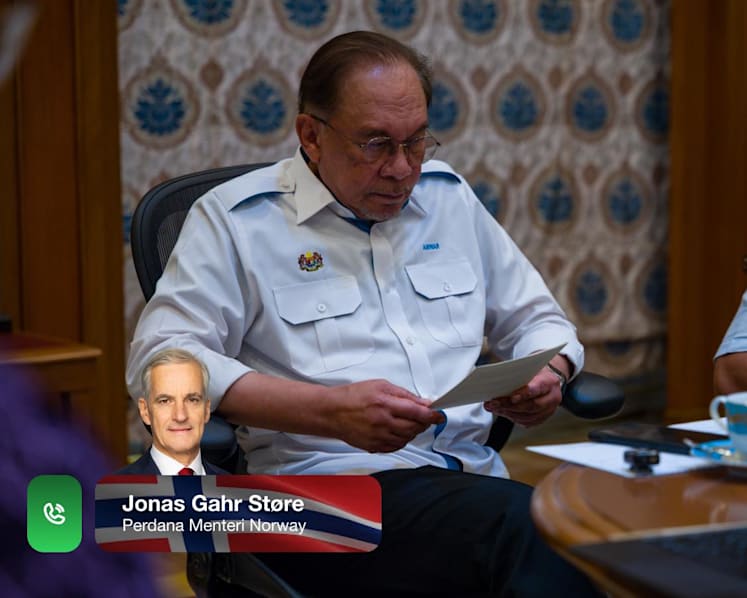
Malaysia's Prime Minister Anwar Ibrahim said in a May 14, 2026 social media post that he had conveyed to Norwegian counterpart Jonas Gahr Støre Putrajaya's "vehement objection" to Oslo cancelling exports of naval missiles. (Photo: Facebook/Anwar Ibrahim)

This audio is generated by an AI tool.


KUALA LUMPUR: Putrajaya’s RM1 billion (US$251.5 million) claim against a Norwegian defence company shows it is maintaining pressure on Oslo after the Scandinavian country unilaterally halted delivery of crucial naval missiles to Malaysia under a previously agreed contract, analysts say.
The notice of demand came after Malaysia's Prime Minister Anwar Ibrahim last week slammed Norway’s move to cancel the export of its naval strike missiles (NSM), which were intended to equip Malaysia’s upcoming littoral combat ships (LCS).
Norway’s foreign ministry had said that it was limiting “exports of some of the most sensitive Norwegian-developed defence technologies” to its “allies and closest partners”.
While observers say the PM-level escalation has transformed an export-control dispute into a matter of diplomatic trust and strategic concern, they believe it is not yet a full bilateral row.





“The most likely outcome is continued pressure and negotiation rather than a major rupture, unless the issue hardens into legal proceedings,” said Jamil Ghani, a doctoral candidate at Singapore's S Rajaratnam School of International Studies (RSIS).
Even so, Norway is likely to continue defending its move as a lawful sovereign export-control decision tied to tighter restrictions on sensitive defence technologies rather than a bad-faith commercial breach, he said.
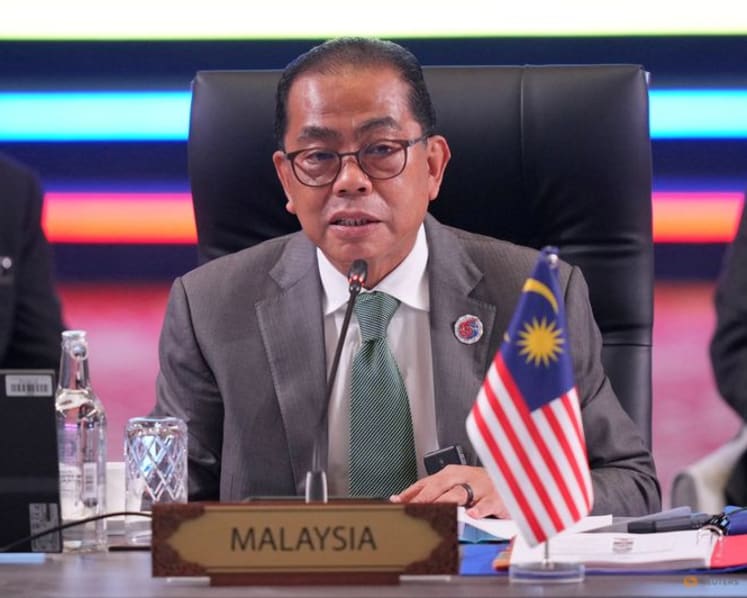
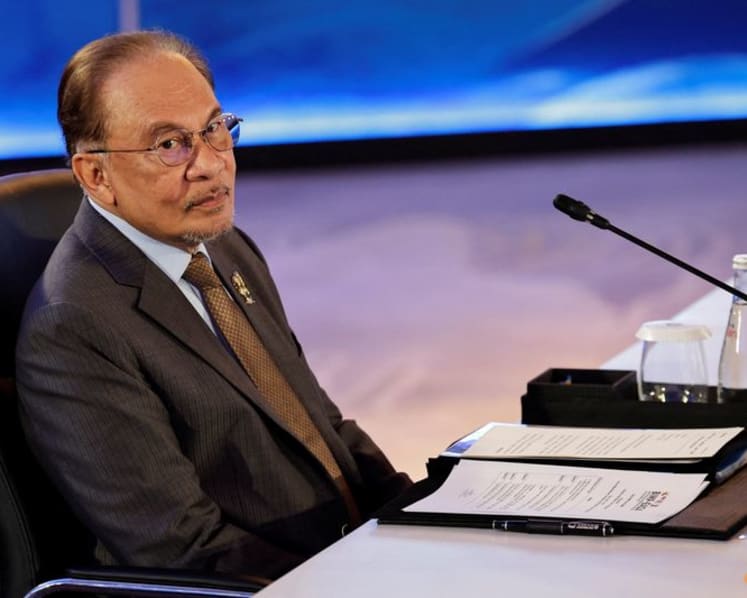
On Tuesday (May 19), Malaysia's Defence Minister Khaled Nordin was quoted as saying that Putrajaya would demand over RM1 billion in damages from Kongsberg Defence & Aerospace (KDA), which manufactures the NSMs.
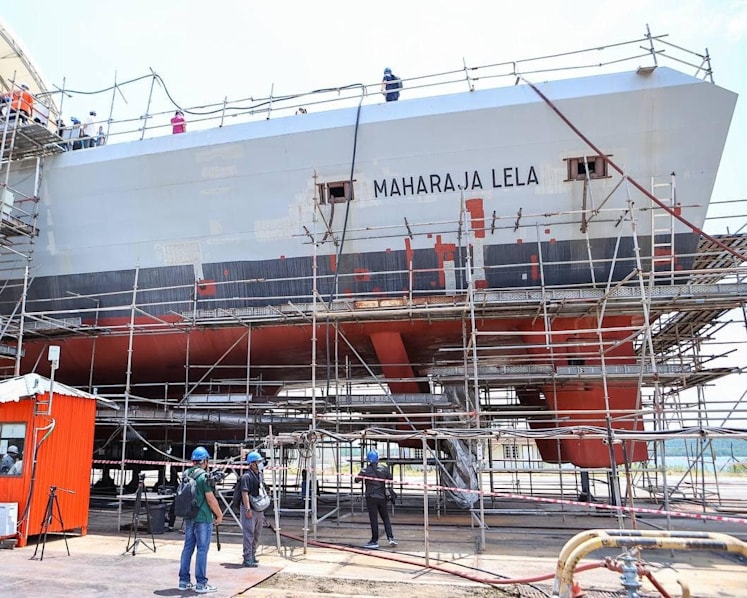
Malaysia had planned to use the guided missiles to equip five upcoming warships under the LCS programme, which had been plagued by delays and mismanagement. The first ship is scheduled for delivery in December.
Anwar’s move last Thursday to wade into criticism of Norway’s decision shows the issue has hit multiple “politically sensitive” points, Jamil said.
These include Malaysia’s LCS programme, its overall defence readiness, and the federal government’s credibility, he said, adding that Putrajaya’s immediate recourse will involve diplomatic engagement, contingency planning for the LCS, and a legal review of how it can claim damages.
Khaled said Malaysia has so far paid RM583 million - which the minister said is 95 per cent of the total procurement value of RM634 million - for the missiles, adding that its claim of RM1 billion included the amount already paid as well as “indirect” costs.
In response to queries from CNA on Malaysia's claim, KDA said it is "in dialogue" with Norwegian and Malaysian authorities on the "issues surrounding this case", and referred CNA to the Norwegian foreign ministry for any further comment.
CNA has reached out to Norway's Ministry of Foreign Affairs.
Ridzwan Rahmat, a principal defence analyst at intelligence company Jane's, suggested that the RM1 billion figure includes sourcing costs and the cost of potential modifications to the LCS.
“The missile bay for the LCS was designed to take on the NSM and the shipbuilder (Lumut Naval Shipyard) has also installed ramps for the launchers amidships,” he told CNA.
“I imagine that if Malaysia were to look elsewhere for the missile, modifications to the structure will need to be done.”
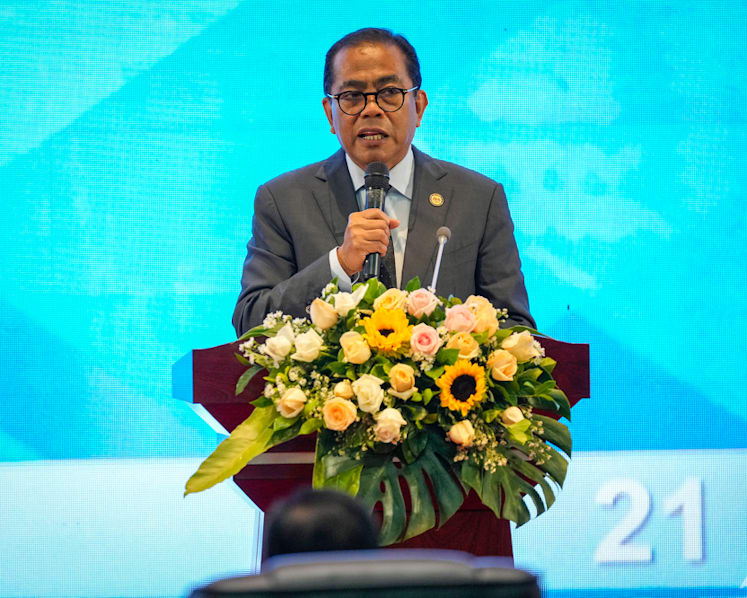
Khaled was quoted as saying by local media on Tuesday that replacing the NSM system would incur extra costs for Malaysia, as it involves training personnel as well as integrating the new system with existing platforms.
Last week, the Norwegian foreign ministry confirmed that “certain licences related to the export of specific defence technology to Malaysia have been revoked”.
This followed reports earlier in May that Norway had banned the delivery of the NSMs just days before the scheduled date under a procurement contract signed in April 2018 with Malaysia.
KDA said export licensing decisions are handled by the Norwegian authorities, while the foreign ministry said Oslo valued its relationship with Malaysia and looked forward to a constructive dialogue.
Anwar, however, did not pull any punches, describing contracts as “solemn instruments” that are “not confetti to be scattered in so capricious a manner”.
"If European defence suppliers reserve the right to renege with impunity, their value as strategic partners flies out the window,” he wrote in a statement posted last Thursday on social media.
Whether Malaysia has a strong legal case will depend heavily on the contract itself, Jamil said.
“Particularly whether export approval was explicitly a condition tied to delivery and what remedies exist if a sovereign government blocks the transfer after signing,” he added.
LEGAL ACTION
The news website of the US Naval Institute reported last Thursday - citing a Malaysian defence official - that Norway had invoked “force majeure” in cancelling the contract between KDA and the Malaysian government.
Force majeure is a contractual clause that frees both parties from liability or obligation due to extraordinary circumstances that impact the contract.
Norway’s move could also be related to a US-made gyroscope component found in the NSMs, the report by the private non-profit military association said, citing an unidentified official.
Gyroscopes are used to measure orientation angles and rate changes, with the data used to keep the missile on course.
Abdul Rahman Yaacob, a senior fellow at Verve Research, an independent think-tank covering Southeast Asian foreign policy and security affairs, said Norway’s revocation could be linked to US restrictions on exports of these gyroscope components.
“Malaysia could argue that US restrictions on the export of sensitive military components do not constitute a genuine disruptive event under the doctrine of force majeure,” he told CNA.
"This could form the basis of potential legal action by Malaysia against Norway. Norway, however, is likely to argue otherwise."
If the NSM contract gave Norway “broad regulatory discretion” in terms of export approval, Malaysia might have to rely more on political leverage than legal leverage, Jamil said.
“That gives Norway a strong basis to argue that it is acting within its legal and regulatory rights, even if Malaysia views the timing as deeply problematic,” he said.

While Ridzwan from Jane’s believes that Malaysia would likely pursue legal action, he feels its “options are limited” as the cancellation would likely fall under a force majeure situation that has “happened several times” in defence contracts.
Ridzwan referred to a 2014 case where France had agreed to sell two warships to Russia in a deal worth 1.2 billion euros (US$1.4 billion) but halted it at the last minute due to the latter's annexation of Crimea and continuing unrest in eastern Ukraine, allegedly caused by Russia-backed separatists.
While France had initially resisted pressure from the US and the United Kingdom to halt delivery, citing the need to respect an existing contract, it eventually suspended the deliveries indefinitely.
Russian President Vladimir Putin reportedly said Moscow would not impose penalties against France over its failure to fulfil the contract, but insisted Paris should honour and reimburse all costs incurred by Moscow, which had made an advance payment of about 840 million euros.
The two countries agreed on a compensation deal in 2015, where France would pay Russia an amount below 1 billion euros, the Associated Press reported, without revealing exact figures.
"Malaysia might still receive (compensation from Norway) but will probably buy weapons from Turkiye after this,” Ridzwan said.
Malaysia's three new littoral mission ships are currently being built in Turkiye based on Ankara's Ada-class corvette design. They will also integrate several Turkish weapon systems, including the Roketsan Atmaca anti-ship missiles.
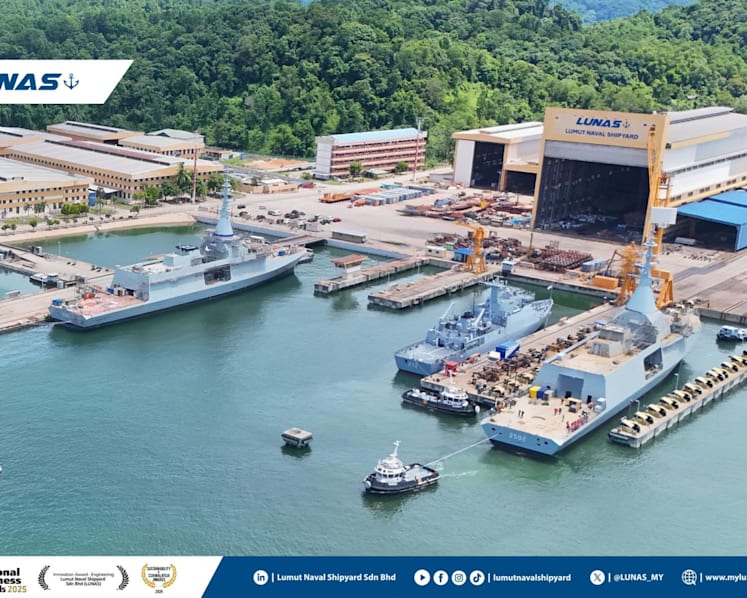
On the other hand, Malaysia's LCS project, awarded in 2011 for six vessels at an initial cost of RM6 billion, had been dogged by mismanagement problems where costs ballooned over the years while the ships remained undelivered.
The project was relaunched in 2023 following a government review, with the decision made to acquire only five ships instead of six.
The first vessel, which was originally scheduled for delivery in August this year, was pushed back to December due to late equipment deliveries from manufacturers and ongoing rework issues.
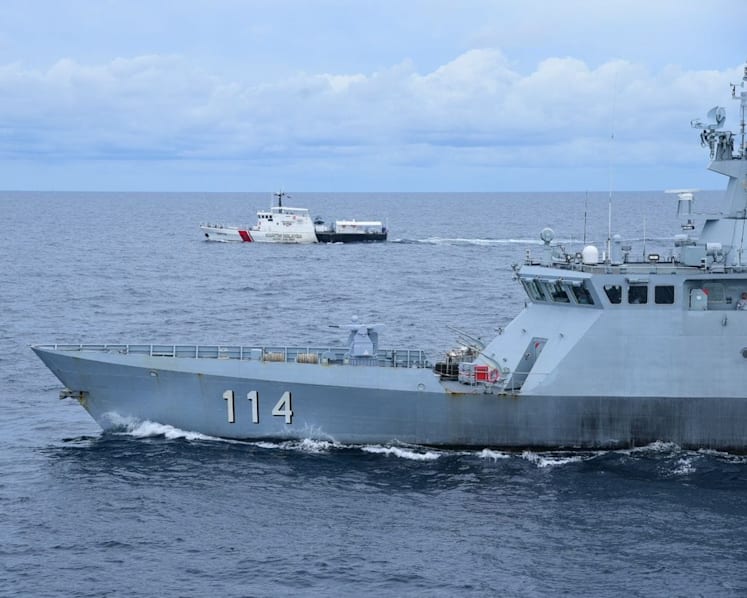
Malaysia’s defence ministry said it has begun exploring alternative surface-to-surface missile systems to ensure both the LCS and Lekiu-class frigates - another class of ships that was supposed to receive the NSMs - have credible offensive power.
Khaled said on Tuesday that, besides cooperating with other friendly nations, the Royal Malaysian Navy (RMN) could also increase engagement with local defence industry players.
The New Straits Times reported last Saturday that Malaysia could look at two alternatives to the NSM: The French-made Exocet MM40 Block 3, and the Atmaca, developed by Turkiye's Roketsan.
According to Rahman from Verve Research, Malaysia’s failure to acquire Norway’s NSM missiles does not represent a “significant blow” to its naval capabilities, as it could still turn to weapons developed by other countries for its LCS.
"The more fundamental issue surrounding the LCS programme lies in longstanding domestic inefficiencies and allegations of corruption, which have significantly delayed the delivery of these warships to the RMN,” he said.
WIDER RAMIFICATIONS
Given that the LCS is a major programme for the RMN, the “scale of the disruption” caused by Norway made it necessary for Anwar to get involved, said Adib Zalkapli of Viewfinder Global Affairs, a geopolitical consultancy.
"Politically, the prime minister could potentially reap domestic dividends by telling the Malaysian public that the export licences were cancelled because he has been outspoken on issues such as Palestine and the Iran war,” he said.
“A foreign ‘bogeyman’, Norway in this case, is often politically useful, especially now that Malaysia is in election season.”
Malaysia must hold its next general election by February 2028, but there is talk that Anwar could call for snap polls amid shifting political winds.
Even if Malaysia ends up going down the legal route, Adib does not think there would be wider implications for Putrajaya on the international stage.
“It’s very unlikely for other countries to take sides in what is strictly an issue between Malaysia and Norway,” he said.
RSIS’ Jamil said Malaysia’s approach still “appears calibrated rather than vindictive”, noting that similar arms-related disputes suggest that countries are generally not viewed negatively simply for defending their contractual or strategic interests.
“Norway itself previously used leverage during negotiations surrounding the (American-made) F-35 (fighter jet) programme,” he said, pointing to how Oslo repeatedly signalled that it could put aspects of its support for the programme on hold unless Norwegian firms received stronger industrial participation.
“That episode was not widely viewed as vindictive, but rather as a smaller state using procurement leverage to protect its strategic and industrial interests within a major defence partnership.”
Rahman said Norway’s move to revoke the missile licences does not necessarily indicate that it is downgrading its assessment of Malaysia as a security partner.
“In reality, Norway and Malaysia do not share particularly broad or deep defence relations,” he said.
"More concerning is the likelihood that the US intervened to block the sale of the missiles to Malaysia … As such, this episode may be more reflective of Washington’s assessment of Malaysia as a defence partner.”
Ridzwan, however, believes Norway's decision stems from its own export control regime rather than any US involvement, though he declined to elaborate on what Oslo's reasons might be.
"I find (Norway's move) curious given that the weapon is still being actively marketed to Indonesia, and I can confirm that this is still happening."
Looking ahead, Jamil said the bigger impact from this arms dispute might be more strategic than legal.
“Malaysia is likely to accelerate efforts to diversify defence suppliers and reduce exposure to third-country export controls, while Norway and other European suppliers may face greater scrutiny from non-NATO buyers over the predictability and reliability of long-term defence contracts,” he said, referring to the North Atlantic Treaty Organization.