‘Dead’ town: At Kelantan-Thailand border, Malaysia’s drug war unsettles residents, businesses
Malaysia is building both walls and bridges along its porous northern border with Thailand, determined to deter rampant smuggling while boosting economic ties. In the first of a two-part series, CNA explores how Malaysia is preventing illicit goods from reaching its shores, and the ground impact of these efforts.
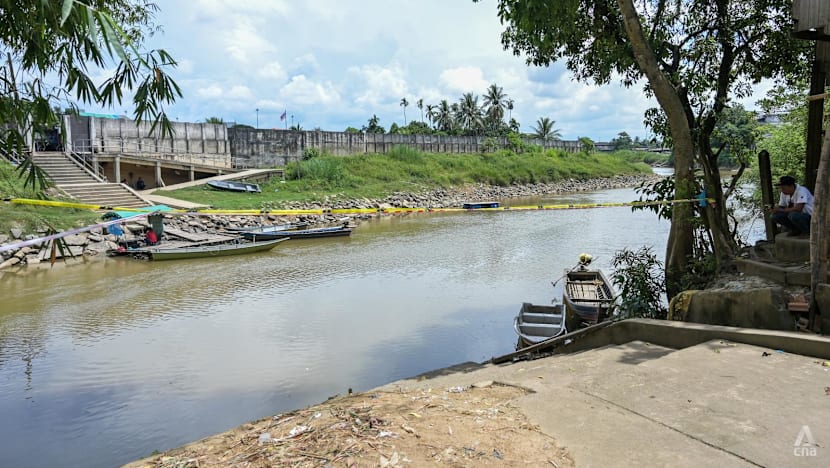
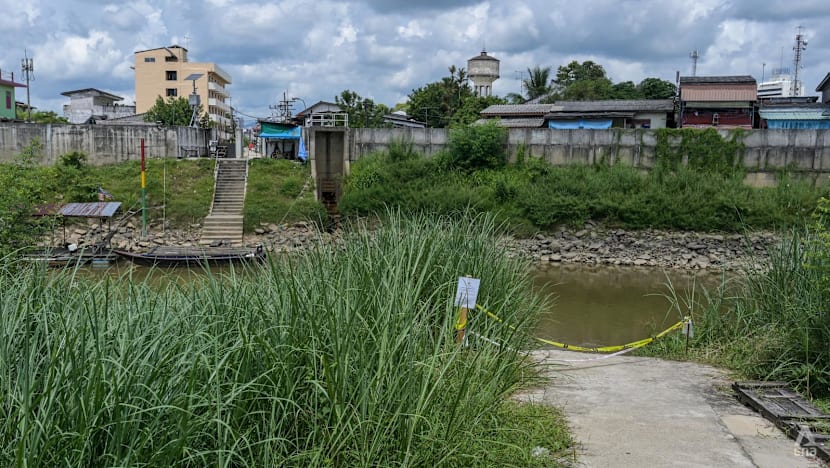
A narrow river runs between two countries: An informal jetty in Rantau Panjang, in the foreground, used for illegal crossings to Thailand cordoned off by Malaysian authorities. (Photo: CNA/Fadza Ishak)

This audio is generated by an AI tool.


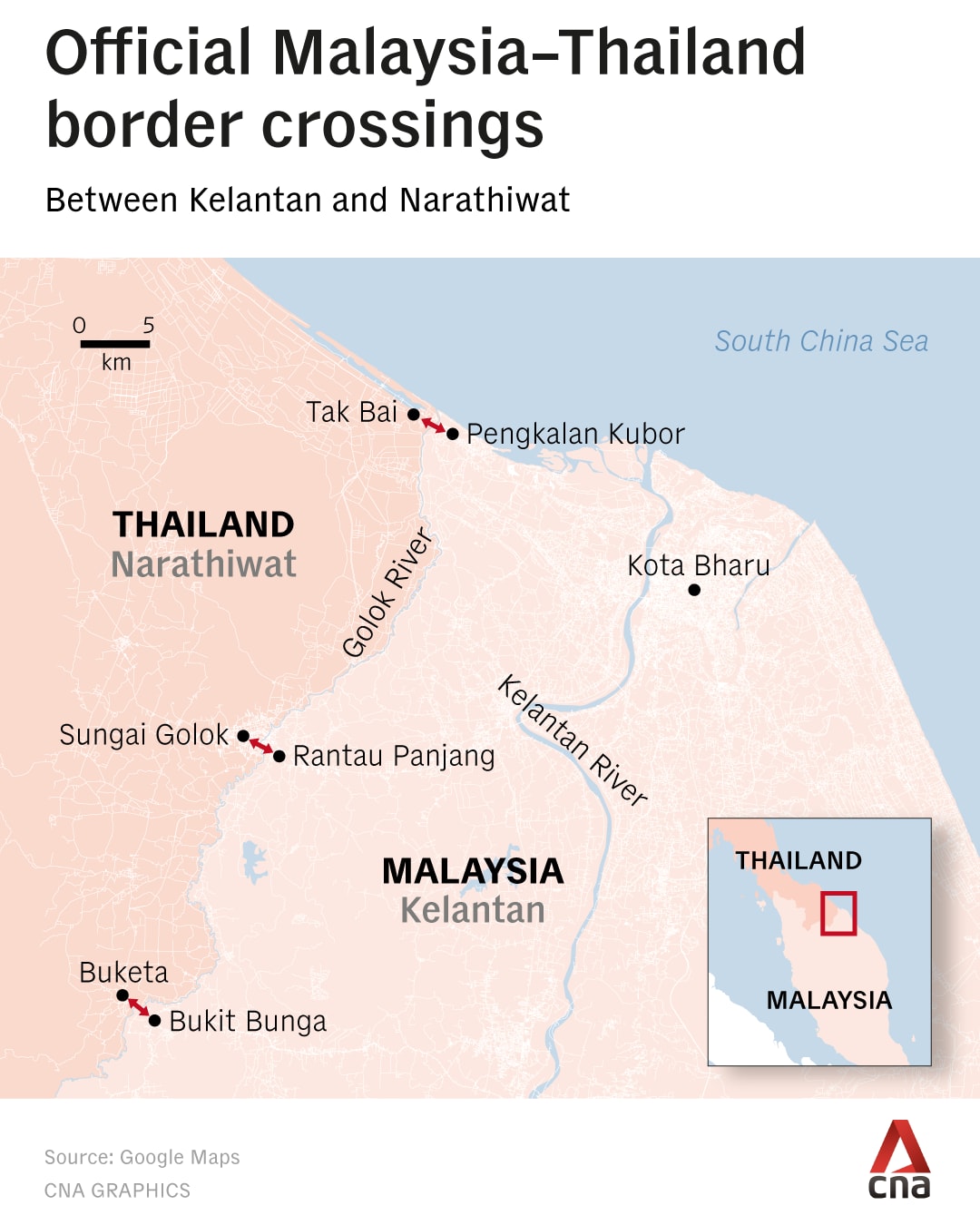
RANTAU PANJANG, Kelantan: In its heyday before the COVID-19 pandemic, the Rantau Panjang duty-free zone in Kelantan, a stone’s throw from Sungai Golok town in Thailand’s Narathiwat province, bustled with shoppers from both sides of the border.
Located next to a bridge, roughly 100m long, that connects Kelantan to Sungai Golok, the duty-free zone would see a steady stream of visitors who crossed the border for school, commerce and other activities.
These people occupied a legally grey area where, instead of using official immigration checkpoints, they crossed the narrow Golok river via boats that ply makeshift jetties on either side.
Hundreds of students consisting of both Malaysia and Thai citizens were known to cross over from Thailand to attend school in Malaysia daily, for instance.
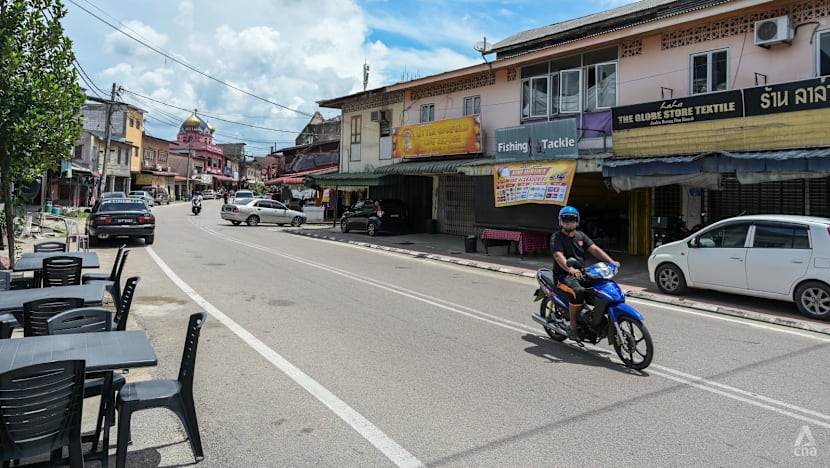
“This place used to be full of people, but nowadays nobody comes here,” a hardware shop owner told CNA in late September.
The reason: Malaysia’s crackdown since late last year on the cross-border smuggling of drugs and firearms, fuelled by the illicit crossings.
In November 2024, Kelantan police chief Mohd Yusoff Mamat announced that those who crossed the border illegally, especially via the Golok river, would be arrested from December that year.
Around the same time, the Kelantan state government revived plans to build a roughly 100km-long wall along its border with Thailand, insisting it was necessary to fully mitigate flooding and smuggling risks.
As little as 30m separates Thailand and Malaysia at the Sungai Golok-Kelantan border, news agency Bernama reported in 2020, with authorities citing the narrow width of the 100km-long Golok river as a factor making eradication of cross-border criminal activities challenging.
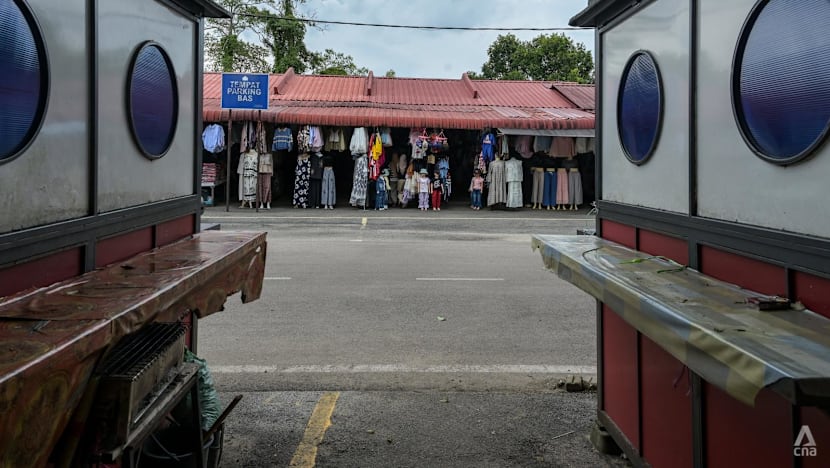
On a weekday in September, CNA observed only a few visitors in the largely empty shopping area, save for some schoolchildren running to their bus with candies in hand.
Many shops were shuttered amid reports that the state government was finding a new location for the once-bustling zone now bereft of customers.
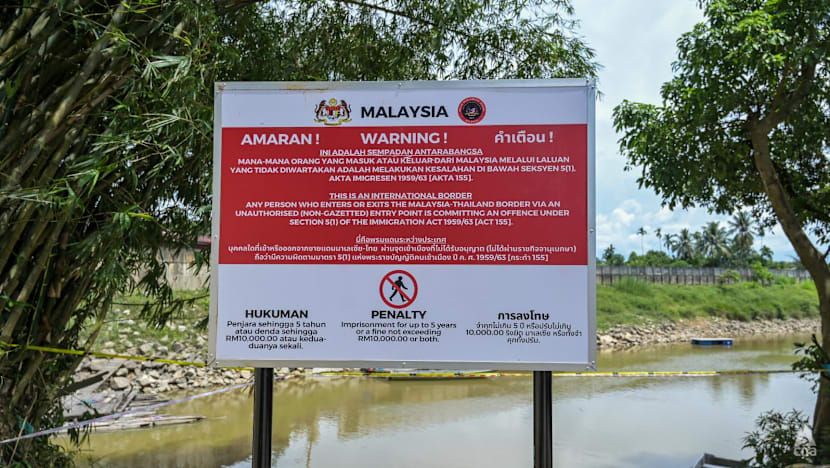
The crackdown has extended to makeshift jetties, a number of which were cordoned off by yellow tape, with large signs warning that those who crossed over faced prosecution. Official notices stated these jetties would be demolished.
“The jetties are now fully closed. Nobody can cross,” said the hardware shop owner.
A woman sitting outside her house beside a cordoned-off jetty lamented that Rantau Panjang was now a “dead” town, a far cry from when it was teeming with shops that sold clothes and cooked food.
“I used to cross over frequently, but now I’m scared,” she said. “People who want to come here, like last time, are also afraid. Because they will be caught here.”
ENFORCEMENT PAYING OFF, SAY KELANTAN POLICE
The tighter border enforcement measures are bearing fruit, Kelantan police chief Yusoff told CNA.
From January to October this year, Kelantan police made 23,974 drug-related arrests and opened 22,798 cases, he said, compared to 29,769 arrests and 27,987 cases for the whole of 2024.
This means cases and arrests in the first 10 months of this year are 19 per cent lower compared to the whole of last year.
The total value of seized drugs until October was RM28.6 million (US$7 million), a sharp decrease from the RM73.5 million in value seized for the whole of 2024, Yusoff said.
“The closure of illegal jetties since Dec 1, 2024 has made a clear impact,” he said.
“The smuggling of drugs has decreased significantly, the value of seized drugs has halved, and high-risk areas are now more secure and subjected to systematic enforcement.”
But the measures have rattled border residents on either side who, for years, had been free to use the informal jetties for more convenient crossings instead of having to travel to only three official checkpoints that are not open 24 hours along Kelantan’s 163km-long border with Thailand.
These jetties served as a hassle-free way to visit relatives, go to school or buy groceries. They also facilitated the illicit trade of controlled goods like cattle, rice and subsidised petrol or cooking oil. Malaysia heavily regulates the import of cattle and rice to protect local farmers.
The demolition of these jetties will also help the country stem revenue losses due to leakages, federal Internal Security and Public Order acting director Fisol Salleh was quoted as saying on Dec 20.
Still, the stricter enforcement has hurt livelihoods and the economy on both sides of the border, and some residents are urging the authorities to be more lenient and take targeted action against drugs instead of a blanket ban on all goods and crossings.
Sungai Golok residents said that due to the lack of job opportunities, they have long relied on the informal trade of controlled goods to make a meagre living.
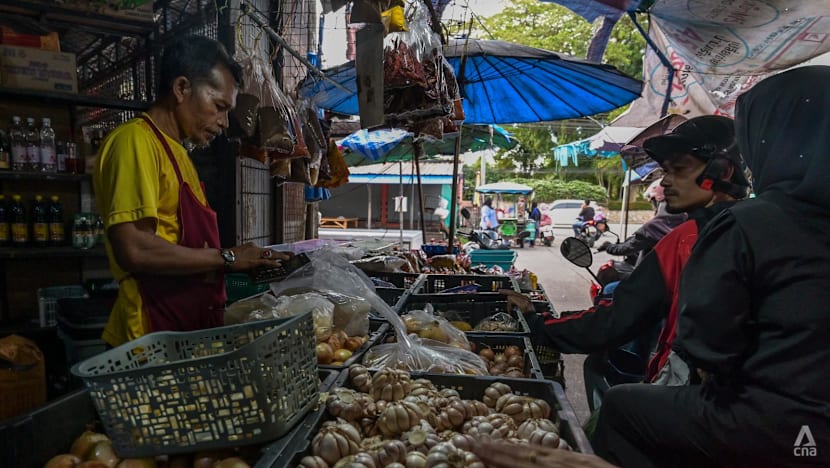
Malaysian authorities, however, argue that more nefarious contraband like firearms and drugs could be hidden in these seemingly harmless goods, while boats have been used to ferry illegal immigrants.
This stance differs somewhat from the Thai authorities’.
Thai officials acknowledged the seriousness of the drug situation but said they have been “flexible” about informal crossings, a longstanding practice of the locals.
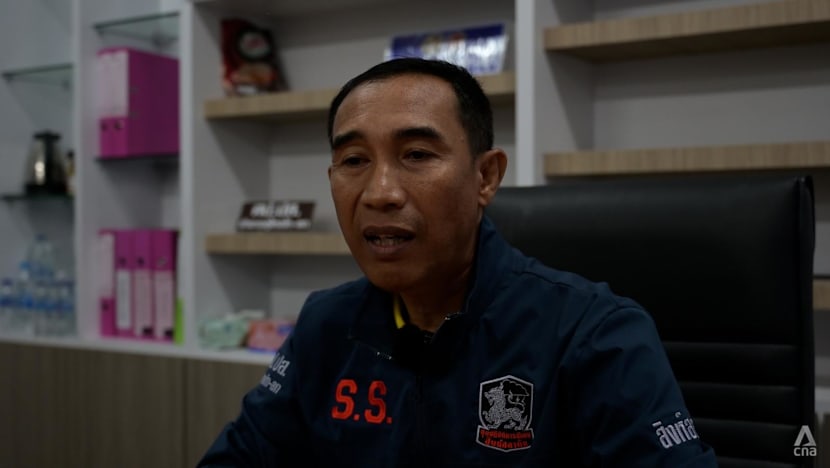
Phimon Chongrak, security division head of the Sungai Golok district council, acknowledged the drug situation in his area has become “very serious” in the past four to five years.
“Malaysia started to lose confidence in us and urged the Thai side to step up efforts in suppressing drug smuggling, since Malaysia itself has been enforcing strict measures against it,” he told CNA.
“When it comes to illegal jetties, they’re actually natural crossings that locals have used for a long time. It’s part of their way of life in Sungai Golok. If we completely shut them down, it would affect their livelihoods and the local culture.”
While Phimon said Thai authorities “try to turn a blind eye and be understanding” about these crossings, he stressed that drugs were an “exception”.
“We’ve asked local people not to hide or smuggle them, like putting them inside instant noodle packages or other items. Drug issues are something the government takes very seriously,” he added.
Read the second part of the series here:

CAN BORDER WALL STEM FLOW OF DRUGS?
According to Thai officials, the main types of drugs trafficked from Thailand to Malaysia by way of large-scale shipments are crystal methamphetamine, followed by heroin and ketamine.
To be sure, drugs and other contraband are also smuggled across the western sections of the Malaysia-Thailand border, where the Golok river gives way to hills and dense forests that separate the states of Kedah and Perlis from the Thai provinces of Yala, Songkhla and Satun.
Smugglers operating in those areas have established routes to cross over undetected, media reports have said, and some have transported contraband through holes in border fences or over them.
However, the fact that Kelantan is only separated from Thailand by the narrow Golok river has made the Malaysian state a major drug transit point, Yusoff - the Kelantan police chief - reportedly said in July.
Yusoff told CNA the Golok river makes the Kelantan-Thailand border “extremely unique”, referring to geographical features like flat land and residential areas that stretch right to the riverbanks on both sides.
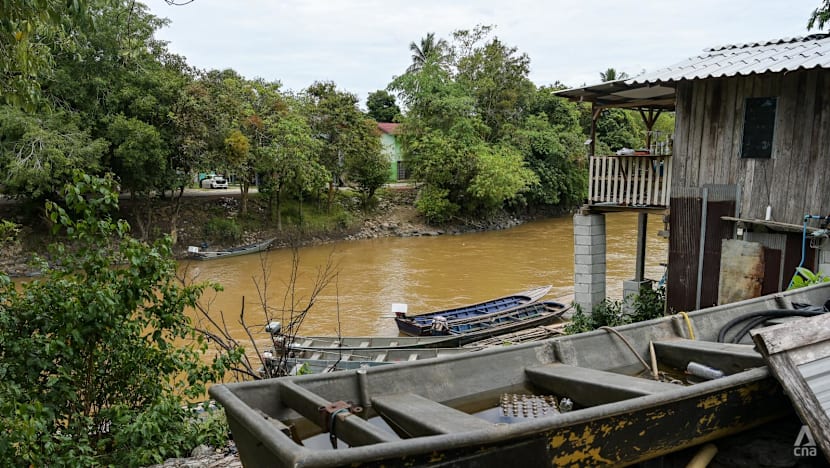
Yusoff said the construction of a border wall in Kelantan would act as a “physical barrier” against smugglers and improve deterrence, particularly in areas where “rat holes” - highly concealed smuggling routes - exist.
“The conventional way of manned border security involves human factors like laziness and integrity, so even though we have increased enforcement, smuggling still occurs,” he said.
“God-willing, this border wall will allow us to solve our problems 100 per cent.”
Bernama reported in June that the country’s Home Ministry is reviewing various proposals to strengthen border security, including introducing a wall, closed-circuit television cameras and other technological measures.
The federal government has allocated RM1.5 billion for the construction of the wall, which will also act as a flood barrier along the flood-prone Golok river, Yusoff reportedly said in a Bernama article published in October.
Malaysia has not given a timeline for completion or confirmed where the border wall will start and end, although the Bernama article said it would be built along the Tumpat-Tanah Merah stretch in Kelantan.
It is unclear if this stretch requires the full 100km-long wall as previously mentioned in media reports in November 2024.
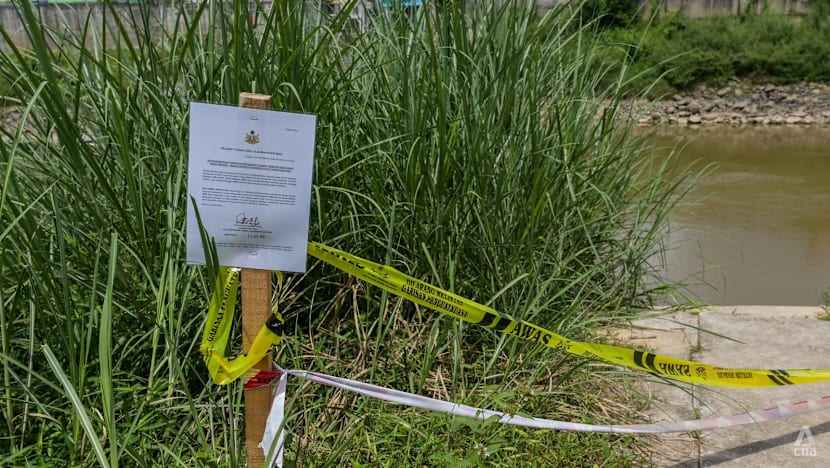
On the other hand, the demolition of illegal jetties is ongoing.
A total of 223 illegal jetties have been identified in Kelantan, with 216 built on government land and the remaining seven privately owned, Yusoff told CNA.
Demolition works began on Oct 27, and all 216 jetties on government land are expected to be demolished within two months based on the capacity of machinery available, he said.
“For jetties on private land, we will take action after local authorities go through a legal process,” he added.
Fisol, the federal Internal Security and Public Order acting director, reportedly said 25 illegal jetties have been demolished, with more than 100 others identified for action.

Narit Sondit, director of Thailand’s Office of the Narcotics Control Board Region 9, which covers the southern border provinces, said the “main challenge” authorities face is that many of these jetties on the Thai side are operated by local residents.
“Cooperation between authorities and the community is still limited. As a result, when officials enter the area, traffickers can easily evade inspections because they have good local intelligence and early warning systems,” he told CNA.
“Currently, Thai authorities need to strengthen their intelligence capabilities and improve coordination with local communities along the border. This will help foster better cooperation in preventing and intercepting drug smuggling activities.”
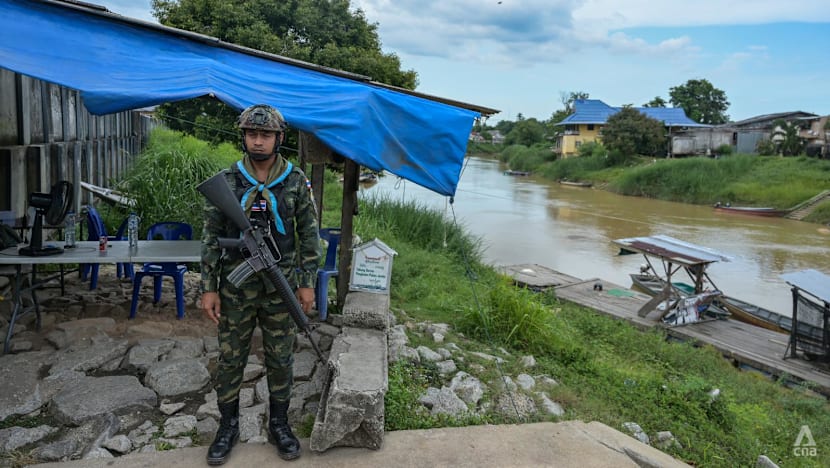
Authorities have also strengthened “suppression and prevention measures” through security checkpoints, police operations and interception of drug shipments, Narit said.
“We’re also paying close attention to logistics routes, including postal and parcel deliveries, which have increasingly become a channel for drug transportation.”
If Malaysia carries out its plan to build a border wall, Narit worries it could disrupt livelihoods on both sides.
“Cross-border trade here is … not strictly in line with the law. However, the government has taken a flexible approach to allow local residents to maintain their livelihoods,” he said.
“Constructing a border wall would certainly aid in preventing drug smuggling, which is a serious concern. At the same time, though, we must also consider the impact on people’s livelihoods and cannot turn a blind eye to their daily needs.”
THAI COMMUNITIES PLEAD FOR LENIENCY
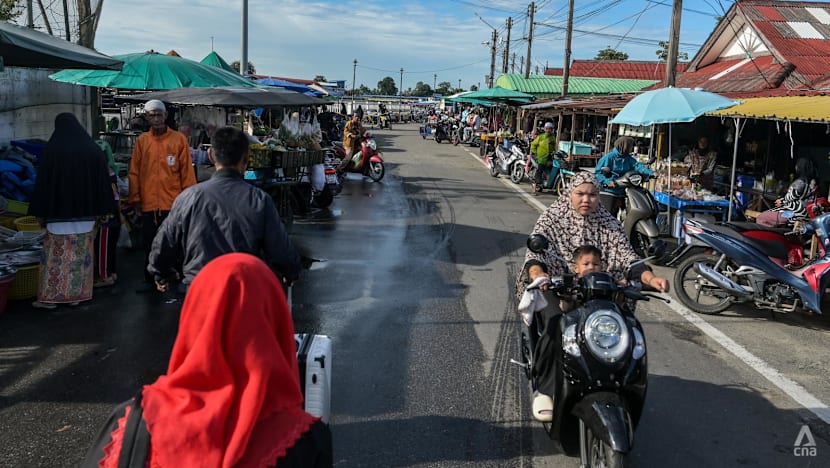
Locals in Sungai Golok say Malaysia’s tighter border enforcement measures have hurt businesses and disrupted tourism.
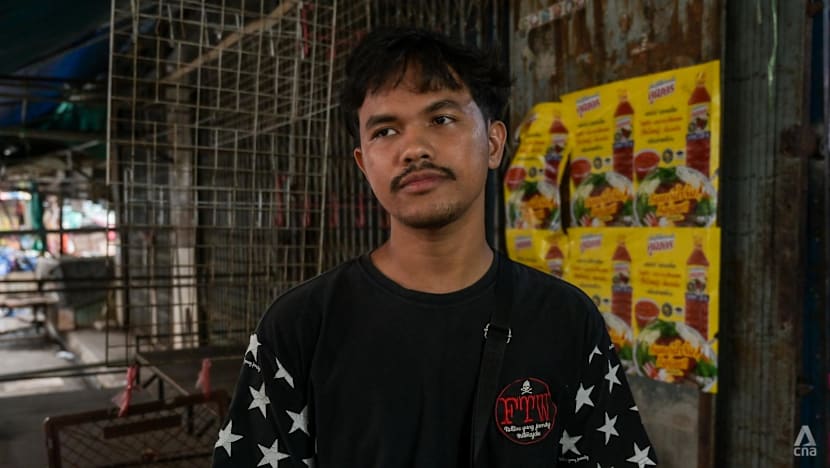
At a local market, mixed rice vendor Anwar Hassan, 26, held back from buying too many ingredients for the day’s cooking, as the drop in customers meant excessive quantities would go to waste.
He said he previously used up 1kg of onions a day before the border clampdown. Now, he uses half a kilogramme in two days.
“Business has been bad as we don’t get the Malaysians who used to come over for supper,” he said, although he acknowledged the crackdown was sparked by increasing cases of drug smuggling.
“If Malaysians can come over in numbers again, we business owners can survive. Those selling local produce would not be affected as well.”
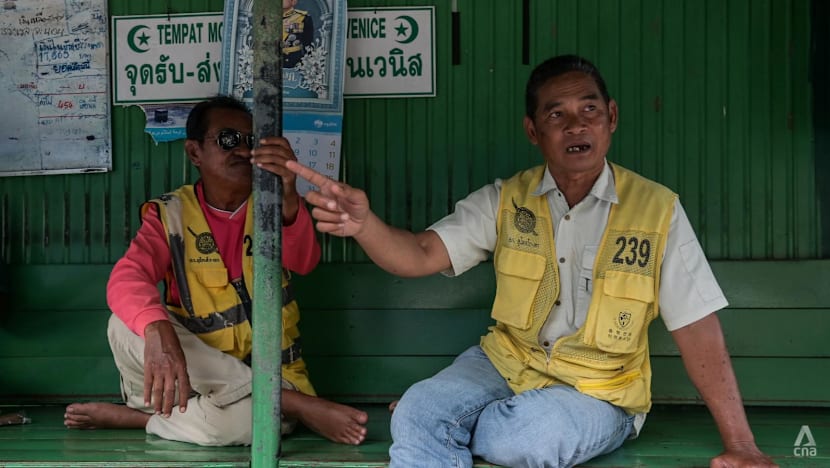
Outside a hotel, several motorcycle taxi riders waited under a makeshift shelter during a light drizzle, smoking as they waited for tourists they said were barely coming in. Business has dropped by at least 50 per cent, they said.
“I hope the Malaysian government can open the jetties again,” said Roslan Muhammad, 57, who has been a motorcycle taxi rider in Sungai Golok for three decades.
“If people are committing crimes, they should be caught. Those who are not in the wrong should be free to cross.”
According to Roslan and other locals, Thai authorities have implemented an informal system where people are allowed to cross via the jetties during certain timeslots each day.
“If Malaysia does the same, it would be better for us,” said Roslan, noting that people who use the official checkpoint via the bridge tend to stop briefly at Sungai Golok before continuing on to bigger cities like Narathiwat and Hat Yai.
“Previously, when people were allowed to cross the river (using the jetties), there were many visitors here. They could come anytime they wished, be it at night or in the morning.”
Despite Malaysia’s stricter enforcement, there are signs that illicit trade and flow of people persist.
Boats were parked on the Thai side of the border across from Rantau Panjang, and CNA saw some people carrying duffel bags and large shopping carriers heading towards the jetties. Across the river, other people appeared to be waiting to cross over.
This could help explain the blanket of suspicion towards outsiders that hung in the air in Rantau Panjang. Locals, presumably acting as lookouts, eyed this journalist warily.
A man riding past on a motorbike asked this journalist what he was doing there, before speeding away when asked about the informal crossings.
Travelling east from Sungai Golok to the town of Tak Bai, CNA saw dozens of these jetties along the river - the lifeblood of an informal trade route to Malaysia.
The rural and narrow lanes that lined the riverbank used to be chock full of workers’ motorcycles, stalls selling food and long trailers carrying goods, locals said. These goods, destined for Malaysia, were stored in large warehouses by the river.
Now, the lanes and warehouses were empty, and the once-thriving trading scene was no more, the locals added.
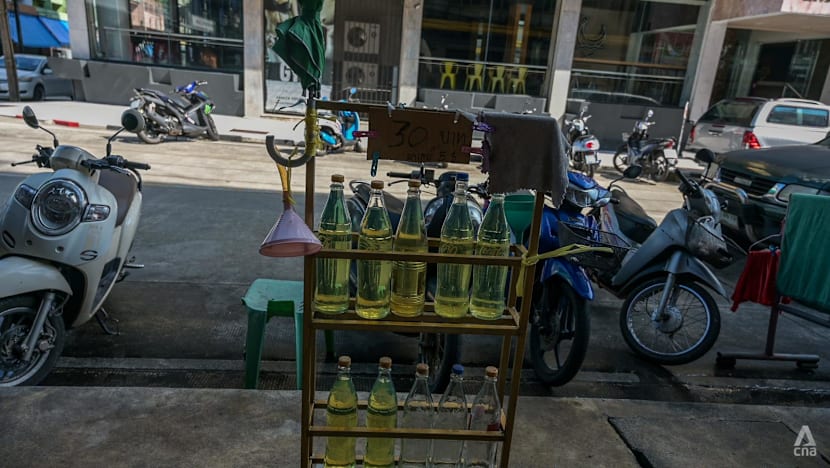
Some, however, persevere at the risk of getting caught. In the rural heartlands, small carts still sold glass bottles containing subsidised fuel from Malaysia.
WALL WON’T STOP DRUG SMUGGLERS, SOME RESIDENTS SAY
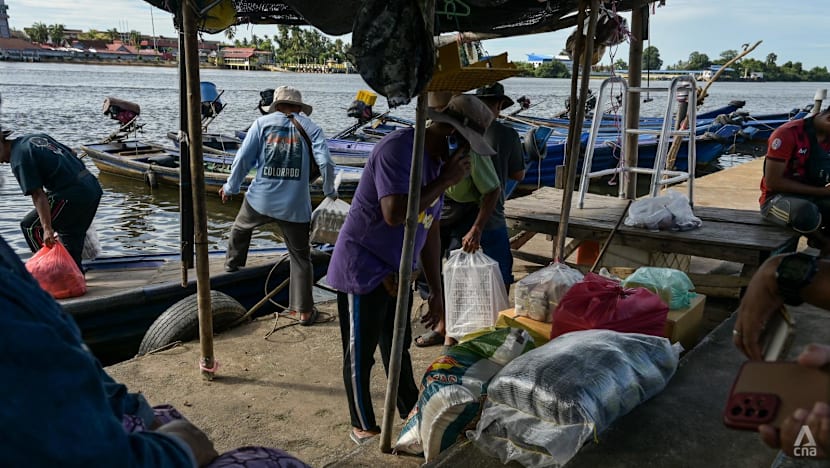
Near the Tak Bai ferry terminal checkpoint - one of the three official checkpoints along the Kelantan-Thailand border - boats at a jetty were being loaded with fish, rice and fruit, ready to make the short and illicit trip across the river.
A man who was at the jetty told CNA locals were willing to risk getting into trouble with the Malaysian authorities as jobs were in short supply, driven by automation in factories and the fishing industry.
“I know not all of us are pure; some take advantage of the trade (to smuggle drugs),” the man said on the condition of anonymity.
“I don’t support all that. But if it’s just to transport goods like these, I am okay with it. Because our people can’t put food on the table and they are suffering.”
One organiser of illegal Thai rice exports to Malaysia, who only wanted to be known as Abu Baja, said a border wall would be a death knell for workers who earn a living by transporting goods across the river.
“If they build it, it will be even more difficult for villagers to earn their RM40 to RM50 a day,” he told CNA.
“But for those who do large-scale businesses (like drug smuggling), they would still be able to find a way even if there are two layers of walls.”
Abu Baja said he takes orders ranging from rice to cattle and fruits from counterparts in Malaysia, and waits for their instructions on which routes and jetties to use.
“They know which jetties can be used to do work, where authorities are more tolerant - that’s where we will go,” he said, adding that goods were sometimes held on the Thai side to wait for the green light.
“My workers are very afraid of getting caught. But they have no choice because they need to raise their children.”
When asked about the impact of Malaysia’s stiffer border enforcement on livelihoods, Kelantan police chief Yusoff said there was always a risk of drugs and firearms being hidden in food items.
“It is difficult for us to identify if these items come together, so we totally stop all duty-unpaid and prohibited goods from coming in,” he said.
Yusoff acknowledged some of these jetties were used for “valid” purposes including family visits or small-scale crossings.
“The Kelantan state government has stated that it will help affected residents through social and economic assistance,” he said.
Malaysia’s General Operations Force, the primary agency enforcing against cross-border smuggling in Kelantan, regularly posts on social media cases of contraband seizures and arrests of those who cross over.
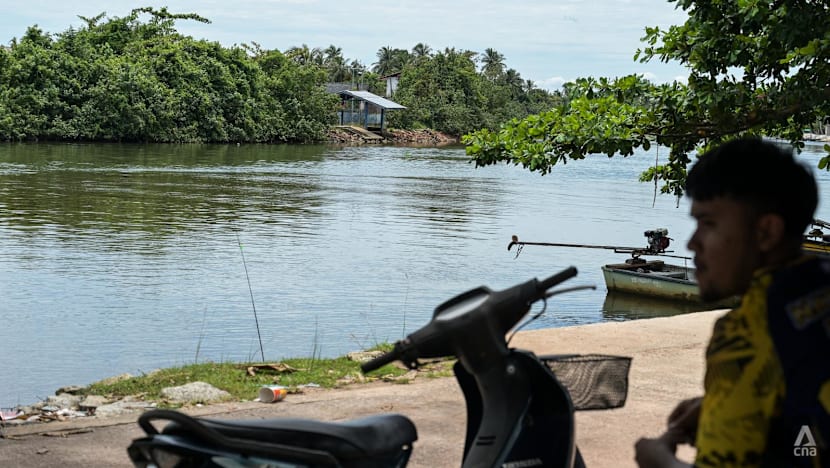
East of the Rantau Panjang bridge, urban areas turn into small rural villages, with some homes by the river nestled behind dense foliage. Some of these gated homes have their own jetties and, from the outside, it was impossible to see what went on within these compounds.
Authorities have used zinc hoardings to block some of the gravel paths to the riverbank, but a resident there said goods were still able to flow through.
Muhammad Arifin Ismail, who used to be involved in the trade, told CNA he understood why Malaysia was cracking down.
“The drug dealers are earning large profits, but the addicts on the ground are suffering,” the 63-year-old said.
“If you really want to prevent cross-border crime, you need to build a wall to guarantee that it will be harder for smugglers to come in. If you just block off the jetties like this, they will still find a way.”
Arifin admitted that the illicit trade of contraband like duty-unpaid cigarettes has become a way of life for generations of villagers on the Malaysian side.
Villagers do not know what their neighbours are bringing in, he said, although a quick look around these rural parts suggests that those with much larger homes and luxury cars might be earning more from riskier goods.
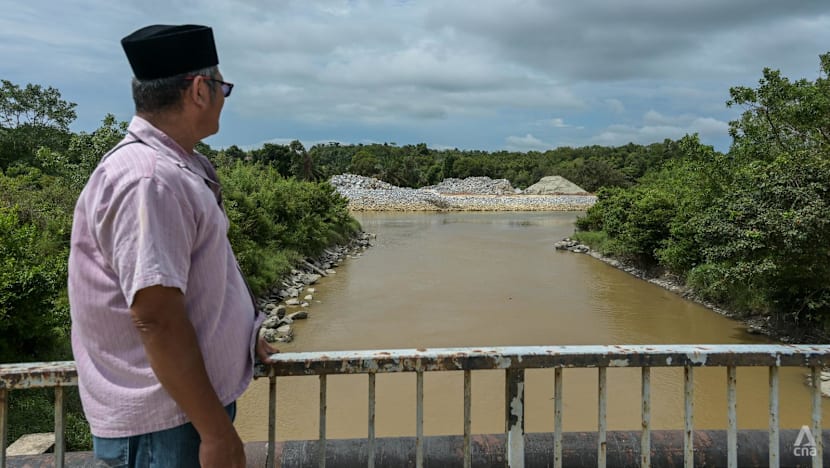
On Oct 21, local media quoted Yusoff, the Kelantan police chief, as saying that authorities will press on with the demolition of jetties despite receiving “provocations” from different parties.
He told CNA the police have consulted local communities along the Golok river, and that many “understood” the need for demolition to ensure border security.
Arifin, the border resident, said: “Villagers will not be happy that their way of earning a living is disrupted. But if authorities have to wait for their permission to demolish the jetties, this problem will not be solved.”
“BARRIERS NOT A PANACEA”
But there might be an even larger problem. Arifin pointed to media reports that highlighted alleged misconduct among border law enforcement personnel, including their involvement in corruption and smuggling itself.
“These civil servants could be involved with smugglers as well; we don’t know,” he said. “If you think logically, how can these goods keep coming in in large quantities?”

Yusoff told CNA he has received information regarding abuse of power among border law enforcement personnel, and a special task force has been set up to thoroughly investigate these allegations.
“The Kelantan police, through myself, confirm that we have received information about activities related to ‘jetty setting’, referring to the involvement of elements of law enforcement with smuggling syndicates,” he said.
“We have issued a stern warning: Any individuals, including our own personnel, will be arrested if found to be involved in these activities.”


Mohd Ramlan Mohd Arshad, a senior lecturer of administrative science and public policy at Malaysia’s Universiti Teknologi Mara, described the issue of local corruption as a “critical and persistent” vulnerability in border security.
“Allegations persist that certain border security personnel on both sides are complicit, either by accepting bribes to remain silent or by actively facilitating smuggling activities,” he told CNA.
“Fundamentally, this corruption undermines the integrity of any enforcement strategy by allowing information to escape and operations to be compromised from within.”
On Dec 10, Malaysian newspaper Berita Harian reported that smuggling syndicates in Malaysia had moved their jetties to the Thai side of the river to avoid demolition works.
The newspaper quoted Yusoff as saying that information about the demolition works was leaked to several smugglers during the operation itself.
According to Ramlan, the predominance of Pattani-Malay ethnicity on both sides of the border has created a shared identity and a “supportive environment” where smuggling is not always perceived as a crime but rather as a traditional economic activity.
“A perfect storm is created by the combination of difficult geography, potent economic incentives, deep-rooted cultural ties and governance gaps, rendering the Malaysia-Thailand border exceptionally vulnerable to persistent smuggling activities,” he added.
While the construction of a wall along the Kelantan-Thailand frontier is “politically appealing” due to its promise of a tangible solution, in practice its security benefits are likely to be mixed, context-dependent and costly, Ramlan said.
“Barriers however are not a panacea, they merely redirect, delay and displace illegal activity, rather than fully eliminating it,” he said.
“Smugglers adjust by utilising alternative routes, such as vessels, tunnels, corrupt checkpoints or higher-value and lower-volume methods.”
To improve border security, Ramlan said both countries should invest in an integrated network of sophisticated surveillance technologies as part of a multifaceted strategy.
“This encompasses the deployment of long-range drones for aerial reconnaissance, thermal imaging cameras for night operations, and seismic sensors along established infiltration routes,” he added.
“This technological ‘fence’ would function as a force multiplier, enabling a restricted number of personnel to effectively monitor a significantly larger area.”
Until then, villagers on both sides of the river will continue trying their luck, crossing and exchanging goods at the risk of prosecution.
On the Thai side, a villager who declined to be named pointed to a recent case where Malaysian authorities used drones to monitor the illegal crossings.
“We had three or four people cross over to attend their relative’s funeral. But when they went back to Malaysia, they were arrested further inland and fined,” he said, gesturing across the river.
“Because of some people committing (drug) crimes, everyone else is implicated.”