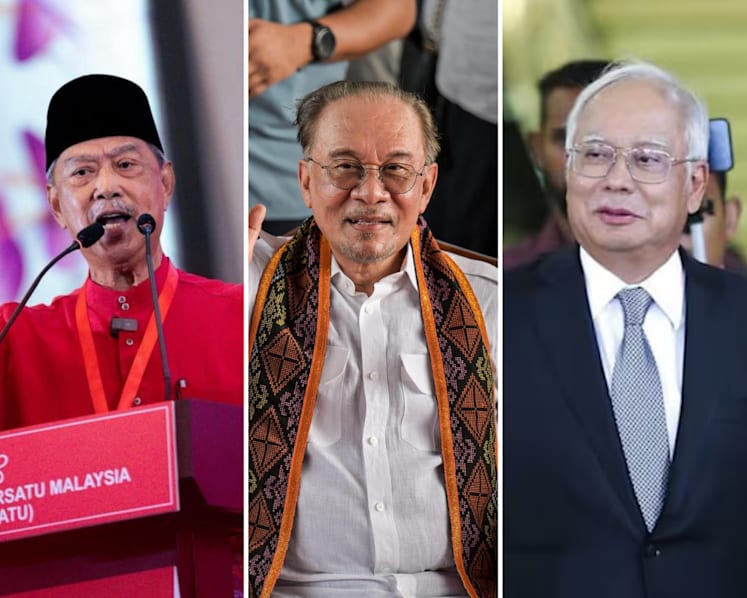
analysis Asia
UMNO at a crossroads amid calls to leave Anwar government, anger at Najib rulings
While former Malaysian premier Najib Razak’s recent legal troubles have reignited grassroots anger in UMNO, analysts believe a departure from the unity government remains highly improbable.
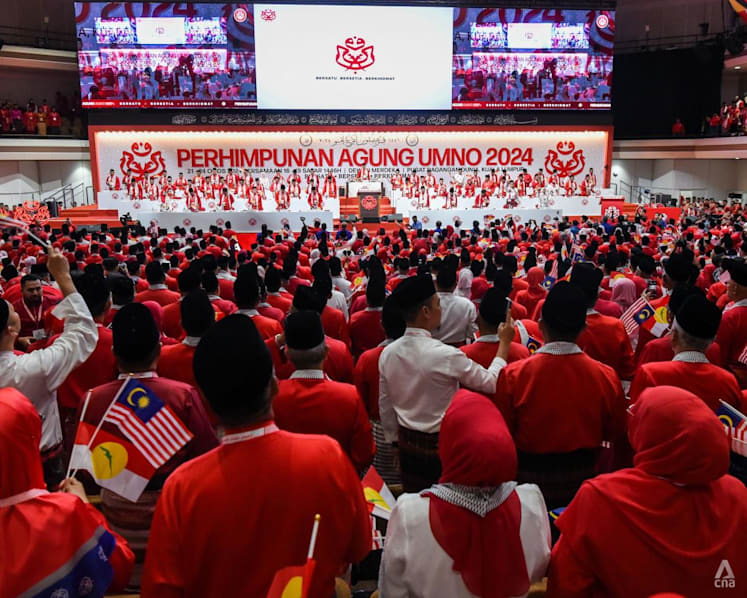
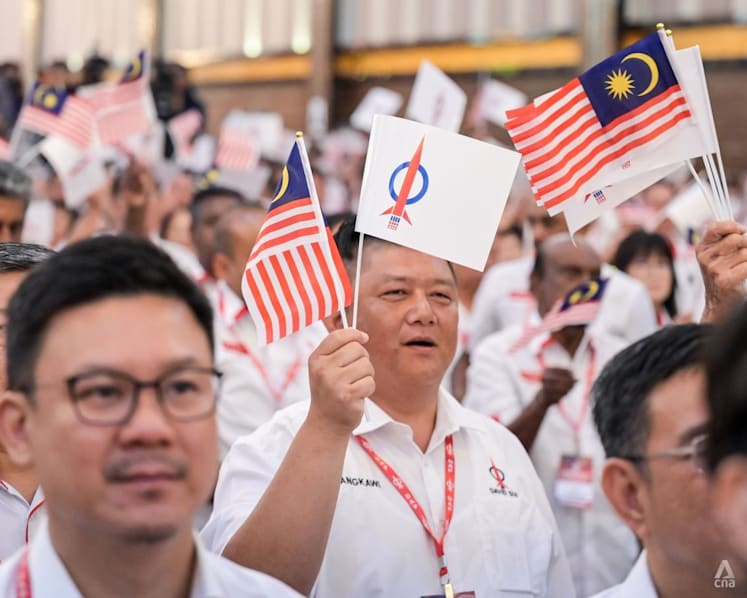
UMNO delegates at the party's General Assembly at the WTCKL, Kuala Lumpur, Malaysia on Aug 23, 2024. (Photo: CNA/Fadza Ishak)

This audio is generated by an AI tool.


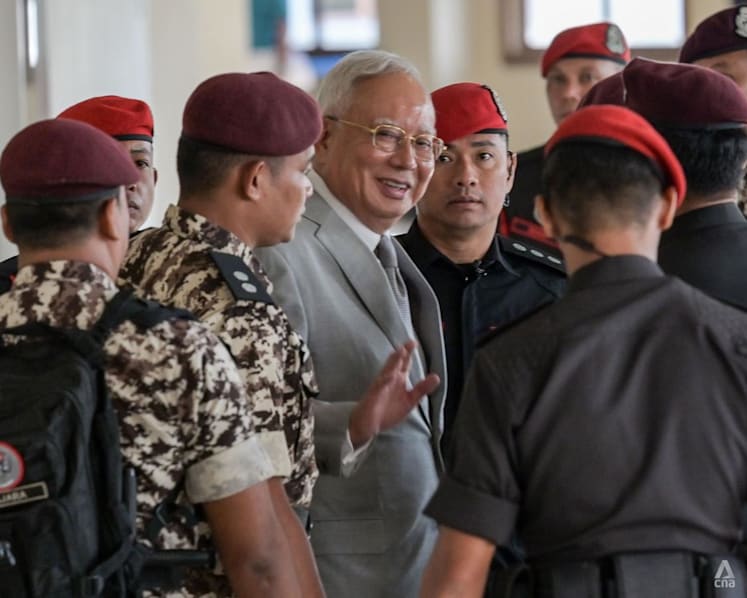
KUALA LUMPUR: As former Malaysian prime minister Najib Razak faces a fresh 15-year prison sentence following his conviction in a major 1Malaysia Development Berhad (1MDB) trial, the once dominant Malay nationalist party United Malays National Organisation (UMNO) stands at a crossroads, say analysts.
They add that the party remains torn between a grassroots nostalgia for Najib - who was its immediate past president - and the reality of being part of a governing coalition that currently offers the only viable path to its survival.
The High Court verdict on Dec 26 - coming on the heels of another court decision which had rejected Najib's bid for house arrest via a royal addendum - has ignited internal friction within the unity government.
Both verdicts - and in particular the rejection of the royal addendum - were met with a polarised response.





Some Democratic Action Party (DAP) politicians had hailed the rulings, while their UMNO counterparts - including ministers - reacted with anger.
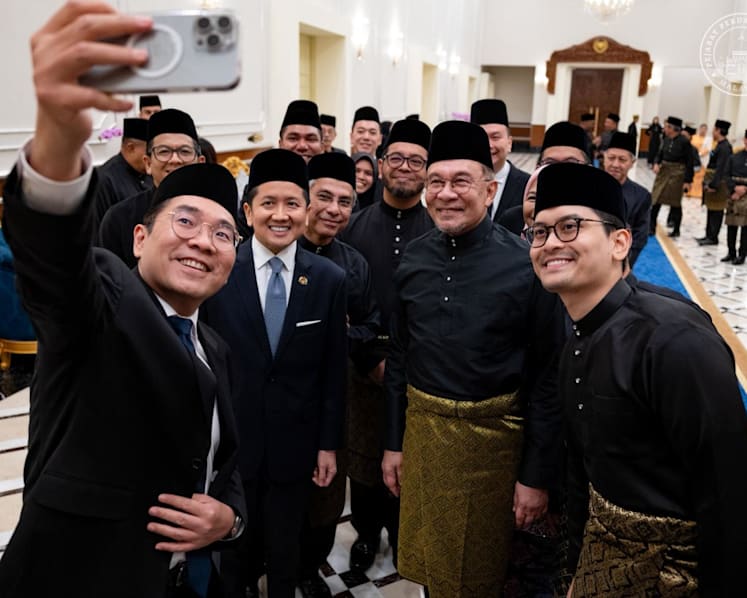
Both parties are part of Prime Minister Anwar Ibrahim’s unity government which was formed after the 15th general election in November 2022 resulted in a hung parliament.
Following the addendum verdict on Dec 22, Anwar had called on all parties to exercise patience and prudence, noting that while some may not sympathise with Najib and his family, it is “important to avoid escalating tensions or creating a charged atmosphere in this sensitive matter”.
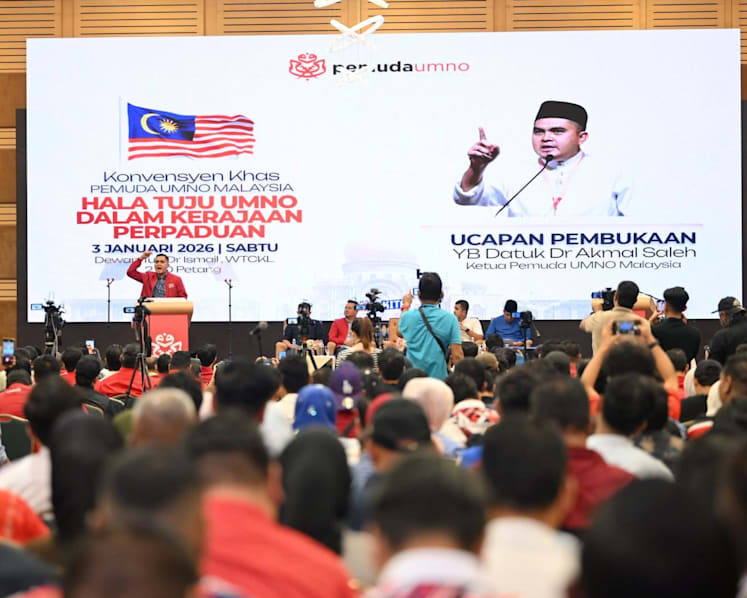
Despite attempts to maintain coalition unity, the UMNO Youth wing under the leadership of its chief Muhamad Akmal Saleh held a convention on Saturday (Jan 3) that will now propose to the party that it leaves the Anwar administration and partner with opposition Islamist party Parti Islam Se-Malaysia (PAS).
Akmal had claimed that UMNO's current role in the unity government has forced it to compromise on "red lines" involving race, religion and royalty.
But Malaysia’s Attorney General’s Chambers (AGC) had previously rebutted claims that Najib’s High Court ruling on Dec 22 had diluted the power of the king and Malay rulers to grant pardons.
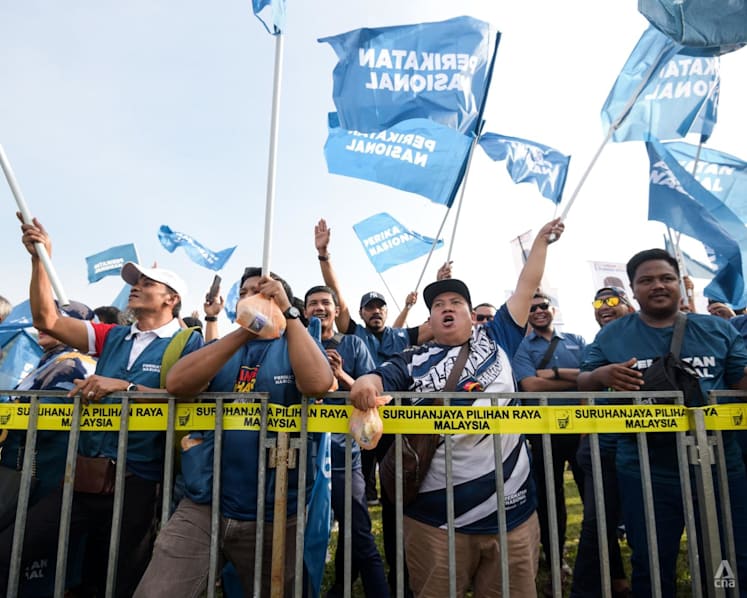
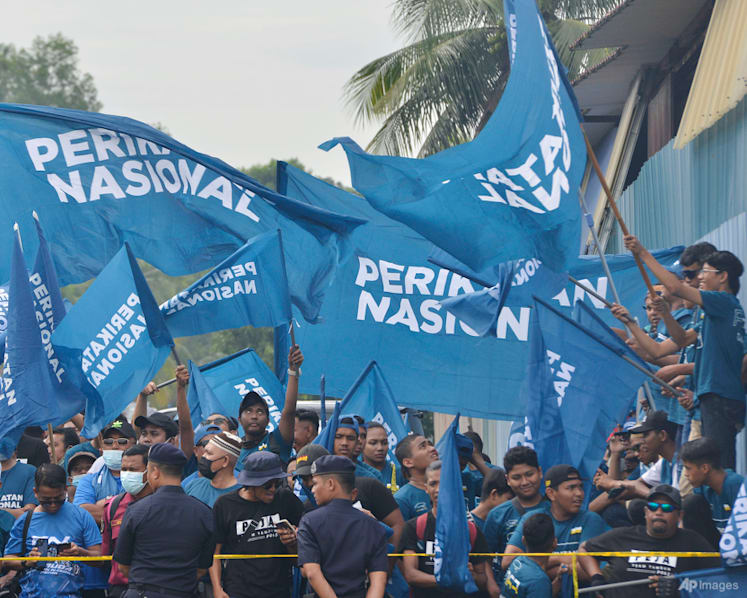
Saturday’s UMNO Youth convention had also coincided with deepening fractures in the opposition coalition Perikatan Nasional (PN).
PN was formed in February 2020 and is currently made up of four component parties: Parti Pribumi Bersatu Malaysia (Bersatu), PAS, Parti Gerakan Rakyat Malaysia and the Malaysian Indian People’s Party. The latter two are largely considered to be minor players in the coalition.
Following a leadership crisis, PAS leaders had begun floating the revival of Muafakat Nasional (MN) - the Malay-Muslim pact with UMNO that was once thought dead.
But while the noise from within some UMNO circles has been loud, political analyst Zaharuddin Sani Sabri of Global Asia Consulting told CNA that the party was not ready to exit the unity government.
“The threat of leaving is more valuable than the exit itself. It is leverage, not a plan,” he said.
“It functions as a pressure valve that allows UMNO to channel grassroots anger, force the government to heed their concerns, and recalibrate their role within the coalition.”
MAINLY RHETORICS
The Kuala Lumpur High Court had on Dec 22 rejected Najib’s judicial review application regarding the royal addendum, halting his bid to serve the remainder of his six-year prison sentence for the SRC International case at his residence in Kuala Lumpur. Najib has since filed an appeal against the ruling.
On the day of the ruling, DAP publicity secretary Yeo Bee Yin had shared a news article regarding Najib’s court judgment.
Her accompanying caption: “Another reason to celebrate this year end.”
Criticisms from UMNO leaders against Yeo – who is a former minister under the second Mahathir Mohamad administration from May 2018 to February 2020 - came in quick succession.
UMNO secretary-general Asyraf Wajdi Dusuki for one called for the party to review its collaboration with Pakatan Harapan (PH) if certain parties continued to fail to appreciate its contributions in the unity government.
PH is primarily composed of Anwar’s Parti Keadlian Rakyat, DAP as well as Parti Amanah Negara (Amanah).
“If you cannot show even a shred of sympathy, do not make statements that are offensive and hurtful. More so when the person insulted is a former top leader dearly respected by the entire UMNO family, who today helps form the unity government,” said Asyraf.
Meanwhile, Akmal - the UMNO Youth chief - also criticised Yeo’s post as “insulting and unnecessary”, and had called on party leaders to withdraw its support of the unity government.
“Better to be an opposition with dignity than to be insulted by these reckless individuals. What are we waiting for? Just withdraw support from this government,” he said in a video shared on Facebook.
Political analyst Hisommudin Abu Bakar of Ilham Centre told CNA that what was witnessed in UMNO was not an institutional confrontation, but an expression of empathy towards the fate of a former UMNO president.
This was coupled with a sense of helplessness among current leaders who hold government positions and have limited room to manoeuvre.
“I do not see any serious or aggressive effort by UMNO leaders within the government to defend Najib through proper institutional channels. Most of the responses remain rhetorical in nature, aimed primarily at projecting an image that UMNO is standing by Najib,” said Hisommudin.
The analyst added that the Najib issue was amplified mainly by a handful of UMNO figures who were effectively articulating the sentiments of grassroots members who continue to sympathise with Najib.
Ibrahim Suffian, co-founder of the Merdeka Centre for Opinion Research, said the various responses by UMNO were a means for its leaders to consistently make a show of defending their former president.
“A big portion of the grassroots and some of the leaders remain loyal to (Najib) and thus have to make the appropriate posture to display their support for him and advocate for his freedom,” he told CNA.
Ibrahim stressed, however, that outside of Najib’s loyal base, it was unclear whether the rest of the country feels the same way about him and that it was likely that most would have moved on.
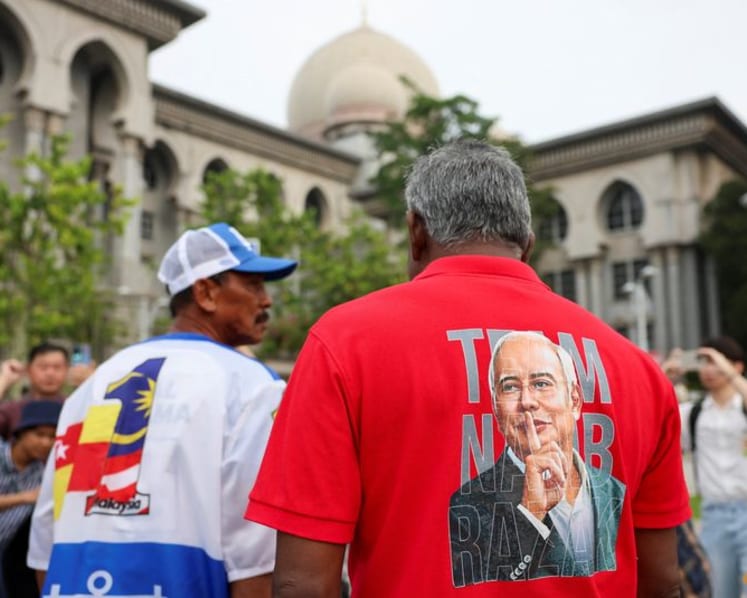
Zaharuddin said that Najib is a weapon that some in UMNO uses to mobilise the base - a symbol of a "lost era of stability" and is a potent tool for mobilising grassroots support.
He added that the UMNO Youth’s convention was not mere theatrics but aimed to place pressure on the government.
“In this context, the Najib saga is not a political handicap - it is narrative fuel. UMNO can frame the issue around ‘sovereignty and Malay dignity’ to strengthen its bargaining power without sacrificing the federal influence it has only recently regained,” said Zaharuddin.
Najib was Malaysia’s prime minister from 2009 to 2018, when the Barisan Nasional (BN) coalition lost the general election to PH that was led by Mahathir.
But the PH government that took power in 2018 did not last long.
In 2020, the “Sheraton Move” crumbled the administration from within, with part of the plot reportedly hatched at the Sheraton Hotel in Petaling Jaya. More than 30 Members of Parliament from the then-ruling PH alliance defected, bringing the government down after just 22 months in power.
This led to the appointment of Muhyiddin Yassin as prime minister, as Bersatu, PAS, and BN joined hands to form a new ruling coalition.
However, Muhyiddin’s tenure lasted only until August 2021 when some MPs from BN’s main component party, UMNO, pulled their support, ultimately leading to Ismail Sabri Yaakob replacing Muhyiddin as prime minister. Anwar then took power in November 2022.
Zaharuddin added that those who believe the “Bossku” phenomenon - a populist moniker Najib adopted to reinvent his image after his 2018 ouster - has faded simply misunderstand its strategic evolution.
“What once looked like a pop‑cultural wave has hardened into nostalgia and grievance politics. For sections of UMNO’s base, Najib is no longer merely a former leader - he is a symbol of patronage networks, political strength, and a ‘lost era of stability’ they believed ended in 2018,” he said.
TO STAY OR TO LEAVE?
Analysts however did not think that an UMNO withdrawal from the unity government was likely, noting that the gains of remaining in power far outweigh the risks of a premature exit.
Despite winning 30 seats in the 2022 general election, UMNO has seven ministerial posts in the Malaysian cabinet while DAP - which won 40 seats - has five ministerial posts.
Ibrahim noted that while UMNO has successfully reclaimed some lost ground, the party has never fully recovered from the 2015 splintering triggered by the 1MDB scandal, which led to the high-profile ouster of leaders like Muhyiddin and the eventual formation of Bersatu.
Ibrahim said that if UMNO stayed in the current coalition government and maintained an electoral pact with PH, it has a chance of winning back some seats from PN on account of some non-Malay support.
“If it leaves the current pact, it will lose that support without any guarantee that the Malays which abandoned them will return to the fold,” he said.
Similarly, Hisommudin of Ilham Centre said that UMNO’s prospects remain far stronger within the government than outside it, as its position in the ruling coalition provides the party with the necessary resources and machinery to rebuild its organiational capacity.
“The experience of being in opposition after losing power in 2018 was politically and institutionally painful for UMNO. Therefore, I do not expect UMNO to make a hasty or emotional decision to withdraw from the government purely in reaction to these two court decisions,” he said.
CAN MUAFAKAT NASIONAL BE REVIVED?
Amid mounting unity concerns within the government and PN pacts, the narrative of reviving MN has gained some traction among grassroots and party leaders of both PAS and UMNO.
PAS information chief Ahmad Fadhli Shaari for one called it “the key to strength and the resurgence of Muslim unity”.
“Once UMNO-(Barisan Nasional) declares that they are leaving the alliance with (Pakatan) Harapan, we can relaunch (Muafakat Nasional),” Fadhli said in a Facebook post on Dec 25 in response to a suggestion by Akmal to revive the pact.
MN was an alliance forged between UMNO and PAS in 2019 against the then-PH government led by Mahathir.
But MN collapsed when PAS and Bersatu - a splinter party of UMNO - formed PN, the current federal opposition bloc.
Ibrahim said that while reviving MN sounded great as an idea, it was difficult to be realised as both PAS and UMNO are vying for the same electorate and neither will yield when it comes to electoral seats to contest as well as potential positions in a future government.
He added that just as PAS supporters would loath to let go of seats to UMNO in the states they control such as Kelantan and Terengganu, UMNO supporters would not want to give PAS space in places like Johor or Pahang.
Hisommudin concurred and said that the fundamental problem was that both parties compete for the same electoral constituencies dominated by Malay voters at both parliamentary and state levels.
“In the last general election, many of these seats were won by PAS. Given PAS’ political culture, it is highly improbable that they would relinquish these seats to UMNO,” he said, adding that entering a pact would only constrain UMNO from challenging PAS in seats that the latter currently controls.
PAS won 43 seats in the last general election, the highest of any political party.
They were the main force behind PN's success, which came largely at the expense of BN and UMNO.
“The collapse of Muafakat Nasional in the past demonstrated that even a partnership framed around defending Malay-Muslim interests could not withstand internal rivalries,” said Hisomudin.
Anwar was reported to have said on Jan 2 that discussions revolving around MN’s revival have yet to reach a serious level.
“So those who fantasie (about) such things or talk about leaving (the unity government), well, that’s not my problem,” he was quoted as saying by online news portal Free Malaysia Today.
Zaharuddin - the analyst - meanwhile shared an allegory and said that UMNO was not a party that would board a moving bus without knowing its destination.
“Until then, MN remains a ghost - and UMNO will not open the door (to MN) without a clear political advantage,” he said.