'No room for illegal activities’: Malaysia stresses security, efficiency for JB-Singapore RTS Link
Speaking to reporters on Friday (May 8), Home Affairs Minister Saifuddin Nasution Ismail also pledged that Malaysia will adopt a more “proactive approach” to ensure immigration glitches do not recur ahead of the Rapid Transit System (RTS) launch.
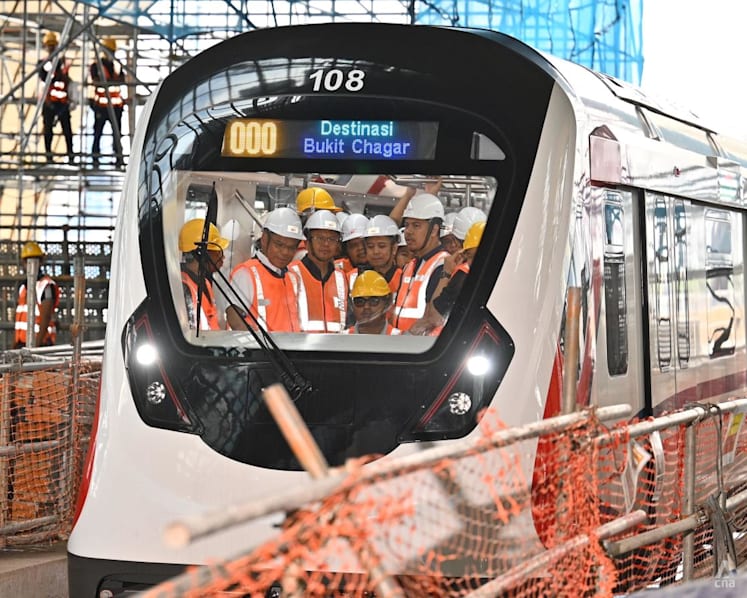
Malaysia’s Home Affairs Minister Saifuddin Nasution Ismail (second left) takes a ride on the RTS train at Bukit Chagar station in Johor Bahru on May 8, 2026. (CNA/Zamzahuri Abas)

This audio is generated by an AI tool.


JOHOR BAHRU: As Malaysia gears up for the launch of the Johor Bahru-Singapore Rapid Transit System (RTS) Link at the end of the year, authorities are zoning in on illegal activities, as well as faster immigration clearance.
Home Affairs Minister Saifuddin Nasution Ismail said the government is strengthening real-time monitoring to detect threats such as smuggling and unauthorised entry, as well as taking a more “proactive approach” to prevent a repeat of recent autogate glitches.
Speaking on Friday (May 8) during a working visit to the site of RTS Link’s Bukit Chagar station, he said the facility is expected to become Malaysia’s busiest land checkpoint - making both efficiency and security critical.
“For a project of this scale, it’s not just about speed. We are … using technology to ensure that all movements are recorded, analysed and monitored in real time … (leaving) no room for illegal activities,” he said, citing risks such as human trafficking, and smuggling of people and contraband.
A key part of the upgrade is the transition from the ageing MyIMMs system, the immigration department’s digital system, to the new National Integrated Immigration System (MyNIISe), aimed at improving reliability and handling higher passenger volumes.
“The fact that we chose to implement this new system means we acknowledge the need to improve the existing system so that the disruptions we have experienced become a thing of the past,” said Saifuddin.
“Replacing an old system with a new one involves a transition and integration phase. There will … be glitches here and there - that is inevitable. No system is perfect. What is most important is the home ministry’s commitment to mitigating such disruptions,” he added.





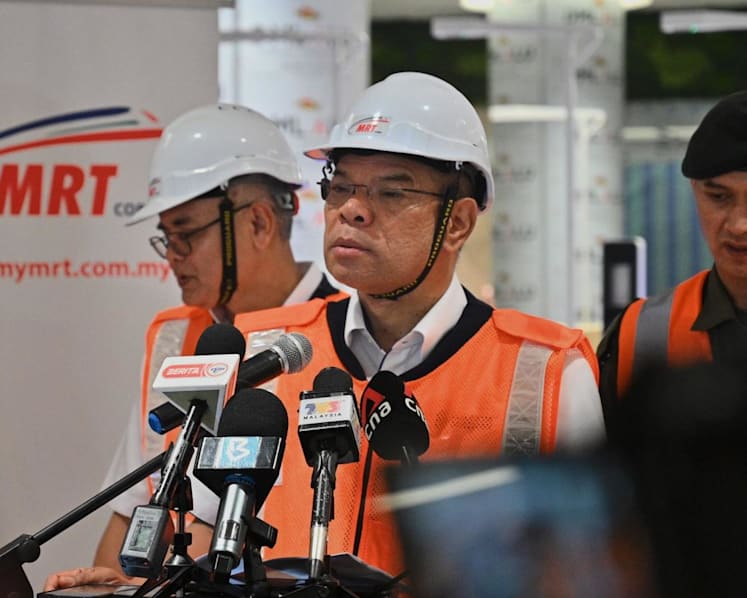
Saifuddin outlined that the MyNIISe system is now in its “final stages of implementation” and that its purpose is to replace the old system, which he said has caused issues at busy entry points, including Bangunan Sultan Iskandar (BSI) linked to the Woodlands Causeway and Kompleks Sultan Abu Bakar (KSAB), linked to the Tuas Second Link.
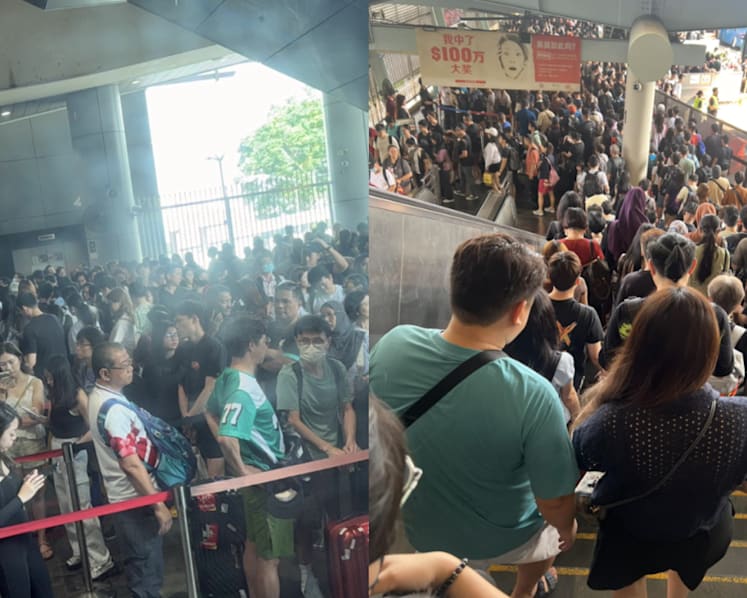
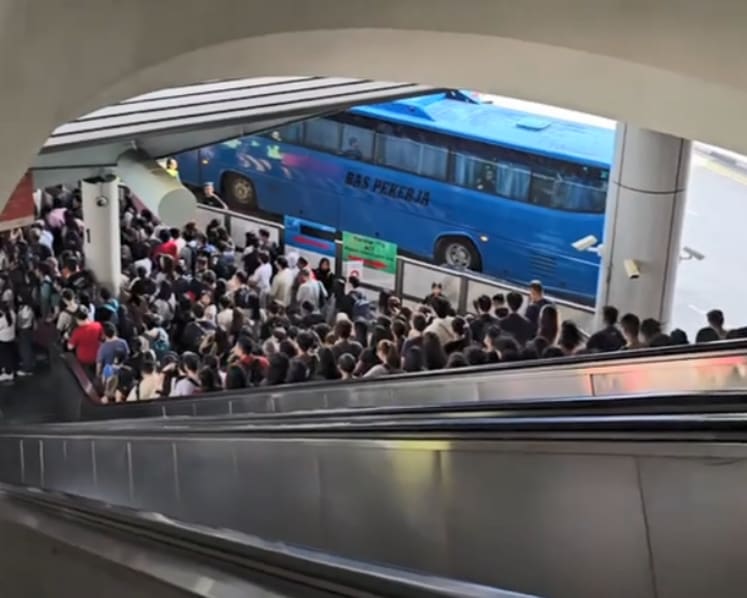
The most recent major immigration outage occurred in January this year, impacting hundreds of thousands of foreigners. It was the the third major outage at the Johor land entry points in 13 months, following similar incidents in December 2024 and July 2025.
Data integration issues as Malaysia transitions from MyIMMs to MyNIISe were cited by Malaysian authorities as the reason behind both the Jan 10 and Jul 19 incident, where more than 200 autogates malfunctioned across BSI, KSAB as well as Kuala Lumpur International Airport Terminal 1 and 2, affecting tens of thousands of foreign travellers.
Commuters and transport experts previously told CNA that more can be done to boost the system’s resilience and contingency plans ahead of the RTS Link opening, when a higher volume of travellers is anticipated.
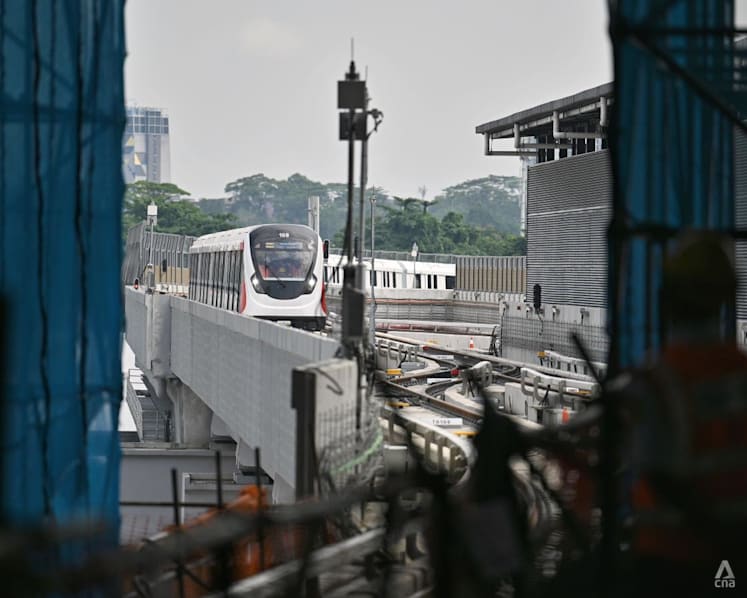
The 4km RTS Link from Singapore’s Woodlands North station to Johor’s Bukit Chagar station is expected to begin service by the start of 2027. It aims to ease traffic congestion on the Causeway – one of the world's busiest border crossings by ferrying up to 10,000 passengers an hour each way.
The RTS Link is expected to draw bus commuters – who are among those most affected by autogate failures – as it is set to be a quicker and more efficient option.
It is also expected to offer a single immigration clearance system, where passengers clear immigration for both Malaysia and Singapore at their point of departure.
Saifuddin stressed on Friday that Malaysia is committed to work with vendors developing the new system to ensure issues do not recur.
“Our commitment is that during this procurement and transition period, there may be some disruptions. I am not making excuses, but I want to reiterate our commitment,” he said.
“What I’ve emphasised to the vendors and service providers developing the system is to change their approach slightly. Don’t just react after something happens. They must adopt a proactive approach,” added Saifuddin.
“My instruction to the service providers developing and managing the system transition is to anticipate what can go wrong, carry out a kind of pre-mortem, and then come up with mitigation plans on how to handle those problems,” he added.
MORE SCREENING MACHINES, MANPOWER TO UNDERGO TRAINING
The home affairs minister also outlined security measures that have been implemented by the Malaysian Border Control and Protection Agency (AKPS), which is set to oversee operations at the RTS Link.
Agencies involved in AKPS include the police, the customs department, the immigration department, the health ministry, the maritime enforcement agency and the road transport department.
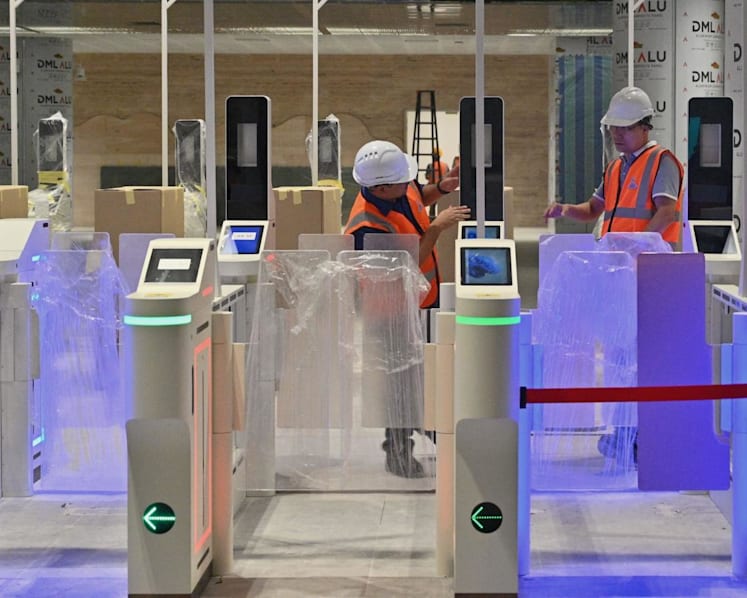
Saifuddin said that for security screening, 18 baggage screening machines, 22 body scanners and 10 walk-through scanners using millimetre (mm)-wave technology were currently being installed and tested.
“The goal is to enhance our ability to detect any potential threats at the country’s entry points,” said Saifuddin.
Mm-technology uses non-harmful, ultrahigh-frequency radio waves to screen bodies and objects.
Saifuddin also pointed out that 220 e-gate units have been installed, which he had inspected that day, and these would be implemented with the new MyNIISe system.
He added that in terms of manpower, 794 positions had been approved to be stationed at the RTS Link. Of these, 640 were designated for immigration, 47 for customs and 107 for police work.
A total of 478 officers are set to begin training in June before being ultimately posted at Bukit Chagar.
“The key point is that when operations begin, we will not face manpower shortages,” said Saifuddin.
He also touched on progress of border control co-location - where both countries are implementing legal frameworks to support how Singapore enforcement agencies can be stationed at Johor Bahru and similarly Malaysian officers at Woodlands North station.
On May 5, Singapore passed the Cross-Border Railways (Border Control Co-Location Bill) which, among other facets, allows for the co-location of both countries’ customs, immigration and quarantine facilities at each station.
Saifuddin said that on this aspect, cooperation between Malaysia and Singapore has been “very good”.
He added that Malaysia has completed its side of the law amendments, and that this was being gazetted.
“According to our timeline, Singapore must also enact domestic laws. Only then can we implement the co-location approach,” he added.
The home affairs minister added that a series of joint Malaysia-Singapore technical discussions must proceed to refine the SOPs.
“This is important because it symbolises neighbouring nations working together. It reflects mutual recognition that establishing a new border entry facility is not just about building physical infrastructure and systems - it must also include legal and regulatory aspects,” he said.