3 Johor autogate glitches in 13 months: Experts raise concerns ahead of RTS Link launch
Immigration clearance has improved at the land borders, but more can be done to boost the system’s resilience and contingency plans, say commuters and experts.
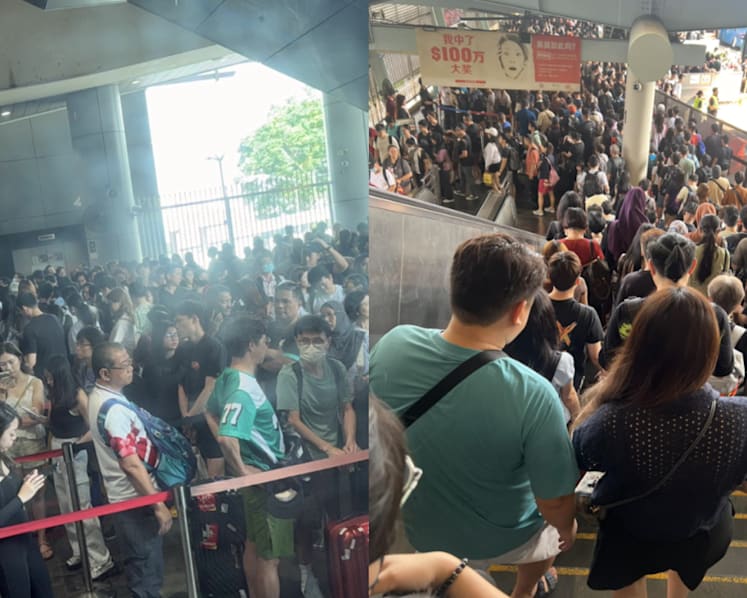
Long queues as a result of autogate glitches at Johor Bahru's Bangunan Sultan Iskandar Customs, Immigration and Quarantine Complex (BSI) on Jan 9, 2026 and Jan 10, 2026. (Photos: Facebook/柔新关卡Both Checkpoint 分享站)

This audio is generated by an AI tool.


JOHOR BAHRU: The recent autogate outages at Johor Bahru’s land entry points have raised questions about whether the system is equipped to handle a higher volume of travellers as Malaysia’s 2026 tourism campaign kicks off, and when the rail RTS (Rapid Transit System) Link launches in about a year.
Last weekend’s incident, which reportedly impacted hundreds of thousands of foreigners, was the third major autogate glitch at the Johor land entry points in 13 months. Similar incidents occurred in December 2024 and July 2025.
While immigration clearance has improved at the land borders over the last few years – with the launch of facial recognition as well as QR code clearance – commuters and experts told CNA more can be done to boost the system’s resilience, especially during peak travel periods.
Timely communication with the public, especially during disruptions, is essential, they said.
Experts also called for greater accountability and transparency on the autogate systems supplier, and more robust stress tests to prevent disruptions from recurring.
“If similar failures were to affect RTS operations, the consequences would indeed be serious, not just operationally, but reputationally for Johor and Malaysia,” said Rosli Azad Khan, a transport planning expert and managing director of Malaysia-based MDS Consultancy Group.
“This would have knock-on effects for the Johor-Singapore Special Economic Zone, investor confidence and national initiatives such as Visit Malaysia 2026. The core risk is … whether critical infrastructure systems are robust, stress-tested and supported by suppliers who are contractually and reputationally accountable for failures,” added Rosli.





“DELAYS ARE NOT WORTH IT”
Mohd Suhaily Mohd Zain, director-general for Malaysia’s Border Control and Protection Agency (AKPS), has apologised for last weekend’s autogate disruption.
While his agency is meant to oversee the immigration clearance system assets at Johor Bahru’s Bangunan Sultan Iskandar Customs, Immigration and Quarantine Complex (BSI) linked to the Woodlands Causeway, they are presently managed by other agencies such as the immigration department, the customs department as well as the police force.
"But this is not an excuse as Prime Minister Datuk Seri Anwar Ibrahim has instructed us that this must not happen again, especially during Visit Malaysia 2026," said Mohd Suhaily, referring to the government’s campaign to attract 35.6 million tourists this year.
Singapore accounted for the highest proportion of visitor arrivals to Malaysia in 2025, with many travellers entering from the Johor land checkpoints at BSI and Kompleks Sultan Abu Bakar (KSAB) that is linked to the Tuas Second Link.
Singaporean Dexter Fong, who was among those who was impacted by the autogate disruptions last weekend, said such incidents discourage him from returning “because the delays are not worth it”.
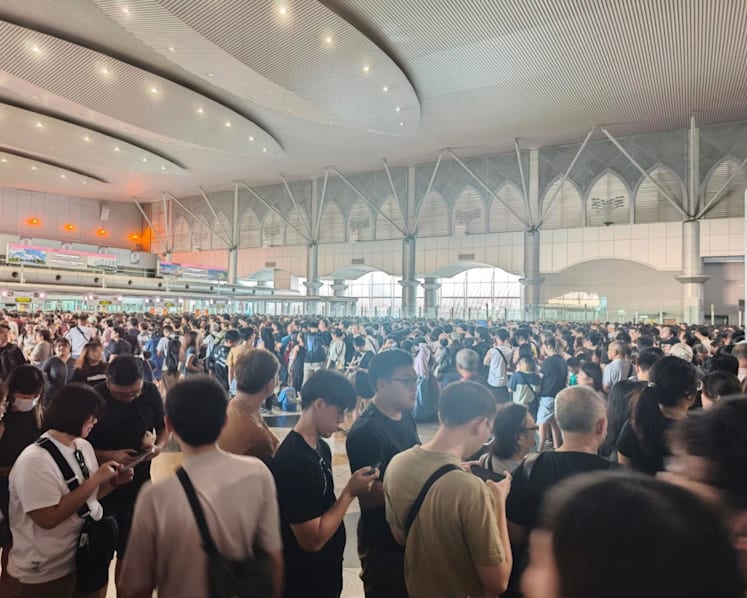
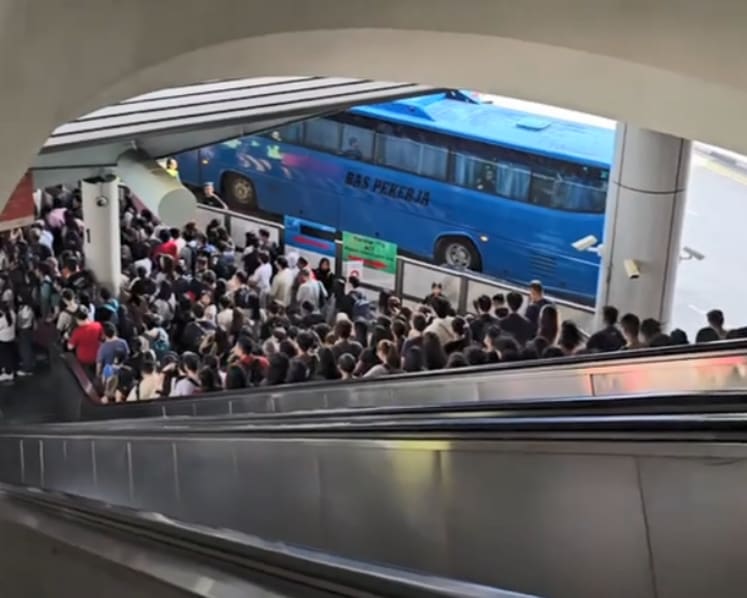
The 43-year-old civil servant said he was stuck for one-and-a-half hours last Saturday afternoon as the queue snaked from the immigration hall “all the way down the stairs and into the bus bays”. He and his family had wanted to shop and dine across the Causeway.
It is even more important for such glitches to be minimised when the RTS Link is launched, said real estate consultant and urban economist Tan Wee Tiam, executive director of Johor firm Olive Tree.
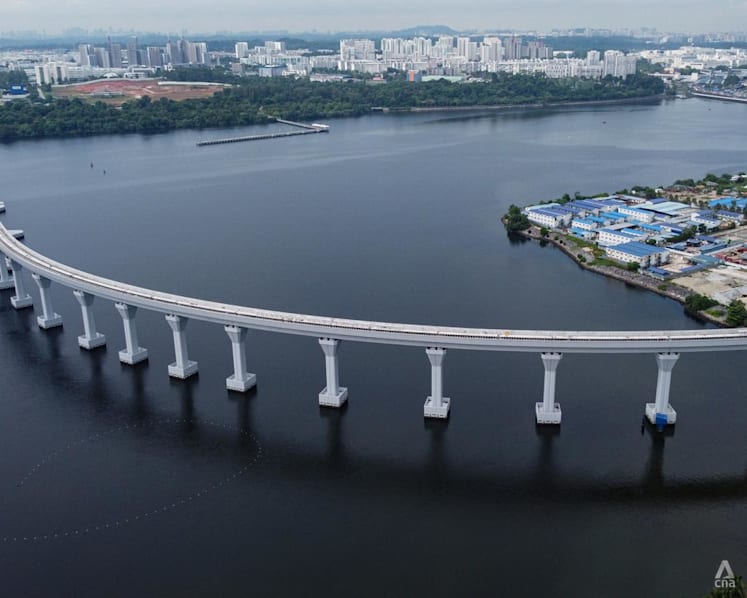
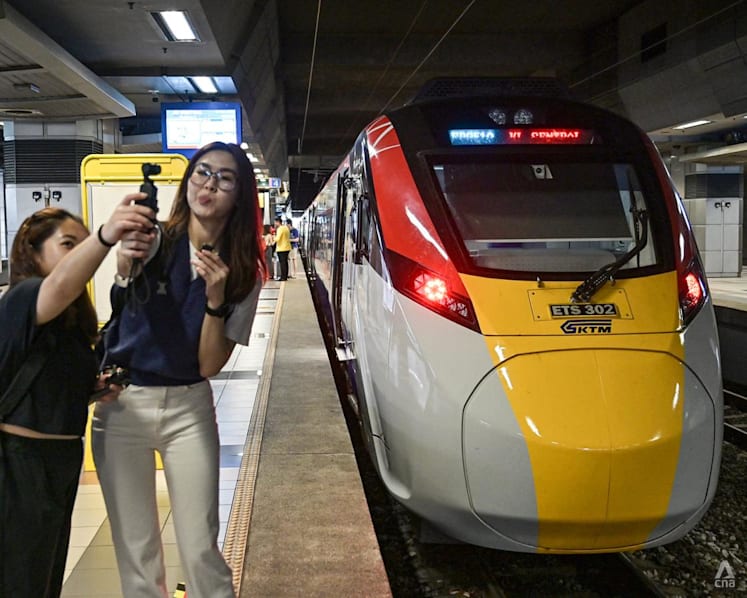
The 4km RTS Link from Singapore’s Woodlands North station to Johor’s Bukit Chagar station is expected to begin service by the start of 2027. It aims to ease traffic congestion on the Causeway – one of the world's busiest border crossings – by ferrying up to 10,000 passengers an hour each way.
The RTS Link is expected to draw bus commuters – who are among those most affected by autogate failures – as it is set to be a quicker and more efficient option. The RTS Link is also expected to offer a single immigration clearance system, where passengers clear immigration for both Malaysia and Singapore at their point of departure.
On Thursday (Jan 15), Malaysia Transport Minister Anthony Loke said construction of the RTS Link was expected to be completed on schedule by the end of this year.
Autogate failures would defeat the rail link’s purpose of reducing traffic congestion, Tan said.
Such disruptions would dent the potential of the future Johor-Singapore Special Economic Zone, an initiative to boost economic collaboration that entails the efficient movement of workers across the border, he said.


WHAT SOLUTIONS CAN BE IMPLEMENTED?
The Malaysian authorities should minimise the occurrence of outages by holding systems suppliers to account, and mitigate the impact of glitches when they occur, observers said.
MDS Consultancy’s Rosli said the authorities must ensure the system is up to task in terms of design, ability to handle capacity and vendor support.
He suggested full, regular audits of these autogate systems, mandatory supplier explanations where relevant following outages and penalties or remedial actions where contractual obligations are not met.
He questioned whether accountability should rest with the supplier instead of the operator when “systems fail repeatedly”.
“Transparency is critical,” said Rosli.
Last weekend’s outage was attributed to data integration issues as Malaysia transitions from the Malaysian Immigration System (MyIMMs) to the new National Integrated Immigration System (NIISe).
The same reason was cited for a Jul 19 incident last year where more than 200 autogates malfunctioned across BSI, KSAB as well as Kuala Lumpur International Airport Terminal 1 and 2, affecting tens of thousands of foreign travellers.
CNA has sent queries to AKPS about the detailed cause of the autogate disruption last weekend, solutions it wishes to adopt, the identity of the autogate supplier and whether any action will be taken against the company if it is found to be at fault.
If outages happen, commanders overseeing immigration clearance operations must “react fast” to man counters and transition to manual processing, AKPS’ Mohd Suhaily reportedly said.
"If counters are not operating, that is a commander's failure," he said.
Tan of Olive Tree agreed, saying the deployment of manual counters should be responsive to the ground situation.
“When autogates fail, all available manual counters should be activated immediately, with a higher proportion allocated to foreign passport holders, since Malaysians may still be able to use alternative automated lanes,” he said.
He suggested better communication between the Malaysian and Singapore immigration agencies when system disruptions occur. “This would help slow or temporarily divert inbound travellers to Johor, preventing congestion from compounding while the system is being restored,” he said.
Commuter and academic Serina Rahman, a lecturer with the National University of Singapore’s Southeast Asian Studies department, suggested that ahead of the RTS Link’s launch, authorities on both sides should conduct trial runs to test if the immigration clearance system can handle the anticipated volume of travellers.
“There needs to be thorough testing, and (a plan for the) dispersal of people by other modes of transport once they exit too,” said Serina, who commutes by bus between Singapore and Johor around five times a week and worries about potential stampedes should glitches occur.
While there have been setbacks, Serina said the Malaysian authorities have made progress in speeding up immigration clearance at the Johor land borders.
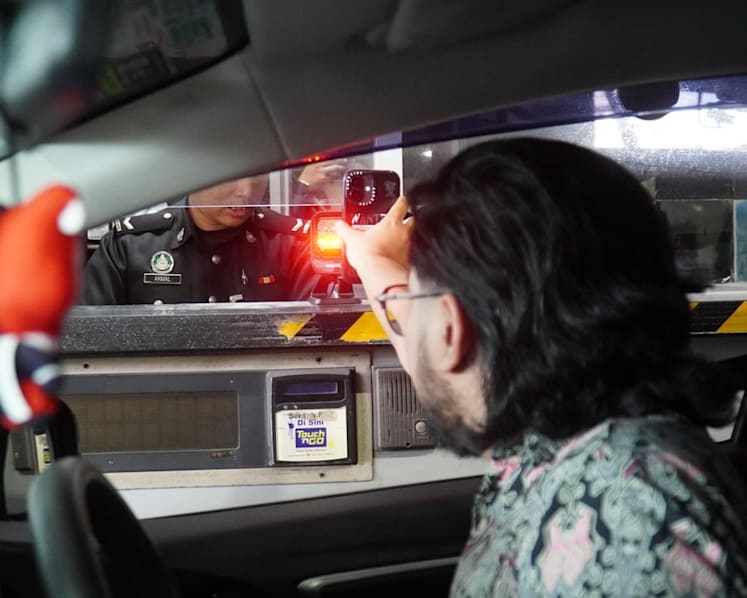
The MyNIISe app now allows foreigners to enter Johor Bahru by scanning QR codes without having to show their passports and, since June 2024, the use of autogates has expanded from locals to foreigners from 63 eligible countries and long-term pass holders.
“Computer systems can fail when on overload; I think Malaysia deserves a bit of air. Some are so quick to condemn but, really, things are way better than before,” said Serina.
“My commutes are down to an hour (from three to four hours previously). We have more buses and the autogates are fast. And when gates fail, you can see immigration officers jump out to see what’s wrong,” she said.