







analysis Asia
Southeast Asia caught between relief and new risks after US court strikes down Trump tariffs
Southeast Asian countries could benefit from a temporary lowering of tariffs, but analysts warn there are other means United States President Donald Trump can use to keep his trade agenda alive.

A woman looks at shoes at a store in Tangerang, Indonesia, on Jul 20, 2025. Indonesia is among the top countries supplying footwear to the United States. (Photo: CNA/Ridhwan Siregar)

This audio is generated by an AI tool.


JAKARTA: A temporary reprieve, or fuel on an already heated political landscape? The United States Supreme Court’s recent ruling on President Donald Trump’s tariffs is being cast in starkly different lights across Southeast Asia, say experts.
Analysts say the decision is poised to send uneven shockwaves through the region, with its political and economic fallout likely to play out differently across different countries, from Bangkok to Manila.
“The only thing certain is that there will be uncertainty,” Lawrence Loh of the National University of Singapore (NUS) Business School told CNA, adding that the Supreme Court judgment would not stop Trump from seeking other means to keep his trade agenda alive.
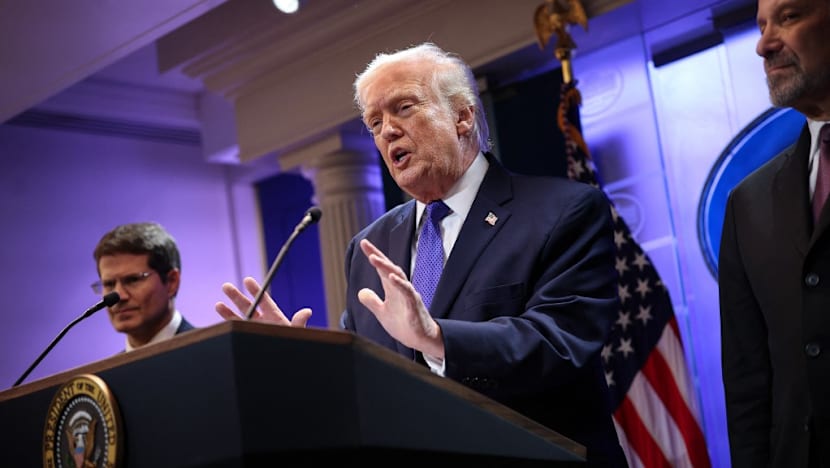
Last Friday (Feb 20), the US Supreme Court ruled that Trump’s use of the International Emergency Economic Powers Act to impose reciprocal tariffs last year without congressional approval was unconstitutional.
The court’s decision prompted Trump to invoke a different law to sign an order imposing a global 10 per cent duty on goods imported into the US. Trump has announced that he intends to raise the rate to 15 per cent, but he has not yet formalised that with a new directive.
The sweeping 10 per cent tariff, which came into effect on Tuesday, is however temporary and can only last 150 days before Congress either extends the timeframe or steps in.
Analysts said most Southeast Asian countries are likely to see the court ruling as a reprieve, as nearly all had previously been slapped with tariffs of at least 19 per cent.
Businesses in these economies, they added, could enjoy a temporary lift as exporters move quickly to take advantage of the lower duties.
Singapore is the only Southeast Asian country to have seen its tariff rate remain in recent days, standing at the original 10 per cent.
However, Deputy Prime Minister Gan Kim Yong recently urged the country to prepare for a fundamentally changed global trade environment.
"It is important for us to continue to remind ourselves ... we need to prepare for the long term, and this is the new world that we are facing," he said.
Meanwhile, countries that have already inked reciprocal trade agreements with Washington in their months-long efforts to seek reduced tariff rates from those first announced in April 2025 are facing mounting pressure from political opponents and critics at home to renegotiate for more favourable terms.
Loh of NUS said that those attempting to capitalise on the ruling should note that the situation could change again soon, as Trump could use other legal provisions to get his tariffs in place.
The temporary 10 per cent tariff was imposed using section 122 of the US Trade Act of 1974 which authorises the president to impose temporary import surcharges of up to 15 per cent when the US faces a serious balance-of-payments deficit or rapid dollar depreciation.
Trump has also authorised the United States Trade Representative to launch an investigation against practices that burden or restrict US commerce under Section 301 of the same trade act and take necessary actions, including tariffs, quotas and other restrictions to counter such practices.
The US president could also resort to using non-trade barriers such as import quotas, strict licensing or complex rules of origin more aggressively.
“The pursuit of trade restrictions in whatever form by the US presidency is relentless and probably unstoppable,” said Loh.


CALLS FOR RENEGOTIATIONS MOUNTING IN INDONESIA, MALAYSIA
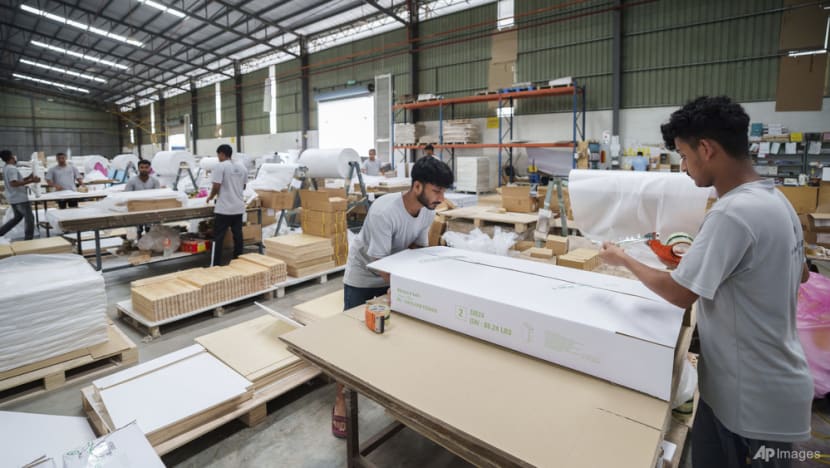
The US tariff agreements with Indonesia and Malaysia have drawn widespread criticism in both countries, with detractors arguing that the deals disproportionately benefit Washington while undermining national sovereignty and economic independence.
Malaysia signed its agreement in October, while Indonesia inked its pact last week.
Although the arrangements allow certain goods such as Indonesian palm oil and Malaysian semiconductors to be exempted from US tariffs, they also commit Indonesia and Malaysia to granting significant preferential market access to US products.
These concessions include exemptions from a range of certifications, standards and other requirements the two Southeast Asian nations typically imposed on imports from other countries.
The agreements further stipulate that Indonesia and Malaysia could face higher tariffs if they enter into new trade pacts deemed to jeopardise Washington’s “essential interests” – a clause many observers interpret as a reference to China.
“I doubt Indonesia has ever had trade agreements this toxic,” Bhima Yudhistira of the Indonesian think tank Center of Economic and Law Studies (CELIOS) told CNA. On Monday, the think-tank announced that it is considering launching a legal challenge to the US-Indonesia trade agreement.
The agreement needs to be ratified by the parliaments of both countries for it to take effect. With no clear opposition to President Prabowo Subianto’s 10-party coalition, the deal is widely expected to pass Indonesia’s House of Representatives with little resistance.
In Malaysia, however, the path forward appears far less certain.
According to Malaysian media, five members of parliament from the opposition Perikatan Nasional coalition have filed a motion with the Federal Court seeking a ruling on the agreement’s validity, alleging that it was signed without proper parliamentary approval.
Criticism has also emerged from within the ruling coalition. On Monday, four MPs from Prime Minister Anwar Ibrahim’s Parti Keadilan Rakyat called for all steps toward ratifying the US-Malaysia reciprocal trade agreement to be suspended.
Despite mounting calls for the deals to be renegotiated or scrapped, officials in both countries have defended their respective agreements with Washington.
Joanne Lin, senior fellow and coordinator of the ASEAN Studies Centre at the ISEAS–Yusof Ishak Institute in Singapore, said countries that have already signed reciprocal arrangements with the US — including Indonesia and Malaysia — are likely to preserve the deals to avoid falling foul of Trump.
“The US remains a key security partner, a technology leader and one of the largest sources of foreign direct investment into Southeast Asia. Preserving broader bilateral relations will remain a priority,” she told CNA.
Trump has threatened to impose more severe sanctions on countries that seek to “play games with the ridiculous Supreme Court decision”, signalling his intentions to governments that may be tempted to back away from tariff agreements already struck with Washington.
COMPETITIVENESS GAINED AND LOST
The court ruling effectively levels the playing field, boosting the competitiveness of most Southeast Asian economies.
Before the Supreme Court’s decision, the Trump administration had slapped a 48 per cent tariff on goods from Laos — the highest in the region at that time— citing suspicions of transshipment.
Transshipment refers to the practice of rerouting or repackaging goods from one country, typically China, to make them appear as though they originated elsewhere in order to circumvent US tariffs.
China was initially hit with a 57 per cent tariff, though Beijing later negotiated it down to 47 per cent — a rate that was, ironically, lower than that imposed on Laos.
However, the bigger beneficiaries of the court ruling are likely to be Vietnam and Thailand, two of the US’ largest trading partners in Southeast Asia.
According to data from the United Nations Commodity Trade Statistics Database (UN Comtrade), Vietnam — previously subject to a 20 per cent tariff — exported US$142 billion worth of goods to the US in 2024.
Thailand, which had faced a 19 per cent tariff, shipped US$66 billion that same year. By comparison, Laos exported US$849 million in 2024.
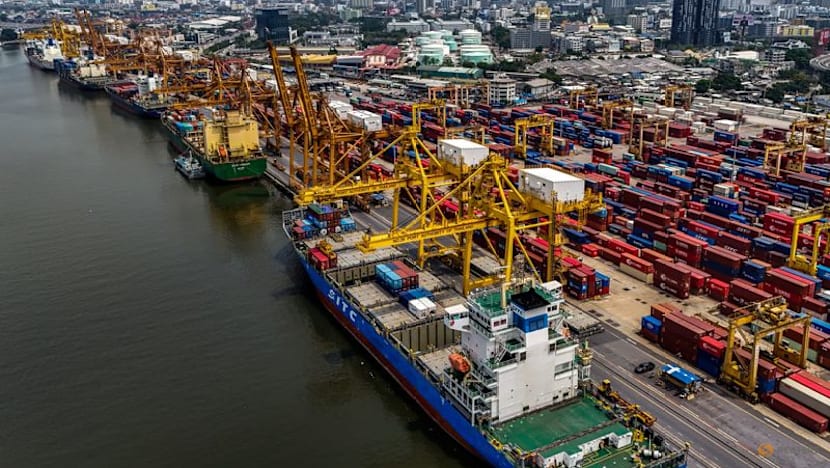
With tariff differentials now temporarily narrowed, exporters in these economies are expected to move quickly to maximise shipments during the 150-day window before the current order expires or before Trump introduces fresh measures.
But economists warned that governments should not mistake short-term relief for long-term stability. Beyond the 150-day window, the bigger risk is prolonged uncertainty.
If tariff rates continue to fluctuate or are reimposed through alternative legal avenues, businesses may delay expansion plans or scale back investments.
“This kind of chronic unpredictability is precisely why businesses are fundamentally rethinking how they configure their global supply chains,” said Pavida Pananond, a professor of international business at Thailand’s Thammasat Business School.
Like Laos, Cambodia, Thailand and Vietnam were also accused by the Trump administration of engaging in transshipment.
When Trump unveiled his so-called “Liberation Day” tariffs in April last year, Cambodia was originally hit with a 49 per cent levy, while Thailand and Vietnam faced duties of 36 per cent and 46 per cent respectively.
Thailand and Cambodia later managed to reduce their tariff rates to 19 per cent and secured exemptions for thousands of products under trade deals signed in October.
Vietnam, for its part, agreed to a trade framework with Washington that brought its tariff rate down to 20 per cent, though the two sides are still negotiating the terms of a more permanent reciprocal trade agreement.

Officials in Hanoi have said they are aiming to secure the same 19 per cent tariff rate granted to their neighbours. Vietnam’s decision to join Trump’s Board of Peace has been widely viewed as an effort to strengthen goodwill, and Vietnamese officials held another round of trade talks on the sidelines of the Board of Peace summit last week.
In a further positive signal, the US recently agreed to remove Vietnam from a list of countries restricted from accessing advanced American technologies, suggesting that bilateral ties may be on an upswing.
Meanwhile, analysts said the latest developments may be viewed less favourably in Singapore, which had already enjoyed a relatively low 10 per cent tariff prior to the US Supreme Court ruling.
According to US Census Bureau data, the US ran a goods trade surplus of US$3.6 billion with Singapore in 2025, higher than the surplus of US$1.9 billion in 2024.
While the shift in tariff rates may narrow Singapore’s relative advantage, analysts predict the city-state to remain resilient.
Singapore’s competitive advantage lies “beyond the rudimentary calculation of tariff rate differentials”, Edward Lee, chief economist at Standard Chartered, told CNA previously.
“Competitiveness will encompass many other aspects, such as institutional stability, policy credibility and stability, robust financial capability, connectivity, productivity, expertise,” he said.
UNCERTAINTY OVER WASHINGTON’S NEXT MOVE
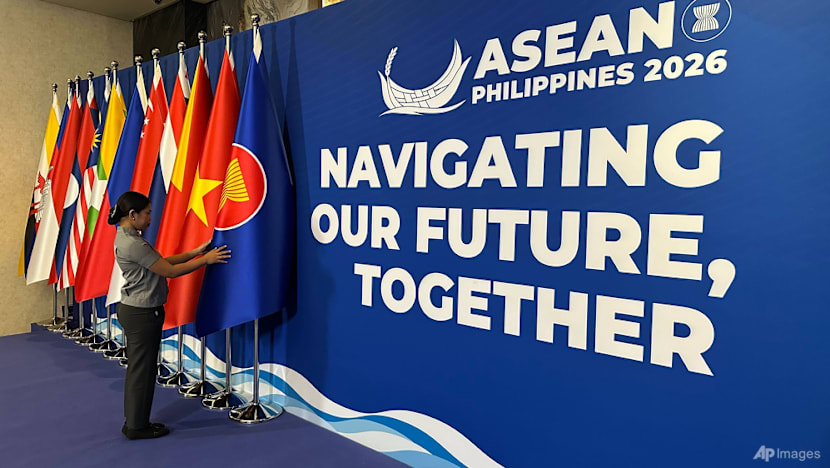
It remains unclear what Washington’s next move will be, and Southeast Asian countries are likely to look to the Association of Southeast Asian Nations (ASEAN) — currently chaired by the Philippines — for coordination and possible solutions.
The issue was hotly debated in Kuala Lumpur during Malaysia’s chairmanship in 2025 and is expected to resurface when regional leaders meet again in the Philippines later this year.
But the Philippines faces its own challenges.
The US is the Philippines’ largest export market, accounting for around 16 per cent of its total outbound shipments, which amounted to US$72.9 billion in 2024.
The 19 per cent tariff has already weighed on the country’s outlook, contributing to it missing its 5.5 per cent to 6.5 per cent growth target for 2025 as consumer and investor confidence weakened. The Philippines’ economy expanded around 5.3 per cent last year.
“The economies most exposed to the US market and US-linked supply chains are likely to experience greater market volatility, while those with more diversified demand and stronger buffers should be relatively steadier,” said Lin of the ISEAS–Yusof Ishak Institute.
Tariff uncertainty is also rippling through Southeast Asian economies with limited direct trade exposure to the US, such as Myanmar, Brunei and Timor-Leste.
A United Nations Conference on Trade and Development (UNCTAD) report released in July showed global foreign direct investment fell 11 per cent, warning that trade tensions could further erode investor confidence.
ASEAN has stepped up calls for deeper intra-regional cooperation, but a maze of cultural, regulatory and structural barriers continues to hamper businesses seeking to expand across borders within the bloc.
“More intra-ASEAN and intra-Asia trade will be expected, especially for tariff-exposed goods,” said Loh of NUS. “Eventually, emerging market regions like Africa and Latin America will have to be cultivated.”
Jayant Menon, another senior fellow at ISEAS–Yusof Ishak Institute, echoed that view, saying Southeast Asian economies should accelerate efforts to diversify their markets.
“The writing on the wall is clear — reducing dependence on the US market should be a clear strategy in order to minimise risk,” he told CNA.





