Bangkok committed to Cambodia peace deal, but Phnom Penh must ‘take responsibility’ for new landmines: Thai foreign minister
Speaking to CNA’s Saksith Saiyasombut, Sihasak Phuangketkeow said Thailand remains committed to the peace agreement but must also address public anger over the landmine incidents.
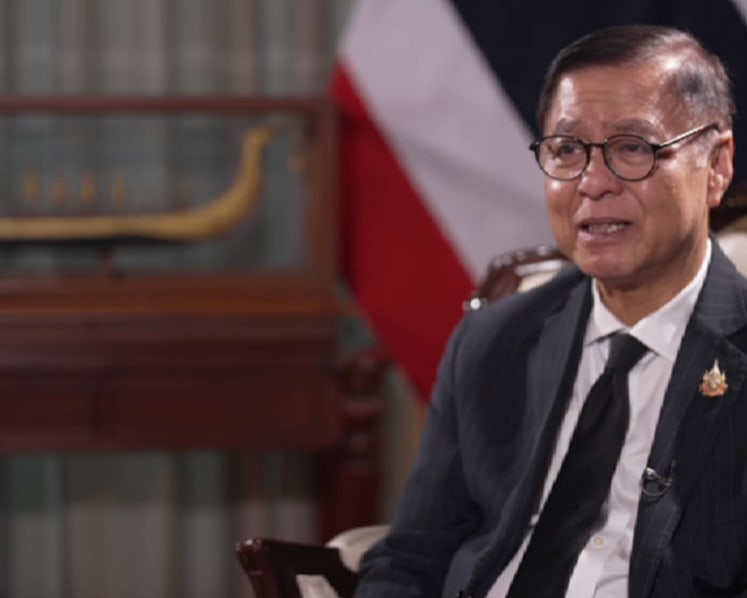
Thai Foreign Minister Sihasak Phuangketkeow speaking to CNA in an interview.

This audio is generated by an AI tool.


BANGKOK: Thailand’s Foreign Minister Sihasak Phuangketkeow said a border peace agreement with Cambodia cannot move forward unless Phnom Penh accepts responsibility for newly laid landmines.
Leaders of the two nations on Oct 26 signed a ceasefire agreement following months of clashes along their contested border.
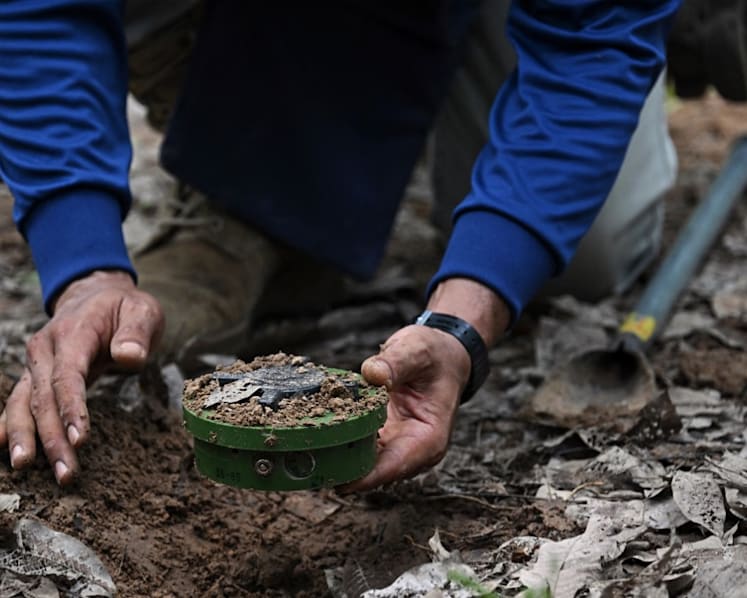
But Bangkok suspended the pact on Nov 10 after a landmine blast injured two Thai soldiers near the border, and demanded an apology from Phnom Penh.
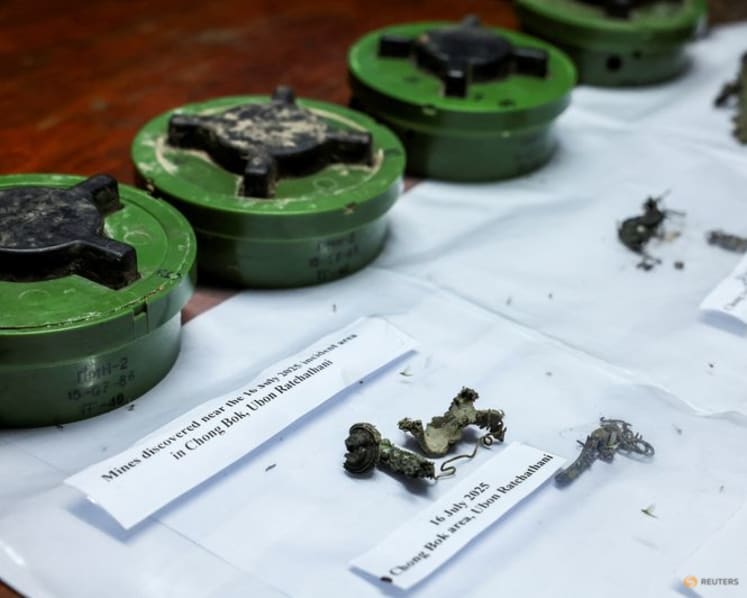
That incident was the seventh time this year that newly laid landmines had injured Thai troops, Sihasak said.
“We (were) forced to suspend implementation because of a serious breach by the Cambodian side,” he told CNA during an interview.
Cambodia maintains that the mines were remnants from past conflicts. However, an observer team from the Association of Southeast Asian Nations (ASEAN) – the regional bloc both nations are members of – reported that the ones found at the latest incident site were new.





ADDRESSING PUBLIC ANGER
Landmines were not the only incidents inflaming Thai sentiment, said Sihasak.
He pointed to the clash between the two countries’ militaries in July, where Cambodia allegedly launched artillery fire into civilian sites in Thailand, causing a number of civilian deaths.
“What we have to bear in mind as we try to go forward with the implementation of the accord … is public sentiments,” he said. “Being a democracy … we have to take (into) consideration the feeling of the public.”
Still, Sihasak said Thailand is “committed to the implementation – faithful implementation – of the joint declaration”, as long as Cambodia accepts accountability.
“We hope that the Cambodian side will recognise how important it is for them to take responsibility for what happened,” he said. “Up to now, they haven't taken responsibility.
“If they keep evading the facts … then what do we do? We want to move on. They need to move on. They need to take responsibility for what has happened, and then we can move on.”
He acknowledged the rising nationalist sentiment in Thailand over the border dispute.
“These kinds of sentiments are normal when you have a situation like this. We hope that, as we move forward, as we try to get things back on track, the public will have a better understanding.”
SURPRISED BY US INVOLVEMENT
The peace deal was brokered by United States President Donald Trump and Malaysian Prime Minister Anwar Ibrahim on the sidelines of the ASEAN summit in October.
It was meant to secure a lasting end to months-long hostilities that killed dozens and displaced more than 300,000 civilians on both sides.
The Southeast Asian neighbours have been locked in a sovereignty dispute for more than a century over undemarcated stretches of their 817km land border.
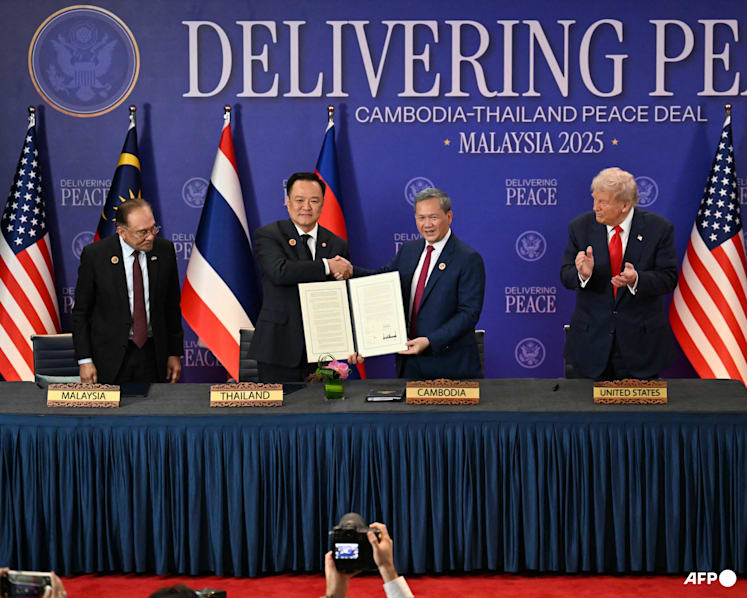
Sihasak said that his government was taken aback when Washington stepped in to help mediate the dispute.
“Because we think that’s something Thailand and Cambodia should work out bilaterally,” he said.
However, he noted that outside help may be acceptable under certain conditions.
“It depends on facilitation. What kind of facilitation… if trying to help us bridge differences, being a neutral facilitator, we could look into that.”
“Our position when we were approached by the US was that if the US wants to facilitate, what we hope to achieve is real peace, genuine peace, and not just a piece of document.”
The talks, he added, took “two tough, very long rounds” before Thailand and Cambodia finally reached an agreement.
As part of the deal, both countries agreed to organise mine-clearing efforts along their border, withdraw heavy weapons and allow access to ceasefire monitor teams organised by ASEAN.
Thailand also promised to release 18 Cambodian soldiers it has held in captivity for the past few months.
Phnom Penh has in recent days stepped up pressure on Thailand to release its soldiers, but Sihasak maintained that Bangkok expects accountability before any progress can resume.
HOPE FOR MYANMAR’S ELECTIONS
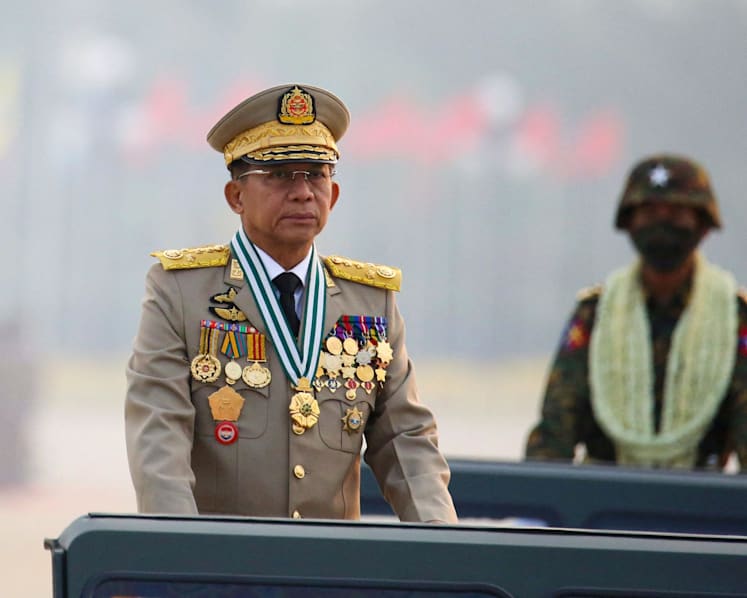
During the interview, Sihasak also offered cautious optimism on Myanmar’s elections, expected to begin at the end of December – the first polls since the country’s military seized power in 2021.
“I'm an optimist. There's a possibility that it could be a step forward … in the transition back to democracy,” he said.
“It’s our hope that they would use the opportunity to make it as inclusive as possible. And then not to stop with the election, because many of the problems that they are facing are deeply rooted. It's not going to be resolved with a single election.”
Instead, the vote must be part of a wider peace process, which “must involve inclusive dialogue … reconciliation among the parties concerned”, he added.
“How are they going to do that? It's up to the parties in Myanmar to decide. Our approach is that eventually peace and stability in Myanmar must be a Myanmar-led, Myanmar-owned process.”
He also acknowledged that Thailand, as Myanmar’s neighbour, has a responsibility to act.
“Thailand must do more … because we're the country next door,” he said, citing humanitarian assistance, bilateral engagement with Naypyidaw and offering ways to move forward with ASEAN’s five-point consensus on Myanmar.
He added that regional coordination is essential.
“Neighbouring countries … China, India, Bangladesh, Thailand – we have to align our efforts, rather than doing our own thing,” he said.
FOREIGN POLICY CONTINUITY
With Thailand expected to head toward a snap election next year, Sihasak said his ministry is working to ensure foreign policy continuity despite domestic political shifts.
“I’m hoping that in the four or six months that we have, we try to set some clear strategic direction,” he said, calling for a bipartisan approach on core national interests.
While implementation may shift between administrations, he said Thailand must remain clear about “the core priorities (and) strategic goals that we have to pursue… for the sake of national interest”.