analysis Asia
Thailand bets on a landmark climate law, but doubts persist
As Thailand moves towards a landmark Climate Change Act, some experts warn the bill could prioritise businesses over the country’s most vulnerable communities.
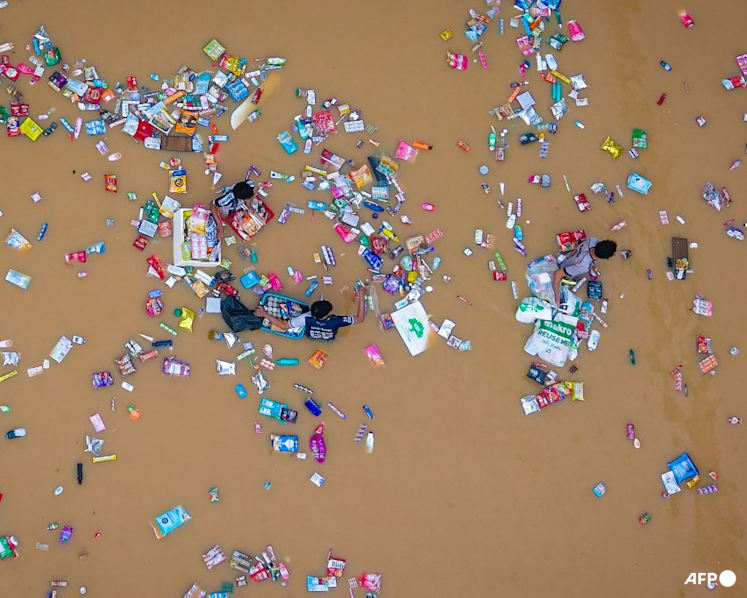
People surrounded by floating products from a supermarket as they wade through flood waters in Hat Yai in Thailand's southern Songkhla province. (Photo: AFP)

This audio is generated by an AI tool.


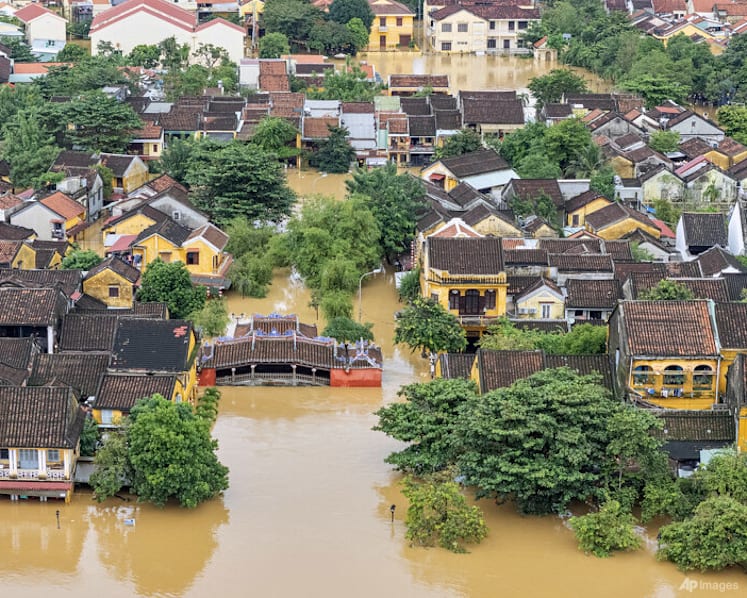
BANGKOK: They were images that left Thailand in shock. People stranded on rooftops as deep waters rose around engulfed buildings. Entire urban areas and commercial zones submerged. Dead bodies floating in the flood.
In late November, the major city of Hat Yai and surrounding districts in southern Thailand were hit by record rainfall and an unprecedented disaster for the area in recent memory.
As rescue teams worked to evacuate residents and later clean up in the aftermath, Thailand quietly advanced its first Climate Change Act. After a draft was approved by the national Cabinet on Dec 2, the country is now on the verge of finally realising a comprehensive climate law.
This attempt to modernise the country’s response to increasingly frequent and devastating climate-driven events could force greater transparency for both private and public sector carbon emissions and see a new system allowing emissions trading amongst companies in major polluting sectors.





After several years of attempting to produce such legislation, for Thailand it is a potentially landmark package introduced at a moment when the country is visibly overwhelmed by climate impacts, experts said.
“With this Act, Thailand will finally have an environmental law that aligns with international standards,” said Sonthi Kotchawat, environmental and health expert at the Thai Environmental Scholars Association. The country’s plan under the Paris Agreement sets out an ambition to reach net-zero emissions by 2050 and achieve carbon neutrality by 2065.
“It won’t help 100 per cent, because disasters are ultimately caused by global warming. But it will help mitigate the impacts and become one part of the solution to climate change,” he said.
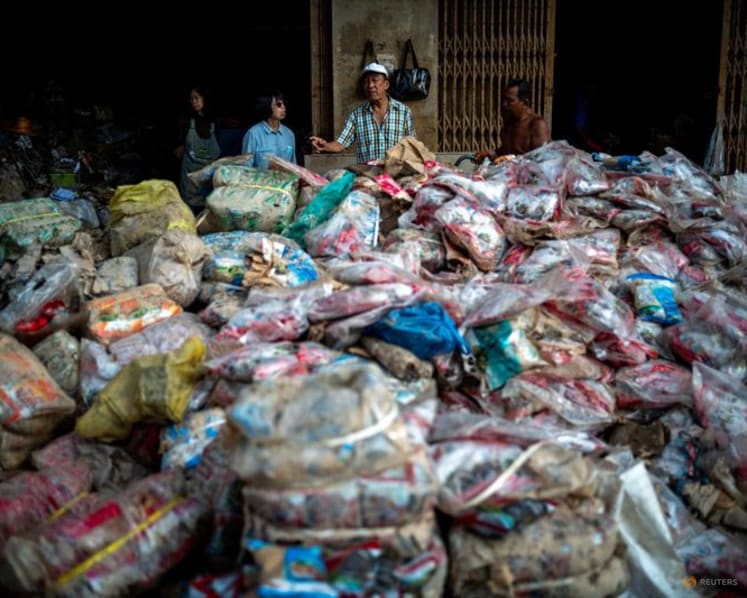
Thailand is among the world’s most vulnerable nations to climate change, facing intensifying storms, heat and droughts.
In terms of the human and economic toll of extreme weather, it was ranked 17th in the world last month on the Climate Risk Index (CRI), released by independent environmental organisation Germanwatch, a steep jump from 72nd in 2022.
“The recent severe flooding across southern Thailand is a stark reminder that climate impacts are no longer abstract threats. They are here now and they are intensifying,” said Anchalee Pipattanawattanakul, campaign lead at Greenpeace Thailand.
The Act includes a raft of measures, including on climate mitigation, adaptation, carbon markets, taxes, planning systems and green finance.
Some of the key features include the establishment of four national-level governance bodies and a Climate Fund to collect revenue from carbon-related mechanisms, like a new carbon tax.
A national greenhouse gas registry will mandate private and public sector entities to collect and report emissions. An emissions trading system will also be established that will be used by companies in Thailand’s major polluting sectors.
Those obligated would include power sector firms, oil, gas and petrochemical companies, airlines and industrial and construction businesses.
The Act also has provisions for a Cross-Border Carbon Adjustment Mechanism, essentially a carbon tax on imports tied to their carbon footprint. It aligns Thailand with emerging global standards, like those in the European Union, and aims to protect local industries while pushing foreign exporters to cut emissions.
Adaptation plans are also meant to be made at multiple levels, from local administrations up, to address climate risks.
The legislation still has a long way to go before becoming law. It will need to be checked by the government’s top legal advisory body and returned to the Cabinet for final approval, before being submitted to parliament.
The complex nature of this omnibus-style legislation means its approval is likely to be delayed for a year or more, due to the upcoming standing committees, multiple parliament readings, possible senate review, amendments and debates.
“Getting this legislation right is not just a policy decision,” Anchalee said. “It is a matter of public safety.”

SYSTEMATIC WEAKNESSES
The Hat Yai floods were just one example of Thailand being severely underprepared for the impacts of climate change, experts said.
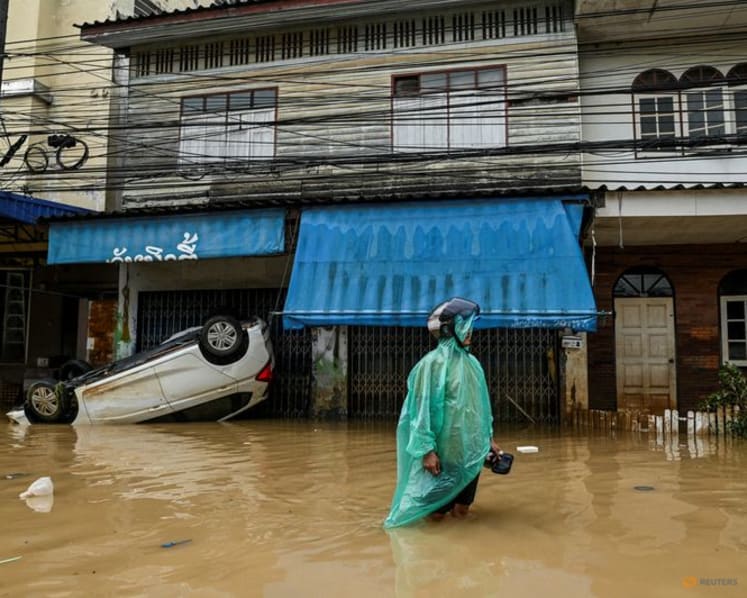
In the end, 179 people were reported to have died, according to figures from the Public Health Ministry. About 1.4 million residents across 16 districts in Songkhla province were affected and tens of thousands of homes were seriously damaged.
Local media reported widespread concerns about inadequate warning, preparation and response, as well as infrastructure issues, despite flooding in the past. Drainage systems, canals, retention basins and flood controls were strained to breaking point by the deluge.
The vulnerabilities exposed by the disaster are exactly what the Climate Change Act is supposed to address, and it raised the need for longer-term risk mapping and coordinated climate data, said Seree Supratid, director at the Climate Change and Disaster Center at Rangsit University.
Thailand still struggles with fragmented data systems, delays in information flow and limited local-level capacity. Early-warning messages often don’t reach communities in time or in formats they can act on. Coordination between agencies also remains inconsistent, he said.
Local authorities lack resources, real-time data and budgets needed to protect communities. Much of the country’s planning remains highly centralised, slowing action when crises are unfolding.
“The Act can help address these systemic weaknesses because it mandates data integration and clearer chains of responsibility. It requires agencies to plan based on climate projections rather than waiting until disasters occur. That is a major change in mindset,” he said.

He warned that extreme events are intensifying faster than policies can keep up. And without “rapid follow-through” the Act alone will not be sufficient to protect vulnerable communities.
The government has promised to strengthen its early-warning networks, improve water management and promote nature-based solutions.
Such investments are costly and becoming increasingly urgent. Analyses by climate finance bodies show that adaptation costs in developing countries are expected to run into the hundreds of billions of dollars annually by the 2030s.
“Building an effective legal framework also requires money to effectively enforce it, and we are seeing governments struggle to fund these initiatives,” said Kanika Sood, a lawyer at ClientEarth, an international non-profit environmental law organisation.
Thailand’s Climate Fund is meant to collect money from polluting industries to pay for clean energy investment, adaptation projects and greenhouse gas reduction programmes.
Yet there remain vagaries around who could access it or whether independent scientific monitoring would ensure funds are being adequately allocated and progress properly measured.
“There's going to be a need for real clarity of who has access to this fund, who operates it, who has overall control over it,” said Jolene Lin, director of the Asia-Pacific Centre for Environmental Law at the National University of Singapore.
Implementation rules for the fund are pending secondary legislation. Critics said the proposed plan for the country overly prioritises business interests - with a focus on carbon markets and industry competitiveness - over justice and community protection.
“Where is the legislation to deal with these communities who are displaced by climate-related events? They are the vulnerable, marginalised communities, the poorest of the poor, farmers that have lost or will lose their livelihoods,” Lin said.
She added that the laws would be important, but a “real weakness" would remain if it does not have provisions to deal with the impacts on people.
There remain pressing concerns, especially from civil society, that the bill, as it stands, could become a framework that protects business interests more than vulnerable communities across Thailand.
The focus on carbon credit mechanisms generally carries a “high risk of greenwashing and delaying real climate action”, Anchalee said, unless there are clear rules, transparency and strong penalties for non-compliance, currently largely missing from the Act’s draft.
“While the concept of carbon markets is often promoted as a flexible tool for emissions reduction, in practice, they frequently allow major polluters to continue emitting,” she said.
The government’s priorities are reflected in the lack of representation for civil society in the review committees or involved in proper consultation on the laws, said Kritsada Boonchai, the coordinator of Thai Climate Justice for All, a network formed by NGOs, academics and community groups advocating for equitable climate action.
Instead, he argued, major polluters have been allowed to help set their own rules. He called for a more equitable and effective carbon market mechanism that prioritises emission reduction over offsetting.
Thailand’s Department of Climate Change and Environment did not respond to CNA’s interview request to address such concerns about the Act.
REGION OF "LAGGARDS"
There are very few countries in Southeast Asia that have climate framework laws similar to the one being proposed in Thailand, which incorporates multiple elements under a single law, Sood said.
Overall, the region has fallen behind many other places in terms of having comprehensive climate change legislation, said Lin. Thailand’s move, she said, means it is “definitely taking itself out of the laggards”.
The Philippines is one example of a regional neighbour with similar types of overarching ambition. It established its own Climate Change Act in 2009, focused strongly on adaptation and disaster-risk reduction.
It involved the creation of an independent Climate Change Commission, to coordinate with government agencies, local governments and civil society groups, a key difference to Thailand’s proposal.
It also has a built-in dedicated climate-adaptation fund for communities and mandated scientific and technical advisory support.
Some legislators have proposed a separate Climate Accountability Bill to strengthen legal duties, enforcement and justice mechanisms that the existing law lacks. This bill has been filed and debated in the Philippine Congress but has not yet been passed into law.
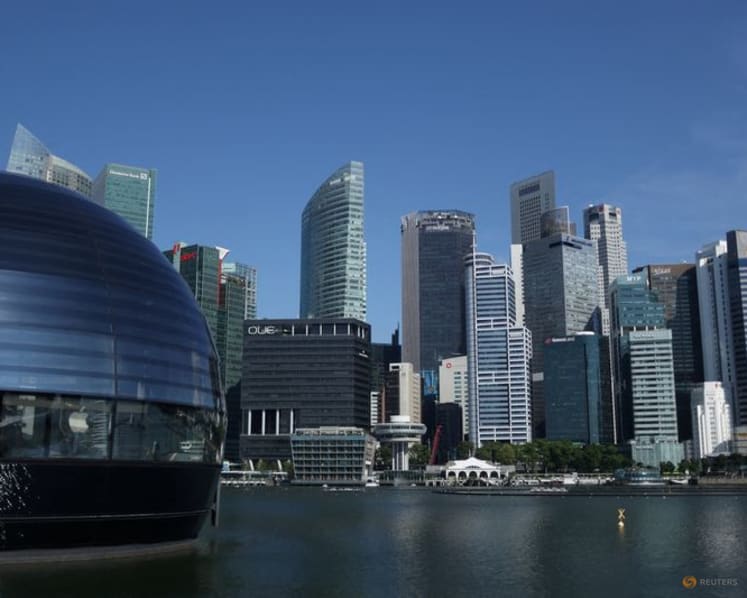
Singapore has no single climate law but rather splits its approach with one track for business compliance and another for community protection.
It was the first country in Southeast Asia with an economy-wide carbon tax via the Carbon Pricing Act in 2019. The tax rate is scheduled to gradually increase over time.
On adaptation and resilience, Singapore has legislated through sector-specific measures, such as building codes, coastal protection policies and land-use planning. Other climate considerations are built into multiple policies across ministries, rather than falling under a single statute.
Vietnam is pushing an ambitious renewable energy rollout and is exploring carbon markets.
Indonesia has rolled out a carbon tax and is building regulatory support for emissions accountability and Malaysia is discussing its own climate bill.
Competing priorities is the biggest challenge for countries still yet to build effective climate legal frameworks, according to Sood.
“While countries face the greatest impacts of climate change, they also need their economies to grow and develop to support their growing populations and improve quality of life,” she said.
For all of Thailand’s promises, the path ahead for the legislation appears long and uncertain. Its finer details will be negotiated through the parliamentary process and are subject to change.
Getting parliamentary approvals for such a hefty omnibus package will be “very difficult”, Lin said, and one of the reasons why some countries opt to split up their climate-related laws.
And even if the law does succeed, the hardest challenges are still to come, she said.
“The devil is in the details. The implementation is where it gets complicated, not the drafting.”
Additional reporting by Jarupat Karunyaprasit.