Thailand’s multi-billion-dollar fishing industry reels as soaring fuel costs keep fleets ashore
Diesel prices in the country have climbed to more than 50 baht (US$1.53) per litre – nearly double what many trawlers paid at the start of the year.

This audio is generated by an AI tool.




SAMUT SAKHON, Thailand: The soaring price of diesel has turned the already difficult livelihood of Thai fisherfolk into an increasingly unsustainable one.
Before the Iran war broke out on Feb 28, they were earning about 4,000 to 5,000 baht (US$122 to US$153) per trip and were able to take some of it home.
But every cent goes to fuel now, fisherman Kamol Puengporn told CNA.
“Fishing nowadays means stopping more often than going out. Fuel is expensive, marine resources are declining, so it’s just not worth it anymore,” he added.
“Ask anyone around here if they still have enough money to live – they’d all shake their heads.”
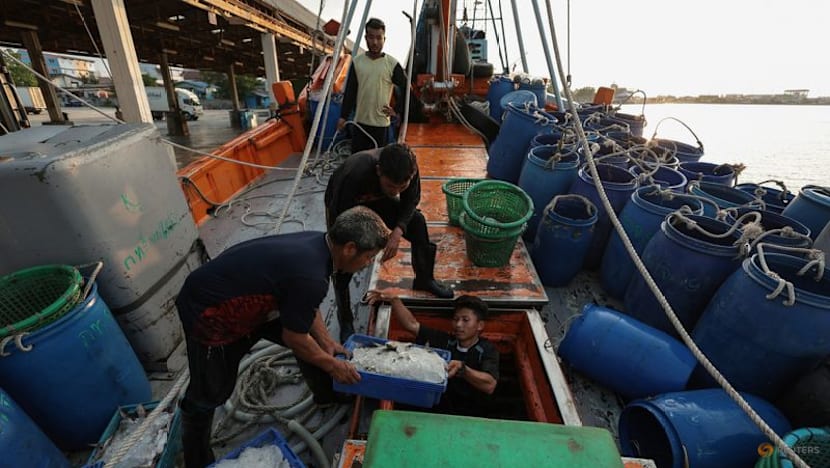
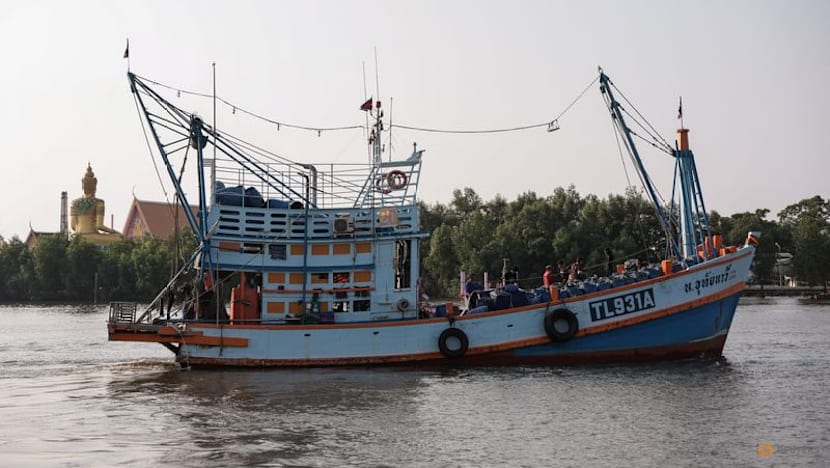
Kamol’s experience reflects a broader crisis unfolding across Thailand’s multi-billion-dollar fishing industry, where rising fuel costs have forced many boats to remain docked for weeks, with little relief in sight.
Half of Thailand’s fishing fleet of 9,000 vessels has reportedly remained in ports since March as operators struggle to cope with surging costs.
Diesel prices in the nation have climbed to more than 50 baht per litre – nearly double what many trawlers paid at the start of the year. The spike follows a sharp rise in global energy prices triggered by the war in Iran, which has disrupted oil supplies.
Each fishing trip can consume up to 1,000 litres of fuel, with larger trawlers often spending weeks at sea and travelling hundreds of kilometres offshore.







RIPPLE EFFECTS ACROSS SUPPLY CHAIN
Along the coast of Samut Songkhram province, about a two-hour drive from the capital Bangkok, only a handful of boats now return at sunrise from the Gulf of Thailand with their daily catch.
Beyond fishermen and boat owners, the impact of rising fuel costs is being felt along the entire supply chain of businesses dependent on seafood.
Around US$7 billion in seafood products are exported worldwide from Thailand, according to government data.
“Some of the catch goes to factories making fish balls, the rest to market vendors. If boats don't go out, fishmongers won’t have anything to sell. The factories have nothing to process,” noted fishing boat owner Warangkana Mongkoltriluk in Samut Songkhram.
In neighbouring Samut Sakhon province, vendors at a local fish market told CNA they are already feeling the strain.
While stalls still display mussels, shrimp, squid and sea bass for sale, traders are grappling with rising costs across the board.
Packaging costs are among the less obvious items that are getting more expensive, as some materials are made from crude oil.
Rubber band prices have gone up by about 20 to 25 baht per kilogram, while the cost of plastic bags has risen by about the same amount, said fishmonger Pen Pongaram.
Vendors said they are trying to keep prices stable but worry consumers may start tightening their wallets.
“If costs keep rising ... people will spend and shop less because they are worried that everything will become more expensive,” said Pen.
GOVERNMENT UNDER PRESSURE
The crisis comes at a challenging time for Thailand’s new government, which took office earlier this month.
Prime Minister Anutin Charnvirakul has pledged to revive the country’s sluggish economy, but rising energy prices are threatening to undermine those efforts.
Measures have been limited with no specific support schemes for the fishery industry. Authorities have encouraged the use of cheaper biofuel blends and introduced a small cut in diesel retail prices – steps that industry players say offer only limited relief.
Beyond the immediate financial strain, there are growing concerns about the long-term viability of the sector.
Nattapong Sumanotham, a Member of Parliament for Samut Sakhon, warned that the situation could accelerate a generational shift away from the industry.
“Once this crisis hits us, fishermen with families won’t want their children to continue fishing anymore, and this leads to other problems. We are already seeing impacts on the supply chain,” he said.
“And if fishermen keep disappearing, how will we carry on? This is a big challenge for our Thai society.”
With fuel prices expected to remain high and no quick resolution in sight, Thailand’s fishing communities are bracing for a prolonged period of uncertainty – one that could reshape the future of the industry.
Additional reporting by Jiratchaya Chaichumkhum.