‘Killing auto industry’: Indonesia faces pushback on US$2.4 billion Indian trucks import
The 105,000 trucks are to support the government’s cooperative programme - a flagship initiative of Indonesia President Prabowo Subianto aimed at strengthening rural supply chains and advancing food security.
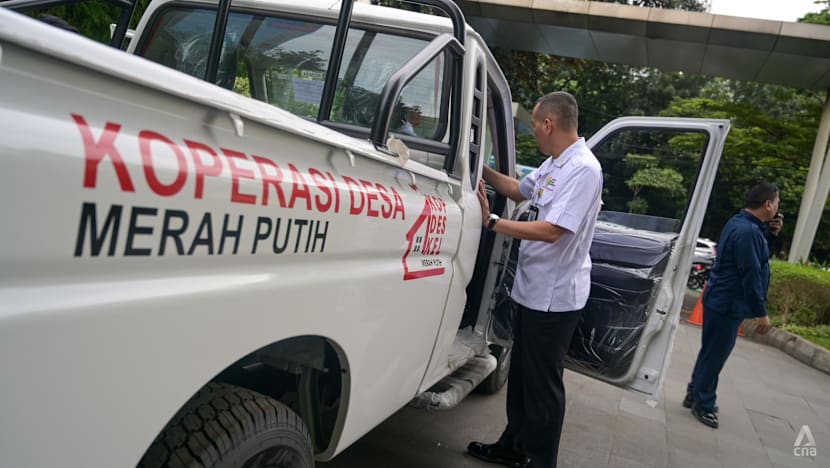
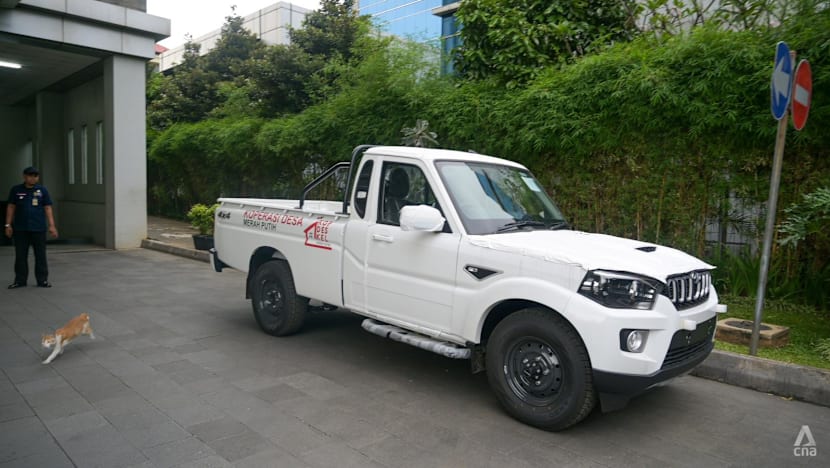
Employees of Agrinas Pangan Nusantara inspect a Mahindra Scorpio pickup truck at the company’s office in Jakarta on Feb, 25, 2026. (Photo: CNA/Ridhwan Siregar)

This audio is generated by an AI tool.


JAKARTA: Indonesia’s move to import up to 105,000 pickup trucks from India in support of President Prabowo Subianto’s plan to help rural communities through the Red-White village cooperative has sparked mounting political resistance and industry disquiet.
Opponents flag concerns that the imports could undermine the domestic automotive industry, even as the state-owned firm behind the 40 trillion rupiah (US$2.38 billion) procurement insists it had acted lawfully and in the national interest.
The orders - made to two different Indian firms - were by state-owned enterprise Agro Industri Nasional (Agrinas), which was formed last year to support food, energy and water security in the archipelago.
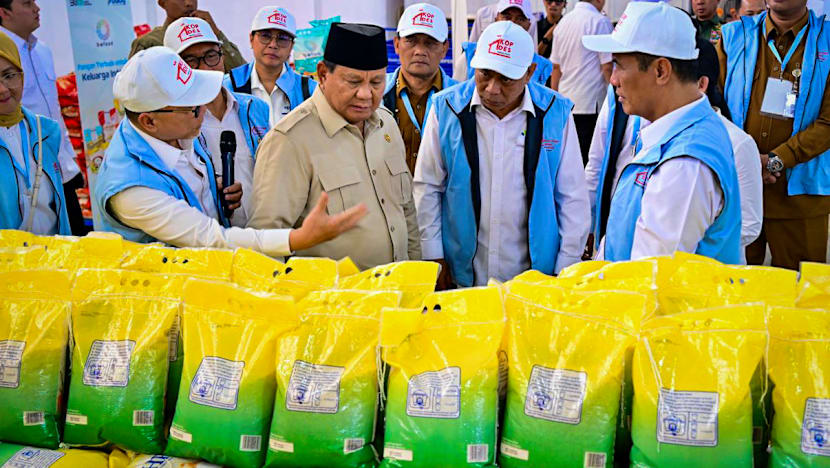
Agrinas said the trucks would support the government’s cooperative programme - known locally as Koperasi Desa Merah Putih - a flagship initiative of Prabowo’s government aimed at strengthening rural supply chains and advancing food security.
The president has made it his vision for Indonesia to become food self-sufficient within four or five years from his inauguration in October 2024.
His administration is focused on achieving food self-sufficiency as soon as possible, targeting rice independence in the short term by increasing national production, optimising land use, and strengthening village and national food barns.
But observers whom CNA spoke to said that the move to import the pickup trucks from India contradicts Prabowo’s push for domestic industrialisation and prioritisation of local manufacturing, with some calling on the government to reassess its plans - including to delay the procurement process or cancel the contracts altogether.
“I don't think this is necessary for the domestic industry,” said Bhima Yudhistira, executive director of think tank the Center of Economic and Law Studies (CELIOS).
“There is a potential economic loss of about 39 trillion rupiah in workers who could have been employed instead (if the vehicles were produced in Indonesia).”
He added that the imports will create competition with domestic manufacturers, potentially resulting in about 330,000 workers being laid off.
WHAT IS THE AGREEMENT
Indian automakers publicly revealed export deals to Southeast Asia’s biggest economy at the beginning of February, before Indonesian authorities made any announcement of the procurement.
On Feb 4, Mahindra & Mahindra said in a press release that it would supply 35,000 units of its Scorpio pickup trucks to Agrinas this year, describing it as the company’s largest-ever export order.
The Indian firm described the deal as central to strengthening Indonesia’s rural supply chains, as it will enable village-level commerce and support Indonesia's national food security transformation.
“We are looking forward to this association and to supporting Indonesia’s Koperasi through our partnership with Agrinas Pangan Nusantara,” said Nalinikanth Gollagunta, chief executive officer of the automotive division at Mahindra & Mahindra, in the press release.
“By deploying the Scorpio pickup as a part of the Koperasi, we are strengthening a reliable logistics backbone that connects farmers to markets more efficiently.”
The Scorpio pickup trucks are manufactured at a plant in Nashik, India and will be tailored to “meet the operating requirements of Koperasi - from rough rural roads to farm tracks”, the company said in the statement.
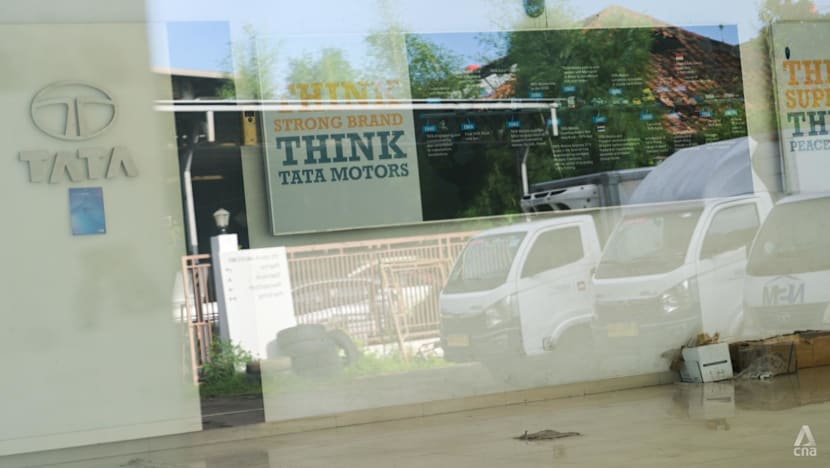
Four days later, India’s Tata Motors confirmed an agreement to supply 70,000 vehicles to Indonesia. These consist of 35,000 Tata Yodha pickup trucks and 35,000 Ultra T.7 trucks.
Asif Shamim, director of PT Tata Motors Distribusi Indonesia, said the two models are designed for “sustained performance, high uptime and efficient operating economics”.
“Their deployment will support agricultural logistics in Indonesia by improving connectivity, enabling more efficient movement of goods across rural and regional networks.’’
The announcements from both companies mean Indonesia will import a total of 105,000 vehicles from India.
HOW THE CONTROVERSY STARTED
The controversy erupted after news of the agreements circulated in Indonesian media.
This prompted the director of Agrinas to hold a press conference on Tuesday (Feb 24) in defence of the procurement, after criticisms intensified when reports emerged that around 1,200 Mahindra units had already arrived in Jakarta.
Joao Angelo De Sousa Mota last week said the move was made because manufacturers in Indonesia purportedly cannot meet Agrinas' demands and are also more expensive, triggering debate.
On Feb 24, Joao said the decision to import the Indian vehicles was taken only after negotiations with domestic producers failed to secure sufficient production capacity and pricing.
He said locally manufactured vehicles from brands such as Toyota Astra, Mitsubishi, Hino and Suzuki were invited to participate, but they could not meet the volume or timeline requirements.
Thus, Agrinas ultimately committed to purchasing 70,000 units of 4x4 pickup trucks, split evenly between Mahindra & Mahindra and Tata Motors.
Joao said that the pickup trucks were necessary to navigate challenging rural terrain in Indonesia and claimed the procurement generated savings of up to 46.5 trillion rupiah, though detailed pricing was not disclosed.
He added that they are also cheaper than vehicles manufactured in Indonesia by 50 million rupiah per unit, adding that Mahindra & Mahindra and Tata Motors have said they could build a factory or spare parts centres in Indonesia in the near future.
Thus, repairments and after-sales services should "not be an issue", he claimed.
“Therefore, besides solving after-sales service problems, it will also create new job opportunities in Indonesia,” he told CNA.
Earlier, Finance Minister Purbaya Yudhi Sadewa said the cooperatives would borrow from state banks to finance the vehicles.
“My task at the finance ministry is to be able to pay 40 trillion rupiah over the next six years,” Purbaya said at a press conference in Jakarta, disclosing the value of the imports.
POSSIBLE IMPLICATIONS
The plan has triggered criticism from lawmakers, business groups and labour unions who warned of wider economic repercussions.
They questioned whether short-term cost savings justify the potential sacrifice of domestic industrial growth, jobs and supply chain development.
The Association of Indonesian Automotive Manufacturers (Gaikindo) said that about 1.3 million vehicle units are currently produced yearly in the country, but there is still room for improvement to meet government demands.
"Our capacity is 2.59 million, and our production is only 1.3 million,” said Gaikindo’s chairman, Putu Juli Ardika, at a press conference on Feb 23. The production is behind capacity due to slow demand.
“And if we push this further, it will definitely have a tremendous positive impact on our industry because if this industry grows, we can maintain jobs."
The concerns come as the automotive industry is trying to recover from the COVID-19 pandemic.
In 2025, Toyota sold the most vehicles in Indonesia, followed by Daihatsu and Mitsubishi Motors. All three firms have plants in Indonesia.
Toyota’s wholesale sales last year were 250,431 units, while its retail sales stood at 258,923 units, according to Gaikindo.
Daihatsu made 130,677 wholesale unit sales last year and 137,835 retail unit sales.
Mitsubishi’s sales in 2025 were comparably lower at 71,781 units and 71,233 units, respectively.
Putu said local pickup trucks production capacity exceeds 400,000 units annually and urged policymakers to consider the broader impact of Agrinas’ plan to import the vehicles from India on jobs and investment in Indonesia.
Meanwhile, the Indonesian Chamber of Commerce and Industry (Kadin) said importing completely built-up (CBU) vehicles risks undermining the national automotive manufacturing and weakening industrial supply chains.
It also questioned coordination by relevant ministries, while noting that the procurement value is significant.
"Importing CBU cars is tantamount to killing the automotive industry," said Saleh Husin, deputy chairman of Kadin for the industrial sector.
Firman Soebagyo, a member of parliament from Golkar party - which is part of Prabowo’s government - said the import move runs counter to the president’s stated goal of strengthening the domestic industry.
He also questioned the availability of spare parts and the after-sales support in rural areas.
In Toyota’s case in Indonesia for example, Firman said the Japanese firm already has a supply chain in the country, even involving micro, small, and medium enterprises (MSMEs).
“So this could kill MSMEs as they will be affected by the plan to import vehicles from India,” said Firman.
Similarly, president of labour group Nusantara Trade Union Confederation Ristadi said that the domestic automotive sector is already facing reduced orders and partial layoffs, adding that awarding the contract to foreign producers could cost Indonesian jobs.
“We support the Red-White village cooperative, which aims to improve the people's economy in rural areas while also creating jobs,” said Ristadi, who goes by one name.
“Prabowo wants to prioritise economic nationalism, so everyone should maximise the potential of our domestic resources.”
Policy analyst Agus Pambagio from the PH & H Public Policy Interest Group questioned whether lawmakers had been consulted about the plan before the orders were placed.
Agus said that although Agrinas is a state-owned enterprise, it should consult parliament before deciding on major plans.
“Who should be responsible for this? Have the details even been discussed, like who should maintain the (vehicles), what to do when they break down?”
Although other Asian countries, such as Sri Lanka and the Philippines, have imported vehicles from Mahindra & Mahindra and Tata Motors, none of them has placed a single large order that courted controversy.
Sri Lanka’s police received 125 Mahindra SUVs at the end of 2022, while the Philippine police received around 1,500 Mahindra vehicles in 2014.
It is noted, however, that the Philippine procurement ran into issues later and faced scrutiny from the country's Commission on Audit.

TO CANCEL OR NOT?
The debate now centres on whether the contracts can be revised or should be entirely cancelled.
Sufmi Dasco Ahmad, Indonesia’s deputy speaker of parliament, on Monday called for the import plan to be delayed pending Prabowo's review once he returns from his overseas trip. The president has since returned on Friday morning from the United Arab Emirates.
“Of course, when the president returns, he will discuss the details regarding the import,” said Dasco, who is from Prabowo’s Gerindra party.
“And of course, the president will also seek opinions and calculate the readiness of domestic companies."
Kadin - the commerce chamber - has welcomed parliament’s quest to delay the imports but said that it would “be better” if the plans were cancelled.
"We have coordinated with automotive industry players, including the components industry,” said Saleh from Kadin.
“They have requested that the president halt the ongoing car imports from India."
Similarly, lawmaker Firman from Golkar also wants the procurement from India to be cancelled.
“In my opinion, the scheme should not just be postponed but cancelled,” he said.
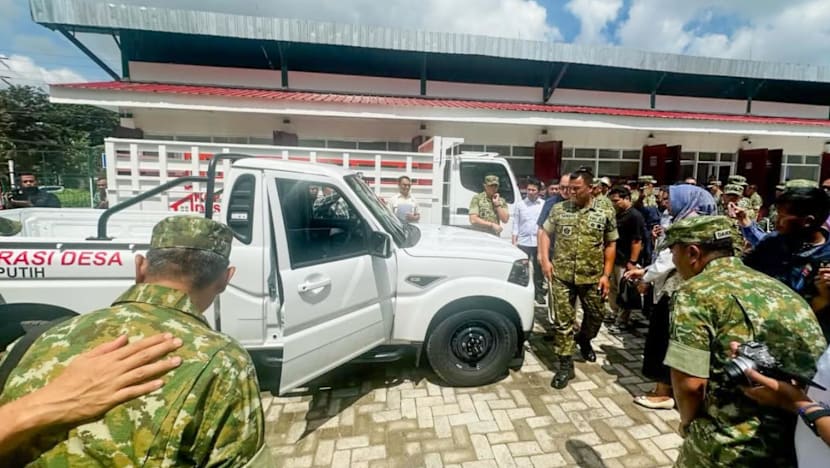
Although about 1,200 vehicles have already arrived in Indonesia, economist Bhima said cancellation can likely still be made.
“It is still possible, but there may be some contract termination fees. That's something to think about,” he said.
Joao, the director of Agrinas, said that the decision to import the vehicles was made under Presidential Instruction No. 17 of 2025, about the acceleration of the physical development of outlets, warehouses, and facilities for 80,000 Red-White village cooperatives.
When CNA asked him whether Prabowo was aware of the import plan, he said: “Yes. Since the beginning.”
Joao did not elaborate further.
Nevertheless, he said he will comply with any government or parliamentary directive, including cancellation, and is prepared to face potential contractual consequences.
"Whatever the decision of the state, the decision of the parliament, it is the voice of the people. As the director of a state-owned enterprise, I will comply, be loyal, and follow," said Joao at the press conference on Tuesday.
"If the supplier sues or (has) issues (with) me, that's my responsibility. I'll bear all the consequences.”
While the final decision rests with the government, Bhima said better coordination and communication is needed in the future, especially between government institutions.
“When making policies, you have to think about the consequences, especially since you have to be sensitive to domestic industries that are in need of stimulus.”