







Commentary: Budget 2026 - less ambitious carbon tax comes with tradeoffs for Singapore
Singapore may price its 2030 carbon tax towards the lower end of the S$50 to S$80 range, as global realities evolve. There is still time to decide, but the shift in signal should not be taken lightly, says NUS climate researcher Melissa Low.

This audio is generated by an AI tool.


SINGAPORE: During his Budget speech on Feb 12, Prime Minister Lawrence Wong announced that if global climate momentum continues to weaken, Singapore may price its carbon tax towards the lower end of the S$50 to S$80 per tonne range by 2030.
Putting a price on carbon is crucial in the fight against climate change. Announced in 2017, Singapore’s carbon tax was the first carbon pricing policy in Southeast Asia. Covering 70 per cent of Singapore’s greenhouse gas emissions, the carbon tax is levied on about 50 facilities across the manufacturing, power, waste and water sectors.
Singapore aims to reduce its emissions to between 45 million and 50 million tonnes of carbon dioxide equivalent by 2035, down from a projected 60 million tonnes in 2030, before achieving net-zero emissions by 2050. To support this target, the carbon tax, set at S$45 per tonne in 2026 and 2027, is expected to rise to S$50 to S$80 per tonne by 2030.
The announcement at Budget 2026 that Singapore may aim for the lower end of that range may come as a surprise. In February 2025, the government highlighted that meeting its 2035 climate target will require more stringent regulations and market policies to incentivise all sectors of the economy to decarbonise.





But global realities have evolved since then, with some countries scaling back climate ambitions slightly, if not dramatically.
IMPACT ON COMPETITIVENESS
Indeed, a carbon tax rate at the upper limit of S$80 per tonne may have a negative impact on Singapore’s competitiveness. There was always the risk that companies might seek other countries in Southeast Asia with lower or no carbon taxes to locate their operations in, but pushing forward too fast ahead of global realities may affect Singapore’s economy and result in carbon leakage.
Positioning Singapore’s carbon tax at the lower limit of S$50 per tonne could provide some relief for firms already feeling cost pressures from tariffs and shifts in demand.
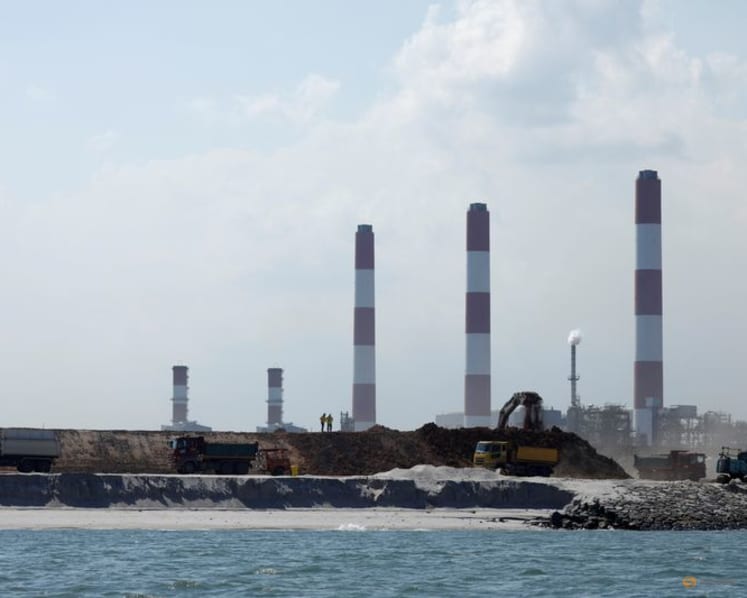
Singapore’s carbon emissions experienced a 5.3 per cent drop from 2022 to 2023 from 58.59 million tonnes to 55.5 million tonnes, due to reduced output in the petrochemical sector.
The last few years saw an oversupply of petrochemical products in the region, in part due to expansions in China’s petrochemical capacity. High feedstock prices because of elevated crude oil prices following the Russia-Ukraine war further eroded margins and dampened production in Singapore’s plants.
LESS URGENCY FOR HIGH-QUALITY CARBON CREDITS
Given that Singapore is highly vulnerable to global shocks and shifts in demand, a lower carbon tax could improve the competitiveness of manufacturing firms based here. However, it could lessen the urgency for companies to decarbonise or purchase high-quality carbon credits to offset emissions.
In its Biennial Transparency Report published in November 2024, Singapore announced its intention to purchase high-quality international carbon credits to achieve its climate targets. These carbon credits are more expensive than those found in voluntary carbon markets because they are verified and authorised, with safeguards to prevent double-counting of emission reductions.
The supply of high-quality international carbon credits is already constrained, due to the rising cost of developing carbon projects, compounded by fragmented, decentralised and underdeveloped regulatory frameworks. Many countries are still developing their own national frameworks and internal procedures for authorising, tracking and approving projects.
Furthermore, countries that host carbon projects are demanding equitable benefit sharing and setting administrative fees, which could add to the costs of projects. Acquiring or buying countries are also demanding more transparency and accountability, resulting in additional measurement, reporting and verification costs to be borne by the project developer.
NEED TO STAY AGILE
If Singapore were looking to increase the carbon tax to the middle or upper bound of the range, one option would be to extend existing transitory allowances to help carbon-intensive industries defray rising costs.
However, in September 2025, four climate advocacy groups issued an open letter to the Singapore government, calling for more clarity on how much the carbon tax will be raised from 2028, and for more transparency on carbon tax allowances. While it remains unclear if the government will continue to extend transitory allowances after 2027, pressures from green groups could contribute to the government’s plans.
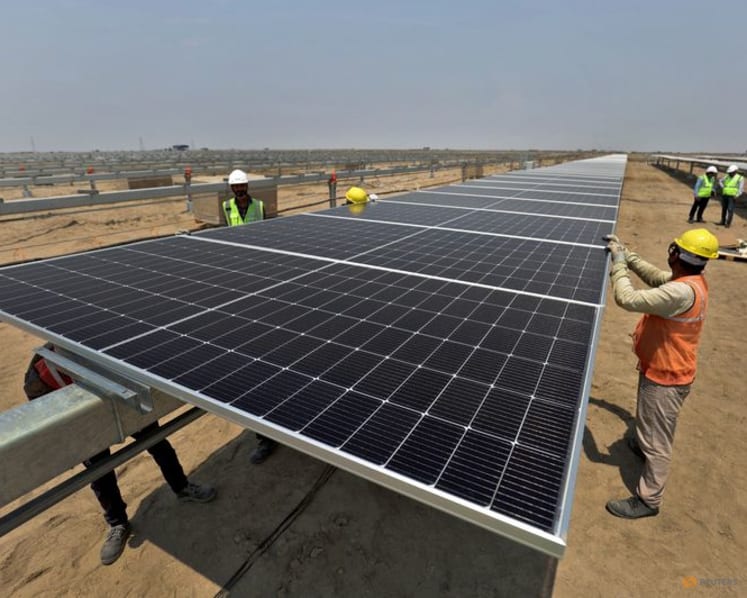
Beyond the carbon tax, Singapore is also pursuing other means to achieve its emission reduction targets. These include developing hydrogen as an energy source, importing low-carbon electricity, increasing solar energy deployment and scaling up electric vehicle adoption.
Singapore’s pace of decarbonisation depends heavily on developments in nascent mitigation technologies and international collaboration. The country needs to continue to adapt to global developments in technology, renewable energy and carbon markets, to decarbonise in the most cost-effective way possible.
There is still time for Singapore to decide on the carbon tax rate as the next hike is not due until 2028. However, the shift in price signal should not be taken lightly as it could have consequences on investments in low-carbon solutions, and the demand and supply of high-quality carbon credit projects.
Melissa Low is Research Fellow at the National University of Singapore’s (NUS) Centre for Nature-based Climate Solutions.




