Commentary: The global narrative is shifting in favour of China – don’t misread it
The shifting narrative in favour of China has more to do with anger over US President Donald Trump’s disruptive policies, says former SCMP editor-in-chief Wang Xiangwei.
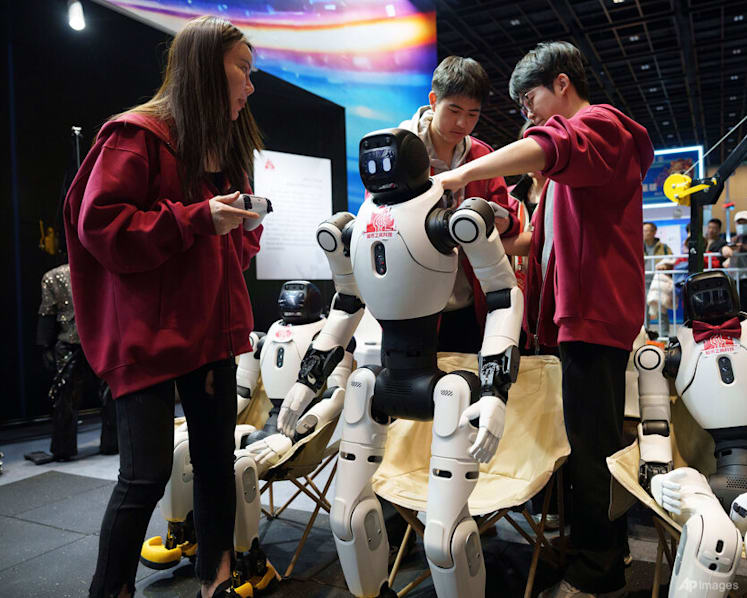
Workers prepare humanoid robots for a performance at a trade fair in Beijing on Feb 18, 2026. (AP Photo/Vincent Thian)

This audio is generated by an AI tool.


HONG KONG: The world has been scrambling and fretting over the erratic ways in which the United States is redefining its global role. Amid growing uncertainty and chaos, there is intense speculation over one question: What kind of role China will choose to play on the world stage?
The shifting global narrative in favour of China is hard to miss.
Scouring international media, one cannot help but notice a growing chorus of reports and commentaries painting a picture of China “winning” the geopolitical game and the AI race in the great power competition with the US, among other things.
But understand this: The praise for China has more to do with Western frustration and anger over US President Donald Trump’s disruptive policies rather than any unalloyed admiration for Beijing’s model.





China is neither willing nor capable of filling the void left by the US. From a Chinese perspective, America’s further retreat from the international stage, particularly in the Eastern hemisphere, could bring more harm than benefits in the foreseeable future.
A STABLE AND RESPONSIBLE WORLD POWER
US actions over the past year have no doubt allowed China to enhance its image as a stable and responsible world power.
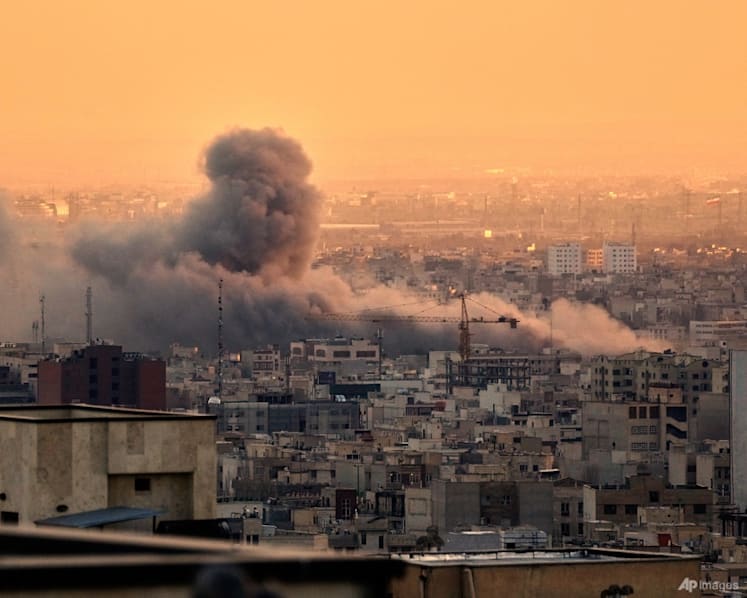
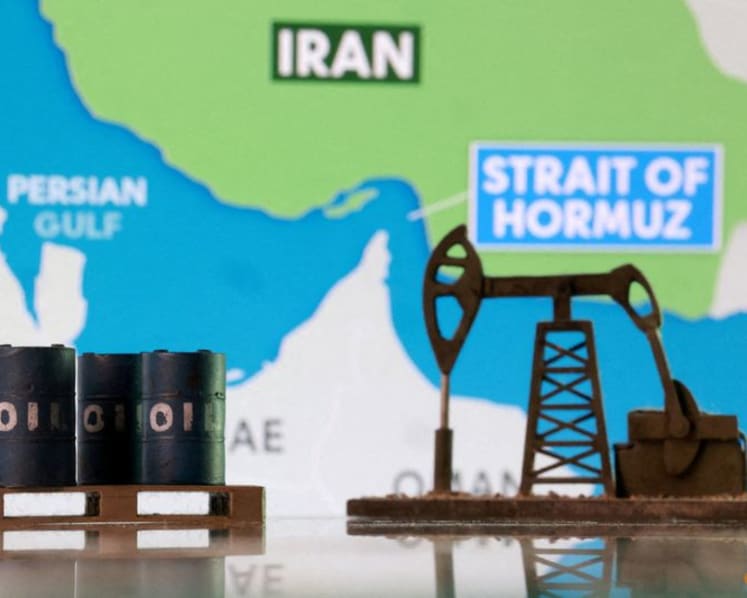
Since Mr Trump’s second term began a little more than a year ago, he has launched a global tariff war, abducted a sitting head of state, blasted a “decaying” Europe and demanded the acquisition of Greenland. Since Feb 28, the US is in a war with Iran that shows little signs of de-escalation, while oil prices soar.
In January, Mr Trump signalled a further retreat by withdrawing the US from 66 international organisations, including various United Nations entities focused on climate, health and development.
Against this backdrop, China is boosting its soft power particularly in the Global South.
More developing countries, seeking alternatives to Western-led institutions, are turning to China. Beijing-led international forums, such as BRICS and the Shanghai Cooperation Organization (SCO), have countries from Asia, Africa and beyond lining up to join or deepen their engagement.
NO ONE’S BIG BROTHER
But any optimism that China can and should do more to manage global affairs is misplaced. Beijing is neither politically willing nor financially and militarily capable of replacing the US – not in managing global affairs nor in providing security protections as the US does.
Take the US action to abduct Venezuelan President Nicolas Maduro. For decades, both Venezuela and Cuba have tried to deepen ties with China, with Beijing’s outstanding investments in Venezuela estimated at about US$10 billion now at the mercy of the US. The intervention has also squeezed Cuba, which relies heavily on Venezuelan oil.
The best Beijing has managed is to repeatedly condemn the US action and seek reassurance that its oil supply would not be affected – to which Mr Trump has effectively agreed.
Similarly, with Iran, one of China’s major energy suppliers now under bombardment by US and Israeli jets, Beijing has merely voiced its strongest condemnation and offered moral support. The implicit message is clear: Any country hoping to count on Beijing as a big brother for protection will be disappointed in the foreseeable future.
Over the past decade, President Xi Jinping has moved away from Deng Xiaoping’s policy of biding time and keeping a low profile. Beijing has adopted an increasingly assertive stance on core issues like Taiwan, Hong Kong and the South China Sea. International commentators often portray these moves as evidence of expansionist ambitions.
Yet from China’s viewpoint, Taiwan and Hong Kong are integral territories, and it has legitimate security interests in the South China Sea, through which about 90 per cent of its maritime crude oil imports pass.
Beyond these core interests, China’s direct influence remains limited. This stems not only from a lack of power projection capabilities for distant interventions but from deliberate strategic choices.
Beijing recognises that overextension could jeopardise its primary focus on domestic economic development and stability.
Getting entangled in far-flung conflicts would drain resources needed for internal challenges like technological self-reliance and social cohesion, while risking escalation with a still-superior US military. Prudence dictates prioritising resilience at home over global policeman duties.
LOW-KEY INVOLVEMENT IN REGIONAL CONFLICTS
China’s reluctance was evident in several regional conflicts.
Mr Trump has claimed he “ended 8 wars in just 8 months”. Whatever the debate on whether to give him credit, his claim included three conflicts at China’s doorstep: between Thailand and Cambodia, Armenia and Azerbaijan, and Pakistan and India. Notably, Pakistan, Thailand and Cambodia are very close to China, while Armenia and Azerbaijan seek closer ties with the SCO.
China’s interests would have been well-served by leading mediation, but its efforts proved limited and low-key compared to Mr Trump’s actions.
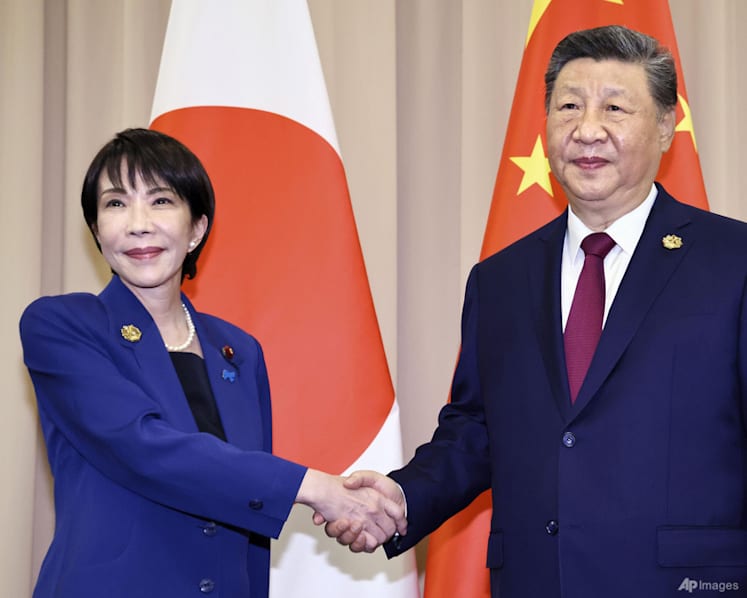
Tensions between China and Japan have escalated significantly over Taiwan following remarks in November 2025 by Japanese Prime Minister Sanae Takaichi. She described a Chinese attack on Taiwan as a “survival-threatening situation” for Japan, opening the door to potential military intervention. Beijing responded with intense diplomatic and economic pressure.
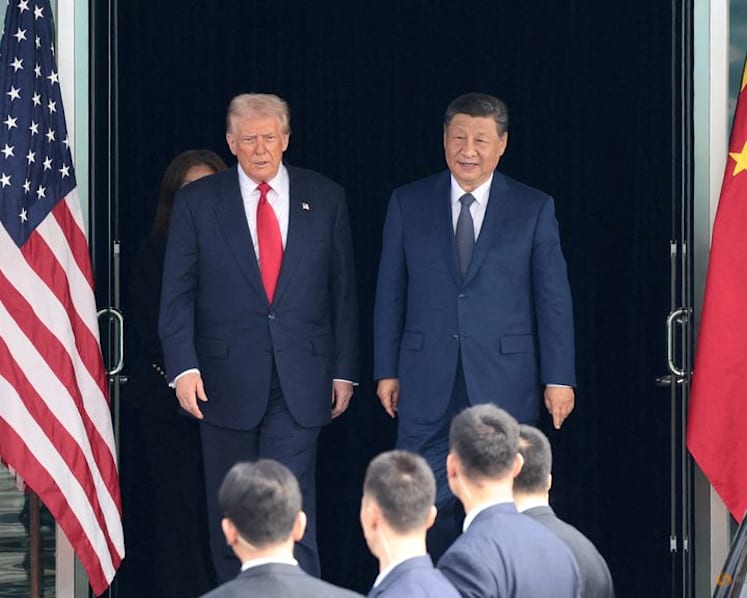
The timing, shortly after the Busan summit between Mr Xi and Mr Trump where Taiwan was not mentioned, suggests Ms Takaichi may have deliberately ratcheted up tensions to draw the US back into the region. Mr Trump has long signalled indifference toward Taiwan beyond its semiconductors.
China may take an increasingly assertive approach in defending its core interests, including Taiwan and the South China Sea, but it has remained very much restrained from intervening in the internal affairs of other countries. Putting its own house in order has been and will remain its top priority.
CHINA STILL RELIES ON US PRESENCE
Some Chinese nationalists have hailed Mr Trump’s efforts to reintroduce the “law of the jungle” as confirmation of the rise of the East and the decline of the West.
But the truth is that a rising China still needs the US to play a stabilising role, even in its own backyard.
In February, North Korean leader Kim Jong Un vowed to strengthen his country’s nuclear programme. The primary reason neither Japan nor South Korea has pursued their own nuclear weapons – despite possessing the technology – is the US security umbrella. One can only imagine the proliferation nightmare and regional instability if Washington were to fully withdraw from the area.
In this turbulent era, while China benefits from America’s inward turn, Beijing understands that true global leadership requires capabilities and commitments it is not yet ready – or eager – to assume. A rising China, focused on sustainable growth, still relies on the US presence in its backyard to maintain a delicate balance of power.
Wang Xiangwei is a former Editor-in-Chief of South China Morning Post. He now teaches journalism at Hong Kong Baptist University.