







Commentary: What Venezuela and Greenland really tell us about Trump’s America
What the world is witnessing is far more consequential than the temporary phenomenon of US President Donald Trump testing the limits of his power, says veteran newspaper editor Han Fook Kwang.
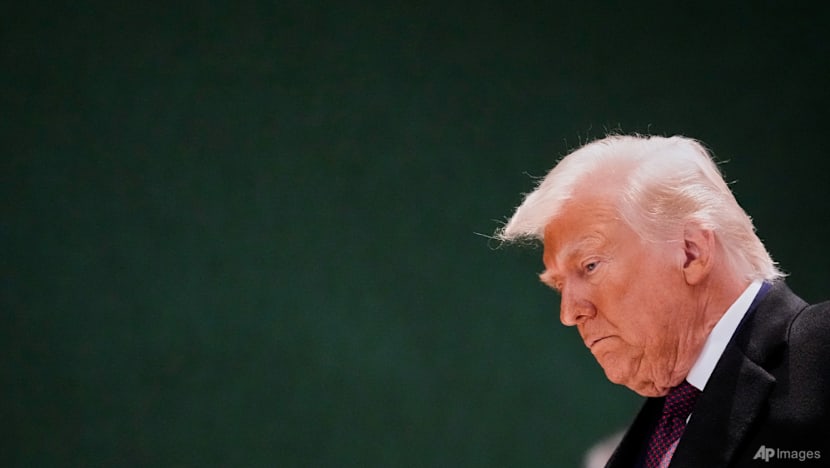
US President Donald Trump attends the Annual Meeting of the World Economic Forum in Davos, Switzerland, Jan 22, 2026. (AP Photo/Markus Schreiber)

This audio is generated by an AI tool.


SINGAPORE: What is one to make of America’s aggressive approach to foreign policy, recently played out in Venezuela and Greenland? Is President Donald Trump, who wants to remake the United States in MAGA-like fashion, the only reason for this sudden change?
Can these extraordinary actions, including the abduction of a sovereign head of state and the threat to annex territory belonging to a military ally against the wishes of its people, be explained away as just another example of Trumpian bravado?
It is tempting to attribute it to one man and his bullying ways.
But it would be a mistake to do so.
What the world is witnessing is far more consequential than the temporary phenomenon of Mr Trump testing the limits of his power.
There is another explanation: They are signs of the decline of a great power struggling to keep its place at the head of the table in a world that is rapidly changing.
A powerful country does not lose its dominance overnight, nor are the indications at the beginning what one normally expects, such as in economic, political or military decline.
These will come later as the country loses its economic competitiveness, growth slows down, its armed forces no longer command superior strength, and so on.
By the time these become obvious, the downward slide would have been many years in the making and evident for all to see.
DYSFUNCTION IS MORE NOTICEABLE
The US is not at this stage yet.
It is still dominant in many areas such as in advanced technology and military power but in others – industrial capability, trade, human development and soft power – it is losing ground.
The slide from outright dominance in all areas to one with serious weaknesses in some is difficult to manage.
It is hard for the strong to accept it is no longer as powerful even in the face of evidence to the contrary.
A recent essay by Kaiser Kuo titled “The Great Reckoning” made this point about America’s decline relative to China’s rise.
“The scale of China’s transformation poses what might be called the intellectual challenge of acknowledgement. Even those of us who have followed China closely, who pride ourselves on seeing past Western prejudices, have found it difficult to fully absorb what we are witnessing,” he noted in The Ideas Letter in October last year.
He argued that there is slowly some recognition of the global transition of power and that it is raising uncomfortable questions about the strength and resilience of Western societies.
“Seeing a rival building, educating and innovating at the scale that China has done casts US dysfunction into sharper relief. Every infrastructure breakdown, every squabble over basic funding, every government shutdown feels more noticeable in contrast to China’s rapid and extensive transformation."
The day of reckoning will inevitably come if the two countries continue their present trajectories but writers such as Kaiser are still in the minority and have not influenced mainstream US thinking, especially in politics.
Mr Trump’s actions are more indicative of a country that believes it is still in triumphalist mode. But because it is not as dominant as before, it will find that its actions no longer produce the expected results.
THE TELLTALE SIGNS OF DECLINE
At the beginning of decline, a country behaves as if it isn’t but will quickly find out the limits of its falling influence.
This is what is happening regarding US action in Venezuela and Greenland. There are three telling indications.
First, a declining power (but which believes it is not) tends to be over-aggressive especially towards lesser powers.
If it is really dominant, it does not need to shout too loudly about its strength. A bully is always too keen to want others to fear it but a really strong person knows people understand the consequences of not doing its bidding without having to be told.
Venezuela is a good example of this.
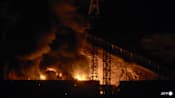
The US capture of President Nicolas Maduro and his wife shows the limit of American power. It was unable, despite being the kingpin in the region, to find another way of dealing with the problem that would have demonstrated its dominance – such as working with like-minded South American leaders for example to neutralise Mr Maduro, or even engineering an internal coup, which was its weapon of choice in the past when it was at its prime.
Instead, it chose brute force which undermined its legitimacy and made it lose the respect of many nations, reinforcing their view that the US does not uphold international law.
Did the raid showcase the might of the American military and serves as an example to others not to offend the US?
It might have been if it was done against a worthwhile opponent but Venezuela is one of the poorest countries in the world, with eight out of 10 persons there living in poverty.
It was not a feat that impressed but which alarmed many.
ALIENATING EVEN ALLIES WHO AGREED WITH AMERICA
Greenland is another case in point.
The US has gotten much of its way in Europe since Mr Trump entered the White House, getting North Atlantic Treaty Organization (NATO) members to increase their defence budgets, threatening and imposing reciprocal tariffs on their exports, and imposing his will on them in the war in Ukraine.
It has been able to do so because it has real leverage on Europe as a result of its security guarantees provided through NATO.
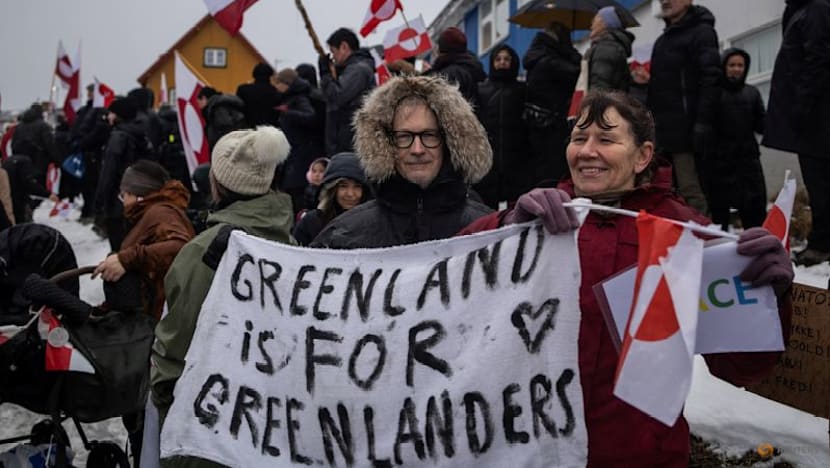
But even when it had such a hold on the continent, it was unable to get its way on Greenland without resorting to boldfaced threats to invade the Arctic island.
Even when its geopolitical stance on the issue – essentially about countering the Russian and Chinese threat – was in sync with the European position, it could not find a way to settle the matter without alienating its allies.
Though Trump has said he is now not contemplating military action in Greenland, it is unclear what he intends to do and what further threats he might make.
Hence in both Latin America and Europe – where you would expect American influence to be greatest – it was unable to get its way without resorting to bullying ways.
Contrast these with the feats of American superpower in the past which were achieved without firing a single shot: getting the world to accept the US dollar as their reserve currencies, forming strategic alliances with many countries and getting them to allow American military bases in their territories in Europe, Japan and South Korea, for example.
No one was bullied into agreeing to these arrangements which strengthened the US economically, politically and militarily in an enduring way.
NEGLECTING THE QUIET WORK
Finally, the defining behaviour of a declining power is that it pursues irrelevant exercises that might impress others in the short term but does nothing to strengthen itself in the long term.
In the modern world, this includes advancing its industrial base by technological innovation and investments, educating its people to the highest standards, strengthening its political system, and making its society more stable and harmonious.
These are not headline-making and the results not immediate. But neglect them and decline will be inevitable.

The US is in danger of losing it on this front.
Supposing it does make Venezuela a vassal state of the US. Of what use will it be if America itself grows weak economically and is unable to maintain its military strength as a result?
The same could be said of Greenland.
Did Cyprus, where the United Kingdom has a military base and is said to be a model the Americans are considering in its quest for Greenland territory, help Britain to avert its decline? On the contrary, it was irrelevant in the greater scheme of things and did nothing for the UK in economic and political terms.
Venezuela and Greenland will be likewise if the US does not make the changes needed in its own homeland to prevent its decline.
Its aggressive foreign policy actions are a serious distraction to this urgent imperative.
Han Fook Kwang was a veteran newspaper editor and is Senior Fellow at the S Rajaratnam School of International Studies, Nanyang Technological University.




