







Snap Insight: US attack on Venezuela further erodes what is left of old world order
If the strike on Venezuela is considered a success, there will be anxiety about where US President Donald Trump’s attention will turn to next, says international security professor Stefan Wolff.
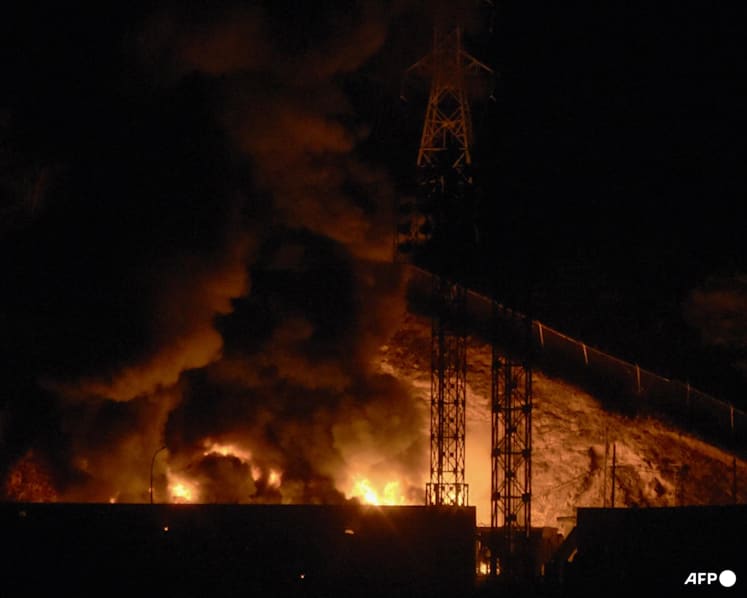
Fuerte Tiuna, Venezuela's largest military complex, burning after a series of explosions in Caracas on Jan 3, 2026. (Photo: AFP/Luis Jaimes)

This audio is generated by an AI tool.


BIRMINGHAM, England: United States President Donald Trump has not been discreet about wanting regime change in Venezuela. Its president was problematic, without anything remotely like a democratic mandate.
Still, Nicolas Maduro's capture by US special forces, after the “large-scale strike” on the South American country in the early hours of Saturday (Jan 3), is both a demonstration of unconstrained force – and a shocking violation of international law.
It is also the first time that the US has effectively abducted a head of state since 1989. Then, about 20,000 US soldiers descended on Panama and took its de facto leader, General Manuel Noriega, to the US to face charges of drug trafficking.
Mr Trump has similarly accused Maduro of driving narcotics into the US. At his press conference, he announced that the US was going to run Venezuela until a proper transition could take place, but stopped short of committing troops to an actual occupation force.





Mr Trump said the US and the Western Hemisphere were a much safer place to be after the US operation. But no matter the lengths to which he and his supporters go to justify this abduction, it further erodes what is left of a rules-based international order.
A DANGEROUS PRECEDENT
The “president of peace”, as Mr Trump likes to portray himself, and his War Secretary Pete Hegseth were unequivocal about Washington’s determination to reassert absolute dominance in the Western Hemisphere – in word and deed.
It is a return to thinking of the world as spheres of influence, as articulated in the 19th-century Monroe doctrine and in Mr Trump’s new national security strategy released just a few weeks ago.
Unsurprisingly, several countries in the Western Hemisphere, which the US sees as the core of its sphere of influence, denounced the US operation, as did Russia and China.
But it is unlikely that the US will face major repercussions beyond some handwringing about the need to respect international law, even from other democratic countries. This sets a dangerous precedent, as United Nations Secretary-General Antonio Guterres put it.
This will likely further encourage other states with similar pretensions of their own sphere of influence.
Mr Trump has also made no secret about his desire to take over the Panama Canal and Greenland for national security reasons, and Secretary of State Marco Rubio has long taken a hard line on Cuba’s government.
If the strike on Venezuela is considered a success in the White House, there will be anxiety about where American attention will turn next.
AMERICA FIRST, INSTABILITY BEYOND
The Trump administration is, without doubt, the key player deciding whether the situation will escalate further or not. But much also depends on how Venezuelans will react.
Maduro was not vastly popular, but he and his circle exercised full control over the armed forces and security apparatus. His government, for now, remains in power, but his capture could set off infighting among the remaining elite and trigger a new wave of mass protests against the regime.
In the immediate aftermath of the operation, Venezuela’s defence minister said that the country will resist the presence of foreign troops and that all of the country’s armed forces will be deployed.
Whether these forces will ultimately put up a fight during a second wave of US strikes, which Mr Trump threatened in his press conference, is not clear.
Nor is it obvious how Maduro supporters and opponents will position themselves in the coming days – or what exact plans the White House has in place to deal with widespread unrest in Venezuela should that happen.
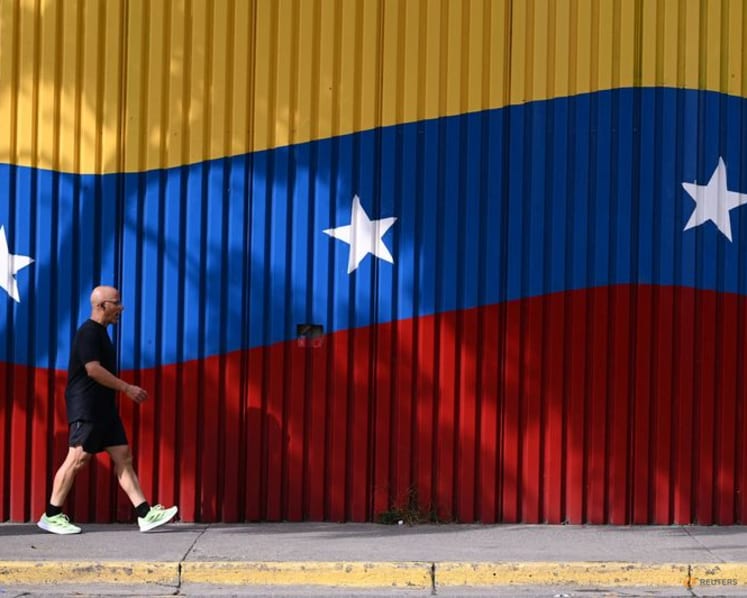
Venezuela is at a critical juncture now, but the repercussions of this US operation will be felt well beyond the country.
If the so-called Trump corollary to the Monroe doctrine gives rise to other similar interventions by the US and others, instability is likely to increase in the Western Hemisphere and well beyond.
Such an outcome – more likely than not in light of recent US experiences in Afghanistan and Iraq – would be a far cry from being the “common-sense and potent restoration of American power and priorities, consistent with American security interests” that the national security strategy proclaimed.
Stefan Wolff is Professor of International Security at the University of Birmingham and head of the Department of Political Science and International Studies.




