







Commentary: US ambassador's comments show how America First will play out for Singapore
The backlash to Dr Anjani Sinha’s remarks after beginning his tenure in Singapore shows just how difficult his mission will be, says political observer Steven R Okun.
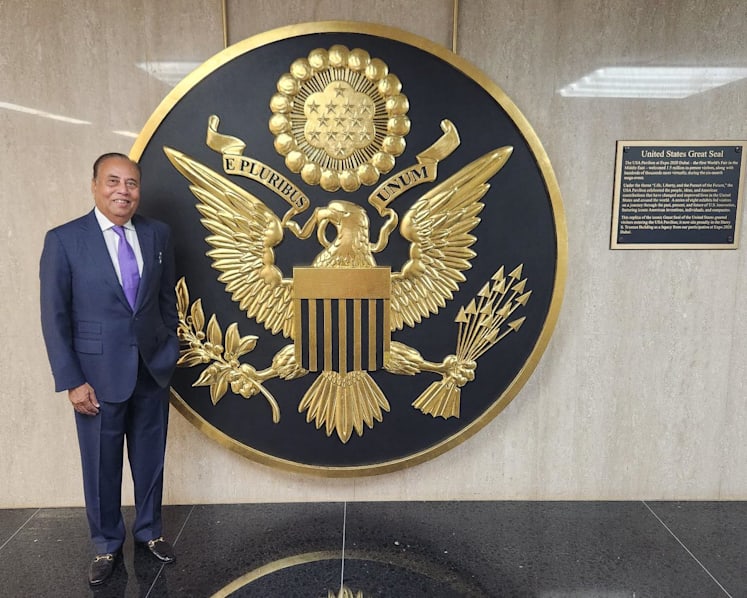
US ambassador to Singapore, Dr Anjani Sinha, at the US Department of State. (File photo: Facebook/US Embassy Singapore)

This audio is generated by an AI tool.


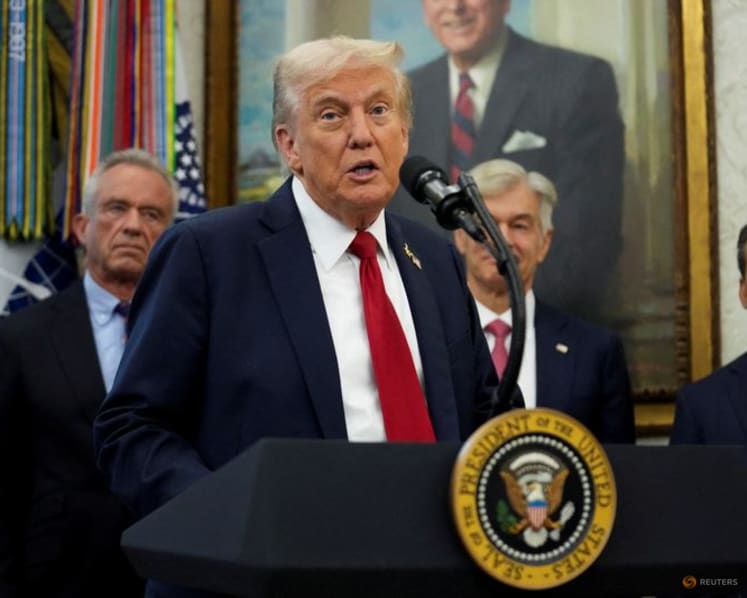
SINGAPORE: “Increase our economic and commercial ties,” was what President Donald Trump instructed Dr Anjani Sinha before he assumed the post, according to the newly arrived US Ambassador to Singapore.
Yet the backlash to Dr Sinha’s recent remarks shows just how difficult that mission will be under Mr Trump’s America First vision.
“Over many decades, American taxpayers and service members have underwritten regional security, playing an important role in making Singapore’s economic miracle possible,” said Dr Sinha in an email interview with the Straits Times.
“Now, we are asking our friends to help us rebalance the economy.” Dr Sinha was responding to a question about how Washington’s 10 per cent tariff on Singapore fits into US-Singapore ties.





Dr Sinha’s underlying message, intended or not, suggested the US sees Singapore more as a debtor than a partner. In the US' transactional worldview, one should pay back to the US what it made possible.
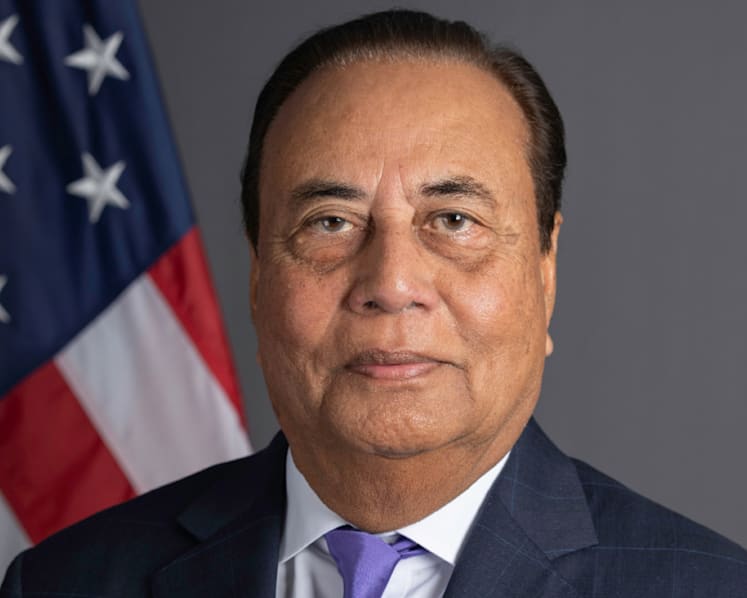
The public quickly picked up on this, likening the ambassador to a “debt collector”. All this underscores the continuing damage being done to Brand America.
DISREGARD FOR TRADE AGREEMENTS
Dr Sinha’s assertion that “the US-Singapore business and economic relationship will continue to grow” did not place the current US-Singapore relationship into context.
“There is no way the sentiment behind these comments can be squared with the contradictory reality of US actions,” Stephen Olson, Senior Visiting Fellow at ISEAS-Yusof Ishak Institute, told me.
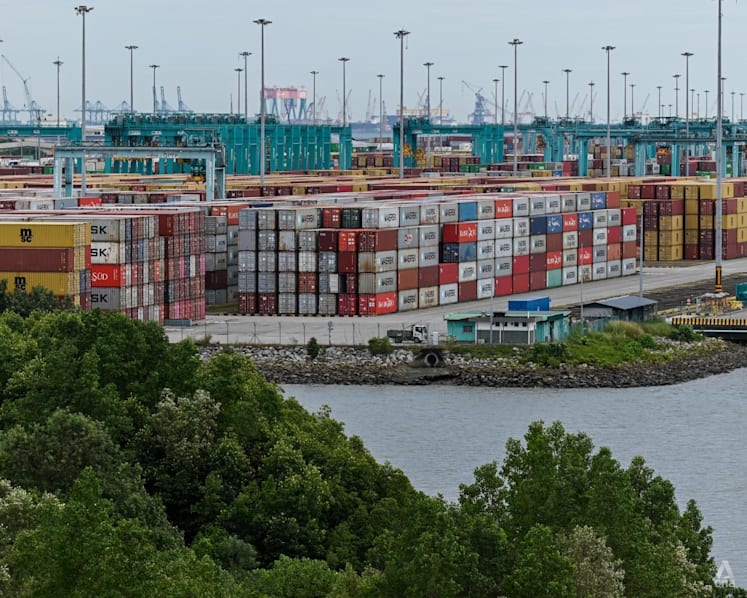
The US has unilaterally breached the 20-year-old US-Singapore Free Trade Agreement, and has imposed sectoral tariffs on key exports such as branded pharmaceuticals.
Indeed, Singapore Prime Minister Lawrence Wong stated in April that the tariffs Mr Trump imposed on his country “are not actions one does to a friend”.
Greg Poling, Senior Fellow and Director of the Southeast Asia Program at the Center for Strategic and International Studies (CSIS), told me that Dr Sinha’s remarks reveal the sense of victimhood emblematic of America First, including in global trade. “This makes no sense given Singapore's trade deficit with the US, which Ambassador Sinha failed to note,” he said.
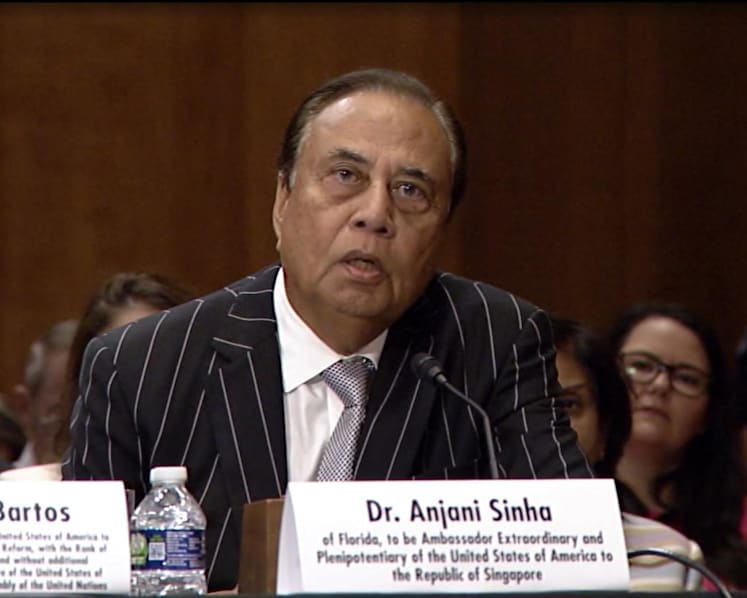
Understandably in his US Senate confirmation hearing, Dr Sinha evaded the question on whether he supported Mr Trump’s tariffs on Singapore.
This, and his recent comments also not acknowledging the unilateral change to the rules being applied globally, reinforce the concerns of many trading partners that the Trump administration does not feel bound by existing commitments to free trade. “While this borders on the surreal, it does provide a fairly accurate reflection of the Trump administration’s approach to trade relationships: The only interests that matter are US interests and trade agreements are observed only when convenient,” Stephen Olson said.
TAKING CREDIT FOR SINGAPORE’S ECONOMIC RISE
Dr Sinha’s remark that Washington played an important role in Singapore’s economic miracle, without placing it into the context of how the US benefits from trade and investment with Singapore, also drew sharp criticism.
While Singapore clearly benefits from the US-led post-World War II international order, the United States gains militarily and economically from its partnership with Singapore.
Singapore’s rise from developing to developed economy stemmed from the disciplined and strategic policymaking of its government and the grit of its people, not just because of Pax Americana. Failing to acknowledge this understandably rankles.
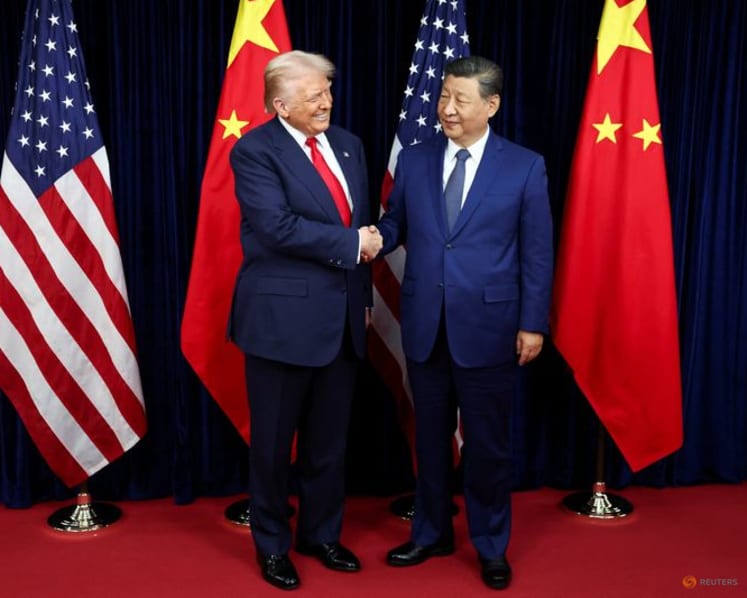
Dr Sinha’s tenure comes at a critical time for US influence across Southeast Asia. The new Anatomy of Choice Alignment Index from the Lee Kuan Yew School of Public Policy shows that over 30 years, the region has been steadily tilting away from the United States across politics, security, trade, soft power and signalling.
A CHANGED RELATIONSHIP
Nonetheless, Singapore understands the need to preserve ties with Washington to advance its own economic and geopolitical interests, regardless of who occupies the Oval Office. But the relationship will not look the same as before.
The Trump-era tariffs and trade disruptions have shifted Singapore’s focus “from strengthening the partnership to managing its challenges,” according to Barbara Weisel, former Assistant US Trade Representative for Southeast Asia and the Pacific, now with the Carnegie Endowment for International Peace.
“The trust built over decades has been shaken. Even where Singapore still welcomes US firms in priority sectors like energy, technology and pharmaceuticals, it now will proceed cautiously, wary of future US actions that could undermine cooperation,” she told me.
Indeed, Asian countries are designing alternative trade architectures.
Singapore co-founded the Future of Investment and Trade Partnership with 13 other small-medium countries to promote open, fair, and digitally enabled trade. The partnership brings together trade-dependent countries committed to sustaining global trade norms and exploring a forward path – even if tangible progress may be years away.
In an earlier era, the US ambassador to Singapore's comments about the bilateral relationship and its importance to Washington would be taken as a given. While the ambassador did discuss how “the US-Singapore business and economic relationship will continue to grow,” the US no longer gets the benefit of the doubt and the envoy’s words get parsed differently now.
As Professor Bert Hofman of the East Asia Institute at the National University of Singapore told me: “The US administration has moved away from its role of custodian of the international economic system to seeing trade policy as merely another instrument in the administration’s transactional toolbox.”
Dr Sinha’s mission of deepening the US-Singapore economic relationship will be a significant challenge. A prerequisite to doing so requires articulating the new reality of a changed US approach to global trade and the impact of America First policies on Singapore. That has yet to be done.
Steven Okun serves as CEO of APAC Advisors, a geostrategic and responsible investment consultancy based in Singapore. He served as Deputy General Counsel at the US Department of Transportation in the Administration of President Bill Clinton.




