







Commentary: TACO time is over for stocks
Donald Trump’s military gambit in Iran is nothing like his tariff experiment or even his threats to take Greenland by force, says Jonathan Levin for Bloomberg Opinion.
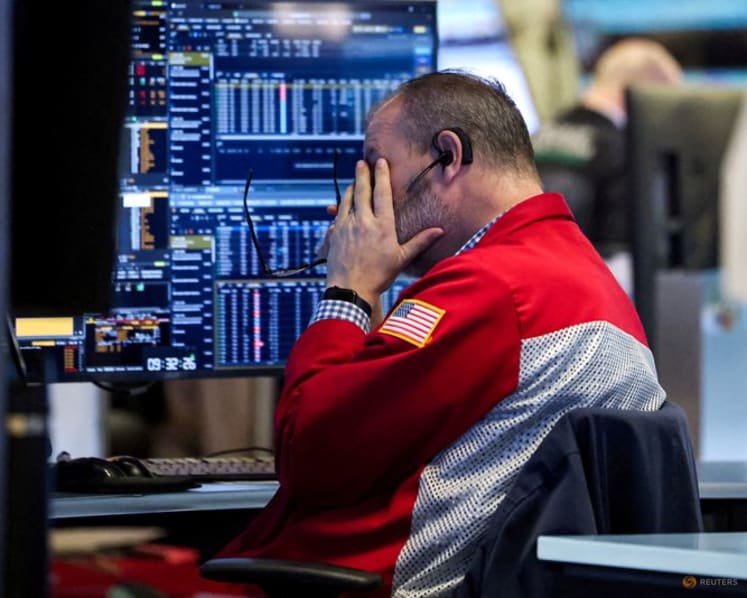
MIAMI, Florida: Investors have grown accustomed to the idea that Donald Trump-induced shocks rarely last long, because, as the popular TACO acronym tells us, “Trump Always Chickens Out”.
But the president’s decision to join Israel in starting a war with Iran has opened a geopolitical and macroeconomic Pandora’s box that may make a tidy walk-back impossible. Under the surface, financial markets are starting to take note.
The TACO regime in US stocks – in which every selloff was a buying opportunity – may be officially over. That thesis will now get a test after Trump postponed threatened strikes against Iranian energy infrastructure and power plants for five days, pending the outcome of what he said were talks with Iran to end the 24-day war.
Consider the extraordinary difference between 2025 and 2026. In the first year of the new Trump administration, the president became a one-man market narrative. He hinted at firing Federal Reserve Chair Jerome Powell, but any market effects were nullified when he moderated his rhetoric.
On Apr 2, 2025, he triggered a market crash by unveiling sweeping and indiscriminate tariffs on the entire world, but he also ushered in a v-shaped recovery less than a week later by opening the door for delays and negotiation. Because the market was driven by words rather than actions, it was easy to repair what was broken.
LOST CONTROL
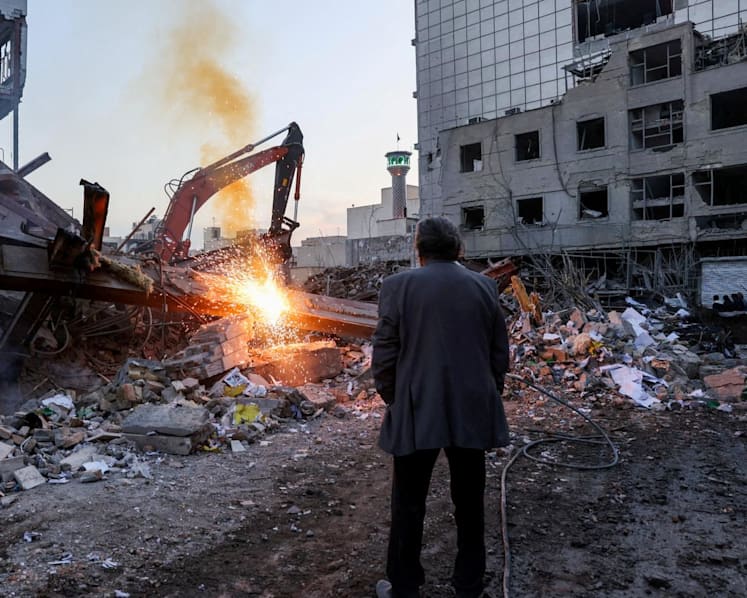
By starting a real kinetic conflict in Iran, Trump has lost any semblance of control. Now, the market moves on attacks against energy infrastructure and the inability to get tankers through the Strait of Hormuz. And with higher gasoline prices, he’s also losing sway over the flagging sentiment of American consumers.
You can see the difference in market pricing. After a few brutal days in April 2025, the S&P 500 Index surged back and never retested the post-“Liberation Day” lows. While the recent selloff has unfolded much more slowly, the recovery looks elusive.
The picture is a bit worse under the surface. The average stock is actually doing worse than the index as a whole: An equal-weighted basket of stocks is underperforming the capitalisation-weighted one, and about 80 per cent of stocks are trading under their 50-day moving averages.
Another problem is Trump’s apparent desire to counter his “TACO” critics. (As a reminder, credit for the acronym belongs to the excellent Financial Times writer Rob Armstrong, of the Unhedged newsletter).
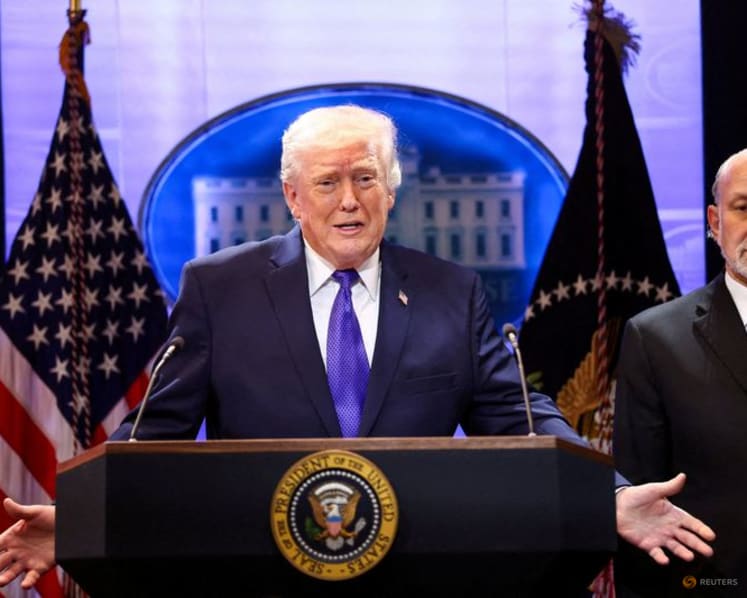
When he was asked about the TACO habit by a reporter last year, Trump called the question “nasty” and sought to reframe his behaviour as a conscious strategy. “You call that chickening out?” Trump said. “It’s called negotiation.”
But whether you call it “madman diplomacy” or the Art of the Deal or anything else, it can’t possibly work if the whole world has your number. Trump is seemingly eager to reassert his unpredictability in Iran, which – if true – would constitute an awful excuse for continuing a war with tremendous economic and, above all, human costs.
NORMALCY WILL NOT BE RESTORED ANYTIME SOON
Certainly, it’s possible that financial markets have now priced in some – maybe a lot – of the economic damage, but we can’t know for sure. Looking at previous geopolitical risk events, the S&P 500 tends to bottom on average around eight days after the event. (In other words, in a world of averages, the bottom may already be in by now.)
But averages can be tremendously deceiving and the actual outcomes exhibit no clear pattern, from the rally after the Iraq War to the long grinding retreat after the start of the Gulf War. Every conflict is unique.
So too are the economic and market circumstances. Relative to other major geopolitical shocks, the Iran conflict is unfolding against high stock-market valuations and low consumer confidence. (Only at the outset of the Iraq War was confidence meaningfully lower.)
In short, shocks have the potential to play out differently based on starting circumstances. The Iraq War unfolded at the end of a crash, and cheap stocks rallied. The Ukraine conflict unfolded near the top of a market bubble. And sure, the US is helped by its position as a net energy exporter. But that was true when the Ukraine conflict was unfolding, and it didn’t insulate the US from economic pain then.
Whatever happens next, investors shouldn’t expect a sense of normalcy to be restored anytime soon. Trump’s military gambit in Iran is nothing like his tariff experiment or even his threats to take Greenland by force, because explosions are rocking the Middle East. And market participants thinking this is just another “Liberation Day” should be advised that the TACO era is over and the next one may be much more dangerous.




