







Commentary: Fatal ICE shooting exposes how badly fractured America has become
Renee Good’s death could be a rallying point against President Donald Trump or a turning point towards a more authoritarian government, says US politics expert Steven Okun.

This audio is generated by an AI tool.


SINGAPORE: The fatal shooting of Renee Nicole Good by a United States Immigration and Customs Enforcement (ICE) agent in Minneapolis last week has become tragedy and political flashpoint. Her death exposed just how badly the US has fractured.
For one side, the killing of the unarmed 37-year-old mother of three, as she tried to drive away from federal agents, exemplifies the dangers of an unchecked Trump regime. On the other side are those claiming it was self-defence against a woman who tried to run a law enforcement officer over.
The government appears to be doubling down on the side of the system as ICE has been so central to President Donald Trump’s immigration crackdown. The Department of Homeland Security called Good a “violent rioter” who committed an “act of domestic terrorism”. Vice President JD Vance declared her death “a tragedy of her own making”.
“The obvious hypocrisy in this tragedy is that Team Trump is all too quick to condemn Good while identifying Ashli Babbitt … as a patriot and hero,” former Democratic campaign operative Peter Goelz told me, referring to the protestor who was fatally shot on Jan 6, 2021 while attacking the US Capitol in a bid to overturn the results of the 2020 presidential election.





“This tragic death will be one more area in which Americans will see the same exact thing differently,” Mike McCurry, former White House Press Secretary under President Bill Clinton, noted to me.
WILL RENEE GOOD’S DEATH STAND OUT?
What makes Good’s death stand out are the extraordinary circumstances Americans find themselves in today.
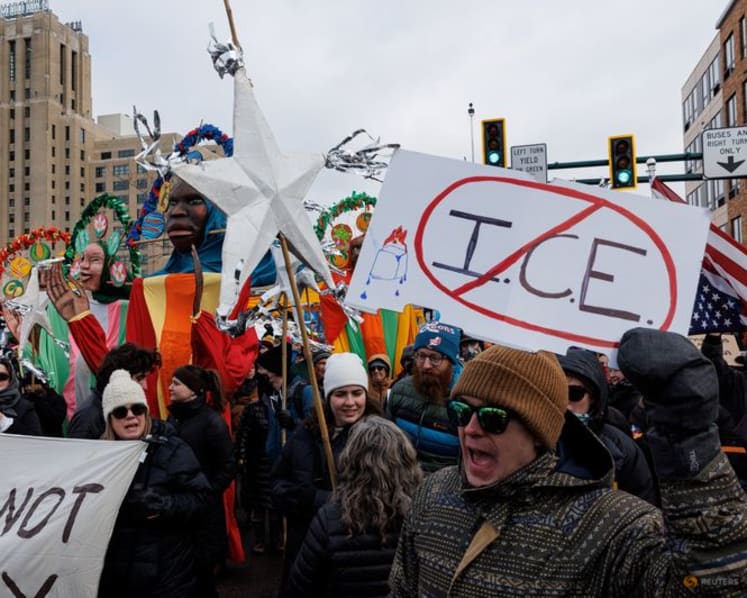
Across Democrat-controlled cities, in an era of mass deportations against people without any meaningful criminal record, citizens carry whistles to alert neighbours to the presence of immigration officers. Renee Good was one of those who responded to hearing those warning whistles by driving her vehicle to partially block traffic in protest.
Even before the shooting, polls showed majorities disapproved of how ICE has been deployed. There were concerns that ICE agents are not trained to prevent violent escalations from occurring, or, worse, are encouraged to shoot first and ask questions later.
A poll conducted soon after the shooting found that about 52 per cent of respondents disapproved of how ICE handles its job, compared with 39 per cent who approved – roughly the same share that approves of Mr Trump.
Good being a white suburban mum compounds the fear that anyone could be the target of aggression in an instant – but that could also drive more to take a stand.
MAGA CLOSES RANKS, DOUBLES DOWN ON STATE POWER
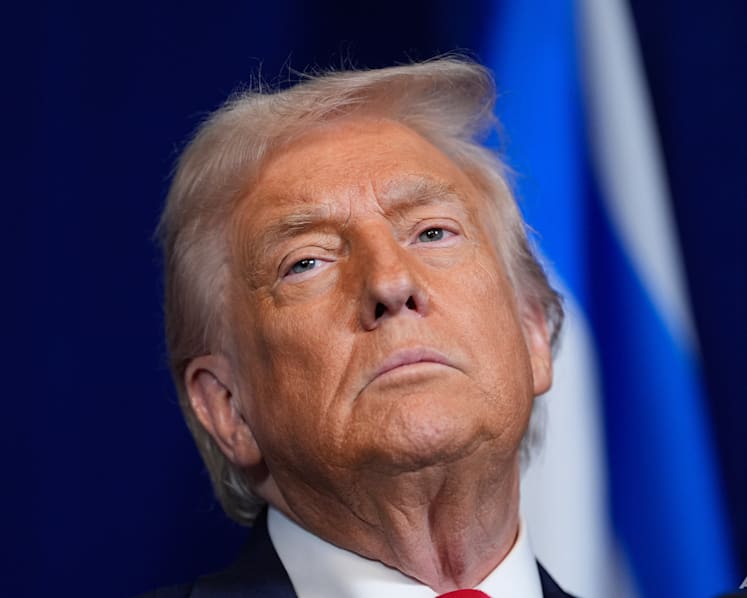
While this tragedy could be a rallying point for resistance against Mr Trump, it could simultaneously be a turning point for his government toward authoritarianism.
Democrats condemned the incident as an “abomination,” demanding a full investigation and warning that they could use the next Homeland Security funding process to restrain ICE’s authority and tactics.
By contrast, Republicans closed ranks – defending the shooting, backing the deployment of hundreds more federal agents to Minneapolis, and endorsing the FBI’s takeover of the investigation from state authorities.
Minnesota’s Democratic Governor Tim Walz drove home concerns about transparency and political influence, by quoting George Orwell’s warning in the classic novel Nineteen Eighty-Four: “The Party told you to reject the evidence of your eyes and ears. It was their final, most [essential directive].”
Concern increases that the administration’s hardline posture bleeds into economic policy.
The Small Business Administration said it would relocate its Minneapolis office, explicitly tying federal economic support for small businesses to local compliance with ICE. In effect, support for immigration enforcement has become a litmus test for access to government resources – weaponising federal aid and punishing communities for resisting Washington’s agenda.
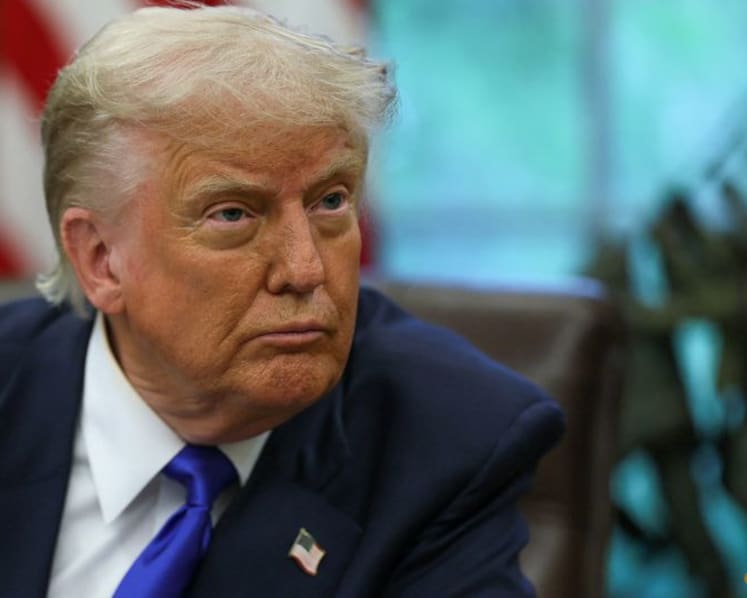
Mr Trump also pairs ICE’s lethal authority with a growing surveillance system. Palantir technology helps ICE pull in social media activity, location data, licence-plate scans, phone records and even tax information to identify and track individuals.
AWAITING THE MIDTERMS
The blurring boundary between law enforcement and political control will be important in a high-stakes midterm election year.
In November, every seat in the House of Representatives will be up for election, as will one-third of the Senate. With the Republican control of each chamber up for grabs, Mr Trump knows what’s at stake.
"You got to win the midterms because if we don't win the midterms, it's just going to be – I mean, they'll find a reason to impeach me. I'll get impeached," he said earlier this month.
Republicans are forecast to lose the House by a significant margin based on the historical precedent of a president’s approval rating as the best predictor of the outcome.
For the Republicans to hold Congress, they need more than just the MAGA base. They need swing voters, such as college-educated suburban women – and ICE just killing a person in that demographic will not help them. Getting those votes to stay Republican in 2026 will be that much more difficult.
Knowing what his party’s defeat portends for him, Mr Trump now pushes to change the electoral playing field, including redrawing electoral maps, tightening voter registration rules and ending the use of voting machines and mail ballots.
A TURNING POINT, BUT WHICH WAY?
Each side looks at the same facts and draws opposite conclusions about what happened to Good and what could happen to the country.
With Americans’ ever-shrinking public attention span, the death of Renee Good may well be largely forgotten, sooner rather than later. More shiny objects will appear – witness the pivot from Venezuela to Good's death to Federal Reserve Chair Jay Powell being under criminal investigation in the few days since then.
If that happens and authoritarianism were to come next, it will do so in two ways: gradually, then suddenly.
Steven Okun serves as CEO of APAC Advisors, a geostrategic and responsible investment consultancy based in Singapore. He served as Deputy General Counsel at the US Department of Transportation in the Administration of President Bill Clinton. Noemie Viterale contributed.




