







analysis East Asia
5 takeaways from China’s Central Economic Work Conference as Beijing maps its 2026 growth path
Analysts say the key meeting offers fresh clues about where China sees its biggest pressures as it faces up to domestic and external headwinds.

This audio is generated by an AI tool.


SHENZHEN: China has offered its clearest signal yet of how policymakers intend to steer growth in 2026, wrapping up its annual Central Economic Work Conference (CEWC) with a familiar message of confidence, stability and resilience, say analysts.
Held from Dec 10 to 11 in Beijing, the agenda-setting meeting - attended by the country's top leaders - took stock of the economy and laid out policy priorities for the year ahead.
Many of the commitments reaffirmed existing policy pledges such as boosting domestic demand and stabilising foreign investment, underscoring Beijing’s focus on continuity and fine-tuning rather than sweeping new measures.
At the same time, analysts say the readout offers fresh clues about where the world’s second-largest economy sees the biggest pressures - and where it believes growth can still be sustained - as it navigates a challenging domestic landscape and an uncertain external environment.





“The main focus this year and the difference from before is more alignment with the long-term economic target rather than short-term stimulus,” Wang Dan, China director at Eurasia Group, told CNA.
Here are five key takeaways from the conference:
BANKING BIG ON EXPORTS
Exports received only a passing mention in this year’s readout, with the sole explicit reference tied to support for services exports.
Rather than signalling a reduced emphasis, analysts said the language points to exports continuing to play a central role in supporting growth.
“The whole tone of the communique shows an implicit confidence in exports,” said Wang, pointing out how the current model is “very much reliant” on exports.
“Since two years ago, exports have been essentially the only real economic driver.”
Wang said that without major fiscal or monetary stimulus, domestic demand has generated little growth in consumption and investment, despite Beijing’s efforts to boost it.
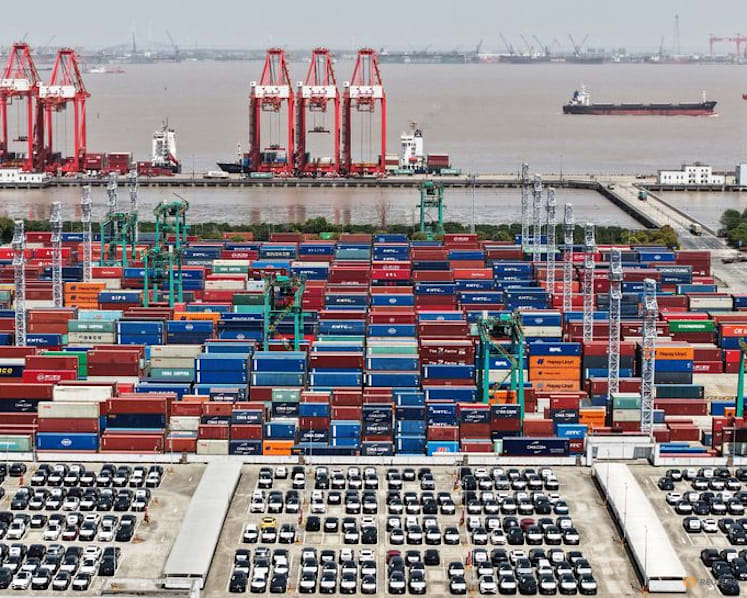
Official customs data show China’s trade surplus reached US$1.08 trillion in the first 11 months of 2025, underscoring how external demand has continued to anchor growth.
But the strategy comes with growing risks. As Chinese firms push exports and overseas investment to sustain momentum, trade frictions are likely to intensify, warned analysts.
“When the growth engine is so much on exports, that means 2026 is going to see more trade disputes between China and the rest of the world - and it’s not just with the US, but also Europe (and) emerging markets,” Wang said.
In the first 11 months of the year, China’s exports rose 6.2 per cent from a year earlier, customs data showed.
Stronger shipments to Europe, Southeast Asia and Africa - up 8.9 per cent, 14.6 per cent and 26.3 per cent respectively - more than offset an 18.3 per cent drop in exports to the United States over the same period.
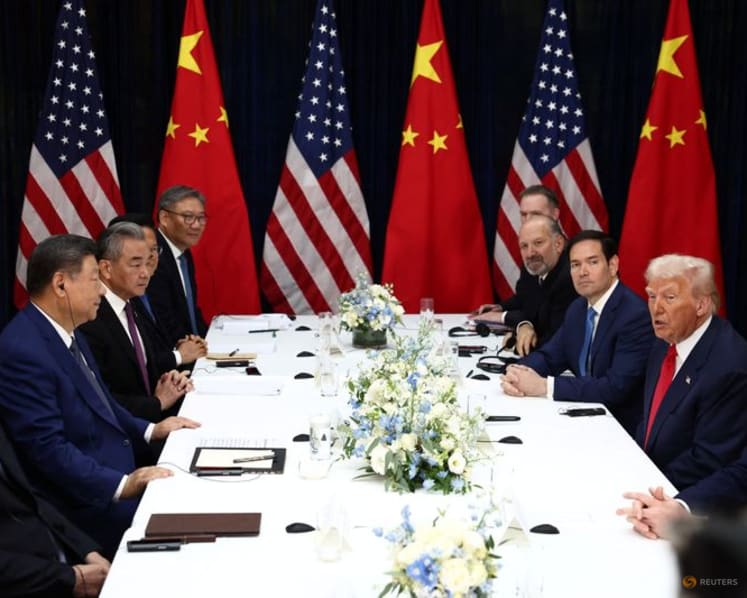
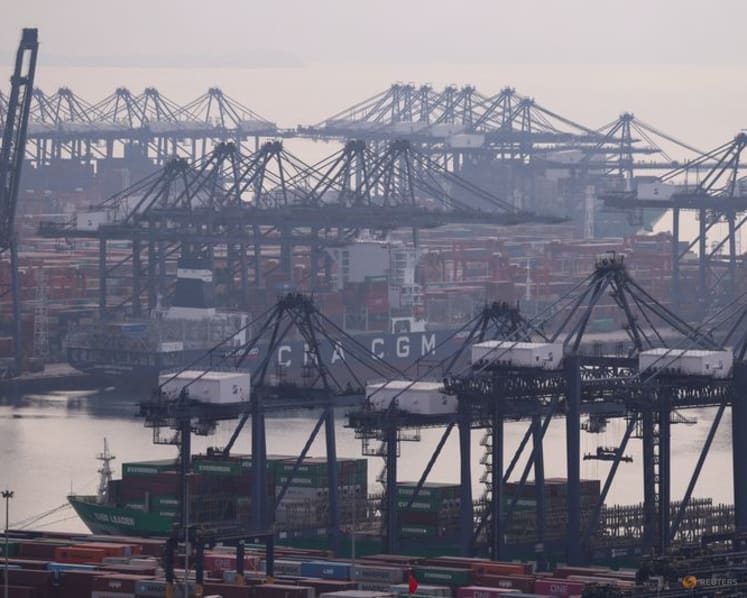
China’s widening trade surplus was reportedly a key issue during French President Emmanuel Macron’s visit to China in early December.
“I told them that if they do not respond, we Europeans will be forced, in the coming months, to take strong measures - just as the United States has done, such as tariffs on Chinese products,” Macron told French business newspaper Les Echos in an interview published on Dec 7.
Hannah Liu, China economist at Nomura, questioned the sustainability of Beijing’s export-driven model.
“A large share of China’s industrial exports has squeezed the market share of European manufacturers,” she told CNA. “Geopolitical developments may increasingly constrain China’s export momentum.”
China’s export growth is likely to slow after an exceptional run, she added.
“We do not expect negative export growth next year … but the 5 to 6 per cent growth rate this year may fall slightly to around 4 per cent,” Liu said.
STABILISING THE PROPERTY SECTOR
Mention of the property sector was notably absent from the official readout of a Dec 8 Politburo meeting that preceded the CEWC and traditionally sets the tone for it.
Yet the property sector ended up being mentioned in the CEWC communique. The readout said policymakers would focus on stabilising the housing market, adopting city-specific measures to curb new supply, reduce excess inventory and improve housing quality.
Su Yue, chief China economist of the Economist Intelligence Unit (EIU), said the renewed mention points to a shift towards stabilisation rather than revival.
“The focus is on government-supported destocking, which can provide a floor for the housing sector,” she said.
Once a central growth engine, China’s property sector has been mired in a prolonged downturn since 2021, marked by falling sales and a string of developer defaults.
Even major state-linked firms such as China Vanke have come under financial strain, underscoring the extent of the sector’s troubles.
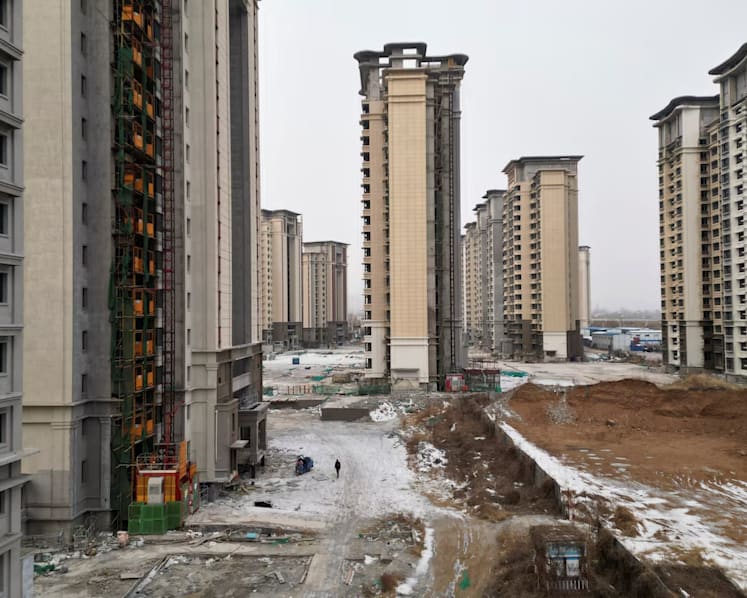
But Su cautioned that any meaningful rebound would require fiscal spending on a scale comparable to the previous Shantytown Redevelopment Projects, which totalled about 6 trillion yuan (US$840 billion).
The nationwide initiative, rolled out after the 2008 global financial crisis, aimed to improve housing for low-income urban residents while stimulating domestic demand, and later helped drive property demand and inventory clearance in many lower-tier cities.
“Without that kind of scale, it will be difficult to achieve a clear stabilising effect on housing prices,” Su said.
Wang from Eurasia Group highlighted the call by policymakers to build “good-quality housing” as part of efforts to establish a new development model for the sector.
“The housing downturn will last longer because building ‘good housing’ is a more selective approach,” she said, noting that genuine demand remains weak and much of the existing housing inventory is likely to be left to clear on its own.
“To me, it means the government is not going to bail out real estate developers,” she noted.
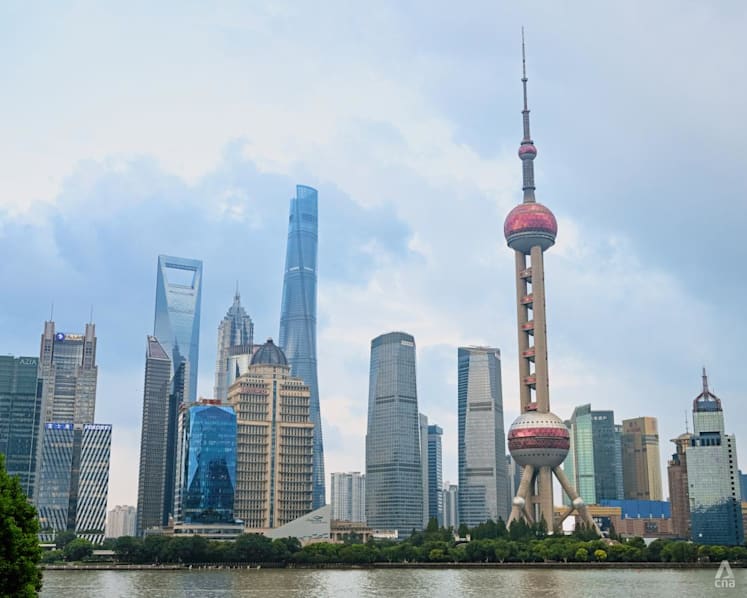
Liu from Nomura believes China has not yet figured out an “effective solution” to its property sector woes.
“Signs of a stabilisation in the property market are still completely absent,” Liu added, warning that continued price declines and a prolonged downturn could still affect banks, households and the wider economy, risks Beijing appears to acknowledge.
Liu said most off-the-shelf measures have already been deployed, including easing purchase and lending restrictions, cutting mortgage rates and rolling out tools to support inventory clearance and project delivery.
She suggested that any solution for now would likely focus on clearing developers’ arrears to upstream and downstream suppliers, as well as ensuring the delivery of pre-sold homes to buyers, obligations she described as another layer of debt.
“For now, policy is likely to remain focused on debt resolution rather than revival,” she said.
CONSUMPTION SUPPORT CONTINUES
Boosting domestic demand once again topped the policy agenda, with the official readout calling for stronger consumption, higher household incomes and efforts to stabilise investment.
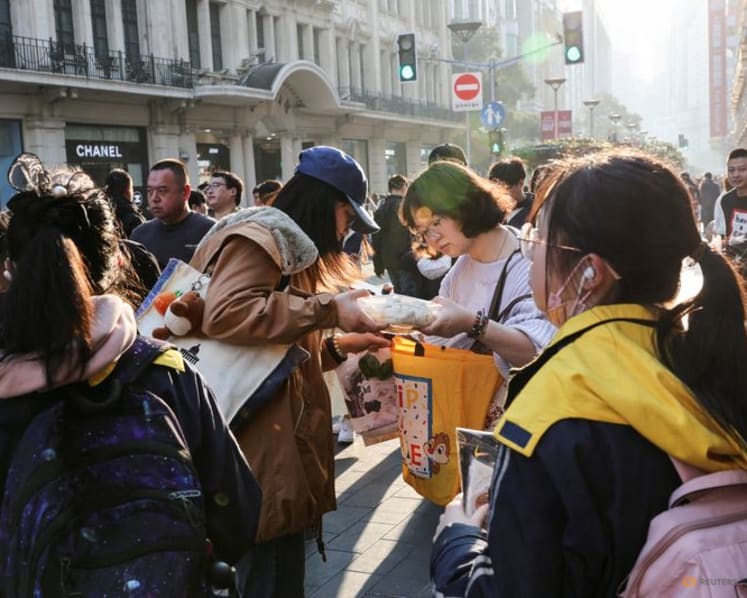
Policymakers pledged to “stick to domestic demand as the main driver”, roll out a consumption-boosting action plan, raise urban and rural incomes, expand the supply of quality goods and services, and make better use of existing subsidy programmes such as trade-ins for consumer goods.
Economists said the message was one of policy continuity rather than an escalation in support.
“The first priority is still consumption and domestic demand,” said Liu from Nomura, noting that this aligns with last year’s shift away from industrial policy towards household demand.
However, she said there is little sign of meaningful new stimulus. “Since last year, the scale of consumption-stimulus policies has already been historically large,” Liu said.
Over the past year, Beijing has rolled out an extensive mix of fiscal and targeted monetary support, including nationwide trade-in programmes for consumer goods, expanded bond issuance and flexible monetary tools.
Trade-in subsidies for consumer goods are likely to continue, but the wording suggests limited scope for expansion, Liu said.
She pointed out that last year, China said it would “expand and scale up” trade-ins, while this year, officials only said they would make “reasonable use” of such policies.
“So further intensifying subsidies to boost consumption seems unlikely.”
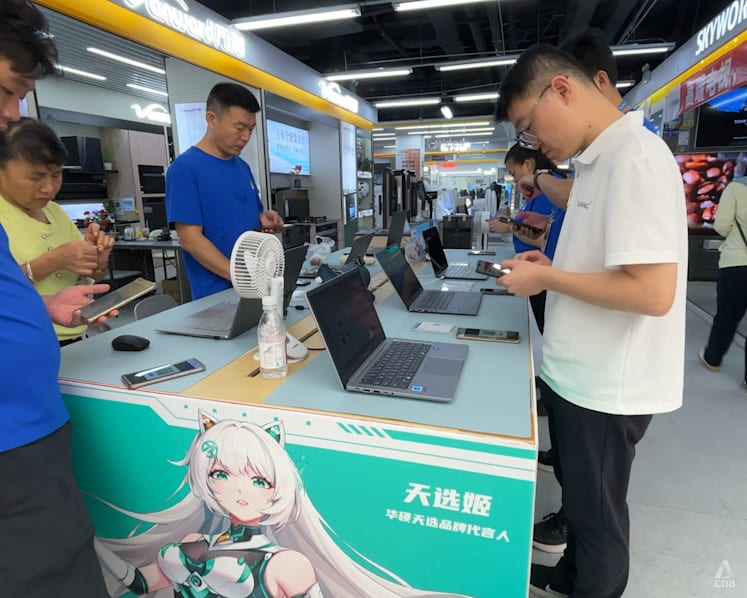
EIU’s Su said that closer scrutiny will likely fall on excessive local subsidies that fuel involution - a term borrowed from China’s corporate culture to describe intense, often self-defeating competition.
In a reflection of policymakers’ increasing concern, the CEWC readout pledged to “deeply rectify involutionary competition”, signalling stronger scrutiny of inefficient pricing wars and excess capacity.
Su said the language reflects a firmer resolve to curb harmful competition, though risks remain.
She warned that as China pushes for stronger national security and technological self-reliance, involution could re-emerge in strategic sectors such as artificial intelligence (AI) and semiconductors.
POWERING LONG-TERM GROWTH
Chinese policymakers placed a clear bet on innovation and green energy as pillars of China’s longer-term growth strategy.
Innovation featured prominently in the agenda, following economic targets and domestic demand.
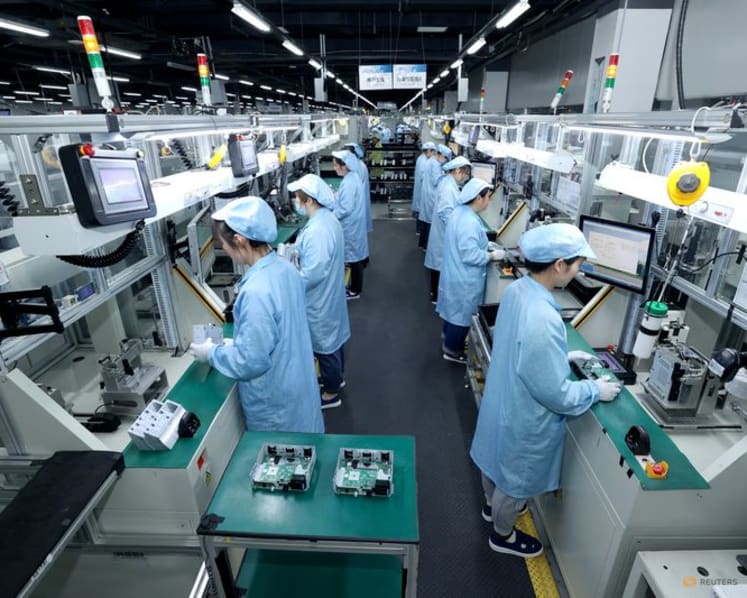
The CEWC readout outlined plans to strengthen education, technology and talent development, expand the use of AI, upgrade industrial chains and improve governance of emerging technologies.
At the same time, it stressed the need to “promote win-win development between platform companies and the operators and workers within them”.
Su said the wording signals growing recognition that technological progress, while yielding gains in productivity, can also disrupt employment.
“The explicit call for mutual benefits for both platforms and workers shows the government’s recognition of the disruptive effects technological progress can have on labour markets,” she said.
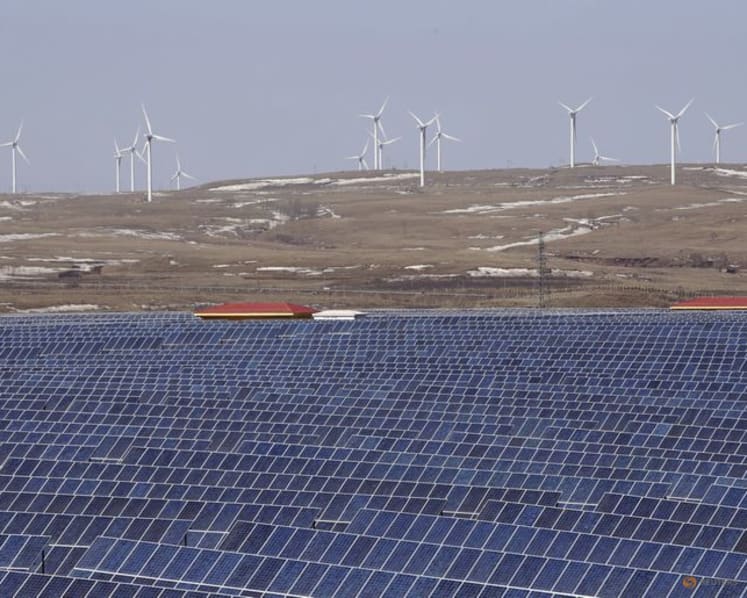
Green energy also emerged as a clearer priority. Wang noted that the CEWC readout, for the first time, called for drafting a national plan to build a “neng yuan qiang guo” or “energy-strong nation” in Chinese.
“This will be a leading priority in building the modern industrial base under the 15th Five-Year Plan,” Wang said, noting that 2026 marks the first year of the new planning cycle.
She expects more policy and financing support for new energy and carbon-related industries.
HALTING INVESTMENT DECLINE
Investment emerged as a point of concern at this year’s CEWC, with the official readout explicitly calling for efforts to “halt the decline and stabilise investment”.
The emphasis comes against a backdrop of weakening fixed-asset investment (FAI), a broad measure covering spending on infrastructure, factories, equipment and other long-term assets.
Official data from China’s National Bureau of Statistics show FAI fell 1.7 per cent year-on-year in the first 10 months of 2025, largely dragged down by the property downturn. Excluding real estate, investment rose 1.7 per cent.
The indicator captures total spending on building and purchasing fixed assets within China, including both domestic and foreign-funded projects, but does not directly measure foreign direct investment flows.
Liu from Nomura said the conference sent an unusually clear signal that policymakers recognise the severity of the slowdown.
“Since the third quarter, the decline in fixed asset investment has been almost unprecedented in recent history,” she said.
The stated objective, Liu added, is for investment growth to return to positive territory as part of a broader economic repair. However, she noted that the policy toolkit appears limited.
“There were not many new policies mentioned,” Liu said, adding that the conference largely reiterated measures rolled out earlier this year, including expanding quotas for local government special bonds and deploying new policy-based financial instruments.
“These policies will need proper follow-through.”
EIU’s Su said the emphasis reflects a stabilisation mindset rather than a push for aggressive expansion.
According to the official readout, leaders pledged to support growth through a more proactive fiscal stance, while keeping debt risks in check and maintaining a cautious approach to monetary policy.
Su said fiscal support is being guided by tighter discipline, with investment increasingly expected to align with longer-term structural goals rather than short-term growth targets.
Eurasia Group’s Wang said the overall approach points to containment being prioritised over stimulus.
“I don’t see any chance actually for fiscal or monetary expansion,” she said, adding that the emphasis on debt stabilisation signals that “the fiscal budget is going to be basically the same as last year”.






