China to hike defence budget by 7% amid rising global security tensions
China’s defence outlays are closely watched as a barometer of Beijing’s strategic priorities as it presses ahead with military modernisation.
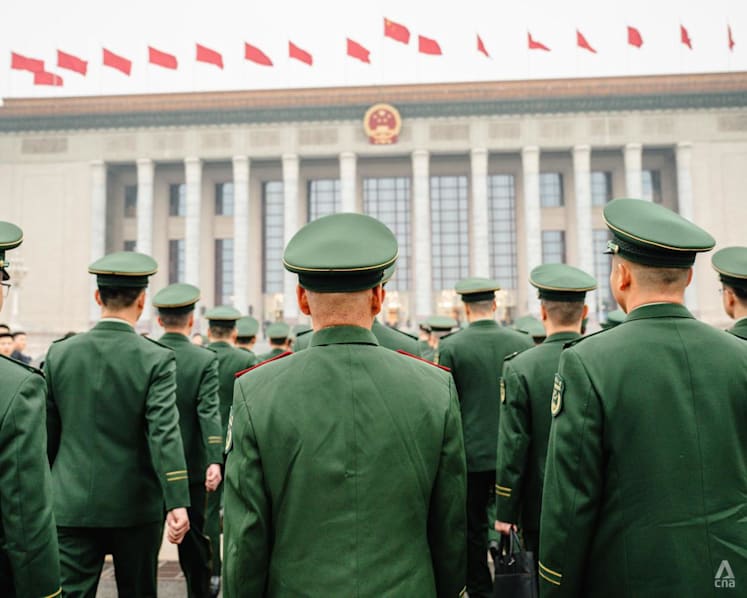
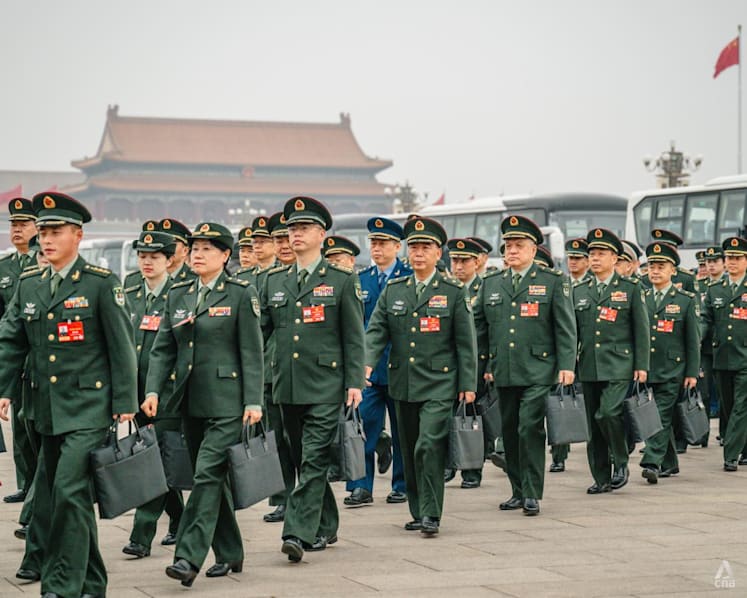
Military delegates arriving outside the Great Hall of the People before the opening sessions of the annual Chinese People's Political Consultative Conference (CPPCC) and National People's Congress (NPC), in Beijing, China, on Mar 4, 2026. (Photo: CNA/Hu Chushi)

This audio is generated by an AI tool.


BEIJING: China will raise its defence budget for the year by 7 per cent, a slight dip from last year’s 7.2 per cent increase amid strategic rivalry with the United States, tensions in the Taiwan Strait and a widening conflict in the Middle East.
The pot will grow to 1.91 trillion yuan (US$276.9 billion), according to a draft budget report released on Thursday (Mar 5) as Chinese Premier Li Qiang delivered the government work report at the opening session of the National People’s Congress (NPC).
It’s the lowest percentage increase in the national military budget since a 6.8 per cent hike in 2021. China’s defence budget rose 7.1 per cent in 2022 and 7.2 per cent annually from 2023 to 2025.
Since 2016, China’s defence budget has grown at single-digit rates, generally exceeding the gross domestic product (GDP) growth target set for the same year.





“Last year saw new achievements in modernising national defence and the armed forces,” Li said in his speech, without providing details.
“We will continue striving to achieve the centenary goals of the People’s Liberation Army (PLA), make solid progress in combat preparedness, enhance our strategic capabilities to safeguard national sovereignty, security and development interests, and advance cross-service reforms in a coordinated manner,” he added. The PLA marks its 100th anniversary in 2027.
Li also reaffirmed the Communist Party’s “absolute leadership” over the armed forces and stressed ideological continuity.
Calling for broader institutional backing, he added that "governments at all levels” should “provide strong support for national defence and military development, and consolidate unity between the military and the government and between the military and the people".
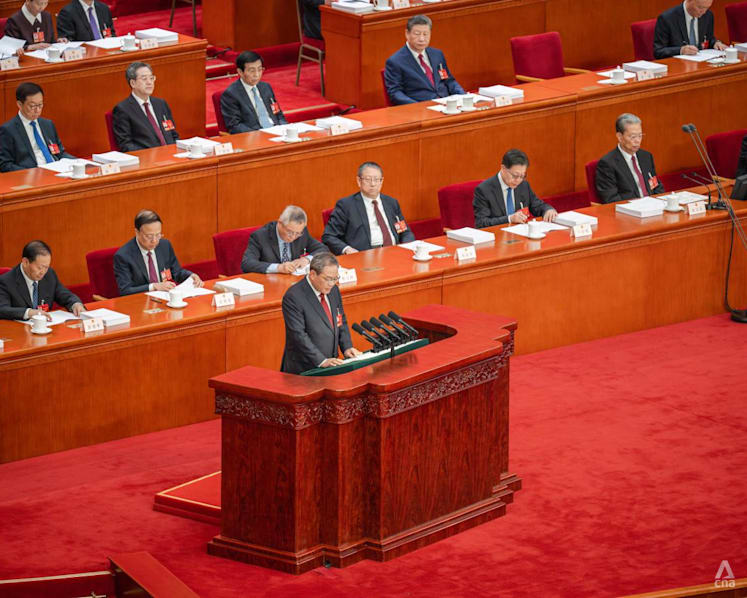
The defence budget is released annually at the Two Sessions, which comprise the NPC gathering and the meeting of the country’s top political advisory body. This year’s meetings come as China begins implementing its 15th Five-Year Plan, which will shape economic strategy through 2030.
The marginal dip was not unexpected given the broader economic backdrop, said Zeno Leoni, a lecturer in defence studies at King’s College London.
“China's strategic documents kind of impose a defence budget growth that is appropriate compared to GDP growth,” he told CNA, noting the slight downward revision in the latter this year.
China has set its 2026 economic growth target at 4.5 to 5 per cent, marking the first downgrade since 2023 and the lowest growth target since 1991.
In that context, Leoni suggested the 7 per cent rise in defence spending reflects alignment with macroeconomic targets rather than any shift in China’s long-term military trajectory.
CHINA’S IMMEDIATE DEFENCE PRIORITIES
China’s defence outlays are closely watched as a barometer of Beijing’s strategic priorities amid sustained tensions in the Taiwan Strait and the South China Sea, as well as intensifying Sino-US competition.
The escalating conflict in the Middle East - which is testing China’s oil security and Gulf partnerships - has further heightened global security concerns.
While the annual increase in the national military budget has remained in single digits for more than a decade, analysts said the steadiness itself reflects long-term objectives: building credible deterrence, modernising forces across domains, and ensuring the PLA can execute increasingly complex joint operations.
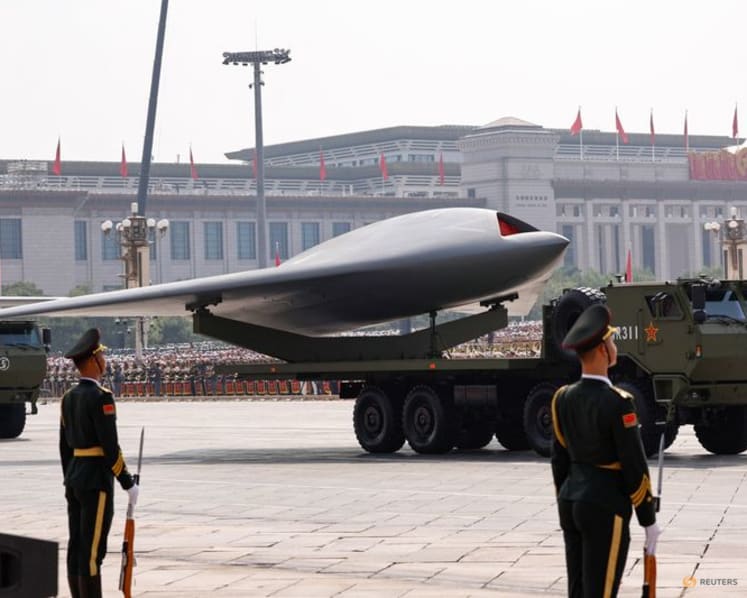
Chong Ja Ian, an associate professor of political science at the National University of Singapore (NUS) and a non-resident scholar at Carnegie China, said the headline figure only tells part of the story.
“The PRC’s (calculus) is (linked) - since it would likely want to plan for some escalation if they decided to use force even more directly against Taiwan, in the East China Sea, the South China Sea, or even the Yellow Sea,” he told CNA.
“Taiwan is not the only area where the PLA is currently acting to pursue PRC claims and where escalation is possible.”
Chong stressed that the PLA’s political role must also be taken into account when interpreting spending priorities, highlighting that it is the armed wing of China’s Communist Party (CCP) and “not a national army”.
“That means that a core function of the PLA is to protect the interests and survival of the (CCP),” he said, adding that one way it does so is by emphasising the party’s leadership.
“To the extent that asserting control over claimed territory is key to (CCP) legitimacy, the (CCP) will ensure that the PLA is in a position to follow its directives.”
Michael Clarke, an associate professor at Deakin University’s Centre for Future Defence and National Security, said observers should look beyond the topline and examine how funds are distributed.
“Like other defence budgets … it is always useful to follow the money to ascertain priorities,” he told CNA.
“In the PLA's case, the bulk of the budget is accounted for by three core areas - equipment, personnel and training, and maintenance.”
A key signal to watch is whether these proportions shift significantly toward any one of the three or remain relatively consistent, Clarke said.
China does not provide a detailed breakdown of its military spending.
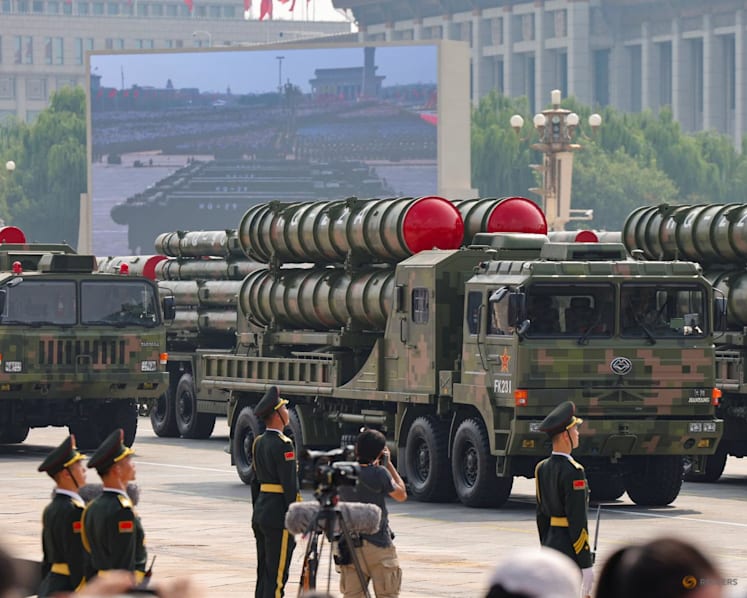
MARCHING TOWARDS MAJOR MILESTONES
The defence budget also feeds into longer-term milestones, with 2027 - the PLA’s centenary - widely seen as a key year for the armed forces.
In recent years, US officials have referenced 2027 as a target by which China should have the capabilities necessary to carry out major combat operations, including against Taiwan, the self-ruled island Beijing claims as its territory.
Also set to take place that year is China’s 21st Party Congress, when President Xi Jinping is expected to secure a fourth term as CCP chief and Central Military Commission (CMC) chairman.
Against that backdrop, analysts said the annual defence budget remains one piece of a larger puzzle: whether the PLA is on track to meet the leadership’s stated goal of becoming a “world-class” military by mid-century, and of achieving key modernisation benchmarks by 2027.
The question for observers is not whether China will continue to invest in its armed forces, but how rapidly and in which areas - and how that investment aligns with the leadership’s political and strategic objectives.
“China's military modernisation over the last 25 years is the largest the world has seen since World War II. I don't see any indication that they are going to slack off,” Drew Thompson, a senior fellow at the S Rajaratnam School of International Studies (RSIS), told CNA.
“I think that Xi Jinping believes that the military is an ever more important tool for the party to achieve its objectives, whether it's the international security space, in Taiwan, (or in) confronting the United States and Japan.”
He also underscored that the PLA’s mission extends beyond external defence.
“Remember, the primary objective of the PLA is the defence of the Communist Party. So it does have a domestic role as well - backstop the People's Armed Police and the public security agencies to maintain internal stability, social stability.”
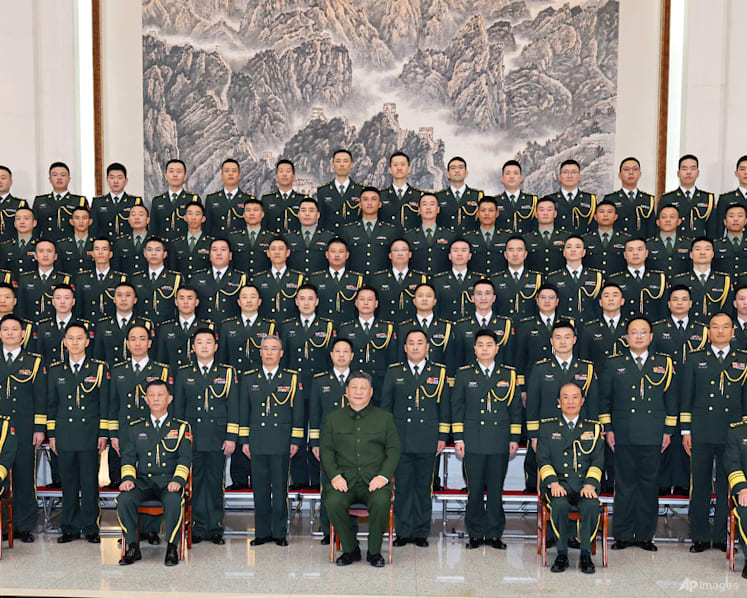
Thompson noted that Xi’s rhetoric in recent years has increasingly stressed struggle and resilience in the face of perceived threats.
I think his rhetoric has gotten increasingly dire regarding his analysis of the security situation facing the party. His rhetoric has become steadily more militarised over the last 10 years,” he said.
“So I suspect the budget for both the internal security for the public security ministry and the People's Armed Police as well as the People's Liberation Army, will increase because they see growing threats against the party.”
China does not provide a consolidated breakdown of overall security-related spending across the PLA, the People’s Armed Police and public security organs, making it difficult to gauge shifts in total internal and external security allocations.
MILITARY PURGES
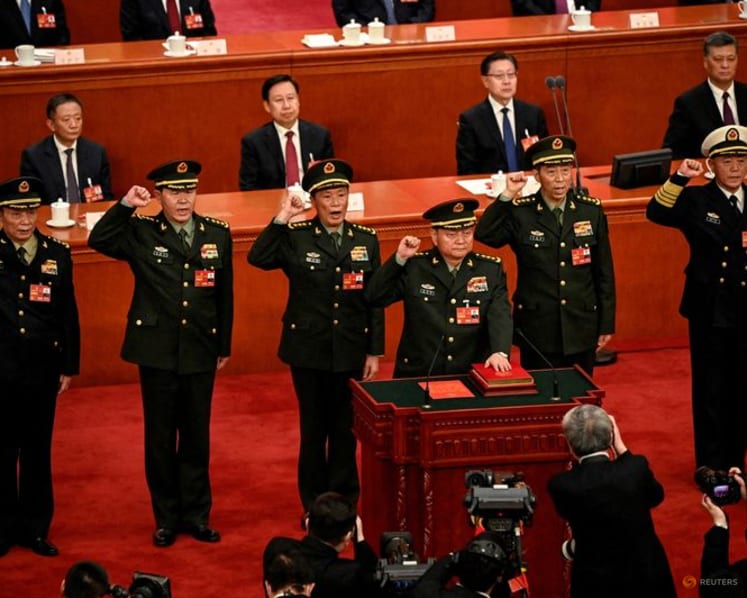
Thursday’s defence budget announcement comes amid one of the most sweeping anti-corruption drives within the PLA in recent years.
The most significant development emerged on Jan 24, when authorities announced that first-ranking CMC vice chairman Zhang Youxia and CMC member Liu Zhenli were being investigated for suspected “serious violations of discipline and law”, a phrase commonly used to denote corruption.
The probe into Zhang is particularly notable, considering his senior position and long-standing ties to Xi, analysts have pointed out.
Leoni from King’s College London said the impact of such purges can cut both ways.
“In the short term, purges disrupt procurement continuity and decision-making. In the longer term, they may reinforce modernisation by tightening Party control,” he said.
“It is also true that these, however, may have an impact on innovation, still in the long term.”
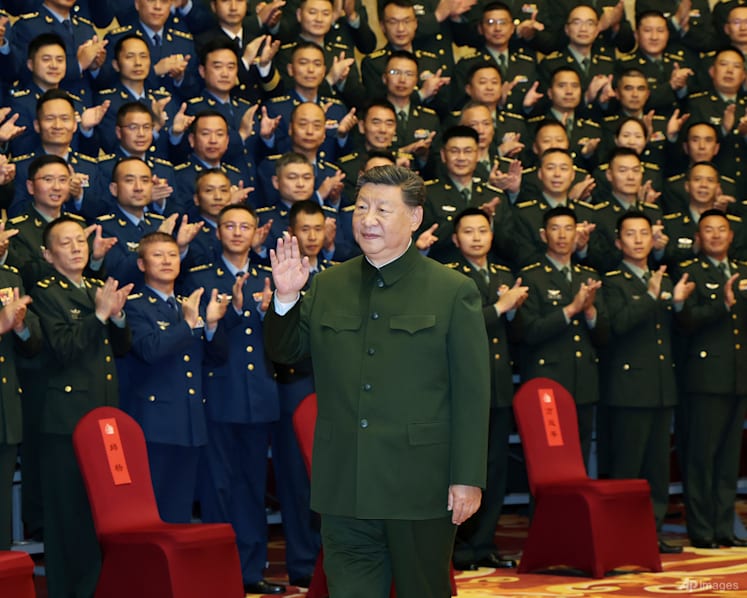
Clarke from Deakin University believes that the purges will likely reinforce China’s modernisation goals overall in the longer term.
While the removal of high-ranking officers may raise questions about short-term effectiveness, he suggested a possible longer-term outcome could be the promotion of better-educated and more professional officers.
“Additionally, from Xi's perspective, the purges are not designed to weaken the PLA but to strengthen its ability to become a 'world-class' military capable of defending the PRC's interests,” he said.
The PLA Daily published an editorial in January framing the anti-graft campaign as essential to building a better military.
“Practice has fully proven that the more the PLA combats corruption, the stronger, purer, and more combat-ready it becomes; the faster corruption is eliminated, the faster the military recovers and strengthens, and the more reliable the guarantee for the development of a strong military becomes,” the editorial said.
RSIS’ Thompson said corruption in China’s armed forces could dilute combat effectiveness, although the exact extent is hard to ascertain.
“There’s internal discussion about the impact of corruption on the effectiveness of the PLA and that certainly seems plausible,” he said.
“Corruption is so ubiquitous - not only personnel choices, but in acquisitions, that's going to affect military capability. It inflates the costs, and likely results in corners being cut by the defence industry,” said Thompson, noting that defence industry entities have also been swept up in investigations.
“So that’s got to have an effect on the quality of the products they produce. But it's hard to measure that in such an opaque system.”
NUS’ Chong, however, said the overall trajectory of the PLA’s modernisation and capability building is unlikely to change dramatically.
“The PLA is a massive machine. Commanders are important, but it does not depend on specific persons even if they are very senior. The scale of the PLA system allows multiple redundancies.”