China’s Two Sessions: 5 things to watch as political gatherings get underway
The tone of the country’s biggest annual political meetings will focus on stability and realism instead of major policy shifts, say analysts.
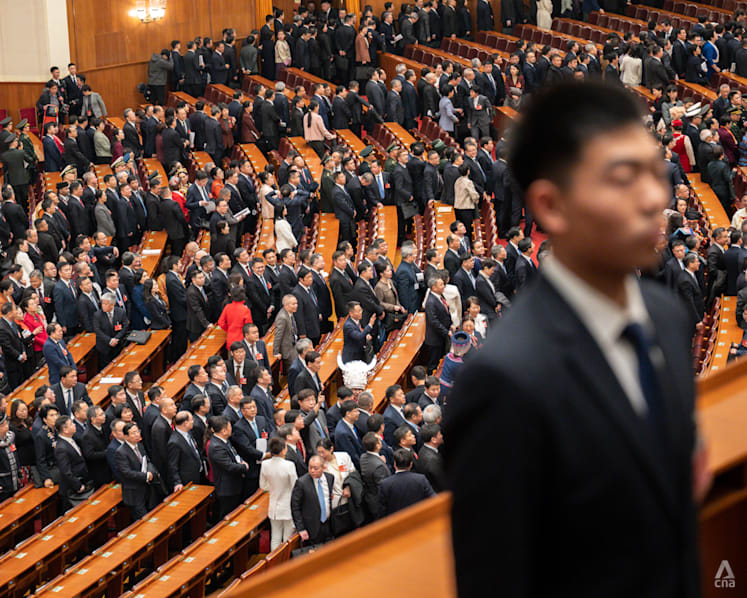
Delegates leaving after the opening session of the National People's Congress (NPC) at the Great Hall of the People in Beijing, China, on Mar 5, 2025. (Photo: CNA/Hu Chushi)

This audio is generated by an AI tool.




BEIJING/SHENZHEN: Whether China lowers its economic growth target for the first time in three years and how it frames the start of its next five-year development blueprint will be closely watched as the country’s most important annual political meetings begin on Wednesday (Mar 4).
The pace of increases in its defence budget and hints on personnel matters will also be among the key watchpoints at the Two Sessions, known in Chinese as lianghui, which set policy priorities for the year ahead in the world’s second-largest economy.
The near-concurrent meetings of China’s top political advisory body, the Chinese People’s Political Consultative Conference (CPPCC), and the national legislature, the National People’s Congress (NPC), will unveil economic targets, fiscal plans and legislative priorities.
But this year carries added significance. It marks the start of China’s 15th Five-Year Plan, which will shape economic strategy through 2030 as policymakers confront slowing growth, weak domestic demand and rising geopolitical tensions.





Analysts say the tone is likely to focus on stability and realism rather than major policy shifts.
“Continuity and consolidation will be the themes of this year's Two Sessions. Beijing will stay the course with Xi’s agenda of slower but more secure growth, focused on technological self-reliance and tighter political control,” Neil Thomas, a fellow on Chinese politics at the Asia Society Policy Institute's Center for China Analysis, told CNA.
Here are five things to watch from the political gatherings.
ECONOMIC GROWTH TARGET
As with previous Two Sessions, the annual growth target will be one of the closest-watched numbers, offering insight into how Beijing is balancing economic pressures against political signalling.
Last year’s growth target was “around 5 per cent”, the same as the previous two years. Although the economy met that mark, logging 5 per cent growth, sluggish consumer spending and a prolonged property downturn weighed on activity.
A trim to this year’s growth target could be on the cards, Thomas said.
“China is likely to lower its growth target to around 4.5 per cent, reflecting the structural reality of slower long-term growth and underscoring Xi Jinping’s prioritisation of economic security and industrial self-reliance,” he said.
Any reduction this year would mark China’s first lowering of its annual gross domestic product (GDP) growth target in three years.
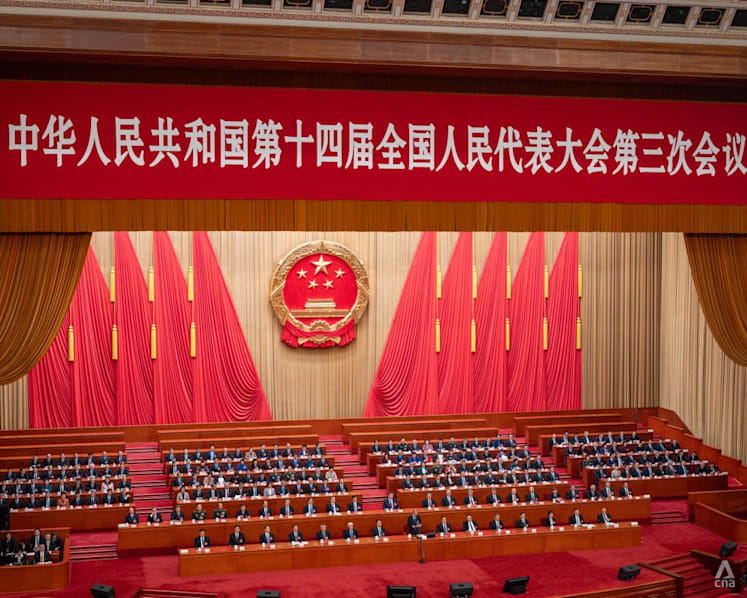
China’s growth targets have historically served as both policy anchors and political signals, with actual performance often exceeding them in earlier decades; in recent years, however, performance has been closer to the target, even at times below the mark.
Recent signals from local governments also point to a potentially lower national target.
Many Chinese provinces have set more modest growth goals for 2026. Of all 31 provincial-level regions, 21 have lowered their goals from the past year, nine have kept them broadly unchanged while only one - Jiangxi - has raised its target.
Some analysts expect Beijing to retain some flexibility.
“A range of 4.5 per cent to 5 per cent is most likely because it’s enough to reach Xi’s goal to double China’s GDP by 2035 from 2020 levels,” Lin Han-Shen, China director at advisory firm The Asia Group, told CNA.
“Beijing also understands that ‘around 5 per cent’ has become a signalling device - about confidence as much as growth.”
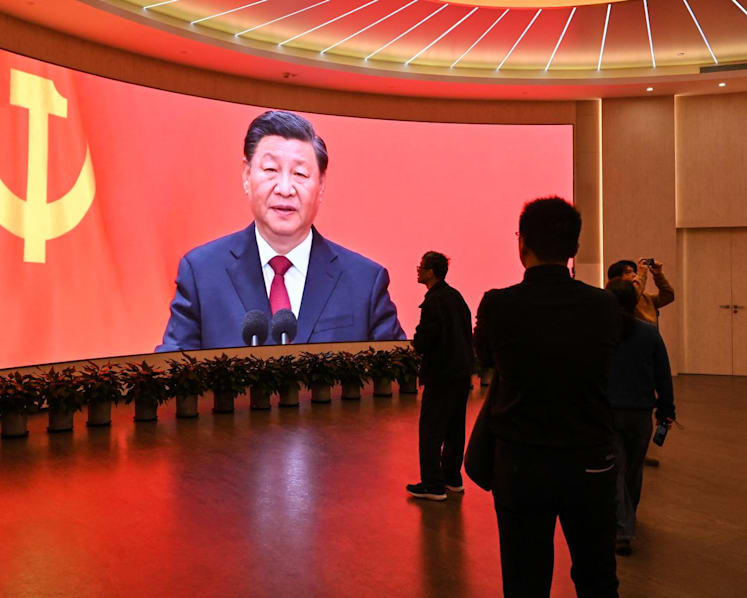
Chinese economists pointed to employment stability and managing expectations as key considerations in setting the target.
Dong Ximiao, chief researcher at Merchants Union Consumer Finance, likewise sees it as a “more likely scenario” for China to set its growth target within a “more flexible range” of between 4.5 and 5 per cent.
Setting a more flexible target would not necessarily signal weaker policy ambition, he added.
“Setting the target above 4.5 per cent in the opening year of the 15th Five-Year Plan would not be low. It would create space for economic reforms and high-quality development, shifting the policy focus from speed first to quality first.”
Tian Xuan, a Boya Distinguished Professor of Finance at Peking University (PKU), said a stable growth target would help anchor confidence in the opening year of a new planning cycle.
“China’s GDP growth target for 2026 will most likely be set between 4.5 per cent and 5 per cent, with efforts to achieve around 5 per cent. The likelihood of lowering it to 4.5 per cent is relatively small,” he told CNA.
At the same time, analysts said the figure matters less as a precise forecast than as a statement of policy intent.
In a Feb 27 meeting, China’s Politburo stressed the need for more proactive and effective economic policies, and better policy coordination, state news agency Xinhua reported.
The Politburo called for continuing a more proactive fiscal policy and a moderately accommodative monetary policy. It also discussed efforts to stabilise employment, enterprises and markets, as well as building a robust domestic market, Xinhua reported.
Tracking which sectors receive priority support will be key, said Thomas from the Asia Society Policy Institute.
Meanwhile, The Asia Group’s Lin said investors and markets would pay more attention to fiscal support and policy follow-through than the headline number itself.
“The bigger risk for sentiment would be keeping 5 per cent without clearly expanding policy support. Investors care more about the policy mix than the exact number,” he said.
TECHNOLOGICAL SELF-RELIANCE
China’s push for technological self-reliance is expected to remain central to its economic agenda this year, especially as geopolitical competition and export controls reshape global supply chains.
The United States has tightened export controls on advanced semiconductors and chipmaking equipment in recent years to limit China’s access to critical technologies, while lobbying allies to do the same.
These restrictions have accelerated Beijing’s push for domestic innovation and self-reliance, which policymakers see as crucial for both long-term growth and national security.
PKU’s Tian expects innovation priorities to be further elevated under the 15th Five-Year Plan (2026-2030), which is set to be formally approved at the upcoming Two Sessions.
“My main focus for the 15th Five-Year Plan is the pursuit of high-level technological self-reliance and the accelerated development of ‘new quality productive forces’,” he said, referring to the term coined by Xi in 2023 that has since become central to China’s economic strategy.
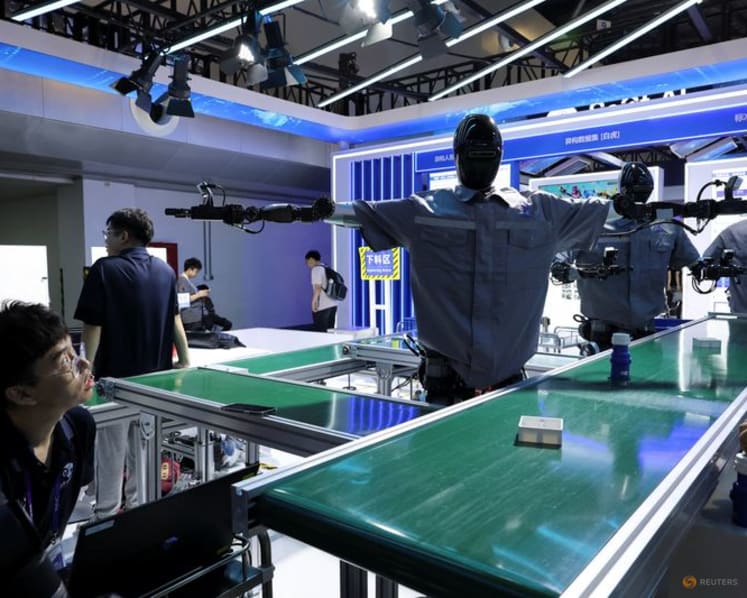

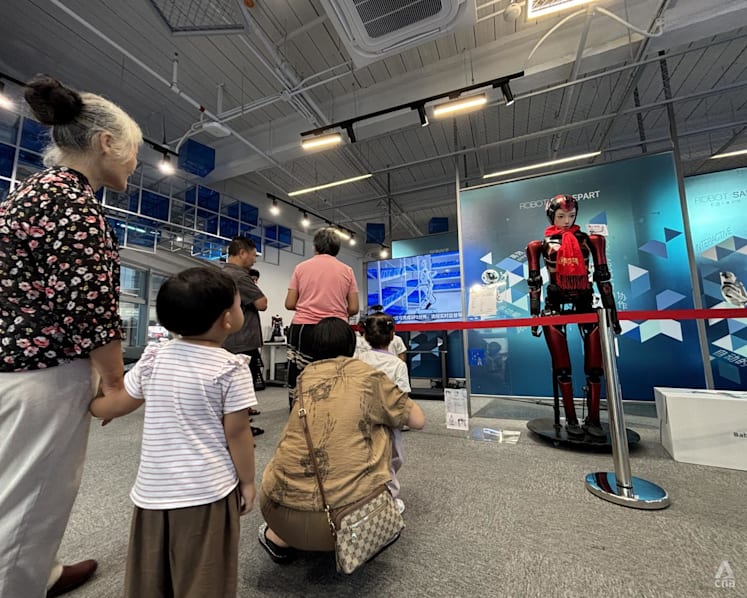
Tian added that policymakers are expected to prioritise breakthrough technologies and accelerate the translation of research into industrial applications.
“The country is concentrating resources to overcome bottlenecks in areas such as chips, high-end equipment, new materials and biomedicine, while also laying out frontier industries including artificial intelligence, quantum information, 6G and brain science.”
Analysts said technology policy is increasingly tied to Beijing’s broader goal of balancing economic development with security in a more uncertain global environment, with financial resources expected to flow toward priority industries.
The Asia Group’s Lin said policy language would provide clues about how Beijing is responding to Western restrictions.
“Look for references to supply chain security, AI, and advanced manufacturing. The emphasis will reveal how Beijing is adjusting its response to US and EU controls.”
The role of private companies will also be under scrutiny, particularly after years of regulatory tightening in the technology sector. One key question is whether policymakers signal greater support and predictability for businesses.
A point to watch out for is “concrete language” on legal protections, financing access and regulatory predictability, Lin said.
HOUSEHOLD VS INDUSTRIAL SUPPORT
Another key point to watch is whether Beijing will prioritise boosting household demand or continue focusing on industrial investment and supply-side upgrading, analysts said.
Officials have already rolled out measures such as consumer subsidies and trade-in programmes for household goods to encourage spending, but economists have said stronger income support and social welfare reforms are needed to drive sustained demand.
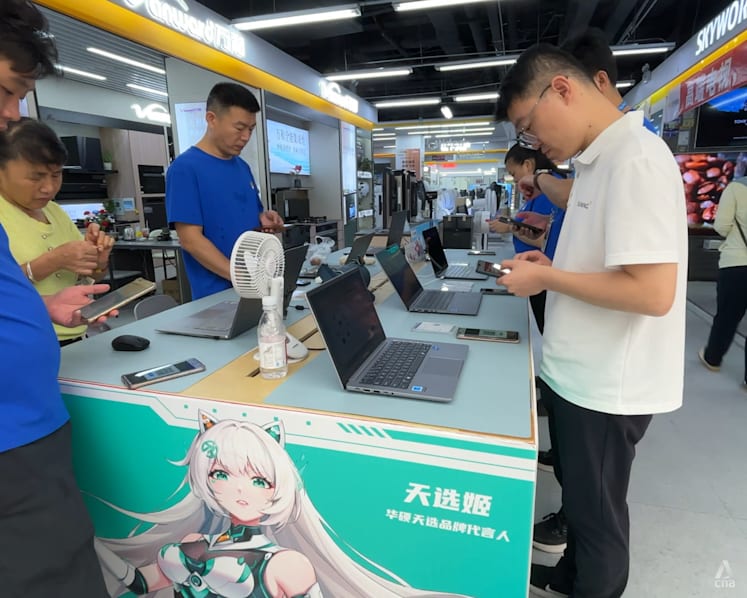
Analysts believe the answer matters not only for China’s recovery but also for global trade dynamics, analysts said, as stronger consumption could support imports while continued industrial expansion may intensify competition in export markets.
Thomas from the Asia Society Policy Institute said a key watchpoint is “whether Beijing introduces meaningful measures to boost household consumption”.
The Asia Group’s Lin said investors would be closely analysing the balance between consumption and industrial policy language.
“How often does ‘boosting consumption’ appear compared to talk of ‘new productive forces’? The balance tells you whether China is serious about shifting toward consumers or only doubling down on industry.”
Dong from Merchants Union Consumer Finance said policies to boost consumption and expand domestic demand would likely continue, highlighting possible efforts to “further optimise” large-scale equipment upgrades and consumer trade-in programmes.
Increasing incomes and reducing household burdens will be key to sustaining demand, he said, adding that policymakers would also seek to strengthen social protections in tandem.
Chinese policy experts said the government may place greater emphasis on social spending and support for households.
Tang Dajie, a senior researcher with the China Enterprise Institute (CEI), said policymakers could shift more resources towards people-centred investment such as education, healthcare and income support.
He pointed to signals from the agenda-setting Central Economic Work Conference, held in December, which proposed “closely combining investment in things with investment in people”.
“In addition to promoting employment and developing the silver economy, I believe social security reform will be a major highlight,” Tang told CNA.
PROPERTY RISKS AND LOCAL DEBT
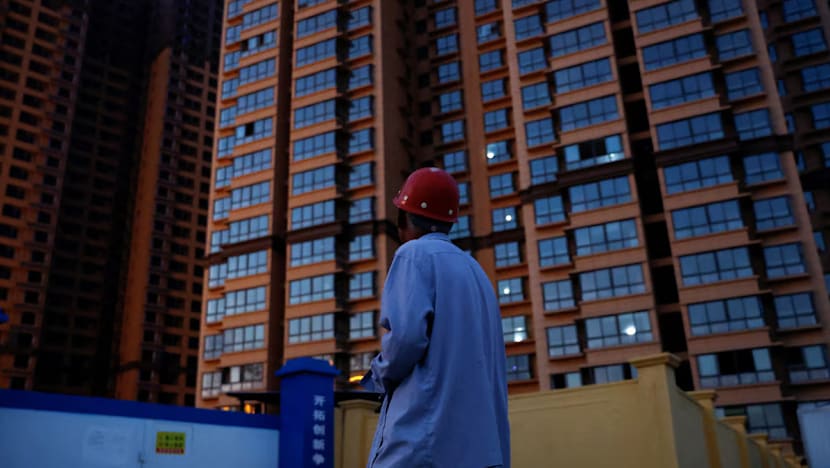
Beyond headline growth, financial stability risks - particularly in the property sector and local government debt - remain a major concern for investors.
Analysts said the key signal will be whether Beijing shows stronger central government backing to contain systemic risks.
Lin from The Asia Group said markets would focus closely on policy wording.
“Clearer central government backstopping for property or local government financing vehicles would signal a serious move to ring-fence systemic risk, not just manage it.”
Any shift in fiscal arrangements between central and local governments could also be significant in the longer term, said analysts.
Thomas from the Asia Society Policy Institute said the new five-year plan could include incentives for local governments to support consumption more directly.
“A key watchpoint is whether Beijing shifts more fiscal power to local governments and incentivises them to promote consumption.”
China’s property sector has been in a prolonged downturn since peaking in 2021, with falling sales, weak prices and developer distress weighing on growth.
The slump has also strained local government finances because land sales, historically a major source of revenue, have fallen sharply, increasing borrowing pressure and linking housing risks closely with local debt concerns.
At the same time, economists note that structural adjustments in local finance could be complex and politically sensitive.
CEI’s Tang said any move to lower growth targets would require broad fiscal recalibration.
“Lowering the growth target would require reasonable adjustments to fiscal revenues and expenditures, including taxation, government bonds, local debt, monetary policy and general public budgets,” he said.
“For an economy with strong elements of planned coordination, this would be a major undertaking.”
THE DEFENCE BUDGET
Also sure to be closely tracked is how much China sets aside for defence as it presses ahead with military modernisation amid tensions across the Taiwan Strait and broader rivalry with the United States.
The headline figure is typically unveiled when the Chinese premier delivers the government work report at the NPC’s opening session.
Last year, China announced a 7.2 per cent hike in its defence budget to 1.78 trillion yuan (US$260 billion), keeping pace with its 2024 increase.
Analysts CNA spoke with were mixed on where the figure may land this year.
Some expect the topline to remain broadly in line with recent trends, reflecting economic headwinds rather than any sharp shift in military ambition.
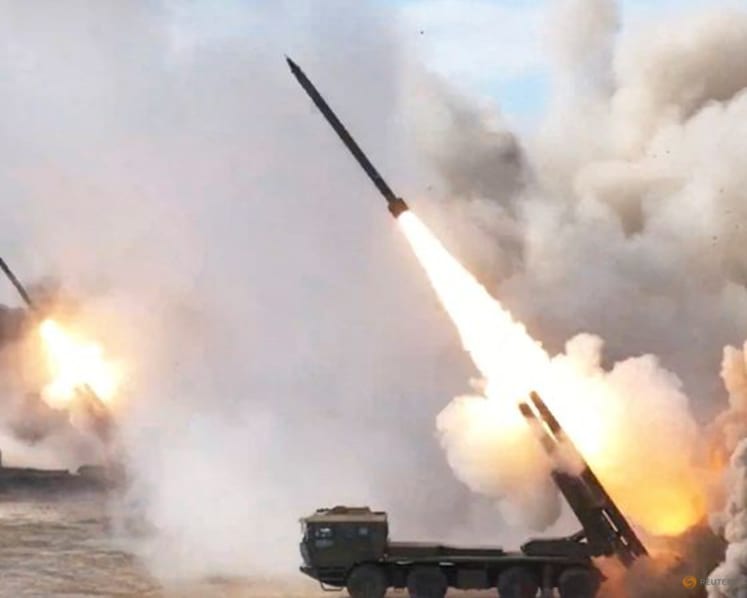
Zeno Leoni, a lecturer in defence studies at King’s College London, said China’s own planning logic makes a dramatic spike unlikely.
“China's strategic documents kind of impose a defence budget growth that is appropriate compared to GDP growth. With the estimates for GDP growth recently revised slightly downwards, it is unlikely that we will see unusual or noteworthy increases,” Zeno Leoni, a lecturer in defence studies at King’s College London, told CNA.
Michael Clarke, an associate professor at Deakin University’s Centre for Future Defence and National Security, expects a modest increase.
“There are a couple of reasons for this. First, the trend over the past decade has been for yearly nominal increases in the defence budget in the single digits,” he told CNA. Last year’s defence budget was the 10th straight year of single-digit growth.
“One would expect the budget allocations for equipment and personnel - consistently the biggest shares of the defence budget over time - to (also) grow to an extent,” he added.
Drew Thompson, a senior fellow at the S Rajaratnam School of International Studies (RSIS), does not expect the budget to shrink in the current climate, though he cautioned against over-interpreting the headline number.
“What China announces and what it does doesn't always align. So I don't think the announced budget is that significant, especially considering the estimates of the actual spending can be almost double in some years,” he told CNA.
“So, whether it rises or declines, that's a political choice, rather than an indication of actual capability development in the future.”
Even so, China’s long-term trajectory remains clear, noted Thompson.
“China's military modernisation over the last 25 years is the largest the world has seen since World War II. (And) I don't see any indication that they are going to slack off,” he said.
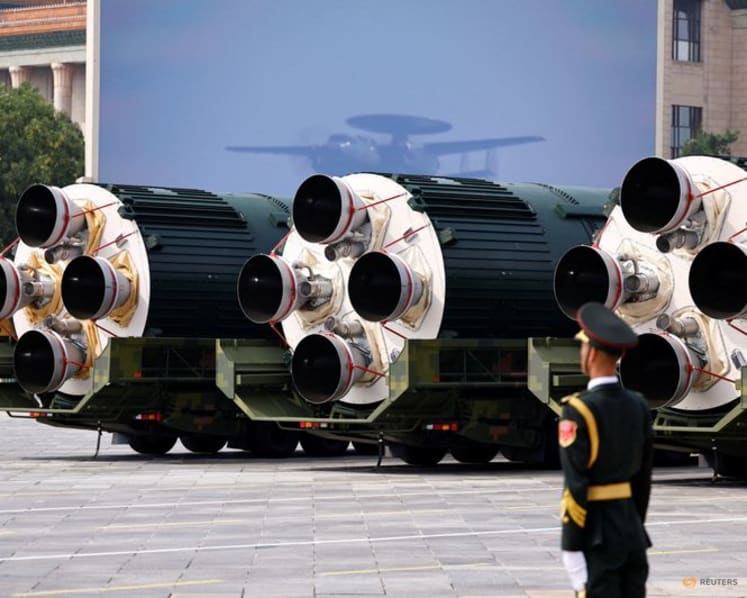
Analysts said the defence budget alone will not lay bare Beijing’s priorities, highlighting how close attention will be paid on how defence and security are framed in the government work report and related policy documents.
As for whether recent high-profile purges in the upper echelons of the People’s Liberation Army (PLA) could affect defence priorities, Thompson sees little evidence of disruption.
“The purges have been a feature of Xi since 2012 and we have not seen China's military modernisation slow in the last 15 years. We have not seen operations against Taiwan degrade significantly,” he said.
“There’s actually not much indication that the high-level purges of officials, as well as all the mid-level officials … (are) slowing (military) acquisitions, defence modernisation.”
PERSONNEL AND LOYALTY SIGNALS
Beyond topline figures, analysts said it is also worth watching for personnel movements and loyalty signals at this year’s Two Sessions as a sweeping anti-corruption drive grinds on, even if few expect dramatic surprises.
One of the most notable developments in the past few weeks was the announcement on Jan 24 that Central Military Commission (CMC) first-ranking vice chairman Zhang Youxia and CMC member Liu Zhenli had been placed under investigation.
Authorities said they were being probed over suspected "serious violations of discipline and law", a common euphemism for corruption.
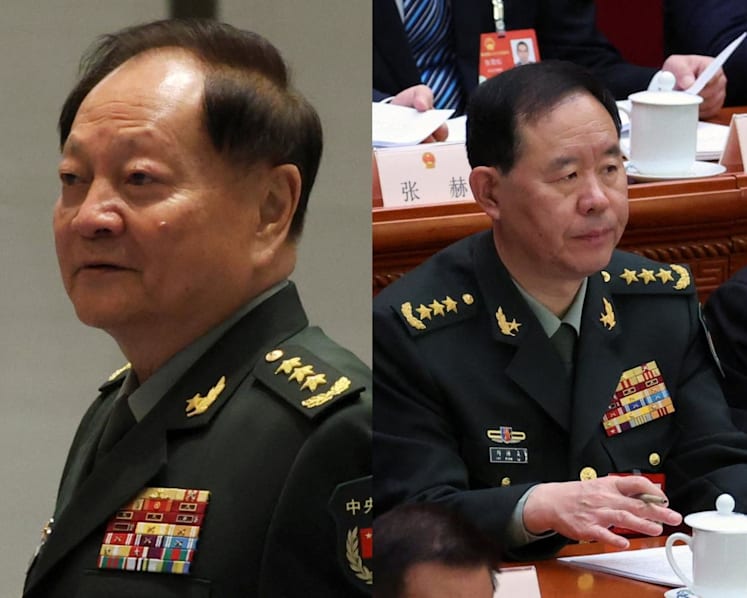
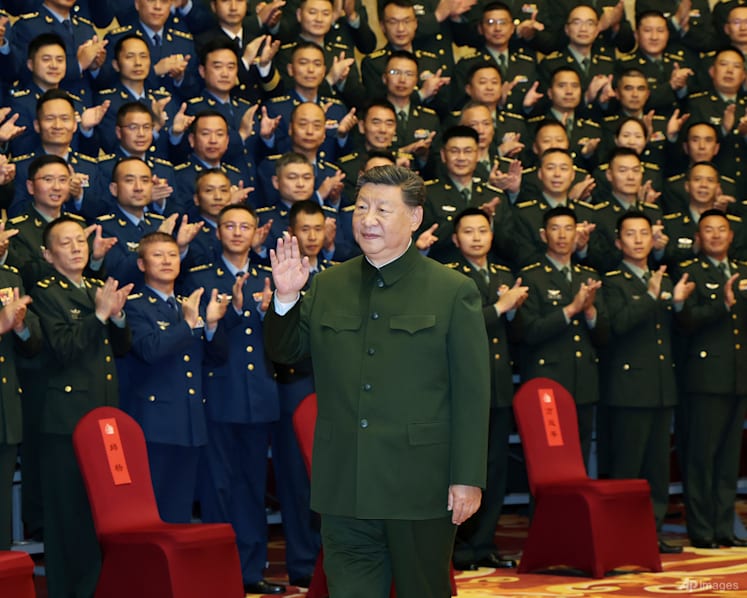
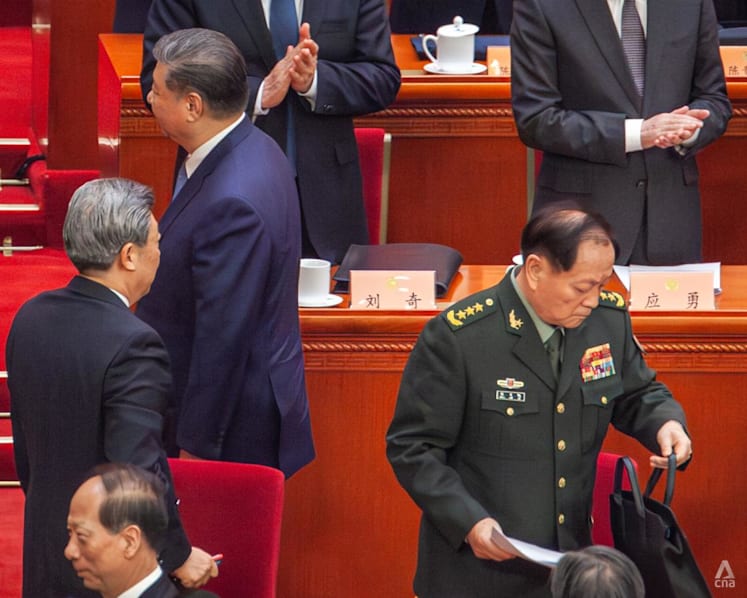
Just last week, the NPC Standing Committee closed its Feb 26 meeting by voting to revoke the delegate status of 19 people, including nine from the PLA.
The PLA removals included five full generals - former army commander Li Qiaoming, former navy commander Shen Jinlong, former navy political commissar Qin Shengxiang, former air force political commissar Yu Zhongfu and former Information Support Force political commissar Li Wei.
Zhang and Liu, despite being under probe, remain on the list of NPC delegates.
Even so, experts caution against expecting the Two Sessions to become the stage for sweeping military reshuffles.
The Two Sessions are unlikely to be used to announce major military changes, as the political focus will remain elsewhere, said Leoni of King’s College London.
“The (meetings) are unlikely to be used to announce major military reshuffles, because the focus will be mostly economic,” he said, adding that over the past decade, significant personnel shifts in the armed forces have not strictly followed the NPC calendar.
“Any formal appointments would likely confirm decisions already made internally rather than introduce unexpected figures or signal a new strategic direction.”
Instead, Leoni suggested observers look for subtler cues - unexplained absences of PLA delegates, shifts in seating arrangements, or repeated references to discipline and political rectification.
Michael Clarke of Deakin University said the composition of the PLA delegation to the Two Sessions may offer insights, considering the extent of the removals and resignations.
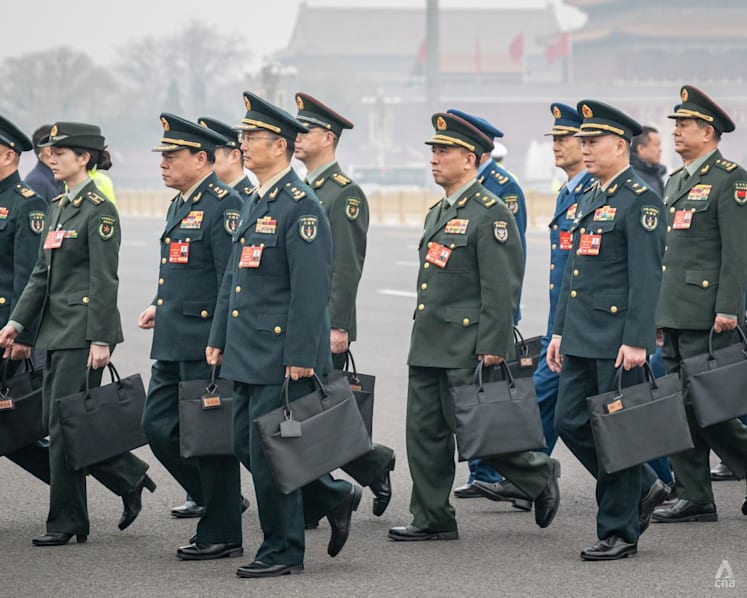
He said that the ranks, service backgrounds and career tracks of those who do attend could signal where emphasis lies in Xi’s ongoing efforts to reform and cleanse the PLA - whether in operational competence or political reliability and loyalty.
Clarke expects military-related messaging to consolidate the current narrative that the purges stem from corruption or subversion of the “chairman responsibility system”, with language emphasising discipline and professionalism.
The chairman responsibility system refers to the principle that ultimate command authority over the PLA rests with the CMC chairman - currently Xi - reinforcing his direct control over the armed forces and requiring absolute loyalty to that chain of command.
He also pointed to past examples, such as PLA delegates in 2025 calling for more civilian resources in emerging technologies to support military development and war readiness.
Whether similar proposals surface again, and what Xi says if he meets the PLA delegation as he has in previous years, could offer signals of his confidence in his control of the armed forces.
For RSIS’ Thompson, the broader tone is unlikely to deviate from continuity.
“Xi Jinping doesn't want surprises in a high-level political meeting. So I think the whole goal is to instill confidence in his own party, in his own government, in his own military,” he said.
“It's to avoid a crisis of confidence over the economy … so surprises are definitely not on the agenda.”