analysis East Asia
‘Reset’ or ‘calculated stabilisation’? Why ties between China and the Philippines appear to be warming
After nearly four years of bilateral tensions, Beijing and Manila have signalled an intent to improve ties, but analysts say domestic and geopolitical pressures could limit how long the thaw lasts.

This audio is generated by an AI tool.


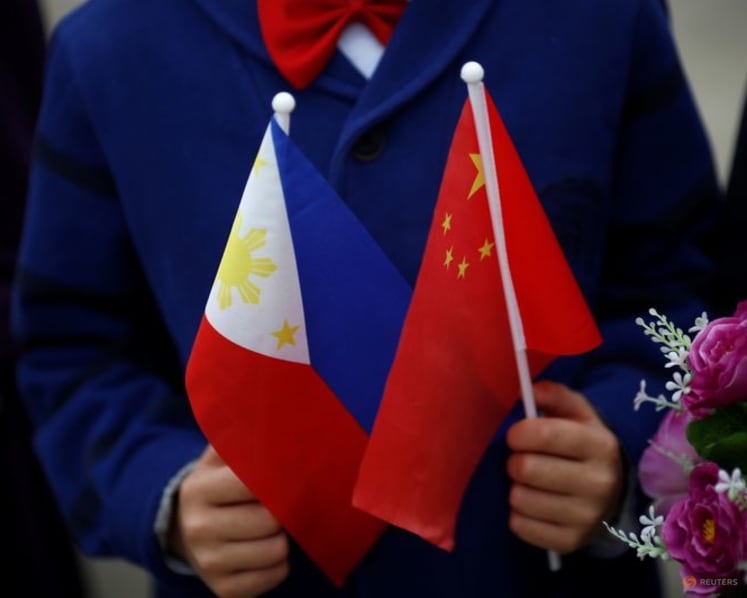
BEIJING: Signs of a thaw between China and the Philippines have recently emerged after nearly four years of troubled ties under Philippine President Ferdinand Marcos Jr, marked by repeated clashes in the South China Sea and Manila’s deepening security links with Washington.
But analysts caution that this does not signal a reset of Sino-Philippines relations.
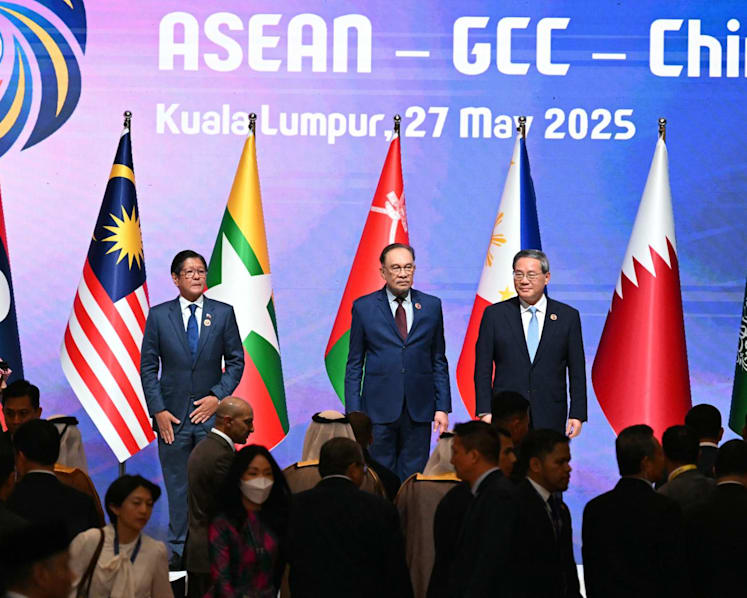
They add that instead, what is taking shape is a strategic effort by both sides to temporarily lower tensions driven less by trust than by necessity - amid energy supply shocks, geopolitical uncertainty and diplomatic pressure arising from the Philippines’ chairmanship of the Association of Southeast Asian Nations (ASEAN) this year.
“It is a calculated stabilisation … to try to de-escalate and find a ‘modus vivendi’ on key issues of dispute,” said Malcolm Davis, a senior analyst in defence strategy and national security at the Australian Strategic Policy Institute (ASPI), using a Latin term that refers to a workable arrangement to manage differences.





That raises a deeper question of whether this delicate balancing act can hold, said experts, or whether entrenched disputes, domestic constraints and great power competition will ultimately limit it to a fragile, tactical pause.
MANILA’S CALCULUS
Under former president Rodrigo Duterte, warmer ties with Beijing coincided with more strained relations with Washington, creating space for China to adopt a less confrontational approach, analysts noted.
That dynamic shifted after Marcos took office in June 2022, with Manila adopting a firmer stance on the South China Sea while deepening security cooperation with the United States.
Sino-Philippines ties deteriorated further from 2023, when the Philippines expanded defence access for US forces and confrontations with China around disputed features such as Second Thomas Shoal became more frequent and dangerous.
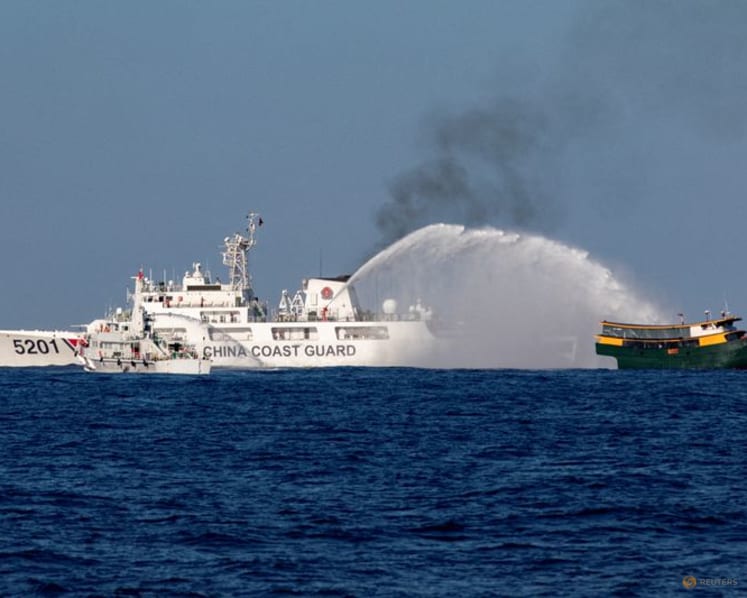
Against this backdrop of long-standing disputes in the South China Sea, where competing claims and differing interpretations of maritime rights continue to drive friction, Manila and Beijing have in recent months moved to reopen dialogue, revive discussions on joint energy exploration and tone down rhetoric after repeated run-ins at sea.
In an interview with Bloomberg published on Mar 25, Marcos said a “reset” in ties with China was “certainly going to happen”, adding that it was “not an option”.
He pointed to global geopolitical uncertainty - including tensions in the Middle East - as shaping the Philippines’ approach, including renewed openness to discussions on joint energy development.
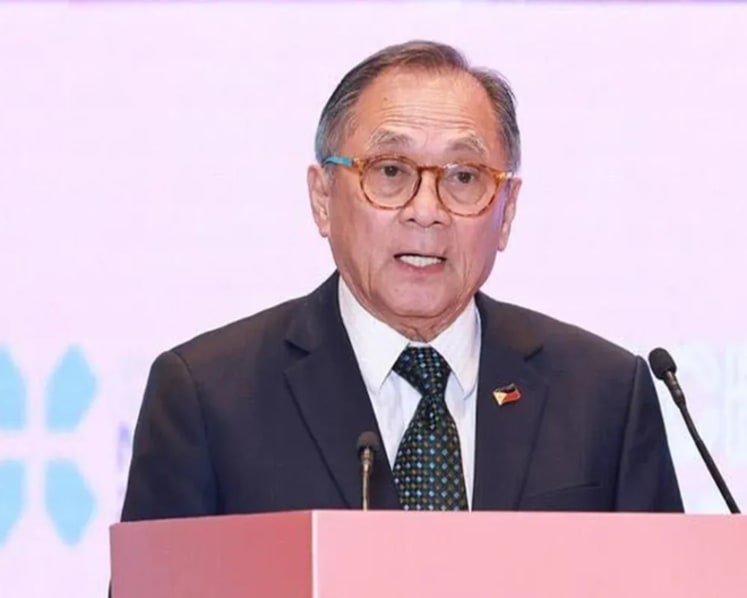
That message has been echoed by Philippine Ambassador to China Jaime FlorCruz, who said in an interview with the South China Morning Post published on Apr 22 that both sides are taking “baby steps” towards a “new equilibrium”.
He described these efforts as gradual moves towards a more stable and predictable relationship, while stressing that cooperation should not come at the expense of Manila’s position in the South China Sea.
On the diplomatic front, both sides have resumed high-level engagement.
At talks under the Bilateral Consultation Mechanism (BCM) in late March, senior officials agreed to strengthen communication, better manage maritime tensions, deepen practical cooperation and push ahead with discussions between ASEAN and China on a Code of Conduct for the South China Sea.
The code seeks to establish rules to manage disputes in the contested waters, with talks on a formal framework advancing since 2017, though no binding deadline has been set.
China has cast the resumption of high-level engagement under the BCM as a return to dialogue and consultation rather than confrontation.
After the talks, its foreign ministry said it hoped the Philippines would “return to the right track of handling maritime issues through dialogue and consultation” and help create conditions for more stable bilateral ties.
TIMELINE OF RECENT CHINA-PHILIPPINES RELATIONS
June 30, 2022 - Ferdinand Marcos Jr is sworn in as Philippine president, and within months, he started steering Manila closer to Washington, reversing moves made by his predecessor Rodrigo Duterte.
February 2023 - The Philippines and the US announce plans to expand the Enhanced Defense Cooperation Agreement, granting American forces access to four additional military sites in the country.
Aug 5, 2023 - China’s Coast Guard vessels use water cannon to block a Philippine resupply mission to Second Thomas Shoal in the South China Sea, marking a sharp flare-up in maritime tensions.
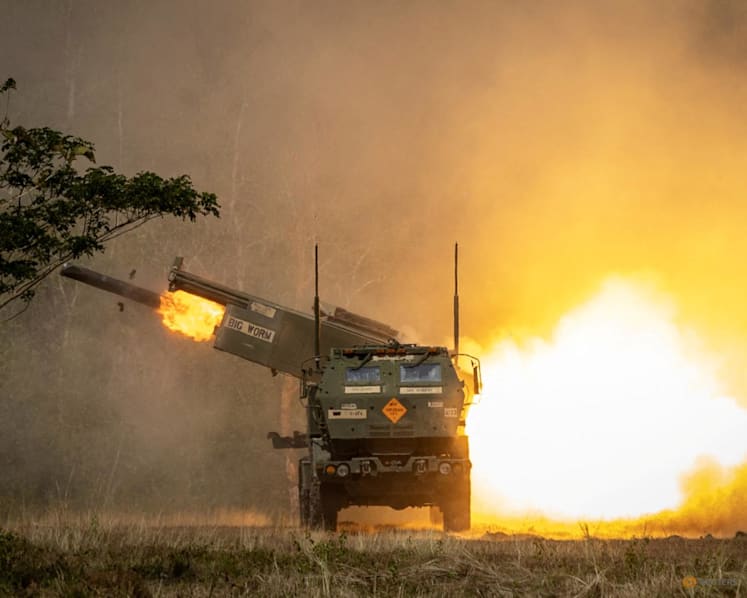
Apr 11, 2024 - The US deploys its Typhon missile system in Northern Luzon for Exercise Salaknib 24, the system’s first deployment in the Philippines.
June 17, 2024 - A major confrontation near Second Thomas Shoal injures Filipino personnel, including a Philippine sailor who lost a thumb.
July 2024 - Manila and Beijing reach a provisional arrangement on resupply missions to Filipino troops stationed at Second Thomas Shoal.
2025 - No single defining flashpoint, but maritime tensions remain elevated, with repeated stand-offs and resupply missions at Second Thomas Shoal underscoring the continued friction between Manila and Beijing.
Jan 29, 2026 - Chinese and Philippine officials hold a bilateral dialogue on maritime affairs in Cebu, agreeing to maintain communication through diplomatic channels.
Mar 25, 2026 - Marcos’ Bloomberg interview is published, with the Philippine leader signalling a reset in ties with China and renewed openness to energy talks.
Mar 27-28, 2026 - China and the Philippines hold Foreign Ministry consultations and the 11th Bilateral Consultation Mechanism meeting in Quanzhou, discussing maritime tensions, practical cooperation and the South China Sea Code of Conduct.
Apr 22, 2026 - Philippine Ambassador to China Jaime FlorCruz tells the South China Morning Post both sides are taking “baby steps” towards a “new equilibrium” in ties.
Analysts said the shift is being driven as much by external shocks as by strategic calculation.
Two key factors are shaping Manila’s recalibration, said Jose Miguelito Enriquez, an associate research fellow for multilateralism studies at the S Rajaratnam School of International Studies (RSIS) in Singapore.
The first, he said, is the fallout from the Middle East conflict, which has exposed the Philippines’ vulnerability to energy supply disruptions and triggered domestic pressures, from inflation to transport unrest.
The Philippines imports most of its oil, much of it tied to global supply routes affected by the Iran war and tensions in the Middle East, leaving it exposed to price volatility and supply shocks.
“The possibility of renewed talks on joint oil exploration with Beijing… has generated the most headlines,” said Enriquez, noting that the Philippines’ energy crisis has forced Manila to reassess its options.
At the centre of this is the long-running idea of joint oil and gas development in the disputed waters of the South China Sea - a proposal that has been stalled for years due to sovereignty sensitivities and legal constraints.
These include a Philippine Supreme Court ruling in January 2023 that struck down an earlier trilateral agreement to conduct seismic surveys, or energy exploration, between the Philippines, China and Vietnam as unconstitutional.
The second factor, said Enriquez, is the Philippines’ role as ASEAN chair this year, with Manila under pressure to deliver progress on the long-delayed Code of Conduct for the South China Sea.
Lowering tensions is seen as necessary to “open up some breathing space for constructive dialogue and productive negotiation”, Enriquez said, particularly as negotiators grapple with longstanding sticking points such as the code’s legal status, scope and enforcement.
More broadly, the Philippines’ recalibration reflects how global uncertainty is shaping policymaking in Manila, Enriquez added.
“Geopolitical and geoeconomic uncertainties are fundamentally affecting the fabric of the international order,” he said, adding that the Philippines “has no choice but to address and adapt to those changes”.
BEIJING’S CALCULATIONS
If Manila’s recalibration is driven by necessity, analysts said Beijing’s response is shaped by a mix of strategic intent and risk management.
China has not shifted its core position on the South China Sea, and continues to pursue sweeping territorial claims and control over resources in the disputed waters, said Davis of ASPI.
“China has not walked away from its ‘nine-dash line’… and its claim to control virtually the entirety of the South China Sea,” he said.
The so-called nine-dash line refers to a claim shown on Chinese maps that covers most of the South China Sea and overlaps with the claims of other coastal states.
Yet at the same time, Beijing has an interest in preventing tensions from spiralling, particularly as regional dynamics grow more complex, added Davis.
“There is a case for risk management leading to a temporary de-escalation,” he said, noting that China is wary of pushing the Philippines further into Washington’s security orbit.
The temporary deployment of US Typhon missile systems in the Philippines sent a “strong warning signal” to Beijing, he added, and may have reinforced the need to stabilise ties rather than risk escalation.
The Typhon system - a land-based US missile platform capable of launching long-range precision strikes - was first deployed in the Philippines on Apr 11, 2024, as part of Exercise Salaknib 24, with US officials describing the deployment as temporary, though no end date has been publicly specified.
The deployment follows the expansion of the Enhanced Defense Cooperation Agreement (EDCA) in February 2023, when the Philippines granted US forces access to four additional military sites to strengthen deterrence and defence cooperation.
For Beijing, managing ties with Manila is therefore not just about bilateral relations, but about shaping the broader strategic landscape in Southeast Asia, said Ian Seow, a senior analyst in the China Programme at RSIS.
That calculus extends to ongoing negotiations on the Code of Conduct (COC) for the South China Sea, said Seow, adding that the code’s value lies less in resolving tensions than in its signalling function.
“For China, it uses the COC negotiations to demonstrate that it is a responsible great power … thereby helping to deflect criticisms of its assertiveness,” he said, noting that the talks allow Beijing to signal its willingness to engage ASEAN states through dialogue on managing disputes, even as tensions persist.
At the same time, the process provides ASEAN states, including the Philippines, with a platform to engage Beijing diplomatically and manage tensions even as disputes continue, he added.
THE US FACTOR
The role of Washington remains central to how China and the Philippines are calibrating their moves, said analysts.
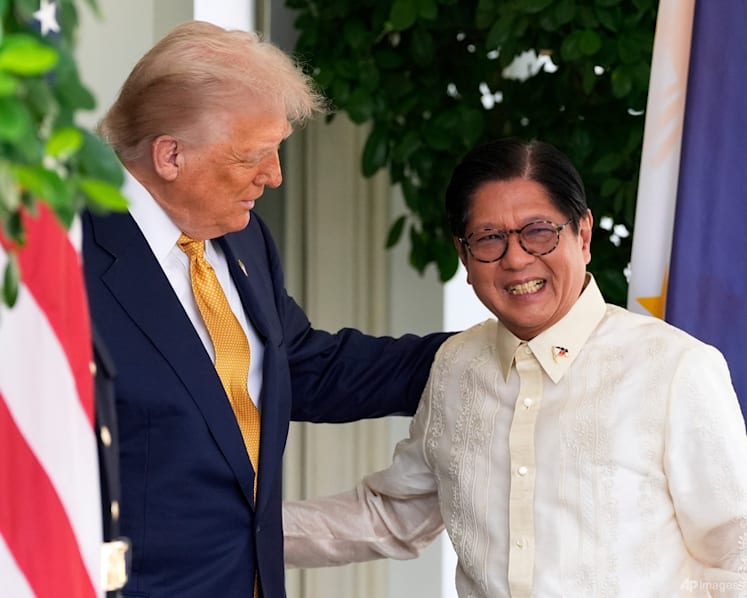
Uncertainty surrounding US policy under President Donald Trump is shaping Manila’s thinking, with leaders closely watching how Washington responds to crises elsewhere, said Davis.
“The ‘Trump factor’ certainly has to play a role,” he said, noting that Manila will be assessing US responses vis-a-vis Ukraine and NATO, as well as its approach to Taiwan, to gauge “to what extent they can count on a US under Trump”.
How Washington handles the war in Ukraine and its approach to military alliance with Europe via the North Atlantic Treaty Organization - particularly on commitments and burden-sharing - is being closely watched by partners assessing US reliability.
Manila will also be closely watching Washington’s approach to Taiwan, especially how Trump responds to Chinese efforts to push the US away from its long-standing policy of “calculated ambiguity” on the US’ commitment to Taiwan’s defence in exchange for improved Sino-US trade ties, Davis added.
China regards Taiwan as a breakaway province and has not ruled out the use of force to achieve unification.
At the same time, concerns about being reliant on the US and left exposed in a crisis are driving the Philippines to hedge its bets, Davis added.
“Manila doesn’t want to be left in the lurch … so they are mitigating risk through strengthening relations with other partners, and at the same time, seeking to reduce the tension with China,” he said.
As for China, analysts said part of its motivations in dealing with the Philippines stems from a bid to expand its influence at the expense of America’s regional standing.
China has been building its image as a “champion of the Global South” through defence diplomacy, development aid and its role as an increasingly indispensable trading partner, said Joshua Bernard B Espeña, an international relations lecturer at the Polytechnic University of the Philippines.
This underscores Beijing’s push to expand its regional influence at a time of shifting US policies, he added.
“Trump 2.0’s mercurial policies have given a wide opportunity for China … to make itself a viable alternative even to US regional allies on various fronts,” he said.
Analysts said the impact of US-China competition on China-Philippines ties ultimately depends on how it intersects with Manila’s own priorities.
“While the Sino-US competition does influence China’s security thinking in the South China Sea, its impact on China-Philippine dynamics depends largely on the priorities of the Filipino leadership,” said Seow.
The expansion of the EDCA, which allows US access to Philippine bases, and the deployment of US military assets have been viewed by Beijing as a growing security concern, said Seow.
“China perceived this as a threat to its security and reunification with Taiwan,” he said.
In response, China has “adopted a more assertive posture towards territorial disputes with the Philippines in the South China Sea” to express its displeasure with Manila’s closer security ties with Washington, he added.
However, analysts said both sides are now seeking to bring ties back onto a more even keel, driven by wider strategic and economic considerations.
LIMITS TO THE THAW
Even as both sides seek to stabilise ties, analysts cautioned that the current trajectory faces structural limits.
While de-escalation is welcome, the longer-term outlook remains uncertain, said Espeña of the Polytechnic University of the Philippines.
“The future remains bleak for both parties,” he said, adding that China’s strategic direction under President Xi Jinping has been anchored in asserting regional dominance, leaving little room for fundamental compromise.
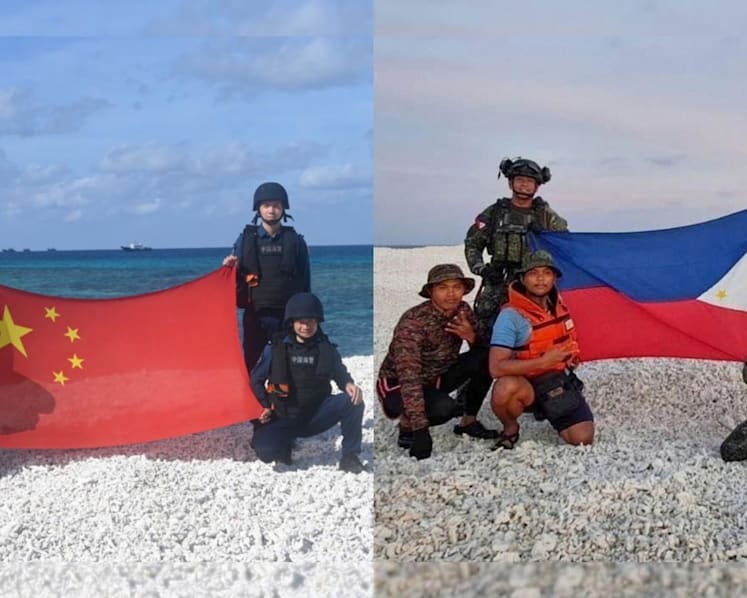
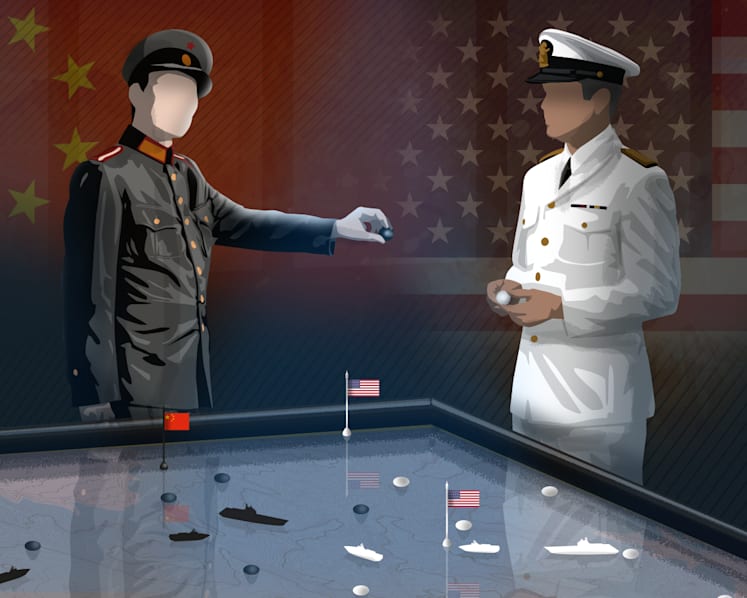
On Sunday, China accused the Philippines of landing personnel on a disputed reef in the South China Sea, as Manila said it would dispatch ships to drive off Chinese vessels it said were conducting research illegally.
China's Coast Guard said it had identified five Philippine personnel who had landed on Sandy Cay, an action Beijing termed "illegal", according to state-run media outlet Global Times.
Manila said last week it had dispatched its coast guard to Sandy Cay after state media reports showed Chinese coast guard personnel arriving on the reef holding a Chinese flag.
Analysts added that domestic dynamics in the Philippines could complicate efforts to sustain a calibrated approach towards ties with China.
Foreign policy may become a tool in domestic political competition ahead of the 2028 presidential elections, Espeña said, with candidates potentially leveraging relations with major powers to their advantage.
“Those who see hedging as the way forward … will not find it as easy as it may seem,” he added.
Analysts said this balancing act itself introduces further uncertainty, particularly as both Beijing and Washington test each other’s resolve from time to time.
Despite its recalibration, Manila is unlikely to shift away from Washington in any fundamental way, said Enriquez.
Even as it lowers tensions with Beijing, the Philippines will continue to pursue defence and economic cooperation with the US, including through ongoing joint military exercises and new initiatives such as efforts to boost its semiconductor industry.
“As long as the US can contribute to boosting the country’s defence posture and economic development, those partnerships will continue to prosper,” he said, adding that any drastic shift could face public resistance.
Legal and constitutional constraints also limit the scope for deeper cooperation, particularly on joint energy development, they added.
Even if both sides are willing to proceed, domestic laws in the Philippines impose strict requirements on foreign participation in resource projects, said Seow.
Previous efforts have already run into difficulties, including the 2023 Supreme Court ruling that struck down an earlier joint seismic undertaking between the Philippines, China and Vietnam as unconstitutional.
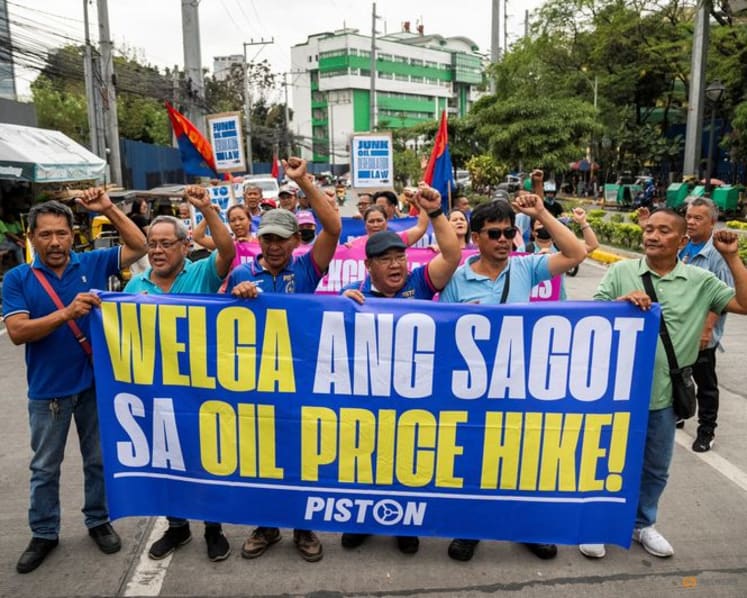
Those constraints underscore the political hurdles facing any attempt to revive joint exploration, analysts said.
Ultimately, the question is whether Manila and Beijing can move beyond managing tensions to addressing underlying differences - or whether the current thaw will remain a temporary pause.
“The Philippines has no choice but to address and adapt,” Enriquez said, but doing so will require navigating constraints that go well beyond diplomacy.
Over the longer term, the current stabilisation may prove difficult to sustain, said Davis, noting that China is unlikely to abandon its “ambitions” in the South China Sea.
Potential flashpoints remain, including the risk of renewed confrontations at sea or attempts by Beijing to test US commitments in the region, he added.
“An ‘incident’ occurring in the South China Sea … could spark things off again.”