Better support urged for Hong Kong’s growing elderly population as more live alone
The number of seniors living alone in the city has jumped by about 43 per cent in five years, raising concerns over loneliness and safety.
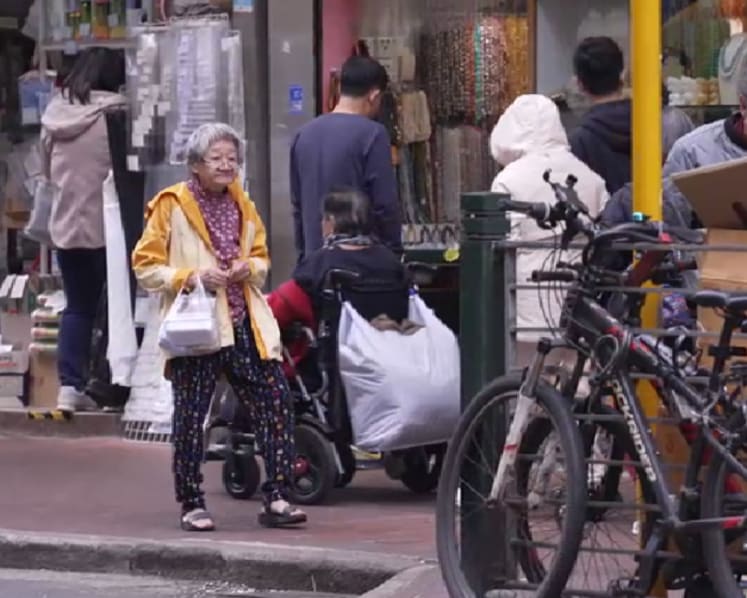
Almost a quarter of Hong Kong's more than 7.5 million residents are aged 65 and above.

This audio is generated by an AI tool.




HONG KONG: On the streets of Hong Kong, a 19-year-old student is on a mission, delivering meal boxes to underprivileged elderly residents.
The teen, who goes by the name Belle, has been doing this for almost a year. She declined to reveal her full name, saying she does not want her friends to know about her efforts.
Initially funded by her own pocket money, she later turned to social media to raise awareness and crowdfund through online donations.
With the additional funding, she now distributes up to 50 meal boxes a day to the city’s vulnerable residents, most of whom live on the streets or make a living collecting cardboard.
But for Belle, the food parcels are simply an opening for her to check in on how they are doing.





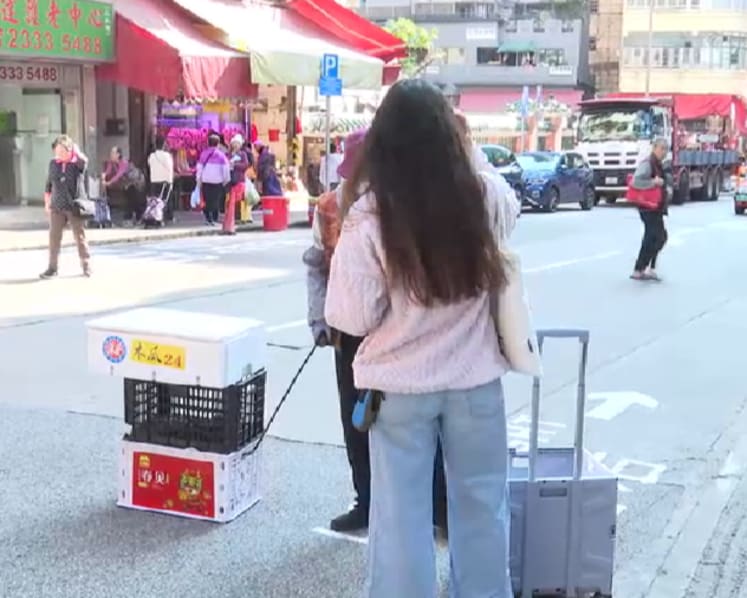
“While I give out these boxes, I also ask them about how they are, how their health is, about their family, or just what they’re doing day to day," she told CNA.
She believes such interactions make a difference.
“These little conversations do help. It makes them happy. It makes them feel like somebody cares about them, especially somebody younger,” she said.
“Some of them do have friends. But I feel they feel very ignored by the younger generation.”
“NO HAPPINESS” LIVING ALONE
Belle’s work underscores a broader challenge confronting the bustling, fast-paced city.
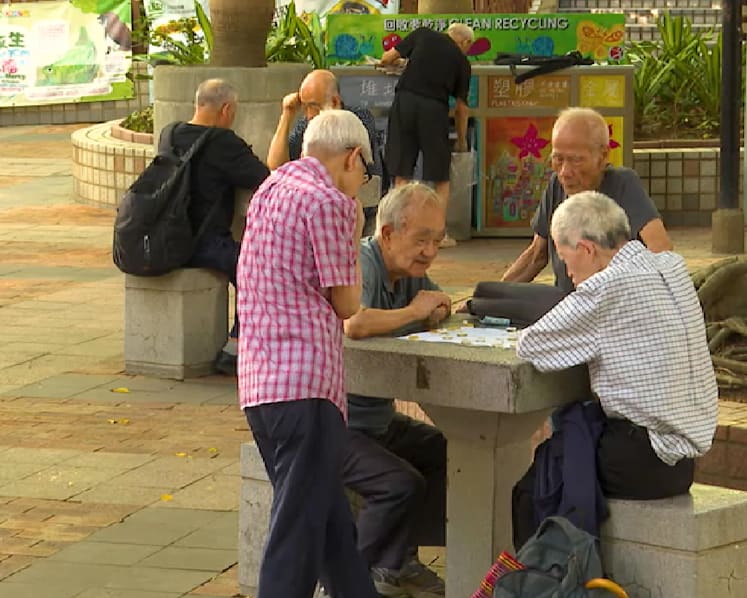
Hong Kong is ageing quickly. Almost a quarter of its more than 7.5 million residents are aged 65 and above.
More seniors are also living alone. According to data provided by the city’s Census and Statistics Department, the number of elderly individuals living alone rose from 173,100 in 2020 to 247,700 as of the third quarter of 2025, approximately a 43 per cent increase over five years.
Grandma Tang, 74, is one such senior. She has been living alone for the past seven years. After her husband died, she could not bear to remain in their flat by herself and eventually moved onto the streets in To Kwa Wan on the Kowloon side of Hong Kong.
She now sleeps under a flyover near where she collects cardboard scraps for recycling, remaining outdoors regardless of weather conditions – even during severe typhoons, she said.
"My health has declined, and I'm experiencing shortness of breath. If I lived in the flat alone, no one would know if something were to happen to me,” she said in Cantonese.
“I don’t want my passing to contaminate the flat, since my husband's passing has already contaminated it … I want to ensure that my daughter can still live there comfortably in the future.”
In traditional Chinese belief, a death inside a home is sometimes seen as bringing misfortune or “contaminating” the space, with some referring to such properties as “haunted houses”.
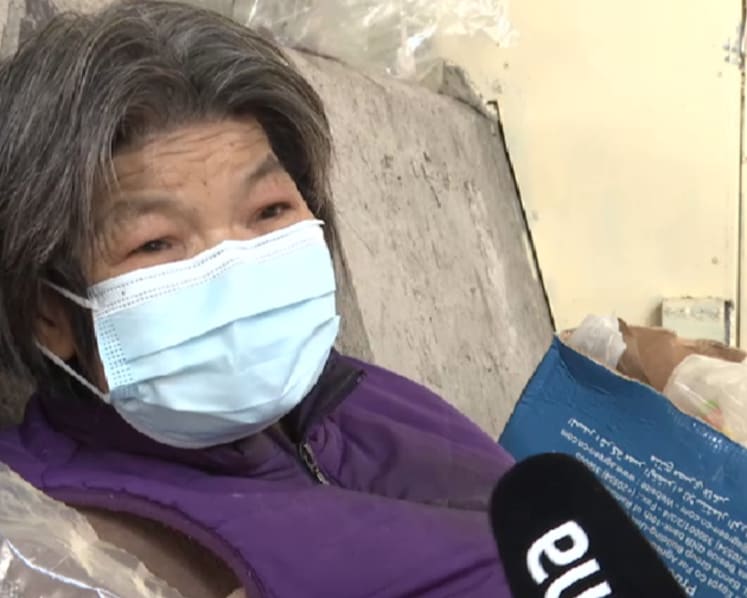
Known affectionately as “cardboard granny”, Grandma Tang collects cardboard scraps for recycling and earns about US$13 a day.
Belle and other residents bring her food, kind words and, at times, much-needed company.
“Oftentimes, volunteers from charities would come visit and chat with me, offering comfort and support,” she said.
“I feel very happy to have someone to chat with. It’s not just about food or materialistic things. Having someone to talk to helps ease my emotions. It’s tough living like this. I spend my days suffering. There is no happiness.”
CALLS FOR MORE COMPREHENSIVE SOLUTIONS
In recent budgets, the Hong Kong government has increased spending on social welfare and distributed more Community Care Service Vouchers for the elderly.
The vouchers let eligible seniors choose from services such as day care, home care, rehabilitation and other community support tailored to their needs.
On Wednesday (Feb 25), Financial Secretary Paul Chan announced in his latest budget that the scheme will be expanded from 4,000 to 16,000 recipients, costing the government HK$1.2 billion (US$153.4 million) a year.
But some social workers say financial support alone is not enough.
"For a long time, support has focused mainly on financial aid. While financial support is important, it's only a shortcut,” said Ivan Lin, community organiser of the Society For Community Organisation, a human rights advocacy group.
“For a substantial, long-term solution to tackle the deeper social issues, we need to implement comprehensive services and policies,” he added.

Lawmaker Bill Tang, who pushed for an elderly-friendly environment in Hong Kong’s Legislative Council last year, said the main concern is how to ensure the safety of elderly residents who live alone.
He noted no one wants their home to become a “trap”, where an accident could happen and no one would know.
Policies have since changed, allowing social workers to better identify units with elderly residents living alone and reach out through home visits and phone check-ins, according to the Social Welfare Department.
At the Society for Community Organisation’s Primary Health Care Centre, for example, elderly residents can also access basic facilities such as free massage chairs and other support services.
The lawmaker said technology could help prevent accidents from going unnoticed.
"It's very easy – just attach a small sensor to the door of each unit. And if a door has not opened within 48 hours, then notify the elderly's friend, neighbour or relative to check on their safety,” he said.
Such sensors are now on trial at some public housing estates in the city.