Singapore, China leaders hail growing ties, sign 27 agreements at annual apex meeting to deepen cooperation
The agreements were signed at the 21st Joint Council for Bilateral Cooperation (JCBC) meeting in Chongqing, which was co-chaired by Singapore DPM Gan Kim Yong and Chinese Vice Premier Ding Xuexiang.
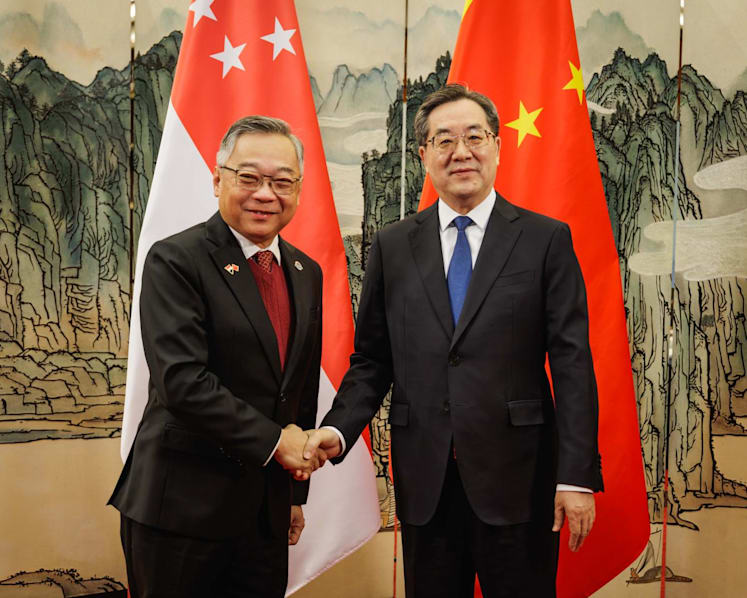
Singapore Deputy Prime Minister Gan Kim Yong (L) and Chinese Vice Premier Ding Xuexiang (R) shake hands at the 21st Joint Council for Bilateral Cooperation meeting in Chongqing on Dec 15, 2025. The meeting marked the 35th anniversary of diplomatic ties and the 10th year of the Chongqing Connectivity Initiative. (Photo: Ministry of Digital Development and Information)

This audio is generated by an AI tool.


CHONGQING: Singapore and China have signed 27 agreements at their annual apex meeting, deepening cooperation in areas such as financial connectivity, green and digital development, and education.
The slew of memoranda of understanding (MOUs) and agreements - up from 25 last year and the most in recent years - was unveiled on Monday (Dec 15) at the 21st Joint Council for Bilateral Cooperation (JCBC) meeting, held at Yuzhou Hotel in Chongqing.
The meeting was co-chaired by Singapore Deputy Prime Minister Gan Kim Yong and Chinese Vice Premier Ding Xuexiang.
It is the highest-level bilateral forum between Singapore and China.





“This year’s JCBC is taking place as countries worldwide face an uncertain geopolitical environment, rapid technological changes, and global economic headwinds,” Mr Gan said in his opening speech on Monday.
“It is, therefore, all the more important for Singapore and China to continue to find ways to cooperate, anticipating challenges and capitalising on new opportunities for our businesses and our peoples.”
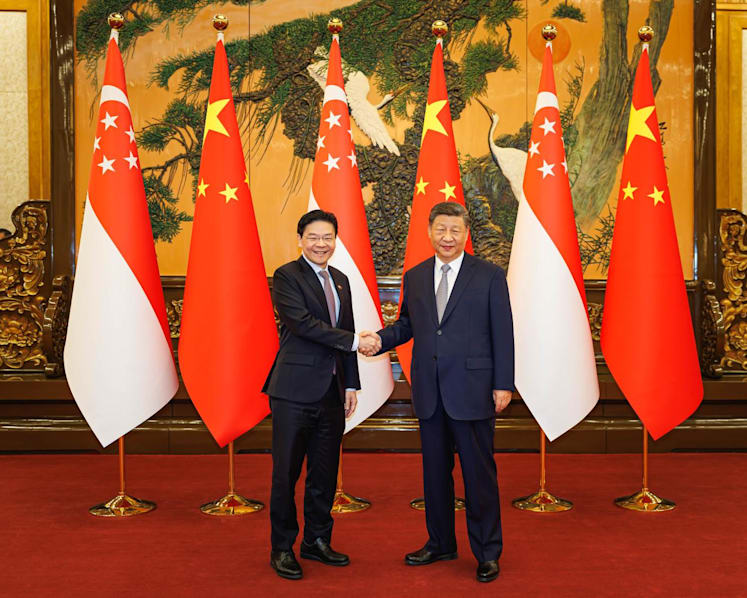
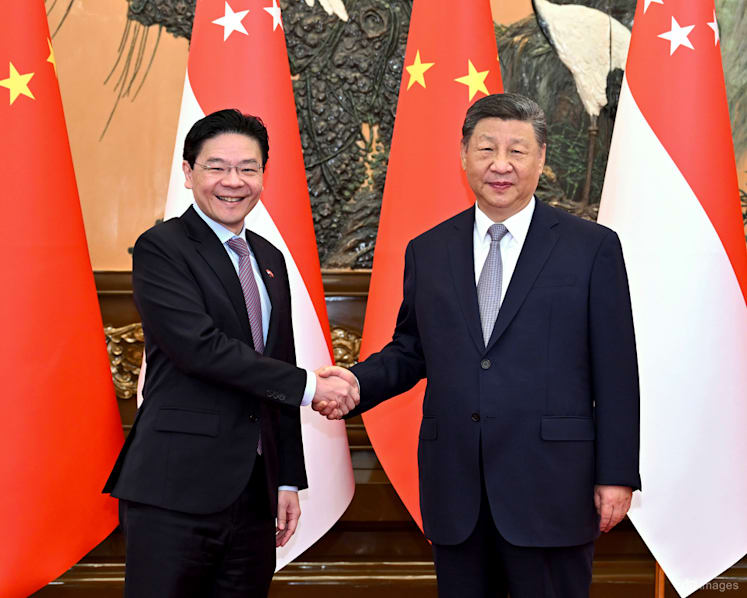
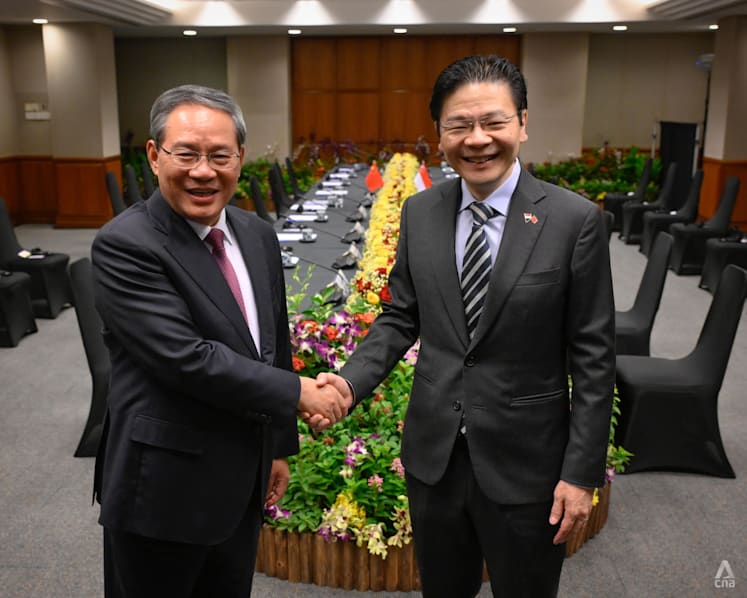
The year 2025 also marks the 35th anniversary of diplomatic relations between Singapore and China. Singapore’s Prime Minister Lawrence Wong visited China in June, while China’s Premier Li Qiang visited Singapore in October.
Under the strategic guidance of leaders from both countries, bilateral ties have continued to grow with tangible results, Mr Ding said in his opening speech.
“China-Singapore relations have developed steadily, with fruitful outcomes across various fields,” he said, noting that this was reflected in cooperation across economic, digital, and people-to-people domains.
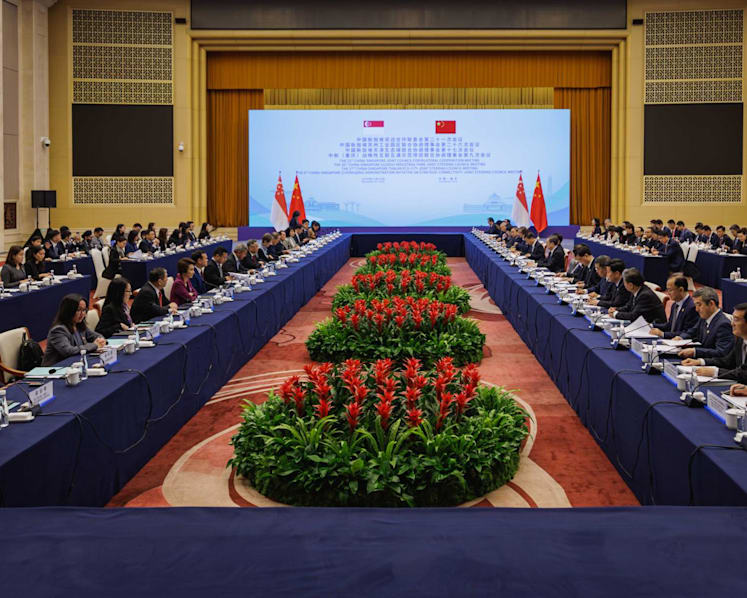
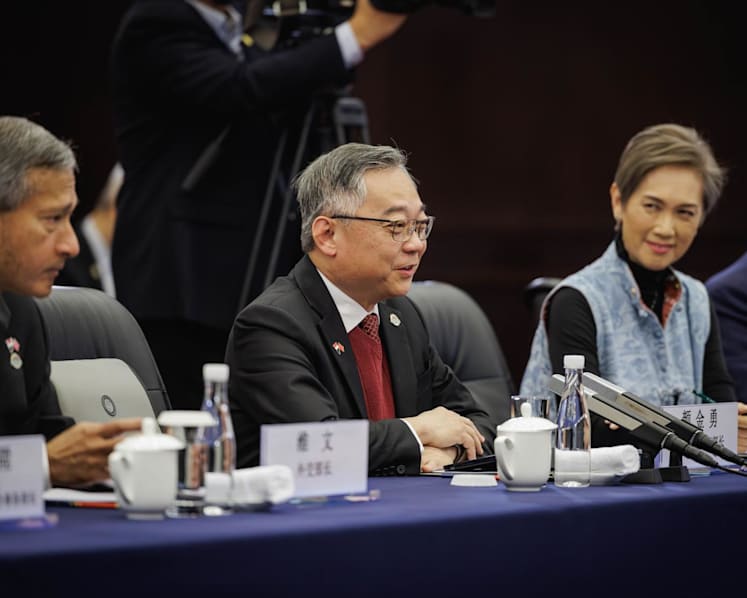
In a wrap-up interview with Singapore media, Mr Gan said the signed MOUs span a wide range of areas.
“This is an all-round, high-quality and future-oriented partnership,” Mr Gan said, adding that it will benefit Singaporeans, businesses and investors.
CCI IN FOCUS
A key focus for this year’s meeting was the China-Singapore (Chongqing) Demonstration Initiative on Strategic Connectivity (CCI) project, now in its 10th year.
Launched in November 2015, it is one of three flagship government-to-government projects, alongside the Suzhou Industrial Park (SIP) and the Tianjin Eco-City.
It is a key priority demonstration project for China’s Belt and Road Initiative, the western region development, and the Yangtze River Economic Belt Strategy.
Over the past decade, Singapore’s investments in Chongqing have more than doubled - increasing from US$5.7 billion in 2015 to US$12.7 billion in 2024.
Since its launch, the CCI has facilitated US$21.8 billion in cross-border financing for enterprises in Chongqing and western China through Singapore.
“The CCI emerged from a shared, ambitious vision to strengthen cooperation and connectivity between western China and Southeast Asia,” Mr Gan said.
“There is scope to do even more in the next decade and beyond, by deepening connectivity to other markets and expanding collaboration into new sectors,” he added.
Singapore and China signed agreements on the vision and implementation of the CCI, setting out long-term aspirations to guide the initiative into its next decade.
In its next phase, the CCI will advance cooperation in newer areas such as education, technology and healthcare, while deepening collaboration across its four priority areas - financial services, aviation, transport and logistics, and information and communications technology - as well as the CCI-New International Land-Sea Trade Corridor (CCI-ILSTC).
This includes strengthening the development of Chongqing and Singapore as key aviation hubs, aligning rules on electronic bills of lading, enhancing logistics operations to extend the trade corridor’s reach, and sharing best practices in healthcare.
Both sides will also support the digital and green development of the CCI-ILSTC, a trade corridor facilitating the flow of a wide range of goods, including automotive components, electronics, and chemical products between western China and Southeast Asia through Singapore.
Container volumes have grown nearly tenfold since 2019. Support will include employing carbon tracking and supporting businesses in areas such as green finance and digital trade.
Air connectivity between both cities has also grown, with 24 weekly flights operated by Singapore Airlines, Air China, Chongqing Airlines and West Air - surpassing pre-pandemic levels.
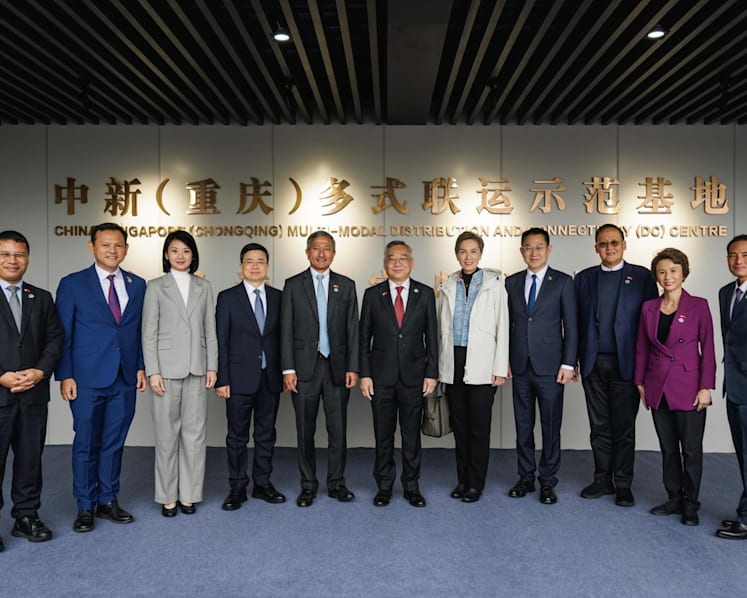
Through these efforts, the CCI will continue to serve as a strategic platform to enhance regional connectivity and create more opportunities for people and businesses on both sides.
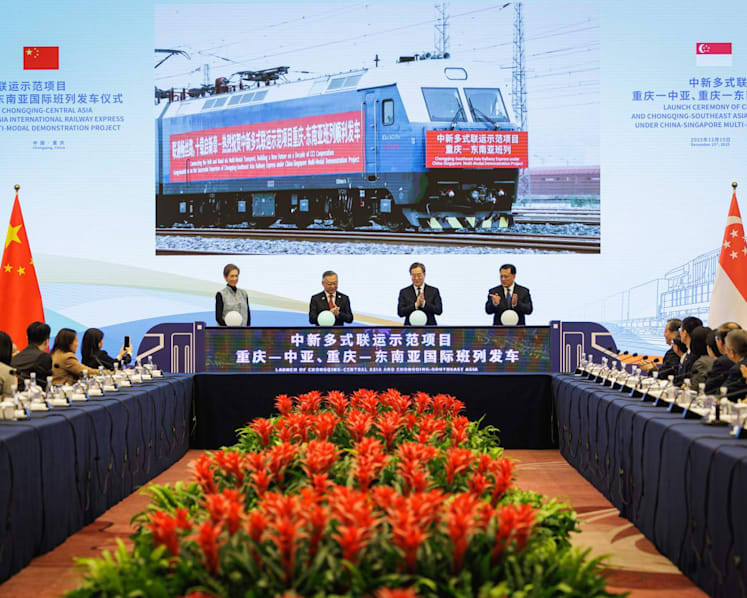
This includes the launch of new train services linking Chongqing to Central Asia and Southeast Asia, announced during the JCBC meetings.
Mr Gan described this as a key example of how both countries are leveraging their respective strengths - Singapore as a trade and logistics hub, and Chongqing as a growing inland gateway.
“This is a pathfinder project that shows the way (of) how we can break out of the constraints that a city like Chongqing faced,” he said.
He added that the collaboration has transformed what was once a landlocked region into a node for cross-border trade, with Singapore’s expertise in supply chains and multimodal connectivity helping to anchor the initiative.
WIDER AGREEMENTS
Beyond the CCI, Singapore and China signed several financial and digital economy deliverables.
DBS was appointed as Singapore’s second Renminbi (RMB) clearing bank, to support growth of the offshore RMB market and facilitate the use of the currency for trade and investment.
The Industrial and Commercial Bank of China (ICBC) Singapore branch became the first RMB clearing bank in 2013.
For Singaporeans travelling to China, a pilot will be launched by end-2025, enabling them to open and top up e-CNY wallets locally for merchant payments in China.
Both sides also committed to deepening collaboration in green and digital finance, updating the Multi-Jurisdiction Common Ground Taxonomy, and expanding capital market connectivity, including exchange-traded fund (ETF) product links and support for secondary listings.
An upgraded MOU to facilitate trade and enhance trade security was also signed - building on an earlier agreement from 2019 to boost collaboration between Singapore and Chinese customs administrations.
Areas of cooperation announced include strengthening Authorised Economic Operator programmes, exchanging information and best practices on Free Trade Zones, and improving customs clearance facilitation between both countries.
To enhance bilateral food trade, China will facilitate market access for Singapore-based food manufacturers to export processed meat products to China, while Singapore approved the export of processed meat products from Chongqing, Heilongjiang and Hunan.
Enterprise Singapore and Suzhou Industrial Park signed an MOU to expand green development efforts.
Singapore also signed a new agreement with Tianjin to promote economic cooperation and support growth sectors such as advanced manufacturing, shipping, biomedical sciences and tourism.
Science and innovation featured strongly, with new MOUs signed between the National Research Foundation and China’s Ministry of Science and Technology, and between ASTAR and Tsinghua University to advance research collaboration and knowledge sharing.
ASTAR’s National Metrology Centre and China’s National Institute of Metrology renewed their MOU to continue collaborating on measurement science.
Agreements were also signed to boost cooperation in health, legal services, sports, as well as youth and cultural exchanges.
Both sides underscored the importance of deepening cooperation to support their respective development priorities and contribute to regional stability.
As development partners with shared cultural affinities and converging interests, China and Singapore should build on the “important” consensus reached by their leaders and continue strengthening unity and practical collaboration across all fields, Mr Ding said.
Reflecting on the significance of this year’s meeting, Mr Gan noted the strength of the relationship built over decades of cooperation.
“It’s a bit like old friends getting together again,” he said of co-chairing the JCBC for the second time with Mr Ding.
“But the partnership goes beyond just personal comfort … it’s built on the trust and understanding that (Singapore and China) have developed over the last 35 years.”
“At the end of the day, we are two different countries - our priorities, our interests, our focus are different. But we continue to find areas of common interest that we are able to work together on, for the mutual benefit of our businesses and our people. That’s the important driving force behind the collaboration.”