


Advertisement
Advertisement

CNA Correspondent - Australia vowed to change after Bondi. Has it?

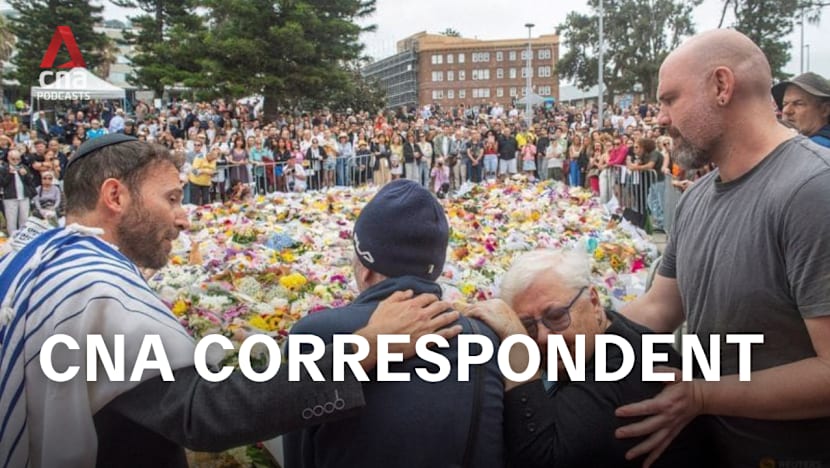
Almost six months ago, two gunmen opened fire on hundreds of Jewish families celebrating Hanukkah near Sydney’s Bondi Beach. Fifteen people were killed and more than 40 wounded in the December 14, 2025 attack - Australia's worst mass shooting in nearly 30 years. In the aftermath, Parliament passed stricter hate crime and gun ownership laws, announced a national buyback scheme and launched a Royal Commission into antisemitism. But since then, the gun buyback initiative has faltered and a provision to criminalise inciting racial hatred has been quietly dropped. On this episode of the CNA Correspondent podcast, Arnold Gay speaks to Natashya Gutierrez and Jack Board to ask: Do Australian Jews feel any safer today? And have the nation's leaders truly matched their words with action?


Resume Pause 26 min

CNA Correspondent - Can toys and companions fill China's emotional needs?

China has a new buzzword: Emotional value. It is used to explain everything from blind box obsessions and AI companions to why young people are hiring strangers to climb mountains with them. In this episode of the CNA Correspondent podcast, Genevieve Woo and Correspondent Krystal Chia explore the rise of China’s emotional economy and examine what this growing search for comfort and connection reveals about modern Chinese society.

Resume Pause 17 mins

CNA Correspondent - Is this really the World Cup of chaos?

The FIFA World Cup 2026 was always going to be unprecedented. Three host nations, 16 cities and 48 teams across an entire continent. What nobody quite expected was how much drama would happen off the pitch. The tournament kicked off amid an ongoing US-Iran conflict, Africa's top referee was denied entry to America, fans have paid record prices for tickets and the three co-hosts - the US, Canada and Mexico - are fighting a trade war of their own. Arnold Gay speaks to correspondents Matthew Mohan, Mitch McCann and Toni Waterman to unpack the politics, problems and blemishes behind the beautiful game.

Resume Pause 19 mins

CNA Correspondent - Australia vowed to change after Bondi. Has it?

Almost six months ago, two gunmen opened fire on hundreds of Jewish families celebrating Hanukkah near Sydney’s Bondi Beach. Fifteen people were killed and more than 40 wounded in the December 14, 2025 attack - Australia's worst mass shooting in nearly 30 years. In the aftermath, Parliament passed stricter hate crime and gun ownership laws, announced a national buyback scheme and launched a Royal Commission into antisemitism. But since then, the gun buyback initiative has faltered and a provision to criminalise inciting racial hatred has been quietly dropped. On this episode of the CNA Correspondent podcast, Arnold Gay speaks to Natashya Gutierrez and Jack Board to ask: Do Australian Jews feel any safer today? And have the nation's leaders truly matched their words with action?

Resume Pause 26 mins

CNA Correspondent - Aviation was flying high. Then the war in Iran changed everything

The numbers going into 2026 were some of the best in aviation history. Then, US and Israeli strikes on Iran led to the closure of the Strait of Hormuz, choking off a fifth of the world's oil supplies. Carriers saw jet fuel prices surge by more than 120% and braced for supply shortages, cancelling thousands of flights and raising airfares. Some budget airlines have already shut down, and others could follow.The aviation industry's annual gathering in Rio was supposed to celebrate record profits and chart a greener future. Arnold Gay speaks with Yasmin Jonkers to find out who will survive, who pays for cleaner skies and what kind of world we are flying into.

Resume Pause 18 mins

CNA Correspondent - Can rice farming ever be climate friendly?

Traditional rice farming is a major climate problem. Flooded paddy fields release methane, a greenhouse gas 27 times more potent than carbon dioxide. But a Singapore-led project in Indonesia is testing a new way forward. By changing the way rice is planted and grown, researchers say emissions can be cut by up to half, without hurting farmers’ incomes. Arnold Gay speaks to CNA Senior Correspondent Saifulbahri Ismail about the science behind low-methane rice, the challenges of changing long-held farming practices and if consumers will go for a more climate-friendly grain.

Resume Pause 25 mins