Singapore will not leave future of work, livelihoods to chance amid AI transition: Tan See Leng
Singapore must be prepared that AI’s impact on jobs could grow as adoption gains pace and scale, said the manpower minister.
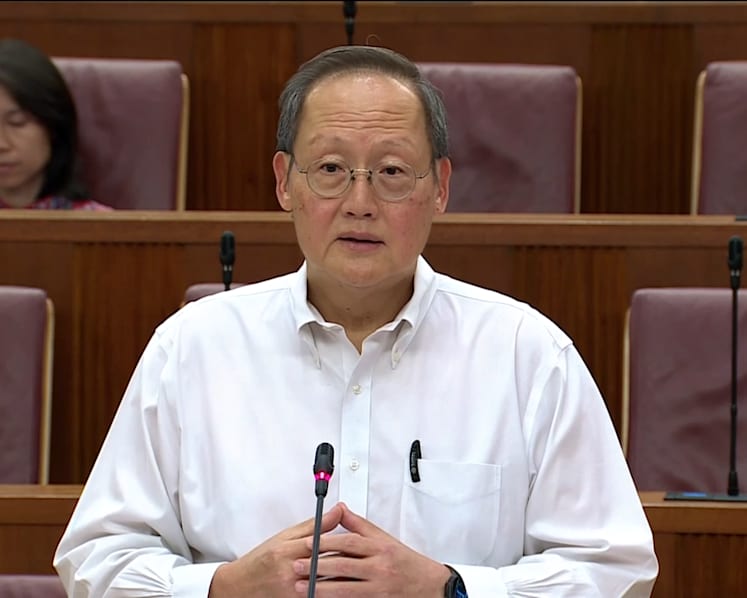
Manpower Minister Tan See Leng speaking during a parliamentary debate on a motion about an AI transition with "no jobless growth" on May 6, 2026.

This audio is generated by an AI tool.


SINGAPORE: Amid disruption from artificial intelligence, Singapore will not leave the future of work and the livelihoods of its people to chance, Manpower Minister Tan See Leng said on Wednesday (May 6).
Instead, the country will shape a transformation that is inclusive, forward thinking and “anchored in real action”, Dr Tan told parliament.
“Singaporeans will never be helpless passengers to an AI-driven future, but Singaporeans will be our fellow co-pilots as our AI journey takes flight,” he said.
“And we will move forward in the Singapore way, with government, employers and the unions working together to ensure that our AI transformation creates good jobs, clear pathways for every Singaporean worker towards a better future.”





The minister was responding to a motion about an AI transition with “no jobless growth”, which was proposed by National Trades Union Congress (NTUC) secretary-general Ng Chee Meng. More than 20 MPs debated the motion over two days.
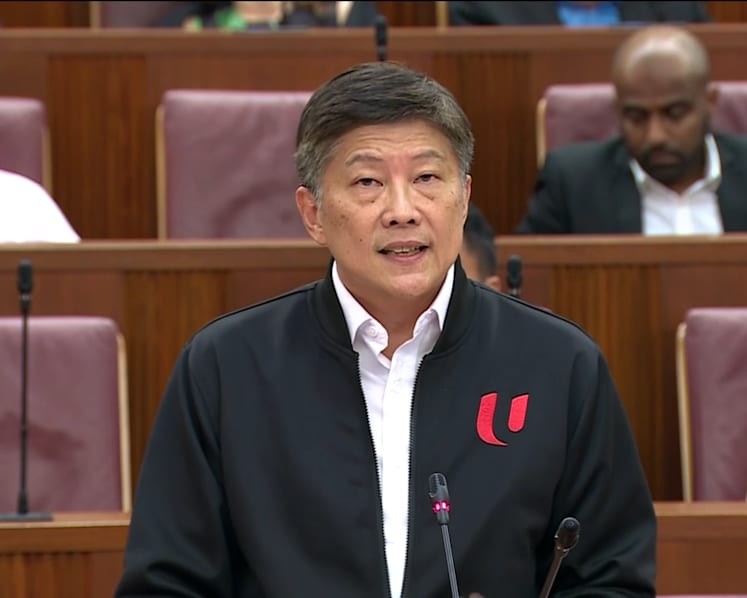
Dr Tan said he supports the motion, which calls on parliament to: recognise AI’s transformative power; emphasise the need to anchor AI-enabled growth in fairness, resilience and opportunity for all; equip workers and businesses to seize new opportunities together; and affirm inclusive economic progress.
The Ministry of Manpower (MOM) has said that there is no indication of widespread job displacement by AI, and that early evidence suggests AI is complementing rather than displacing labour in Singapore.
According to its poll earlier this year, 6.2 per cent of firms have reduced headcount due to AI adoption, while 8.5 per cent of firms had reduced hiring activity due to AI.
But Dr Tan on Wednesday said Singapore must be prepared that AI’s impact on jobs will be greater as its adoption gains pace and scale.
The goal is to enable more businesses to use AI in such a way that workers can do their jobs better rather than be replaced, that work becomes more meaningful, and that AI’s benefits are shared between businesses and workers, he said.
Dr Tan said Singapore has weathered deep disruption in the past – through the Asian financial crisis, SARS and COVID-19 – because workers, businesses and the government stood together.
“In many countries, AI becomes a tug of war – workers on one end, business on the other. Progress contested, trust strained. Singapore does not have to go down that road,” he said.
Dr Tan acknowledged anxieties that AI may erode workers’ skills and experience and even take over jobs.
While some jobs will disappear, AI also creates new opportunities, he said.
AI can also enable new forms of flexible work and fractional work by small teams or “solopreneurs”, and Dr Tan said a tripartite work group on senior employment will explore how to scale flexible work models.
The government will also study NTUC’s proposal to raise the income ceiling of the SkillsFuture Jobseeker Support Scheme to better support higher-income individuals, said the minister.
The scheme provides temporary financial relief of up to S$6,000 and job search support to people who lost their jobs involuntarily, and currently has a salary cap of S$5,000.
IMPROVING AI SKILLS
Addressing the concerns brought up by MPs over inequality caused by AI, Dr Tan said fairness, resilience and shared opportunity in AI-enabled growth will not happen naturally, because the technology’s adoption is uneven across sectors, worker segments and business sizes.
“Without deliberate effort, the gains from AI could flow to some while others are left behind,” he said.
To this end, the new Tripartite Jobs Council will pay special attention to students and young workers anxious about AI’s impact on entry-level jobs, said the minister.
He pointed to institutes of higher learning enhancing their curricula to keep pace with AI developments and offering alumni selected AI courses at a discount.
SkillsFuture work-study programmes also allow graduates to combine classroom and on-the-job training, to build skills and experience that employers value, he said.
Dr Tan also pointed to broader efforts to prepare workers for the AI transition.
The formation of the new Skills and Workforce Development Agency (SWDA) will allow workers and employers to obtain support in skills and employment facilitation more seamlessly, he said.
The government will also do more to improve Singaporeans’ AI literacy. For example, SWDA will introduce diagnostic tools for workers to assess their level of “AI readiness” and find suitable courses.
Singaporeans in selected SkillsFuture AI courses will soon receive six months of free access to premium AI tools.
The Infocomm and Media Development Authority will also expand the TechSkills Accelerator programme to develop “AI bilingual” workers, starting with accountancy, legal and human resource professionals.
SUPPORTING BUSINESS TRANSFORMATION
Dr Tan also reiterated the support Singapore is giving to businesses through the S$400 million Enterprise Workforce Transformation Package, first announced in Budget 2025.
It will provide more funding for job redesign and workforce training – such as covering up to 70 per cent of the job redesign costs for small and medium enterprises, capped at S$150,000.
Dr Tan also pointed out that businesses accessing the grants are required to support workforce outcomes like wage growth and retention.
He then noted labour chief Mr Ng’s suggestion to expand NTUC’s company training committee (CTC) initiative, and said the government shared his ambition to elevate it to a tripartite level.
"We look forward to working with tripartite partners to jointly explore ways to make this a reality," said Dr Tan.
The CTC is a labour movement initiative first launched in 2019, in which employers are encouraged to form training committees with unions to work together on ways to boost worker career prospects and wages through structured training and technology adoption.
It is supported by grant funding from NTUC of up to 70 per cent of the qualifying cost for each project.
Mr Ng had said on Tuesday that NTUC will work with the Singapore National Employers Federation (SNEF) as part of the new Tripartite Jobs Council in order to expand the CTCs nationwide, going forward.
Finally, Dr Tan addressed NTUC’s proposal to require employers to notify authorities of retrenchment in advance, so that the labour movement can proactively support affected employees.
Currently, companies with at least 10 employees must notify MOM of any retrenchment within five working days after the affected employee is informed.
An administrative penalty of S$1,000 can be imposed if the employer fails to do so.
Previously, Dr Tan said advance mandatory notification would pose challenges for businesses and could even discourage backroom talks to save jobs.
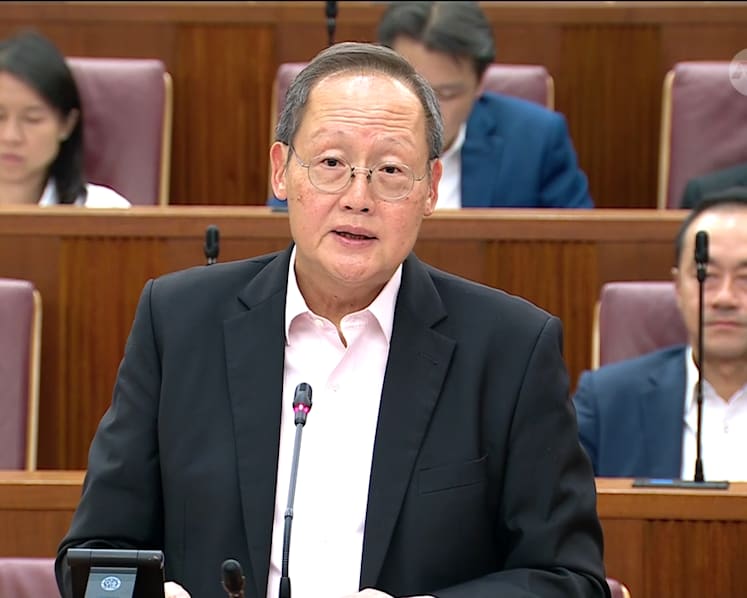
Nominated Member of Parliament Mark Lee, who is also vice-chair of the Singapore Business Federation, on Wednesday said earlier notification alone will not solve the problem if businesses are not ready to redesign jobs or absorb workers.
Said Dr Tan: “We want to strike the right balance. Tripartite partners are already discussing shortening the retrenchment notification duration under the ongoing Employment Act review.
“We, on our part, would like to see notification to the government happening before or by the last day of work of the affected workers as far as possible.
“This would then also enable timelier employment facilitation support to workers.”
Towards the end of his speech, he assured workers, new graduates and firms that the government will support them through the AI transition.
“To our workers wondering where you stand, there will always be a place for you. Your experience, your judgment matter more than ever, and your commitment to our country, your support through the years, through the decades – we are deeply appreciative.
“To all of our young graduates, your ideas, your drive matter more than ever. Your enthusiasm, your curiosity ... matter more than ever, and we are behind you.
“For all of our businesses, if you're unsure, you're uncertain as to where to start, you don't have to figure it out alone. We will walk alongside with you,” he said.