







Lower drink driving limit, possible review of demerit points system in Singapore road safety push
The government is also studying the use of differentiated licence plates for electric vehicles (EVs) to help firefighters take the necessary precautions.
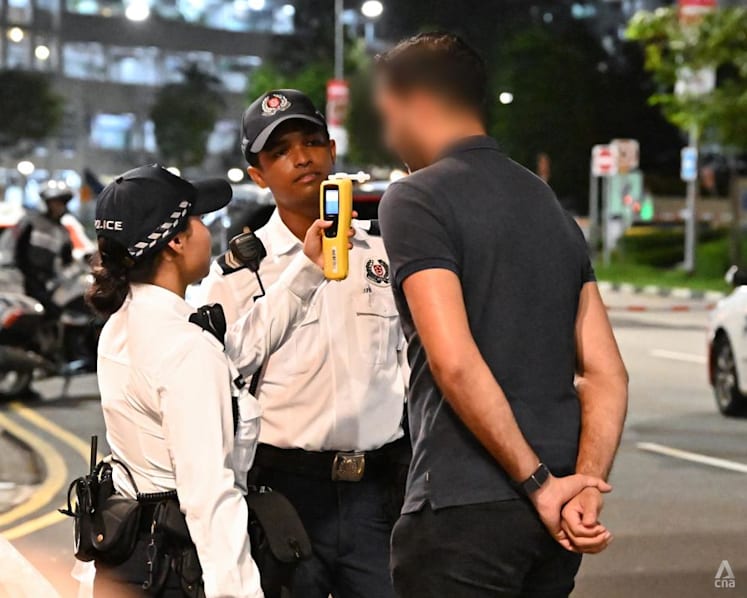
A man is stopped for a breath test using the handheld breath analyser currently used by the traffic police during an enforcement operation against drink driving along Upper Cross Street near Chinatown on Sep 20, 2025. (Photo: CNA/Tan Wen Lin)

This audio is generated by an AI tool.


SINGAPORE: The drink driving limit in Singapore is set to be lowered, bringing the country’s standards in line with other major Asian jurisdictions, Senior Minister of State for Home Affairs Sim Ann said in parliament on Friday (Feb 27).
Singapore’s current limit of 35 micrograms of alcohol per 100 millilitres of breath will be lowered to 15 micrograms of alcohol per 100 millilitres of breath, she said. Legislative amendments will be made later this year, she added.
Ms Sim said that the Ministry of Home Affairs (MHA) is also considering tightening the Driver Improvement Points System, more commonly known as the demerit points system, to motivate drivers to adhere closely to traffic rules.
“We need a stronger enforcement posture because our roads are becoming less safe,” said Ms Sim during the debate on her ministry’s budget for the year ahead.





In his speech earlier, Second Minister for Home Affairs Edwin Tong noted that road traffic fatalities have hit a 10-year high since 2016.
Speeding violations last year rose by 26 per cent compared to 2024, and a 27 per cent increase was observed for red light running-related incidents and accidents, he said.
“We see one too many instances of careless and irresponsible behaviour, which have caused injuries and cost lives,” said Mr Tong, who is also law minister.
CLAMPING DOWN ON DRINK DRIVING
In her speech, Ms Sim said that drink driving is a highly culpable offence.
“No one accidentally drinks and drives. They put themselves and others at great risk. There have been many horrific accidents caused by drunk drivers,” she said.
Lowering the drink-driving limit would bring Singapore in line with other jurisdictions such as Taiwan, Japan and South Korea, she said.
“Evidence shows that impairment to driving skills occurs at lower levels of alcohol concentration, and that crash risks increase with alcohol consumption,” said Ms Sim.
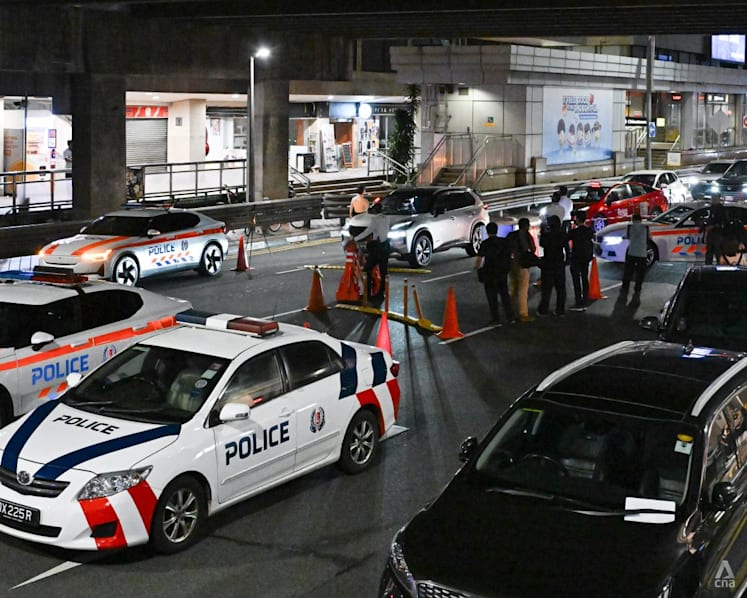
At present, a first-time drink driving offender may be fined between S$2,000 (US$1,546) and S$10,000, be jailed for up to 12 months, or both.
A repeat offender may be fined between S$5,000 and S$20,000, jailed for up to two years, or both.
First-time offenders will also be disqualified from driving for a minimum period of two years, and repeat offenders will be disqualified for at least five years.
The review of the legal alcohol limits for motorists was announced by Home Affairs Minister K Shanmugam in a parliamentary reply in September last year.
CHANGES TO DEMERIT POINTS SYSTEM
MHA is also looking at tightening the demerit points system for drivers. This may include reducing the number of points that can be accumulated before a driver is suspended and also increasing the suspension periods.
“We will not decide on this lightly, but it may be necessary in order to arrest the deteriorating situation, increase deterrence and keep dangerous motorists off the roads,” said Ms Sim.
Responding to a suggestion by MP Cassandra Lee (PAP-West Coast-Jurong West) to consider raising the penalties for certain cases of dangerous driving, Ms Sim said she agreed that penalties should be higher in cases where a driver puts another person in danger on purpose.
“We will study this with a view towards introducing a new offence to tackle such behaviour, with a higher maximum penalty than the existing offence of dangerous driving causing death,” she added.
When MHA announced in May last year that harsher penalties for speeding would take effect from Jan 1 this year, observers noted that increasing the number of demerit points as a penalty is a stronger deterrent than higher fines, given the higher incomes in Singapore.
Ms Sim said that in creating road safety solutions, MHA will also give due consideration to the perspectives of vocational drivers, having consulted the transport-related unions.
Foreign-registered vehicles are also another concern as they form a significant collective presence on Singapore’s roads, so there is also a need to strengthen deterrence and enforcement against errant drivers among them, she added.
“We are working on several measures and will announce details when ready,” said Ms Sim.
DIFFERENT NUMBER PLATES FOR EVS
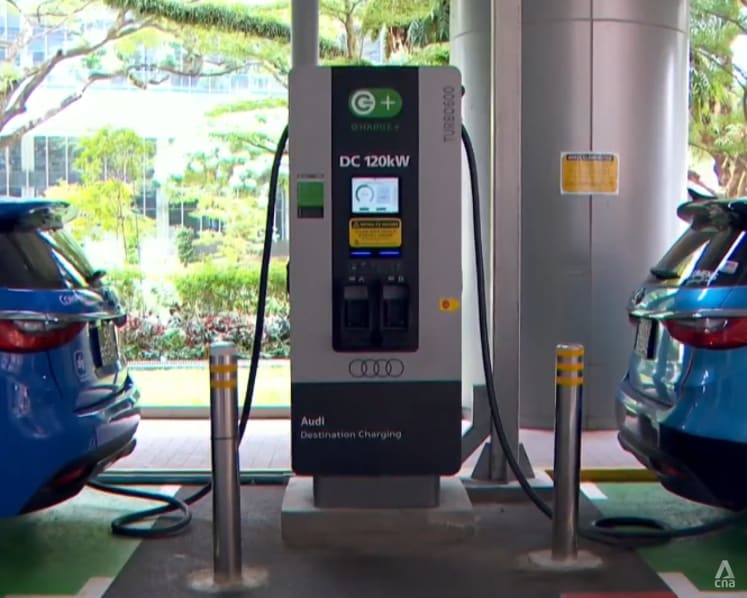
In his speech, Mr Tong said MHA and the transport ministry are studying the use of differentiated licence plates for EVs, as with other countries.
While research has shown that fires in EVs are less likely than in internal combustion engine vehicles, EVs pose different risks when they catch fire and would require a different management approach, he added.
Having differentiated plates would let Singapore Civil Defence Force (SCDF) responders identify more easily whether the vehicle involved is an EV, he said.
They would then adopt specialised procedures, such as establishing a wider safety cordon to account for more intense flames.
“Members of the public can also more readily identify that an affected vehicle is an EV and take precautions to stay away,” said Mr Tong.
More information about the different licence plates will be shared later this year, he added.
In response to CNA's queries, SCDF and the Land Transport Authority (LTA) said they will be engaging the motor industry and EV owners for their views on the proposed EV identifier designs and implementation process.
"The proposed EV identifier designs must ensure visibility and ease of identification," said the agencies.
"There will only be one common EV identifier design for EVs and plug-in hybrid vehicles. More details on the final design and implementation process will be provided in due course."
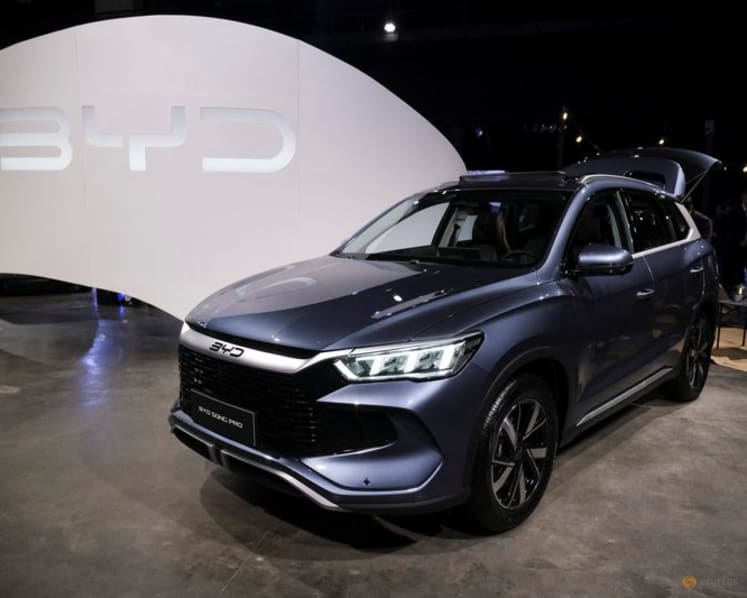
The presence of EVs on Singapore roads has been rising over the years. By the end of last year, it formed 7.4 per cent of the total car population here, nearly double the 4 per cent share recorded in 2024.
EVs also constituted about 45 per cent of all new cars registered in Singapore last year, a substantial increase from 34 per cent the year before.
TECH ADOPTION
In her speech, Ms Sim said that MHA is investing heavily in road safety technology.
This includes traffic violation enforcement cameras, which use video analytics and automatic number plate recognition to detect and capture violations.
The Home Team is also stepping up its foray into artificial intelligence.
This year, the Home Team Science and Technology Agency (HTX) will develop a proof-of-concept for a centralised AI Governance Testing and Monitoring Platform to automate AI governance checks and ensure continuous compliance throughout the AI lifecycle, said Ms Sim.
“HTX will also deploy AI guardrails-as-a-service to protect our AI solutions from attacks and ensure that output is safe and reliable,” she said.
Ms Sim added: “While we press ahead with AI, we are mindful that AI solutions must be trustworthy and delivered responsibly. As with other technologies, AI comes with risks.”
Despite the technology push, some traditional platforms remain relevant.
Ms Sim announced that from May, the SCDF will progressively roll out a new dedicated mass emergency alert system called SG Alert.
This was first mentioned by Mr Tong in August last year.

The system will be able to broadcast emergency alerts to mobile handsets islandwide, or within specific geographical zones, she said.
“Mobile users will not have to download any apps to receive SG Alert notifications," said Ms Sim, adding that SG Alert will complement existing emergency broadcast mediums.
“We believe this capability will significantly enhance Singaporeans’ preparedness for serious emergencies, such as major fire, chemical or terror incidents."




