Singapore monitoring Iran situation 'closely', will reassess GDP forecasts if necessary: DPM Gan Kim Yong
The Trade and Industry Minister said in parliament that global energy prices could rise if the conflict continues.

This audio is generated by an AI tool.


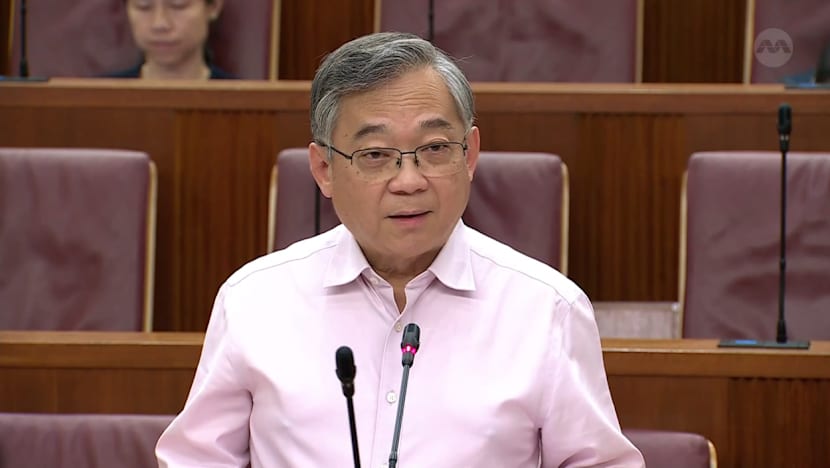
SINGAPORE: The Singapore government is monitoring developments in Iran "closely" and will reassess its GDP and inflation forecasts if necessary, Trade and Industry Minister Gan Kim Yong said on Monday (Mar 2).
Noting the closure of the Strait of Hormuz, a key shipping route for crude oil and liquefied natural gas, Mr Gan said in parliament that global energy prices could rise if the conflict continues.
"Higher energy prices could lead to higher costs for businesses and consumers, and weigh on the global and Singapore economies," said Mr Gan, who is also Deputy Prime Minister.
"We are monitoring the developments closely and will reassess our GDP and inflation forecasts if necessary."
Mr Gan was speaking in parliament during a Committee of Supply debate session as part of the Ministry of Trade and Industry.
The Monetary Authority of Singapore (MAS) on Monday said that Singapore’s foreign exchange and money markets are continuing to function normally.
“The Singapore dollar nominal effective exchange rate (S$NEER) remains within its appreciating policy band, which will continue to dampen imported inflationary pressures,” MAS said.
The central bank added that it is closely monitoring developments arising from the ongoing situation in the Middle East and is assessing the impact on the domestic economy and financial system.
“MAS is in an appropriate position to respond, if necessary, to risks to medium-term price stability,” it said.

"THIS TOO SHALL PASS"
Financial analysts said that as the situation remains fluid, there will be knee-jerk reactions in the markets and investors may flock to safety.
"As the Iranian crisis continues, we see strong tailwinds for gold as the investors seek to protect their portfolios from geopolitical headwinds," said DBS' chief investment officer Hou Wey Fook.
Mr Afdhal Rahman, executive director of wealth advisory at OCBC, said that investors will likely seek safe‑haven assets like US Treasuries, precious metals, as well as the yen and the Swiss franc.
"Investors may trim exposure to riskier assets like equities. Oil prices could rise as markets price in the risk of potential disruptions to crude supply."
DBS chief economist Taimur Baig predicted energy price increases, as the Iranian navy can further slow the pace of shipments going through the Strait of Hormuz, which will also negatively affect shipment costs and insurance charges.
Mr Hou said that the American justification for the war was initially about preventing Iran from developing a nuclear weapon, but the focus has shifted to regime change.
The conflict was also unilaterally started by the US and Israel and was done without the traditional backing of its European allies.
"The lack of strategic vision and clarity heightens the risk of the US embroiling in another 'forever war'."
"It is worth noting that geopolitical developments seldom have a lasting impact on markets unless there is significant economic fallout," said Mr Rahman.
"Markets largely shrugged off the geopolitical risks from the 12-day Iran-Israeli war in 2025, when the US and Israel launched a massive attack on Iran’s nuclear facilities. The speed at which it was resolved was a key factor," he said.
"As we’ve seen in many previous geopolitical episodes, this too shall pass," added Mr Rahman. He noted that markets soared many times over despite the Russia‑Ukraine war remaining unresolved.
"As such, investors should not panic and should maintain a long‑term perspective. This is part and parcel of investing in a geopolitically fraught world."