







As AI reshapes jobs in Singapore, workers and firms face uneven change
Those entering the workforce could lose their competitive edge if they rely too much on AI, warned the president of the Association of Small and Medium Enterprises.
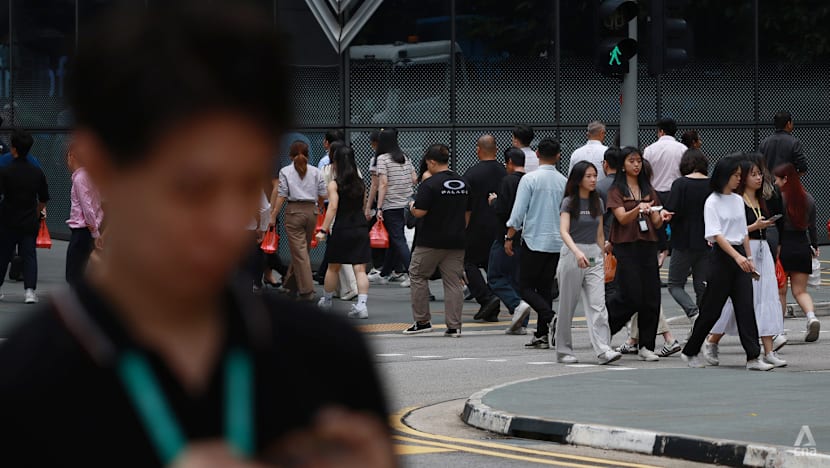

This audio is generated by an AI tool.






SINGAPORE: Every morning, Mr Loh Ming Shun makes sure one thing is by his side before he leaves home: His drill.
The 40-year-old handyman – better known to his customers as Mickey – spends his days fixing drawers, mounting artwork and drilling holes with precision.
Formerly a pet groomer, Mr Loh switched careers a decade ago. He makes sure to upgrade his tools regularly and learn new techniques online, and prides himself on being able to handle almost anything in a home.
In an age when artificial intelligence is transforming white-collar work, Mr Loh said he believes hands-on trade offers something machines cannot.
“I think it’s impossible for AI to take over handyman services because it requires two hands – not just knowledge about the plumbing (or) about how you are going to drill the wall. You still need both hands to do it,” he told CNA.
But while Mr Loh’s work remains largely untouched by automation, the same cannot be said for many other industries in Singapore.
As more companies turn to AI to boost productivity, questions are mounting over what this means for workers – and whether some jobs could disappear faster than others.







CHANGING DAILY OPERATIONS
At event planning firm Adrenalin, technology has already transformed day-to-day operations.
With the support of grants from the National Trades Union Congress (NTUC), it adopted technology to speed up its registration progress.
Project manager Adeline Soon said it has made a significant difference to her work, especially during events where guests may have to wait some time to get registered.
“This actually cuts down a lot of time for them, and guests can actually move on from the registration to mingle (and) network,” she added.
“With me being stuck at the counter, I wouldn’t be able to know if … clients or guests on the ground are facing any issues. So, that frees up my time to walk the ground.”
While this underscores how AI can augment jobs rather than eliminate them, adoption of AI remains uneven.
Larger companies often have the resources to integrate AI deeply into their processes, while smaller firms that tend to grapple with day-to-day costs will make AI a lower priority.
Still, employers said interest is growing as AI tools become more accessible and powerful.
FIRMS MUST EXPERIMENT
Business groups told CNA that companies need to be willing to experiment to reap AI’s full benefits.
The Association of Small and Medium Enterprises said it believes AI can complement domain knowledge, but warned of unintended consequences for younger workers.
“People who are fresh into the workforce will likely tend to use it, over-rely on it, and therefore stunt their ability to grow their judgment and their experience,” said the association’s president Ang Yuit.
“Companies would be less willing at this point to hire people fresh out of school, because the foundational cognitive features of AI now are at a level where it is even better than early-career employees. So, businesses are still assessing – where is it all going to be when the dust settles?” Mr Ang added.
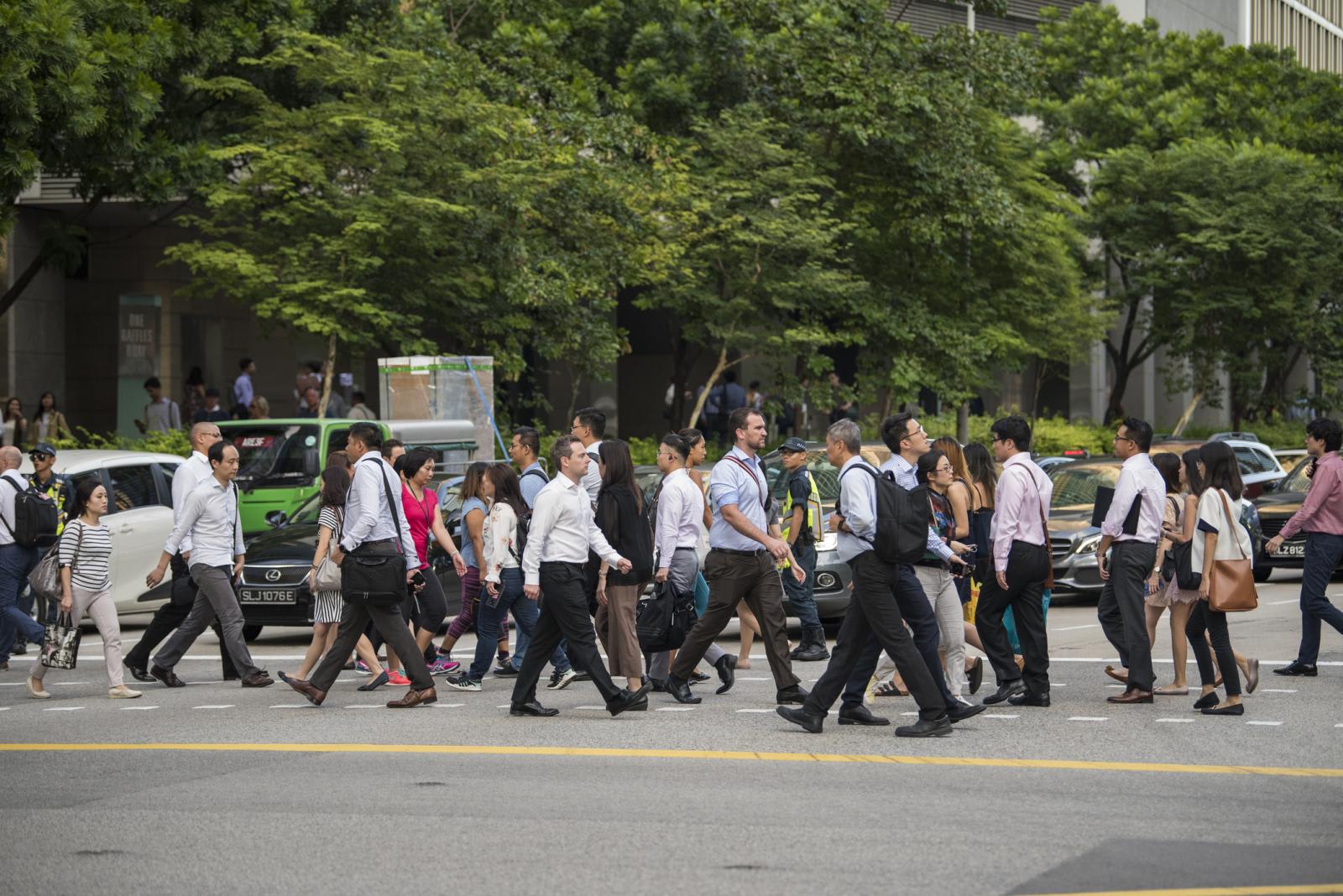
Mr Alvin Goh, CEO of the Singapore Human Resources Institute, said some companies are indeed becoming more cautious about hiring fresh graduates.
However, he stressed that entry-level roles are evolving rather than disappearing.
“Routine-based jobs are really shrinking. But roles that require judgment, collaboration and as well as learning (and) agility are growing,” he told CNA’s Singapore Tonight programme.
He pointed to the financial sector as an example of how expectations have shifted.
Entry-level analysts are no longer needed in the industry to prepare reports or extract data as AI can handle those jobs now, Mr Goh said.
Instead, companies need employees to interpret such data or insights and communicate some of the implications to the relevant stakeholders, he added.


REDESIGNING JOBS, RETRAINING WORKERS
Such concerns about the role of AI in the workforce come as more companies plan hiring freezes this year, according to a survey by the Singapore National Employers Federation (SNEF).
SNEF CEO Hao Shuo said investment in job redesign and training will be critical.
“Ultimately, I think humans will have to be in the loop in deciding, making the value judgments and when (to) actually make the change,” he added.
Mr Goh said another challenge is in how to embed learning in work.
“I think the mindset of learning is very important. It’s not just about tools or skill acquisition,” he noted.
“Skills like judgment, sense-making, communication … and more importantly, ethical decision-making are harder to automate.”
Singapore risks under-investing in these skills because they are difficult to measure, said Mr Goh.
“Upskilling must move from classrooms to daily work. The real gap is not access to courses or programmes, but whether companies can create time and space for learning on the job to take place,” he added.
LEARNING ALL THE TIME
For Mr Loh the handyman, learning also happens on the job – through videos and online communities.
“Some of the things that I do not know, probably I will go to YouTube and Facebook. I follow some of the handymen overseas. That’s where I get my knowledge and experience,” he said.
Mr Loh’s professionalism is what sets him apart, said Mr Conan Teh, one of his regular suppliers.
The 35-year-old runs ACT Hardware with his brother, who started the business immediately after graduating from university.
Mr Teh said he has seen more young people enter the trade, especially those making mid-career switches.
“Traditional white-collar jobs, I think, are not attractive to them anymore. With being a tradesman, you have the flexibility. The money, I would say it’s sometimes better than just an eight-to-five job outside,” he noted.
“But the trend that I see is, most (people) won’t last because it’s actually very hard to build a reputation, a personal brand in this market. So when we come across people like Mickey with professionalism as a key trait, it’s very rare,” he added.
As AI continues to reshape Singapore’s economy, Mr Loh’s drill hums on – a reminder that while technology may change how work is done, some skills remain firmly human.




